
Ginza literally means silver mint. From 1612 to around 1800 the shogunate ran a silver-coin foundry right here, and that coin factory is exactly how the district got its name. So when people call Ginza the luxury shopping neighbourhood — the one where a square metre of dirt is worth more than ten million yen — they are actually describing a specialised-commerce tradition that’s over 400 years old. This was never a post-war invention. Ginza has been the place where you come to spend your money on beautifully made, expensive, precisely measured things since before the Edo period put cherry trees on its rivers.
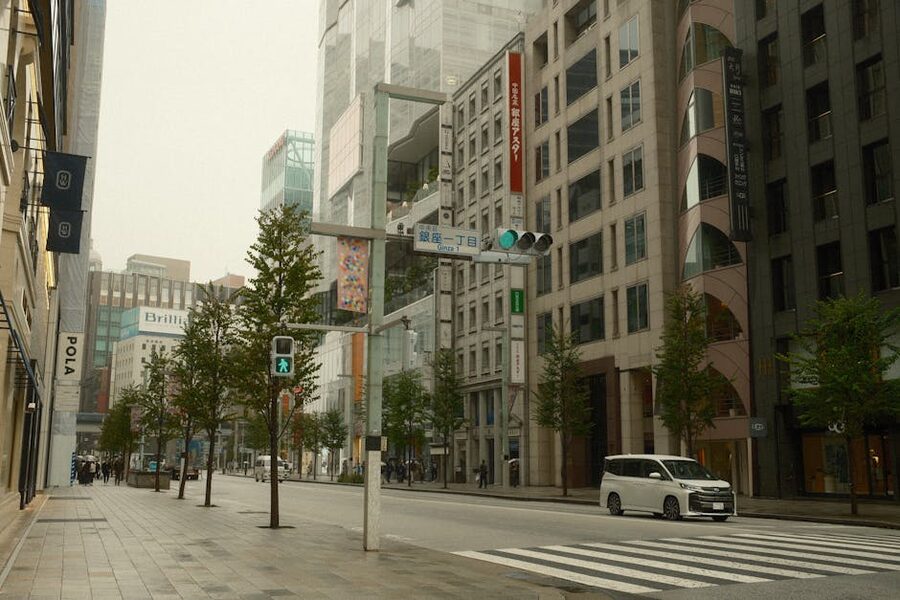
I’ve drifted through Ginza on about twenty different trips to Tokyo by now, and I still get the same small lurch every time I surface from Ginza Station’s C8 exit and see the Wako clock tower across the intersection. It’s not a dramatic skyline. It’s not even that tall. But something about the proportions — the clock, the pale stone, the way the whole 4-chome crossroads funnels toward it — makes you realise you’ve arrived somewhere with a very clear idea of itself.
In This Article
- A short, weird history
- Chuo-dori and Harumi-dori
- The Wako clock tower, which is not just a clock
- Mitsukoshi and the lions
- Kabuki-za, and the tickets most tourists miss
- How to buy a single-act kabuki ticket
- Ginza Six, and the view from the roof
- Hokosha-Tengoku — Pedestrian Paradise
- Eating in Ginza without remortgaging
- How to navigate a depachika without short-circuiting
- The galleries nobody tells you about
- The honest version
- How I’d spend an afternoon in Ginza without spending ¥20,000
- Practical info
- One last thing
A short, weird history
Skip this section if you don’t care. But Ginza’s history is unusually specific and it shapes everything about why the place feels the way it does.
The silver mint was here from 1612 until about 1800. Before that, Ginza was literally swampland — drained and filled in during the 16th century so that Edo-period engineers had somewhere solid to put the coin factory. That’s your starting point: a piece of ground that was reclaimed specifically to make money.
Then in 1872 almost all of it burnt down. The Great Ginza Fire — you won’t see it signposted — levelled most of the district. The Meiji government’s response was a small miracle of nerve: instead of rebuilding in timber they hired Colin Alexander McVean (a Scottish chief surveyor) and the Irish engineer Thomas Waters to design Ginza as a two- and three-storey Georgian brick district. Japan’s first red-brick streetscape. Gas lamps, pavements wide enough for horse carts, shop windows facing the road. It was called Rengakan — Bricktown — and it was meant to be a visible demonstration of what the new, post-shogunate Japan could build.
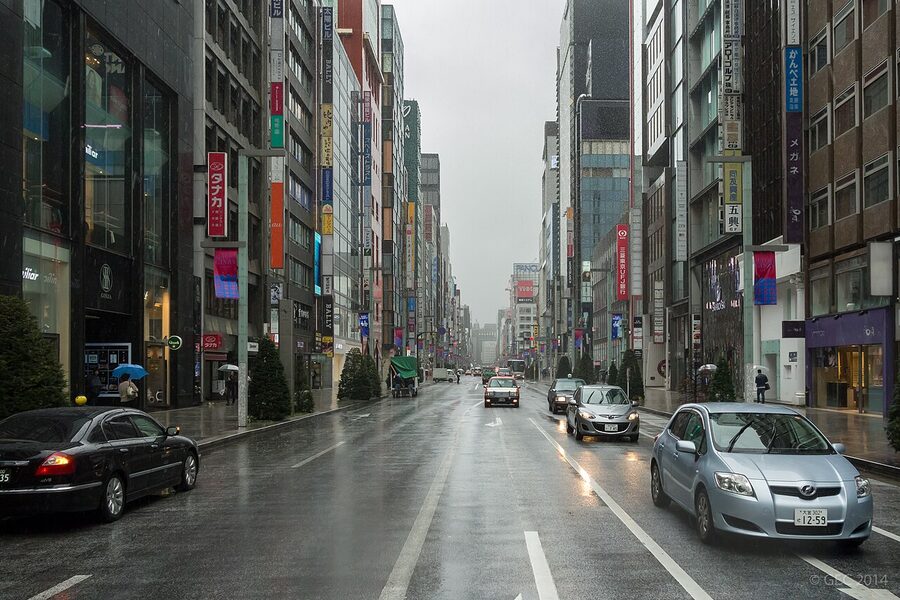

Foreigners at the time were unimpressed. Isabella Bird wrote in 1880 that Ginza looked less like an oriental city than like the outskirts of Chicago or Melbourne. Philip Terry, who wrote the Edwardian-era tour guides, compared it to Broadway and didn’t mean it kindly. But inside Japan, Ginza worked. Newspapers and magazine offices clustered here. The phrase “killing time in Ginza” — ginbura, from ginza-burari, roughly “a Ginza stroll” — became its own genre of middle-class Japanese leisure between the wars. You came to walk and look and maybe spend. That’s still what Ginza is for.
Most of the Meiji brick is gone, mostly to the 1923 Great Kanto Earthquake. But two lineages survive. One is the Wako building at the 4-chome crossing, topped by what’s usually called the Hattori Clock Tower — originally built by Kintaro Hattori, who founded Seiko. The current tower dates from 1932. The other lineage is less visible: the instinct that this is where you put the thing you want Tokyo to look up to. The Apple flagship, the Mikimoto building, the Renzo Piano-designed Hermes facade, Ginza Six, the new Sony building — all of them still follow the Rengakan logic. Ginza is where new Tokyo gets built and charged for.
Chuo-dori and Harumi-dori
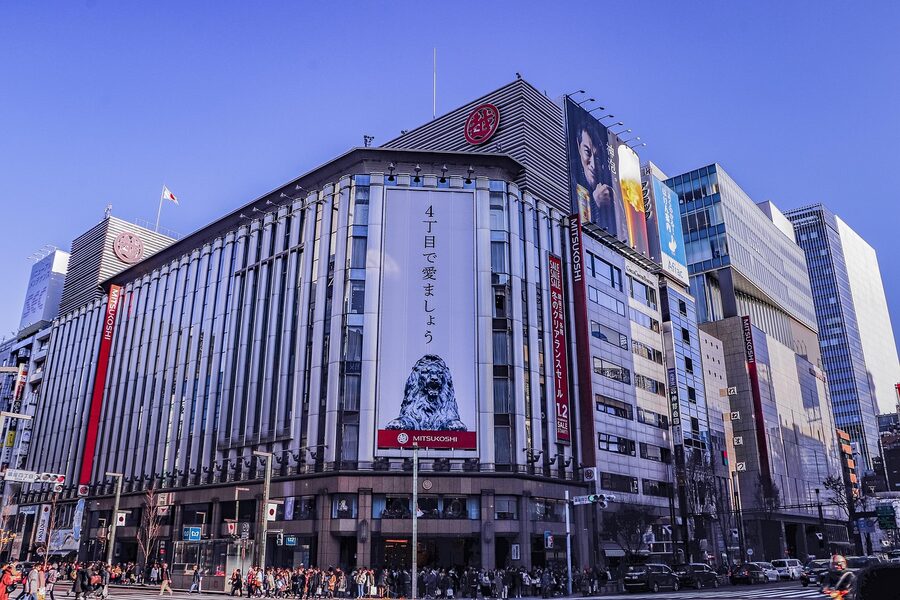
Ginza runs on a grid. You only need two streets to navigate it.
Chuo-dori — “central street” — is the main north–south shopping spine. It runs roughly from Kyobashi in the north down to Shimbashi in the south, passing through all eight Ginza “chome” districts along the way. This is the one that closes to cars on weekends.
Harumi-dori is the east–west axis, running from the Sukiyabashi intersection (the western edge, near Yurakucho) down toward Tsukiji and the bay. The two streets cross at Ginza 4-chome and that crossing is the heart of everything. Wako is on the northwest corner. Mitsukoshi is on the northeast. Ginza Place (the latticed building that looks like origami) is on the southeast. The old Nissan showroom anchors the southwest.
The useful thing to know is that once you’re standing at 4-chome, you can reach every serious Ginza address inside about 12 minutes’ walk. Don’t try to treat Ginza like a list of separate attractions. It’s a grid you stroll. The small streets between the main avenues are where a lot of the best stuff is — tiny galleries, older cafes, sushi counters with three seats and no sign.
The Wako clock tower, which is not just a clock
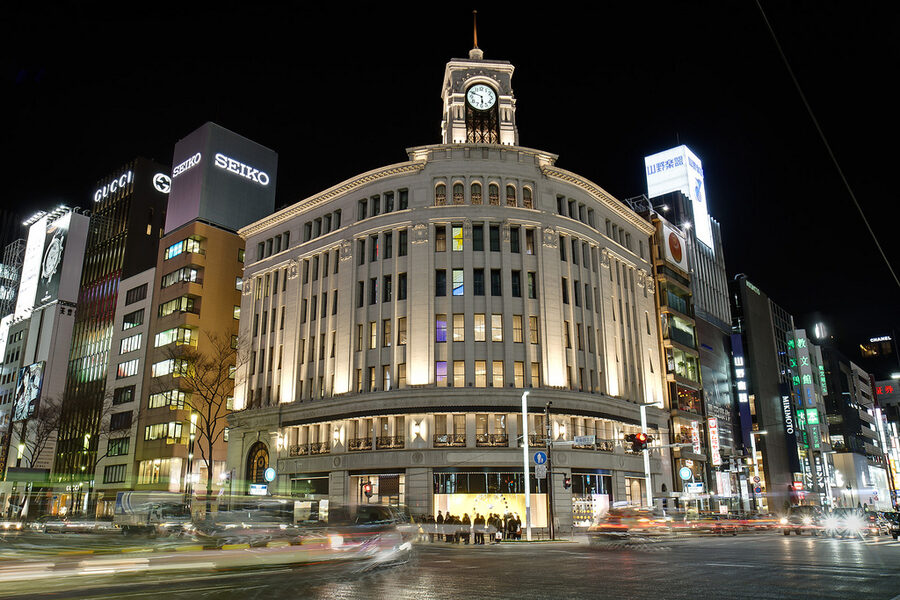

The building below the tower is a luxury department store — watches, jewellery, handbags, the whole Seiko-adjacent world. You can walk in freely and nobody will hassle you; the window displays on the ground floor are worth a look even if you’re not buying. But the tower itself is the landmark. The current structure went up in 1932 and it’s basically unchanged. The clock mechanism chimes the Westminster quarters, and a full hour-chime runs about thirty seconds. If you stand on the pavement at 4-chome at, say, 11:00 on a Saturday, you’ll hear it even through the pedestrian-zone chatter. It’s the sound of Ginza. I’ve had it wake me up in hotels three blocks away.
Mitsukoshi and the lions
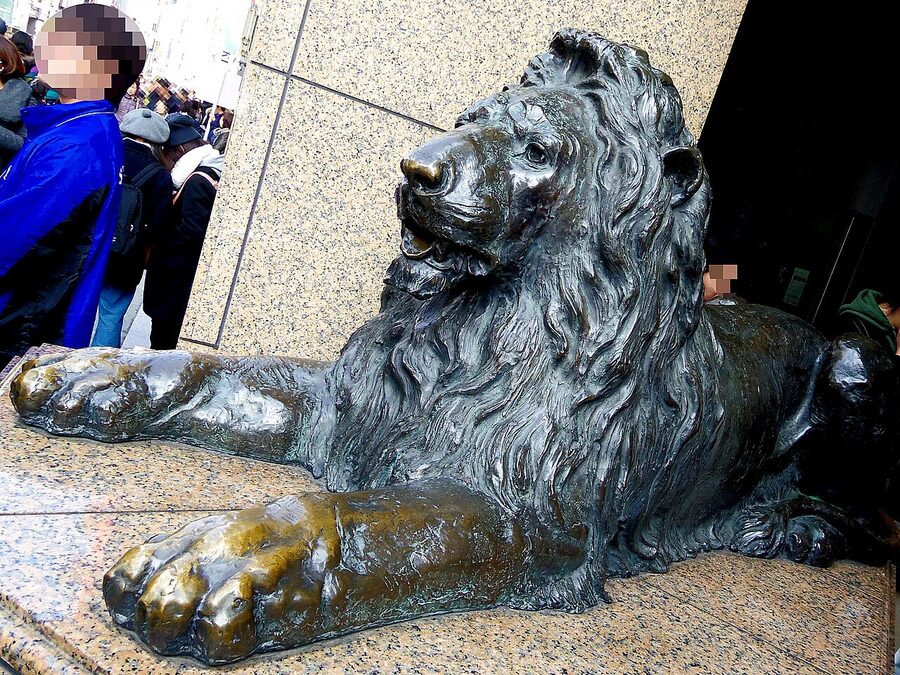

Mitsukoshi’s corporate history goes back to 1673, when it started life as a kimono merchant called Echigoya in Nihonbashi. The Ginza store — the one you walk into at the 4-chome crossing — opened in 1930. Twelve floors. Everything from luxury handbags on the ground floor to restaurants and a rooftop.
The thing most guides forget: the two bronze lions sitting at the Ginza-dori entrance are copies of Sir Edwin Landseer’s lions at the base of Nelson’s Column in Trafalgar Square. Meiji-era Japan doing a quiet hat-tip to the British Empire. They’re worn smooth on the heads because of the local tradition that touching them brings good luck; they’re also the easiest meet-up spot in Ginza — “by the lions” works as directions even if your friend doesn’t speak Japanese.
The real reason to go inside, though, is depachika — the basement food halls. Mitsukoshi’s depachika (one floor below ground) is the platonic ideal of the form: precision-folded wagyu, bento boxes that cost as much as a meal at a pub, the best wagashi in central Tokyo, fruit packaged like jewellery. I’ll explain how to not get overwhelmed in a minute.
Kabuki-za, and the tickets most tourists miss
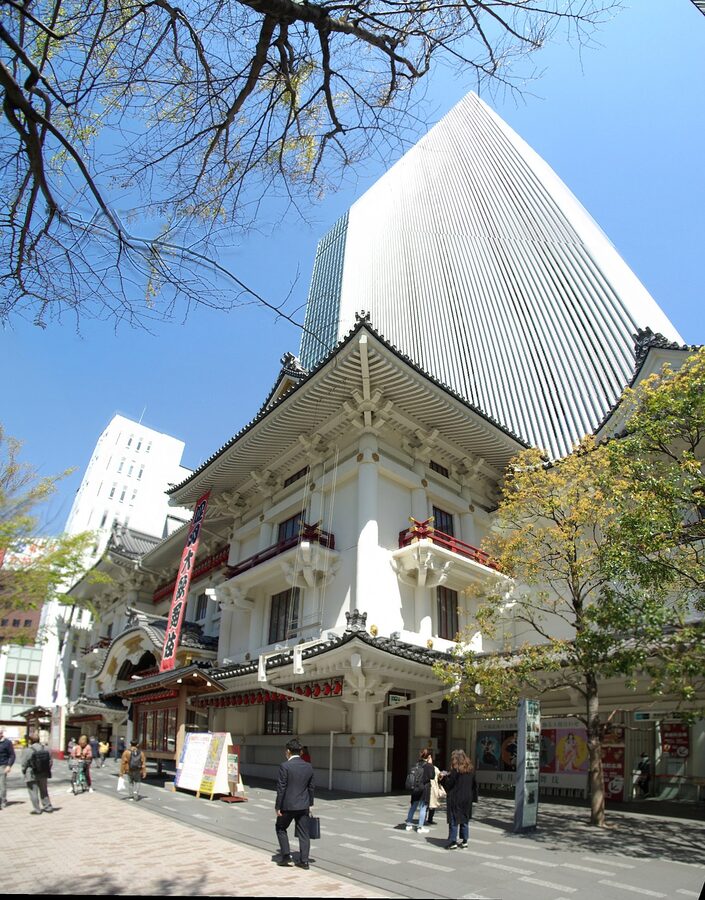
Kabuki-za sits on the eastern edge of Ginza, a short walk from the 4-chome crossing along Harumi-dori. The theatre has existed on this site since 1889 but has been rebuilt four times because of earthquakes, fires, and bombing. The current building, opened in 2013, kept the traditional white-plaster-and-dark-timber facade you recognise from every postcard, but has a 29-storey office tower rising behind it. It’s an odd silhouette once you notice.
Full-show tickets run from around ¥4,000 to ¥22,000 and need advance booking. But the thing almost nobody on the tourist trail uses is the makumi-seki — single-act tickets (also called hitomakumi-seki). These cost roughly ¥900–2,000 depending on the act, are sold only on the day at a separate ground-floor box office, and let you watch one act of a production (usually 30–90 minutes) without committing to the full four-hour performance.
How to buy a single-act kabuki ticket
- Check the day’s programme the night before at kabuki-bito.jp (the official kabuki site) — the schedule lists each act’s name, length, and synopsis in English.
- Pick the act you want. Shorter acts (30–45 min) are a gentler entry; dance pieces tend to be more visual and forgiving for first-timers who won’t follow the dialogue.
- Get to the Kabuki-za about 60–90 minutes before your act starts. The single-act ticket booth is on the ground floor to the right of the main entrance, marked “Hitomakumi-seki” in English.
- Pay in cash if possible — some days the card reader is slow. You’ll be given an unreserved seat on the 4th floor balcony.
- Rent the English audio guide (¥700 deposit plus ¥500 fee) — the narration explains the plot in real time and it makes the difference between a confusing hour and a great one.
If you’re not going to watch kabuki at all, it’s still worth walking past the theatre around opening — staff in formal black kimono sweep the forecourt with long brooms just before the doors open, and it’s one of those tiny Tokyo rituals nobody ever photographs.
Ginza Six, and the view from the roof
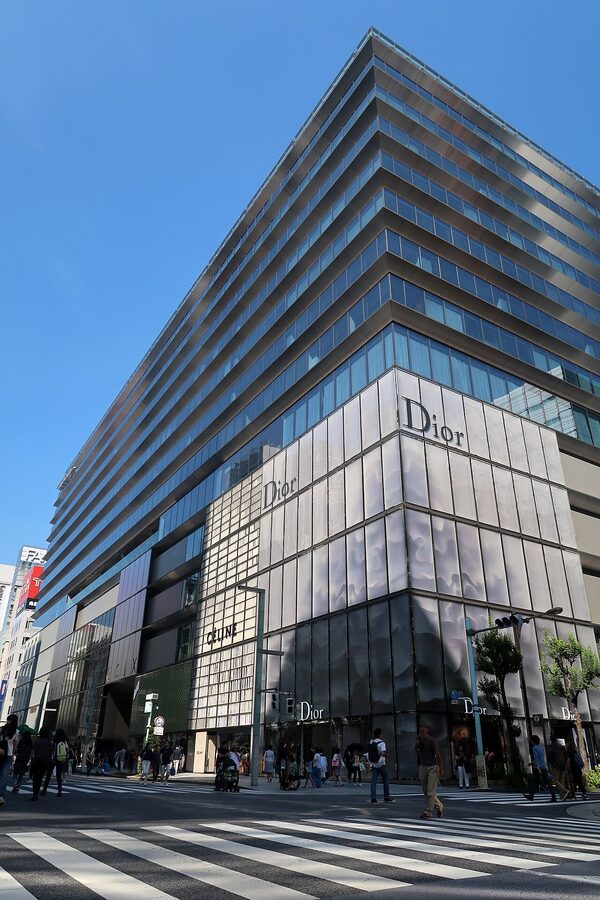

Ginza Six opened in April 2017 and it’s the biggest retail complex in Ginza — 241 shops across thirteen above-ground floors. Inside, it’s exactly what you’d expect: Celine, Dior, a Tsutaya bookshop that specialises in art titles, cosmetics halls, a food basement that sells Pierre Hermé macarons next to ¥3,000 rice balls. Which is to say: worth wandering if you like shopping, skippable otherwise.
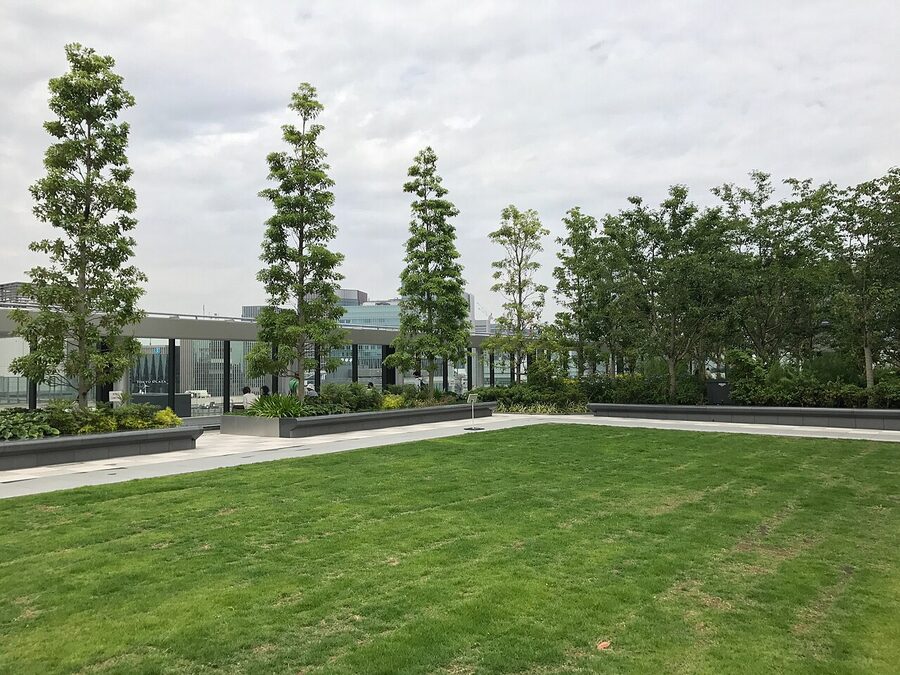
But the rooftop garden is the best-kept secret in Ginza. Take the lift to 13F, follow the signs, and you’re on a 4,000m² open-air terrace with lawn, a small stand of trees, benches, and views down over Tokyo Tower and the Hama-Rikyu gardens. Free entry, open from 10:30 until 21:00 most days. If I had one hour in Ginza and had to choose between the rooftop and anything else on the map, I’d pick the rooftop. It’s also one of the few public green spaces in the district.
.jpg)
Hokosha-Tengoku — Pedestrian Paradise
On Saturdays and Sundays, from midday until 18:00 (or 17:00 between October and March), Chuo-dori closes to cars. The entire main avenue through Ginza becomes a walking street. Tables and chairs appear in the middle of the road. The department stores put out potted plants. Kids on scooters overtake elderly couples pushing shopping trolleys. It’s called Hokosha-Tengoku — “pedestrian heaven” — and it’s been running on Chuo-dori since 1970.
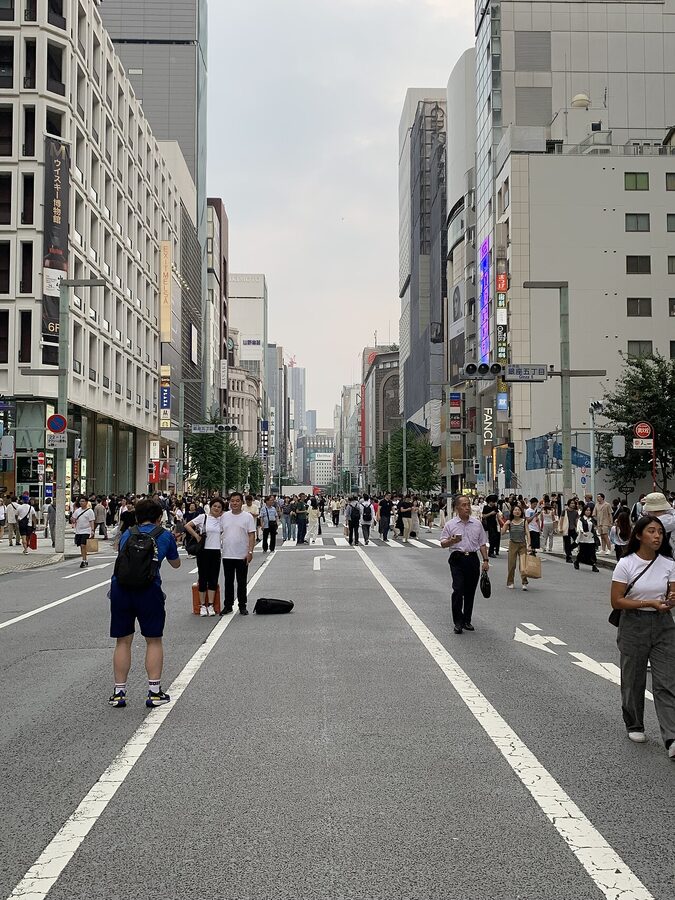

If you’re going to visit Ginza once, try to make it a weekend afternoon. The district doubles in scale when the traffic’s gone. You can stand in the middle of the 4-chome crossing, look four ways, and actually see the whole thing. During the week Ginza is a polite, efficient shopping district. On weekends it’s a party.
Eating in Ginza without remortgaging
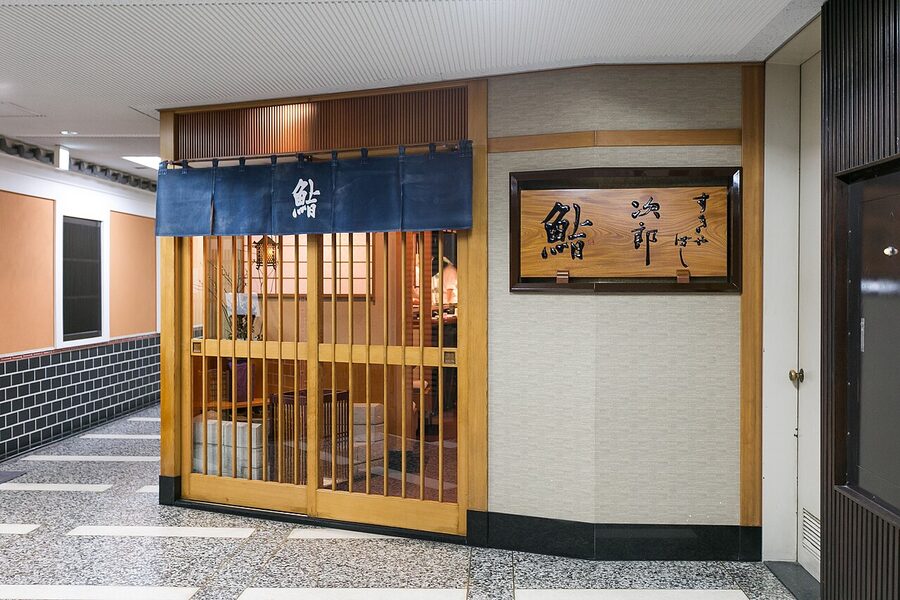
Ginza is famous for two kinds of sushi: the ones you can’t get into and the ones most tourists never try.
.jpg)
The one you can’t get into is Sukiyabashi Jiro — yes, the Jiro Dreams of Sushi Jiro. The honban (main) restaurant in Ginza stopped accepting walk-in reservations around 2018 and was quietly removed from the Michelin Guide in November 2019 because it no longer accepts the general public. If you see it on a Ginza tourist map with an address and a suggestion to “try queueing,” skip the queue and walk on. You cannot get in as a tourist. The branch run by Jiro’s younger son in Roppongi Hills is easier, but still difficult. Don’t burn an hour on it.
The sushi you actually can try at the high-end includes Kyubey (one of the most foreigner-friendly of Ginza’s serious sushi houses — lunch sets around ¥6,000), Sushi Aoki, and Sushi Kanesaka, all of which take real reservations and have English-speaking staff. For mid-range, most department-store basements have sushi counters where ¥2,500 gets you a lunch that would cost twice as much at street level.
If you want cheap: hit depachika at Mitsukoshi or Matsuya. Go around 19:30 when the bento boxes and prepared sushi start getting marked down — 30% off stickers after 19:30, 50% off after 20:00. The rooftop of Ginza Six is a perfectly acceptable picnic spot.
How to navigate a depachika without short-circuiting
Department store food basements are legitimately overwhelming. Here’s how I handle it:
- Walk one full lap of the whole basement without stopping. Look, don’t buy. You’ll want to buy at the first counter — don’t. There will always be something better on the second lap.
- Now pick three things. One for now, one for later, one that surprised you. That’s your lap-two shopping list.
- If you’re buying bento for a picnic, remember most are meant to be eaten within 2–4 hours and need to stay cold in summer.
- If you want free samples, stand near but not directly in front of a counter and look interested — staff usually offer within 30 seconds.
- Take a photo of the counter sign before you leave. You will never find that exact stall again otherwise.
The galleries nobody tells you about
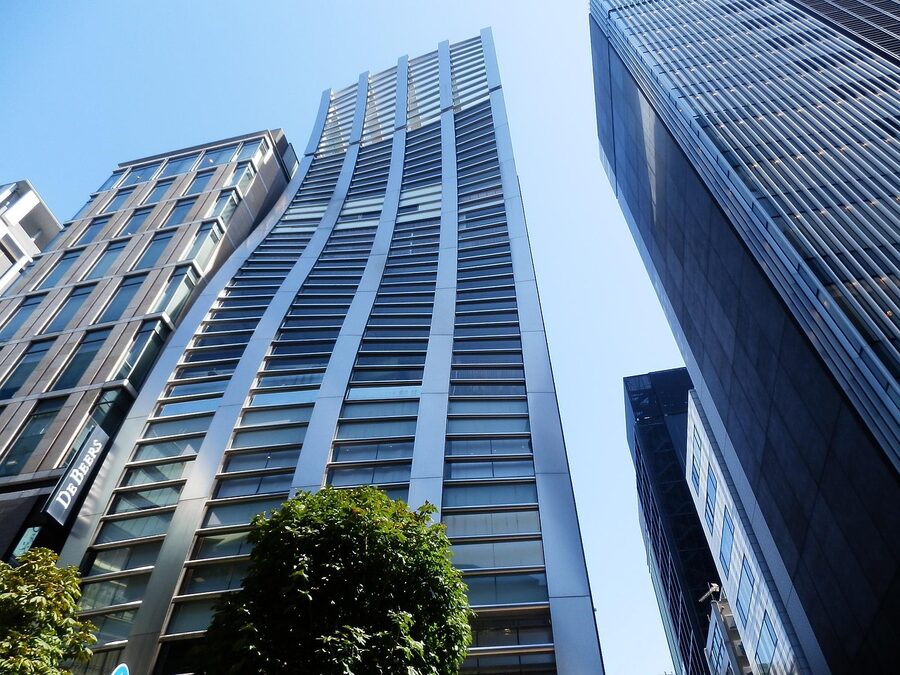
This is the thing about Ginza that almost no first-time tourist discovers: off the main avenues, in the narrow lanes that run between the chome blocks, there are more small art galleries per square metre than anywhere else in Tokyo. Most are free. Many are one-room spaces in an office building’s basement or second floor. The shows rotate every two or three weeks — contemporary photography, calligraphy, ceramics, one person’s entire year of oil paintings.
A few worth knowing about:
- Ginza Graphic Gallery — free, in the DNP Building near Shimbashi end. Specialises in graphic design and often has English labels. Closed Sundays and holidays.
- Art Aquarium in Mitsukoshi Ginza — paid (around ¥2,500), inside the department store. Huge living-art installations of goldfish. Divisive but memorable.
- Shiseido Gallery — in the basement of the Shiseido Parlour building. Free, contemporary art, been running since 1919 and one of Japan’s oldest continuously operating galleries.
- Seiko Museum Ginza — free but reservations required. Surprisingly good for the history of clocks and watches, with English captions throughout.
The best approach is to walk Chuo-dori, then pick a side street at random and wander. If you see a white-cube window at street level with a show poster, walk in. Gallery staff are used to passers-by and you will not be pressured to buy.
The honest version

If you don’t care about luxury shopping, high-end sushi, architecture, or galleries, then genuinely — Ginza might bore you. It doesn’t have the electric chaos of Shibuya, the temple-and-street-food rhythm of Asakusa, or the layered neighbourhood feel of Yanaka. It’s a wealthy, well-dressed, beautifully maintained shopping district that rewards slow walking and a tolerance for window displays. If that sounds like nothing to you, skip it and go to Asakusa instead. I’d rather give you the afternoon back than pretend every Tokyo district is equally interesting.
But if any of the following is true — you like architecture, you want one very Tokyo shopping experience, you’re curious what kabuki is actually like, you want to photograph Japan’s best street-level window displays, you like quiet galleries, or you just want an hour of walking past buildings designed by people who really thought about them — then half a day in Ginza is genuinely rewarding.
How I’d spend an afternoon in Ginza without spending ¥20,000
A Saturday template:
- 12:00 — arrive at Ginza Station, exit A2 for Wako, and catch the Pedestrian Paradise opening. Stand at the 4-chome crossroads for a minute and let the place orient itself.
- 12:15 — wander up Chuo-dori northward toward Kyobashi. Detour into one of the side streets at random. If you pass a gallery that’s open, walk in.
- 13:00 — walk into Mitsukoshi via the lions, head down to the basement depachika, and buy a ¥1,500–2,500 lunch to go.
- 13:30 — eat it on the rooftop of Ginza Six (10-minute walk south), free entry.
- 14:30 — walk east along Harumi-dori to Kabuki-za. Either buy a single-act ticket at the side door (if available that afternoon) or just have a look at the building.
- 16:00 — coffee at Cafe de L’Ambre (in business since 1948, open until 21:30 most evenings, ¥700 for a pour-over) or Bongen Coffee in Higashi-Ginza.
- 17:00 — last loop of Chuo-dori as the light softens, then head out at Shimbashi Station to the south.
Total cost: maybe ¥5,000 including food and coffee. Nobody is going to sell you a handbag.
Practical info
- Getting there: Ginza Station (Ginza, Hibiya, and Marunouchi subway lines) is the main access point. Exit A2/A4 for the 4-chome crossing, exit C8 for Ginza Six. JR Yurakucho Station (Yamanote Line) serves the western edge. Shimbashi Station is on the south side — useful if you’re continuing to Odaiba. All three are within 10 minutes’ walk of the 4-chome crossing.
- Shop hours: mostly 10:00–20:00 (department stores 10:00–20:30). Restaurants vary — many stay open until 22:00–23:00. Ginza Six is 10:30–20:30 (restaurants until 23:00).
- Pedestrian Paradise: Saturdays, Sundays, and public holidays, 12:00–18:00 (April–September), 12:00–17:00 (October–March). Chuo-dori only.
- Best time to visit: Saturday or Sunday afternoon, ideally around 14:00–16:00 when the crowds thin and the light is good.
- Worst time: weekday rush hour — the district is full of office workers getting to expensive lunches and you won’t have room to think.
- Budget: free if you stick to walking and galleries. ¥5,000 covers a decent lunch, coffee, and a kabuki single-act ticket. ¥20,000+ if you want a proper high-end sushi experience.
- Where to stay nearby: the Hamacho Hotel mentioned in my budget-conscious Tokyo hotel guide is a 15-minute walk and much cheaper than anything in Ginza proper. If you want to stay in Ginza itself, the Royal Park Hotel Ginza 6-Chome and Hotel Monterey are the most reasonable mid-range options.
- Official resources: Go Tokyo’s Ginza page, and the Ginza district association’s own portal at ginza.jp.
One last thing
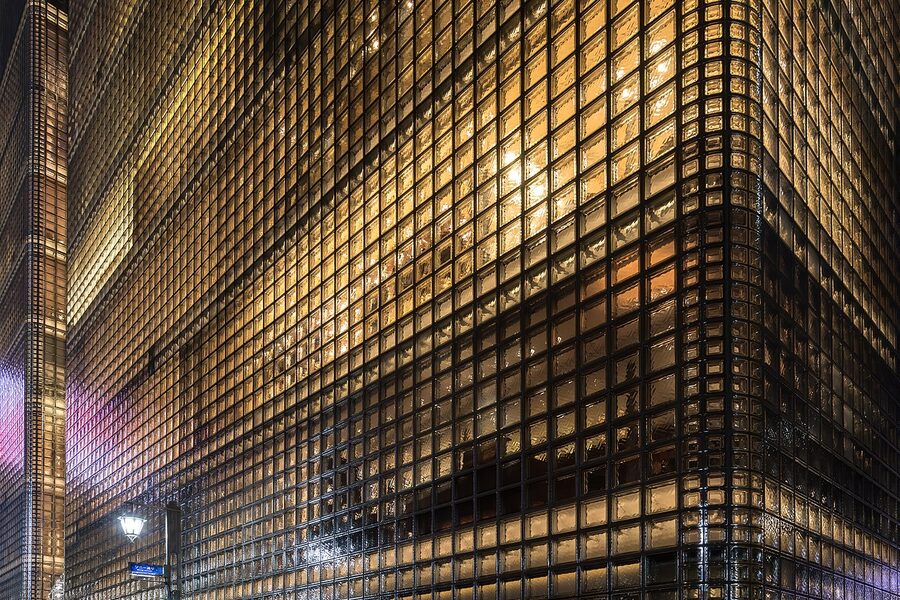

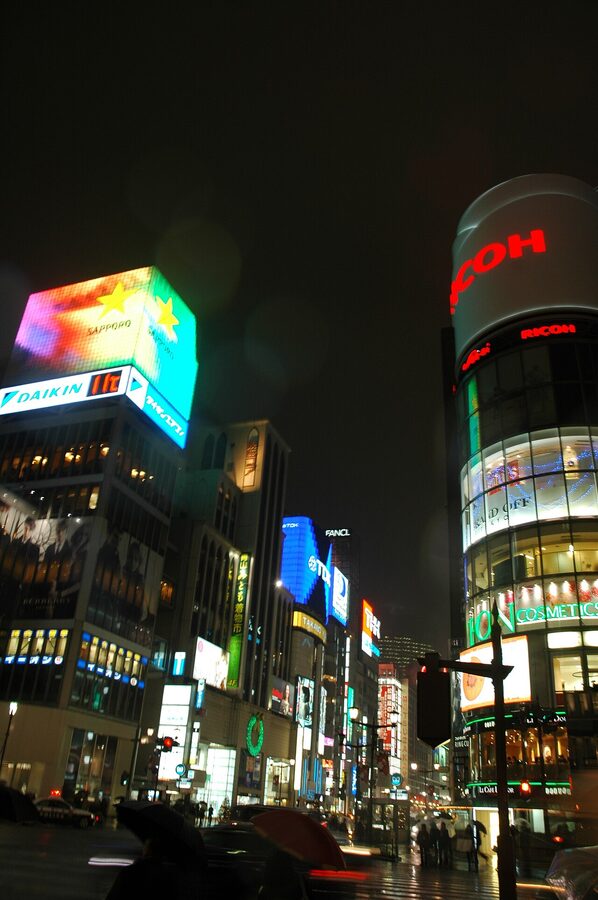
Come back at night if you can. Not because Ginza’s nightlife is any good — it isn’t, it’s mostly members-only clubs and hotel bars, and for real Tokyo drinking you’re better off going one station south to Shimbashi’s izakaya alleys or up to Shibuya. Come back at night because around 20:30 the shop lights dim, the display cases glow a little lower, and the whole grid goes quiet in a way that no other Tokyo shopping district does. A short walk from the 4-chome crossing south to Shimbashi after dark, past the illuminated Mikimoto and Hermes facades, is one of the best free experiences in the city. The silver-mint has been gone for 226 years. The idea of Ginza as the place where you pay to see something beautifully made — that’s still exactly what it is.