
Reviewed · KAMAKURA & ENOSHIMA DAY TRIPS
From Tokyo: Kamakura, Great Buddha, and Enoshima Bus Tour
Kamakura’s 13.5-meter Great Buddha is the star of this day trip, but the real appeal is the range of Japan you cover in one outing. You move from a former samurai capital to a seaside shrine town, then return to Tokyo for Sensoji, Nakamise-dori, and Shibuya Crossing.
I like the easy transport and the useful mix of guided visits and free time. The air-conditioned vehicle saves you from piecing together several rail connections, while the Enoden ride gives you a more local, old-fashioned view of the coast. The main drawback is pace: you see a lot, but some stops may feel short, especially Enoshima and the Great Buddha.
In This Review
- Key points to know
- Why this Kamakura and Enoshima day trip works
- Meeting in Shinjuku before the 7:40 departure
- Meeting Kamakura’s Great Buddha
- Enoshima’s sea views, food streets, and shrine
- Riding the Enoden beside the coast
- Tsurugaoka Hachimangu and Kamakura’s samurai past
- Asakusa, Sensoji, and the Nakamise-dori finish
- Shibuya Crossing closes the day
- Walking, lunch, language, and group comfort
- Who should book this $75 tour?
- FAQ
- Where does the tour begin?
- What time should I arrive?
- Is hotel pickup included?
- What languages are available?
- Is lunch included?
- Can I enter the Great Buddha?
- Where does the tour finish?
- Should you book it?
Key points to know
- The Great Buddha is a 750-year-old national treasure: You can pay 50 yen on site to enter the statue.
- The Enoden train adds real local character: The small retro train runs beside the sea and may offer views toward Mount Fuji.
- Kamakura brings samurai-era Japan into focus: Tsurugaoka Hachimangu Shrine remains tied to the city’s warrior past.
- Enoshima is more than a photo stop: Nakamise-dori offers food and souvenirs, but the schedule may not allow time for the observation lighthouse.
- Asakusa and Shibuya provide a strong Tokyo finish: You get old Tokyo temple streets before the modern energy of Shibuya Crossing.
- The day involves plenty of walking: Comfortable shoes and water are not optional extras.
Why this Kamakura and Enoshima day trip works
For many people, Tokyo is so large that it is easy to spend an entire visit inside the city. This tour gives you a useful change of scene without asking you to plan the rail network yourself. Kamakura is in Kanagawa Prefecture, on the coast south of Tokyo, and its temples, shrines, and old streets feel far removed from Shinjuku’s towers.
I like the way the day combines major sights with ordinary movement between them. You do not simply step off a bus, take a picture, and leave. You ride the Enoshima Electric Railway, walk through shopping streets, and move between religious sites where the atmosphere matters as much as the architecture.
The $75 price is reasonable if you value convenience. It includes guided touring in Kamakura, admission to the Great Buddha, the Enoden ticket, transportation, and a Tokyo Metro ticket from Asakusa to Shibuya. Lunch is included only if you select that option, so check the booking choice carefully. You are paying for a long day of transport and organization, not just entry tickets.
The tradeoff is time. This is a broad sampler rather than a slow, detailed Kamakura visit. If you want to climb every path on Enoshima, linger in gardens, or study each shrine building, you may prefer to visit independently.
A few more Fujisawa tours and experiences worth a look
Meeting in Shinjuku before the 7:40 departure
The tour begins at the Shinjuku Center Building, in front of the red brick entrance and a taller white building. It is about a seven-minute walk from JR Shinjuku Station, and the meeting time is 7:30. The bus leaves strictly at 7:40, so I would not treat the meeting time as a suggestion.
Look for a LIMON staff member wearing a yellow jacket, vest, or shirt. Shinjuku is a large and busy rail district, and seven minutes can disappear quickly if you exit the station on the wrong side. Give yourself extra time to find the building, particularly if you have luggage or are still learning Tokyo’s station signs.
The vehicle depends on the number of people booked. It may be a bus or another air-conditioned vehicle. The transport is one of the day’s practical strengths, especially because Kamakura, Enoshima, Asakusa, and Shibuya are spread across different parts of the region.
There is no hotel pickup or drop-off. Infants aged 0 to 2 can join free, but they do not receive a lunch or a seat on the bus. That is an important point for families to consider before booking.
Meeting Kamakura’s Great Buddha
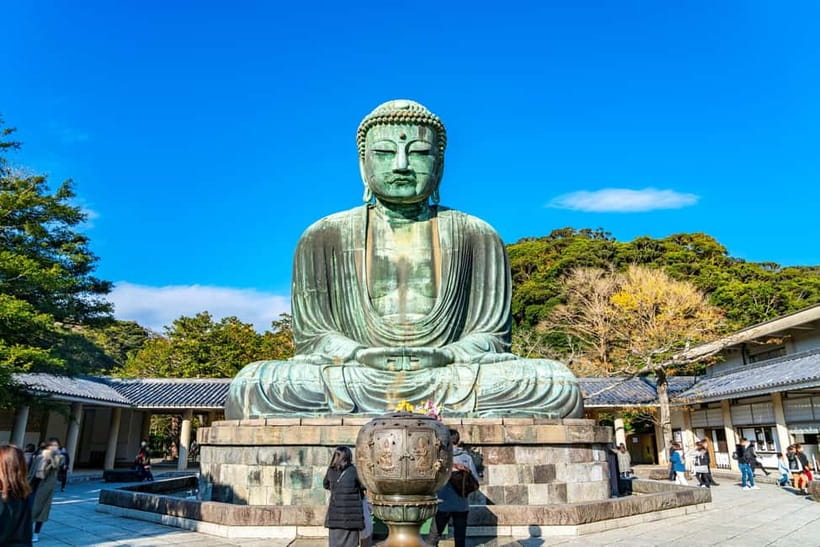
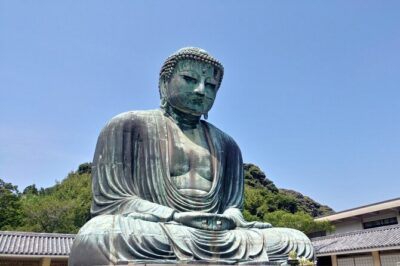
The first major stop is Kotoku-in, home of the Great Buddha of Kamakura. The bronze figure rises 13.5 meters, roughly the height of a four-story building, and is treated as a national treasure.
The statue originally had a covering of gold leaf. After about 750 years of earthquakes, typhoons, and exposure, its surface has taken on the familiar greenish copper patina. That weathered finish gives the figure its visual power. You are looking at a work that has survived repeated natural forces, not a modern recreation built to look old.
I recommend taking a moment to look beyond the standard front-facing photo. Notice the scale of the figure against the surrounding temple grounds, then walk around to appreciate its shape and surface. The visit is not only about size. It is also a quick lesson in how Japanese religious monuments change over time.
For an additional 50 yen, paid on site, you can enter the Great Buddha. The interior visit is brief, but it gives you a closer look at the construction and lets you read about how the statue was made. If you are interested in engineering or religious art, the small fee is worth considering.
The schedule may not allow as much time here as you want. A first visit can easily turn into a longer stop once you begin looking closely at the statue and temple grounds, so keep an eye on the meeting time.
Enoshima’s sea views, food streets, and shrine
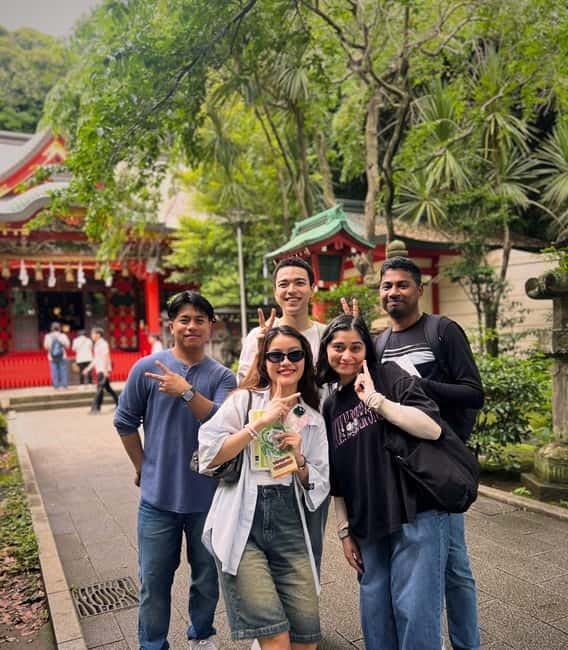
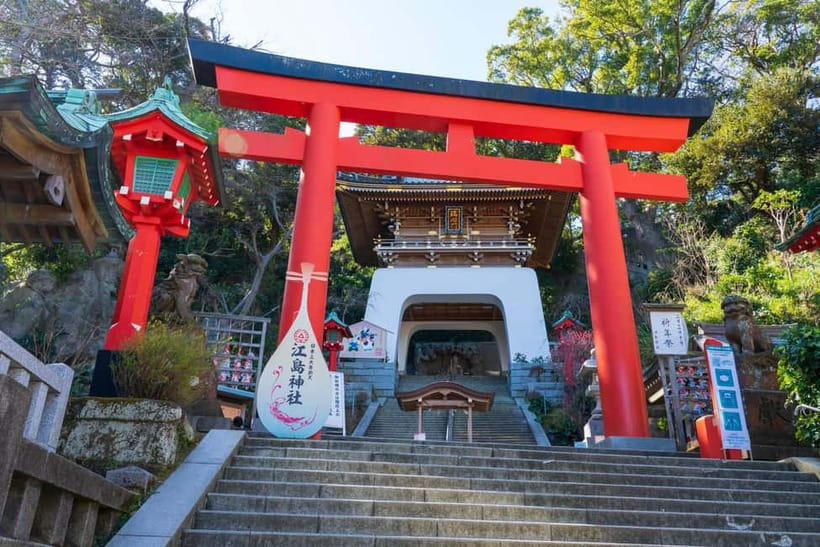
From Kamakura, the tour continues to Enoshima. This small island area is known for its coastal setting, shrines, shops, and views across the water. You can use the time for local food, souvenirs, or a walk along Nakamise-dori, the lively approach to Enoshima Shrine.
Nakamise-dori is a practical place to sample something or browse before continuing. The street leads toward the shrine, so you can combine shopping with the route rather than making a separate detour. The exact food choices are not fixed, but the area is designed for casual browsing and snacks.
Enoshima Shrine is linked with three sister goddesses associated with the sea, water, good luck, finance, and the arts. That mix of religious themes helps explain why the shrine attracts more than worshippers. You will see people visiting for blessings, photos, and the island’s setting.
This is one point where the timetable matters most. You may have enough time for the shrine approach and a snack, but not enough to reach every viewpoint. One particularly important limitation is the observation lighthouse. The supplied schedule does not guarantee time to visit it, and a previous guest specifically wished for more time to see the ocean and reach the lighthouse.
So I would set your expectations correctly. Treat Enoshima as a taste of the island, not a full island exploration. If sea views are your top priority, stay focused and do not spend the entire stop in the shops.
Riding the Enoden beside the coast
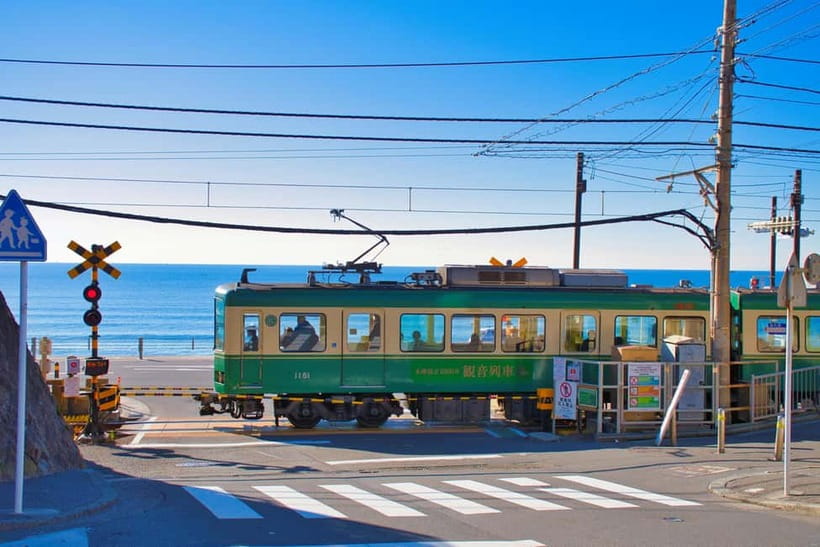
The Enoshima Electric Railway is one of the most appealing parts of the outing. You ride a small, retro one-car train along the coast, trading the enclosed feeling of a tour vehicle for a short stretch of local rail travel.
The route gives you a different view of the area. You may see the glittering ocean, and on a clear day you might catch Mount Fuji on the far side of the water. The famous railroad crossing associated with the anime Slam Dunk is another possible sight along the route.
These details are weather and timing dependent, so I would not treat them as guaranteed photo stops. That uncertainty is part of the charm. The Enoden is still worthwhile even if clouds hide Mount Fuji or you do not get the perfect crossing photograph.
The train also breaks up the day. A full-day excursion with several bus transfers can feel overly controlled, but this short ride gives you a genuine public-transit experience. It is a small detail, yet it helps connect the major attractions into a place that people actually live in.
Tsurugaoka Hachimangu and Kamakura’s samurai past
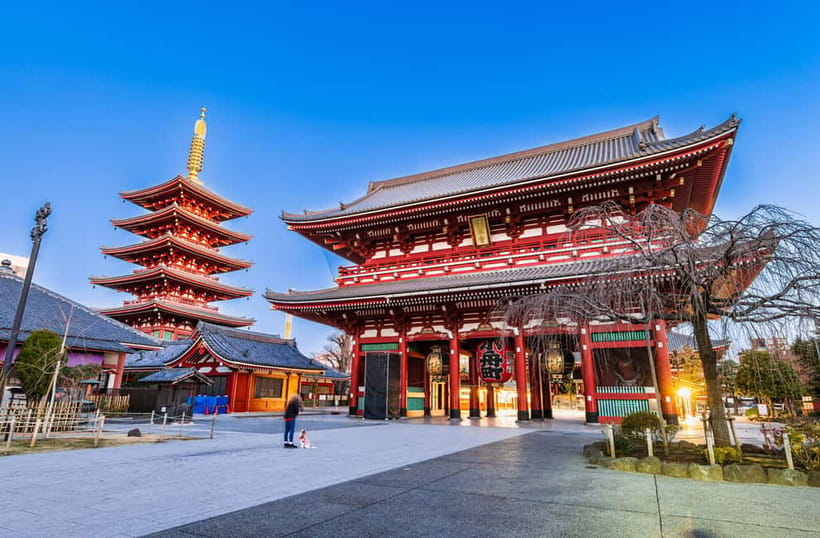
The next major Kamakura stop is Tsurugaoka Hachimangu Shrine, an important Shinto site founded more than 800 years ago during the Kamakura Period. The city was once the home base of Japan’s samurai government, and this shrine remains one of the clearest places to connect the modern town with that warrior era.
The shrine grounds give you a calmer pause after the busy shopping street and train ride. Look for the Japanese pond and garden, then take in the long approaches and traditional buildings. You are not just checking off another shrine. You are seeing a place tied to the political and military power that made Kamakura important.
Tsurugaoka Hachimangu also continues its connection with samurai culture through Yabusame, a horseback archery ritual. The tour does not promise that a ceremony will take place during your visit, but knowing about it adds meaning to the site.
This is where a guide can help most. The tour is offered in English or Japanese, and the guides are there to explain the stops. Still, the amount of narration may vary. One small group had a guide who was kind and patient, but limited English made longer conversations difficult. Another guest wanted more historical background and landmark information.
If you want a detailed lecture at every stop, this may not satisfy you. If you want a basic framework plus time to look around independently, the balance may work well.
Asakusa, Sensoji, and the Nakamise-dori finish
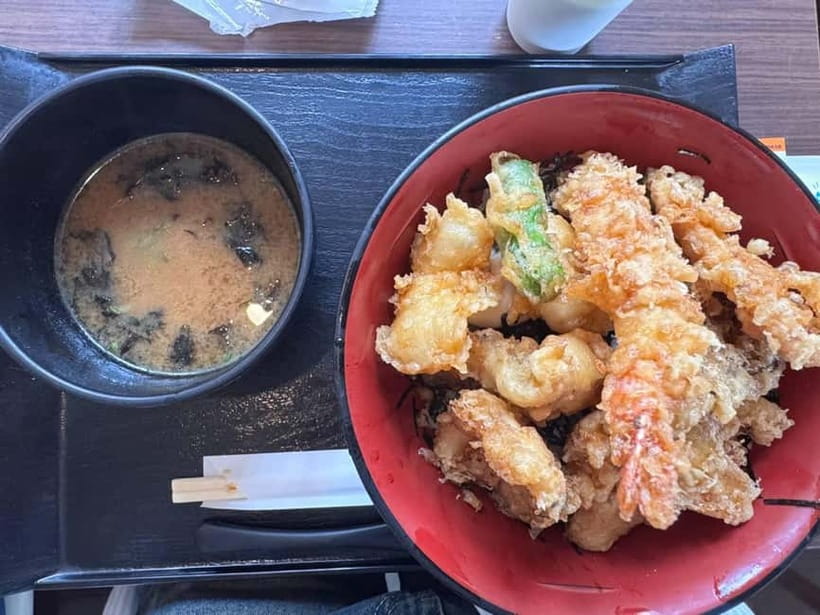
After Kamakura, the tour returns to Tokyo for Asakusa. This district offers a sharp change from the coastal and shrine settings of the morning. Its appeal is old-fashioned Tokyo: temple gates, traditional architecture, food stalls, souvenir shops, and busy pedestrian streets.
Start at Kaminari-mon, the famous Thunder Gate, then follow Nakamise-dori toward Sensoji. The shopping street is a useful place for small gifts and snacks, while Sensoji gives the area its religious focus. From the temple grounds, Tokyo Skytree can be seen in the distance, creating a clear contrast between old temple forms and the modern city.
I like having Asakusa near the end of the day because it is easy to understand even when you are tired. The route is visually clear, and you can spend your free time shopping, taking photographs, or simply watching the flow of people around the temple.
You can choose to remain in Asakusa instead of continuing with the group. That option is valuable if you want more time for the temple district, dinner, or nearby shopping. If you join the group, the tour continues toward Shibuya, with a Tokyo Metro ticket from Asakusa included.
Shibuya Crossing closes the day
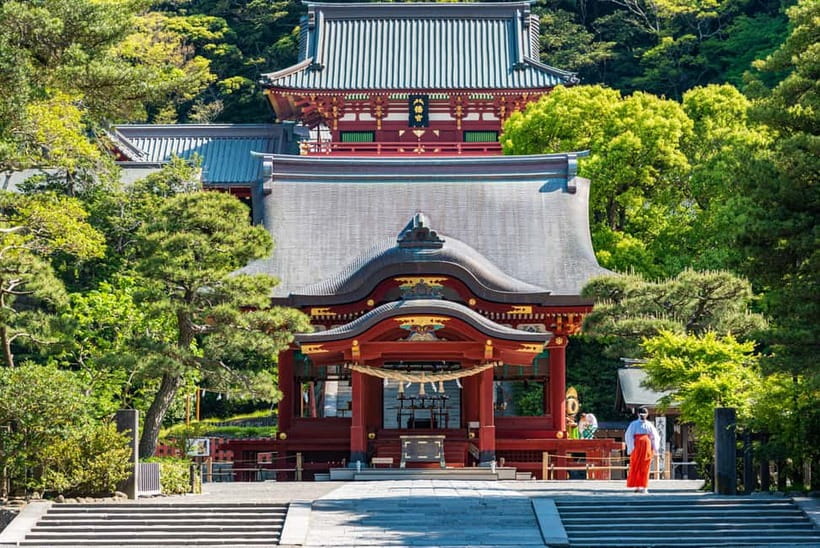
The final city highlight is Shibuya Crossing, one of Tokyo’s best-known modern scenes. After a day of bronze statues, shrine gardens, coastal rail, and temple streets, Shibuya gives you the bright, fast-moving city image many people associate with Tokyo.
The group disbands in Shibuya according to the route description, although the meeting information also says the activity ends back at the meeting point. Because those details do not fully match, confirm the exact end arrangement when you book. In practical terms, you should be prepared for the planned finish to be in Shibuya if you join that final segment.
This is not a guided Shibuya sightseeing program. Think of it as a convenient endpoint where you can continue your evening independently.
Walking, lunch, language, and group comfort
You will walk a lot. The day includes temple and shrine grounds, shopping streets, station transfers, and outdoor sightseeing. Wear shoes that you can use comfortably for hours, and bring water. The tour operates in rain unless severe weather prevents it, so a light rain layer is sensible.
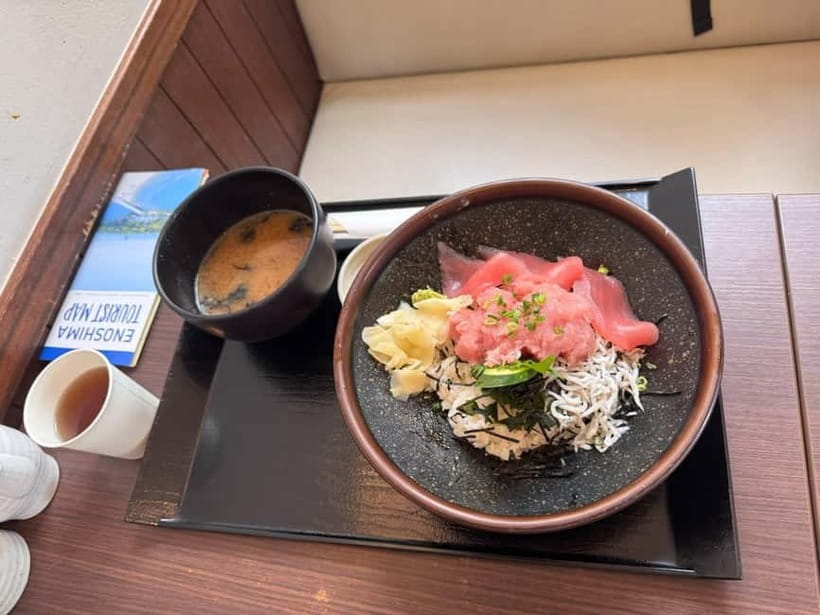
Lunch is optional rather than automatically included. If you select the lunch option, the meal is described as delicious and filling by one participant, but no detailed menu is provided. If you do not select lunch, plan your own food budget around Enoshima or another stop.
The tour runs in English and Japanese. Guide quality can vary by language ability and group size. Most feedback was strongly positive about helpfulness, planning, and communication, but two people wanted more explanation of the landmarks. I would book this tour for transport and coverage first, with historical commentary as a useful extra rather than the main product.
The group size can also affect the experience. One small departure had only a single booking party, which allowed plenty of free time and personal attention. You should not assume every departure will be that quiet, but the vehicle and format can change with the number of participants.
Who should book this $75 tour?
I would choose this tour if you want to see Kamakura and Enoshima but do not want to manage the route yourself. It suits first-time visitors, families who prefer organized transport, and anyone with one open day in Tokyo who wants both coastal scenery and historic sites.
It is also a good fit if you appreciate free time. Several stops leave room to explore on your own rather than keeping you beside the guide every minute. That freedom lets you buy a snack in Enoshima, linger at Sensoji, or focus on photographs.
I would hesitate if your priority is a slow visit. Enoshima may feel rushed, the Great Buddha stop may be shorter than ideal, and the day covers enough ground that you will be tired by Shibuya. Independent visitors can spend longer at the lighthouse, temples, or Kamakura’s other sights.
For $75, the value is strongest when you count the included transport, the Enoden ride, the Great Buddha admission, and the convenience of returning to Tokyo. Lunch costs extra, hotel transport is not included, and the guide’s historical detail may be lighter than some people expect.
FAQ
Where does the tour begin?
Meet at the Shinjuku Center Building, near the red brick entrance in front of a taller white building. It is about a seven-minute walk from JR Shinjuku Station.
What time should I arrive?
The meeting time is 7:30, and the vehicle departs strictly at 7:40. Look for LIMON staff wearing a yellow jacket, vest, or shirt.
Is hotel pickup included?
No. Hotel pickup and drop-off are not included.
What languages are available?
The tour is offered in English and Japanese.
Is lunch included?
Lunch is included only if you select the lunch option when booking.
Can I enter the Great Buddha?
Yes. Entry inside the statue costs an additional 50 yen, paid on site.
Where does the tour finish?
You can remain in Asakusa, or join the group toward Shibuya. The route description says the group disbands in Shibuya, while the meeting information says the activity ends back at the meeting point, so confirm the final arrangement before departure.
Should you book it?
Book this tour if you want a well-organized one-day introduction to Kamakura, Enoshima, and two very different Tokyo districts. The clean transport, Enoden ticket, free time, and strong mix of sights make the $75 cost fair.
Skip it if you want extensive time at Enoshima’s lighthouse, long quiet visits at each shrine, or detailed historical teaching at every stop. For most visitors with limited time, though, this is a smart way to leave central Tokyo, see the Great Buddha and samurai-era Kamakura, and return to the city with both traditional and modern Tokyo in one day.
More Kamakura & Enoshima Day Trips in Fujisawa
More tours in Fujisawa we've reviewed
Kamakura & Enoshima Day Trips, compared.
 ★ 4.5Tokyo: Kamakura & Enoshima Day Trip including Temple TicketsFrom $589 hours - 570 minutes
 ★ 4.5Tokyo: Mt. Fuji, Kamakura, Big Buddha, & Lake Ashi Day TripFrom $4910 - 11 hours
 ★ 4.5From Tokyo: Kamakura & Enoshima 1-Day Bus TourFrom $66
 ★ 5.0Kamakura Historical Walking Tour with the Great BuddhaFrom $98
 ★ 5.0Kamakura Private Tour: Temples, Nature, and the Great BuddhaFrom $98
 ★ 5.0Kamakura Walking Tour – The City of ShogunFrom $35