
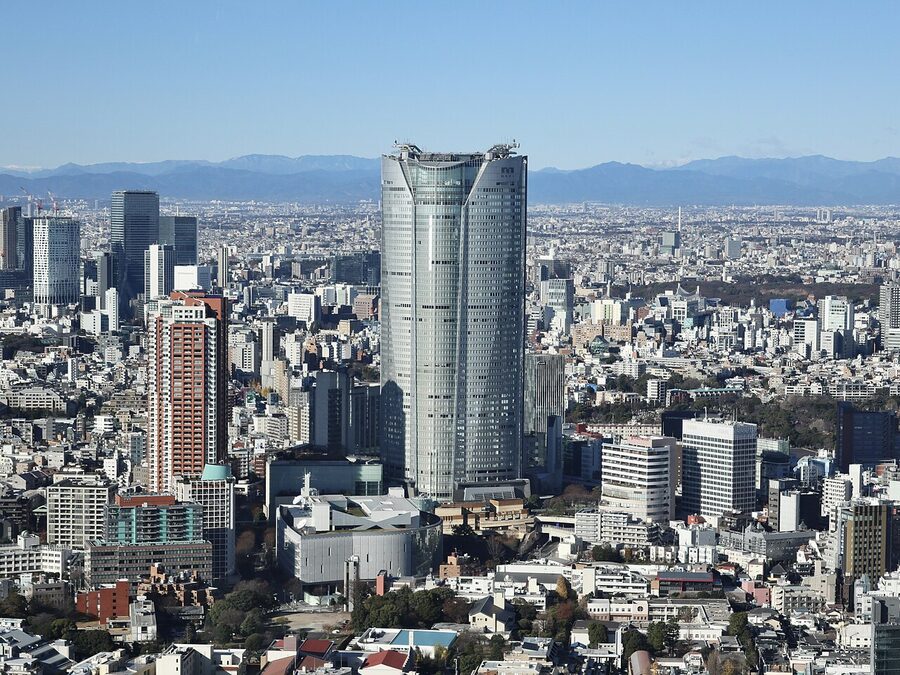
Most English-language guidebooks published before about 2012 described Roppongi as a foreigner-focused nightlife district. The same guidebooks told you to avoid the area after dark. Much has changed. Roppongi is now the single densest art-museum district in Tokyo, home to three major institutions, a sculpture garden that doubles as a working plaza, and Tokyo’s biggest digital-art attraction since teamLab Borderless moved here in February 2024. The late-night clubs are still going. They’re just no longer the only reason to come.

In This Article
- The reputation reset
- Getting to Roppongi
- The Art Triangle Roppongi
- Mori Art Museum
- The National Art Center, Tokyo (NACT)
- Suntory Museum of Art
- Roppongi Hills
- Tokyo City View and the Sky Deck
- Maman, the 9-metre spider
- Tokyo Midtown
- 21_21 Design Sight
- Billboard Live and the Ritz-Carlton bar
- Azabudai Hills (the newest one)
- teamLab Borderless
- The gardens and plaza
- Nightlife, honestly
- Azabu-Juban, the quieter neighbour
- Where to eat in Roppongi
- What I’d skip
- The Tokyo Tower connection
- Practical info
- Three ways to plan your time
- 1. Art Triangle one-day circuit
- 2. Skip-the-queue Tokyo City View
- 3. Azabu-Juban dinner walk
- How I’d do half a day in Roppongi
The reputation reset
I’ll admit I came to Roppongi the first time with low expectations. Every forum thread I’d read made it sound like the place to avoid — loud, grim, sketchy. The reality on a Tuesday afternoon in March was a pedestrian plaza with schoolchildren sketching a 9-metre spider sculpture, a line outside the National Art Center cafe, and signs everywhere for a Rothko retrospective. Not what I was braced for.
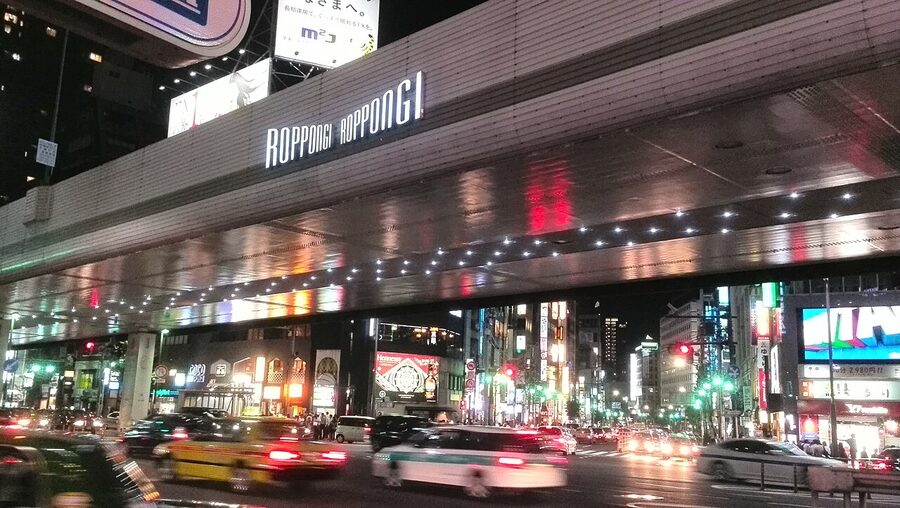
The 20-year-old warnings came from a real place. In the 1980s and 1990s Roppongi was the expat nightlife centre, full of hostess bars and dubious clubs. A few of those still exist around Roppongi Crossing. But the district was rebuilt, almost wholesale, between 2003 and 2007. Roppongi Hills opened in 2003. Tokyo Midtown followed in 2007. The National Art Center opened the same year. Three massive developments redrew the street plan and dropped three world-class museums within walking distance of each other. Then in 2023 the even bigger Azabudai Hills opened ten minutes south, and teamLab moved there in early 2024.
So: the old Roppongi is still there if you want it. The new Roppongi is a contemporary-art district with good restaurants. Both can be visited in one afternoon. Most first-timers skip the district entirely because of stale advice, and I think that’s a mistake.
Getting to Roppongi
Three subway stations serve the area, and which one you pick matters for what you’re doing first.
- Roppongi Station (Hibiya Line + Toei Oedo Line) — the main one. Exit 1C puts you at the foot of Roppongi Hills. Exit 3 goes towards Tokyo Midtown. About 10 minutes from Shinjuku on the Oedo Line, 15 minutes from Tokyo Station via Kasumigaseki.
- Nogizaka Station (Chiyoda Line) — Exit 6 has direct access to the National Art Center. If the art triangle is your main goal, start here.
- Roppongi-Itchome Station (Namboku Line) — handy for Izumi Garden Tower and the north end of the district. Less useful if you’re doing the main sights.
Walking between Roppongi Hills, Tokyo Midtown and the National Art Center takes 8 to 15 minutes in any direction. The routes are well signposted, flat, and — once you’re inside the complexes — mostly covered. I’ve walked the full triangle in the rain without getting wet for more than a minute at a time.

The Art Triangle Roppongi
The three museums that anchor Roppongi are collectively branded the Art Triangle Roppongi, or ATRo for short, since 2007. Keep your ticket stub from the first museum — you get a discount at the other two (¥200 off at Mori, ¥100 off at Suntory, variable at NACT). If you want to do all three, buy a Grutto Pass (¥2,500) which covers 107 museums around Tokyo for two months — it pays for itself before you leave Roppongi.
Mori Art Museum
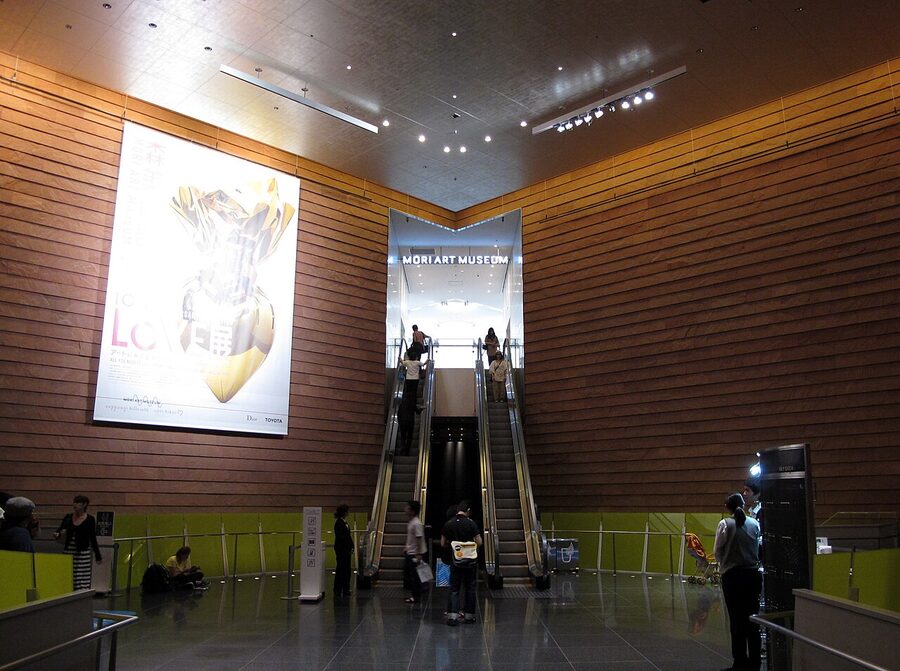

The Mori Art Museum sits on the 53rd floor of Roppongi Hills’ Mori Tower, which is an odd place for a museum and turns out to be the best idea in Tokyo. Exhibitions are contemporary — Takashi Murakami, Ai Weiwei, Theaster Gates, Lee Ufan — and the galleries curl around the central lift core, so the whole visit is a slow spiral. The ticket usually includes access to the Tokyo City View observation deck on floor 52, which means you can leave a retrospective, walk twenty paces, and be looking down at Tokyo Tower from above.
Opening hours are the unusual part. Most days, the Mori Art Museum is open until 22:00 — last admission 21:30. I don’t know of another major museum in Tokyo that stays open that late. It makes a late-afternoon visit perfect: arrive at 17:00, look at the exhibition, then watch the city switch from daylight to neon from the observation deck without moving between buildings.
- Hours: Wed-Mon 10:00-22:00 (Tue 10:00-17:00)
- Tickets: ¥2,300 weekdays, ¥2,500 weekends, ¥200 online discount
- Access: Roppongi Station Exit 1C, 3 minutes through the Roppongi Hills concourse
- Website: mori.art.museum
The National Art Center, Tokyo (NACT)
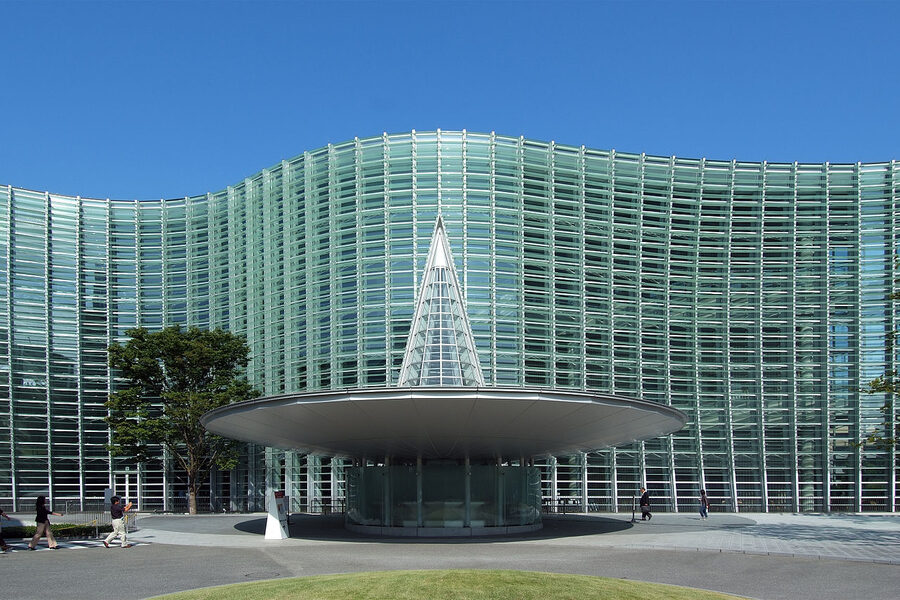

NACT is the strangest of the three because it has no permanent collection. That sounds like a limitation and in practice becomes the point — every visit shows something completely different. It runs on the German Kunsthalle model: rotating exhibitions put together by external institutions (the Japan Artists Association, embassies, international biennales) fill its 14,000 square metres of gallery space.
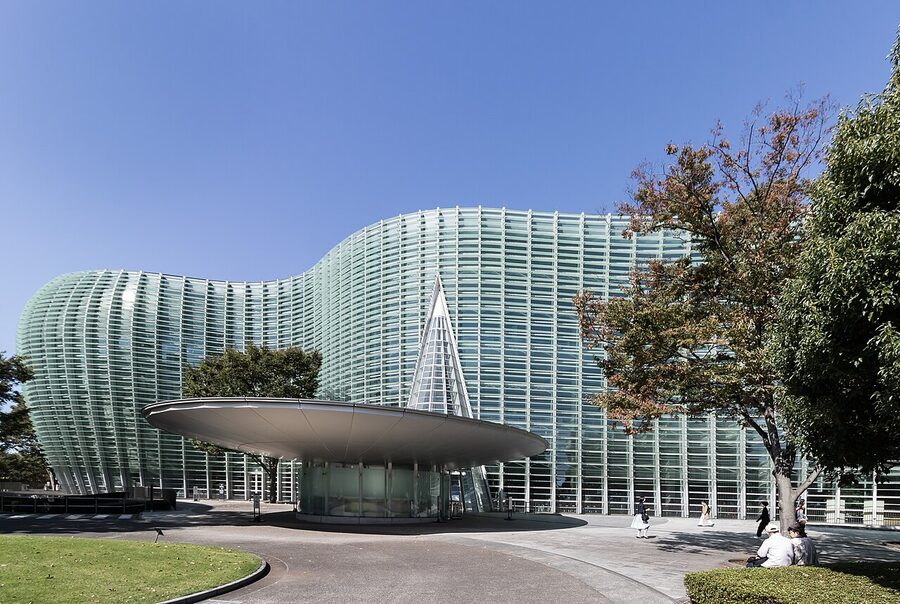
The building itself is arguably more famous than any exhibition it has ever held. Kisho Kurokawa, the late Metabolist architect (also responsible for the Nakagin Capsule Tower), finished it in 2007. The wave-like glass facade runs the full length of the building — at sunset the light splashes across the undulation in a way that’s hard to photograph and easy to stand staring at. Inside, two enormous inverted concrete cones hold up the atrium roof; a restaurant perches on top of the taller one like a teacup on a chopstick. Entry to the building itself is free. Special exhibitions are ticketed (usually ¥1,500-2,000).

- Hours: Wed-Mon 10:00-18:00 (Fri-Sat until 20:00 during exhibitions)
- Tickets: Building free; exhibition prices vary
- Access: Nogizaka Station Exit 6 (direct), or Roppongi Station Exit 7, 5 minutes
- Website: nact.jp
Suntory Museum of Art
The third point of the triangle lives on the third floor of Tokyo Midtown’s Galleria building. Of the three, it’s the quietest and the most Japanese-focused. The Suntory Museum of Art collects traditional crafts — lacquerware, ceramics, textiles, folding screens — and presents them in rotating thematic exhibitions. Some pieces are designated national treasures. Kengo Kuma did the interior, which is all warm wood, paper, and careful lighting. If Mori is loud and NACT is vast, Suntory is a whisper.
Entry to Tokyo Midtown itself is always free — you can wander the shops, the food floor, and the underground passages without paying anything. The museum ticket runs ¥1,500-1,800 depending on the exhibition. There’s a tea ceremony space that runs on select afternoons. Book ahead for those.
- Hours: Wed-Mon 10:00-18:00 (Fri-Sat until 20:00)
- Tickets: ¥1,500-1,800 (varies by exhibition)
- Access: Roppongi Station Exit 8, 1 minute; or Nogizaka Station, 3 minutes
- Website: suntory.com/sma
Roppongi Hills
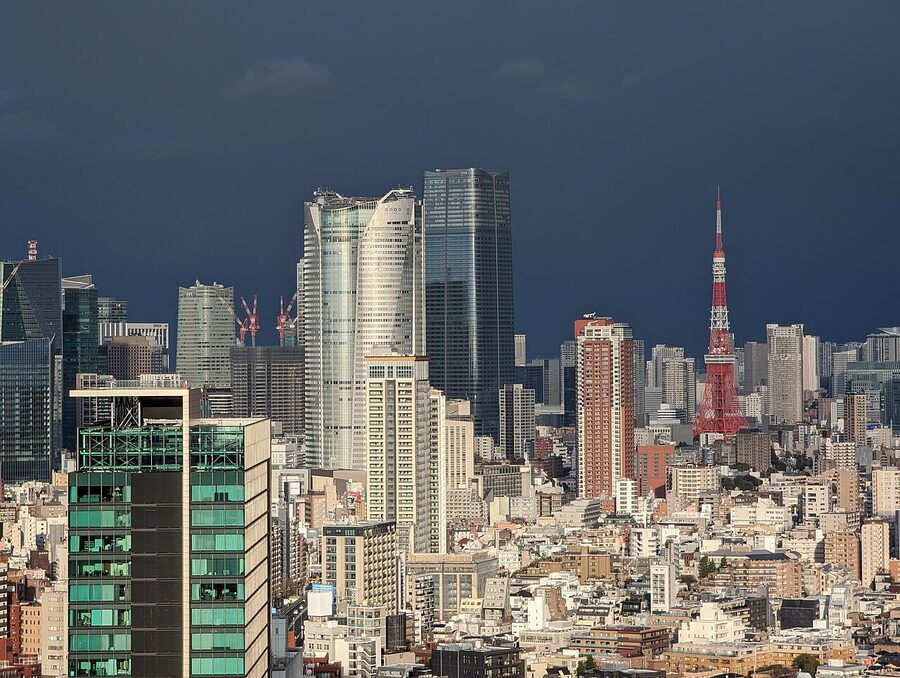

Roppongi Hills opened in 2003 as the first of Minoru Mori’s “vertical city” projects, and it’s still the template every developer in Japan copies. Mori Tower is the main building, 238 metres tall, and packs residential floors, offices, retail, a cinema (Toho Cinemas with the biggest IMAX in Tokyo), the Mori Art Museum, and the Tokyo City View observation deck into a single structure. The low-rise areas around it host shops, cafes and the Grand Hyatt Tokyo hotel.
Tokyo City View and the Sky Deck
The Tokyo City View observation deck on the 52nd floor is normally included with a Mori Art Museum ticket — buy one and you get both. That makes it the best-value observation deck in Tokyo if you like even a little bit of art. Entry to just the deck is ¥2,200 (¥1,800 online). On clear days you can see Fuji from the west-facing window.
Go up one more level — via an exit near the museum café — and you reach the Sky Deck on the 54th floor. This is an outdoor rooftop, open to the sky, no glass. ¥500 extra. The view is the same as the 52nd floor but with actual wind on your face, and you can see Tokyo Tower sparkling below you at night. The Sky Deck closes in bad weather and is sometimes shut for events — I’ve turned up and been turned away twice, so check the morning of.
Maman, the 9-metre spider
.jpg)
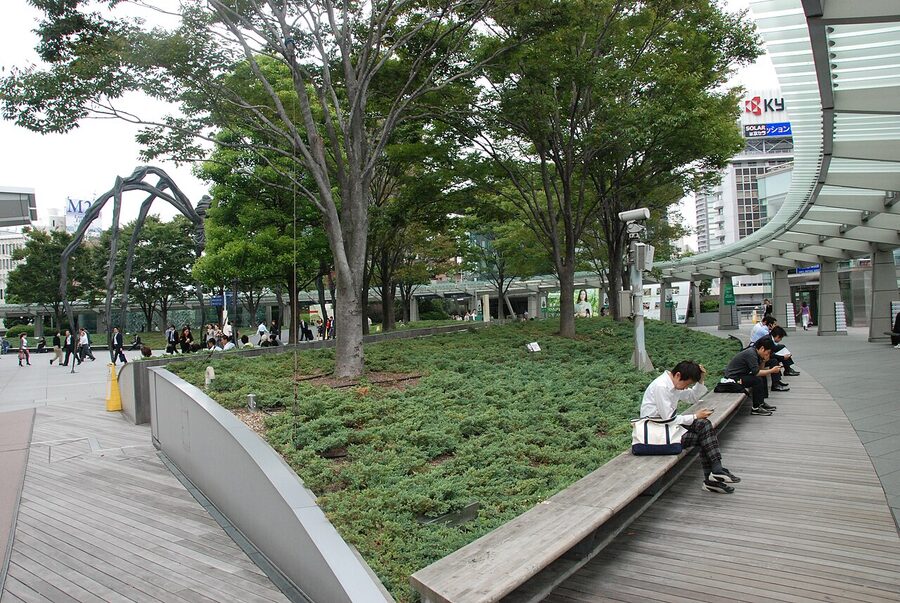
The bronze-and-steel spider in the plaza at the base of Mori Tower is Louise Bourgeois’ Maman. It’s 9 metres tall, and if you stand directly underneath and look up you can see 26 marble eggs tucked under the abdomen. Bourgeois made the piece as a tribute to her mother, who was a weaver — the spider-as-mother motif runs through most of her late work.
Here’s the detail almost no one notices: there are only six cast versions of Maman in the world. The others live in Ottawa, London (outside Tate Modern before it went on tour), Bilbao, Seoul, and Doha. The Roppongi one is the only one in Asia that stays put year-round. It’s a 10-minute detour if you’re already in Roppongi Hills, and it’s free to visit — which is why there’s almost always a queue to pose for a photo underneath it.
My honest opinion: shoot it from the edge of Roku Roku Plaza, not underneath. The distance makes the scale more obvious, and you skip the queue entirely. Early morning (before 10:00) there’s no one around at all.
Tokyo Midtown
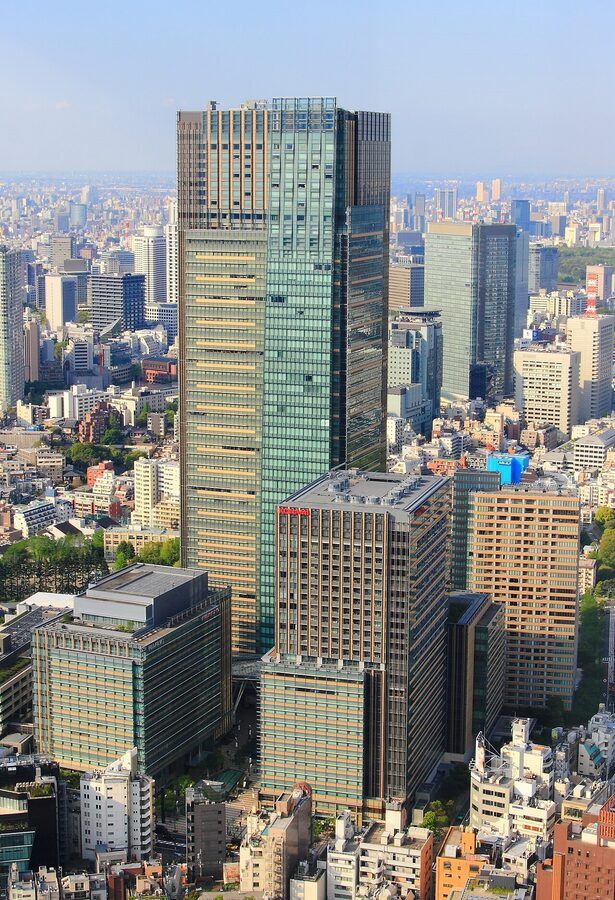

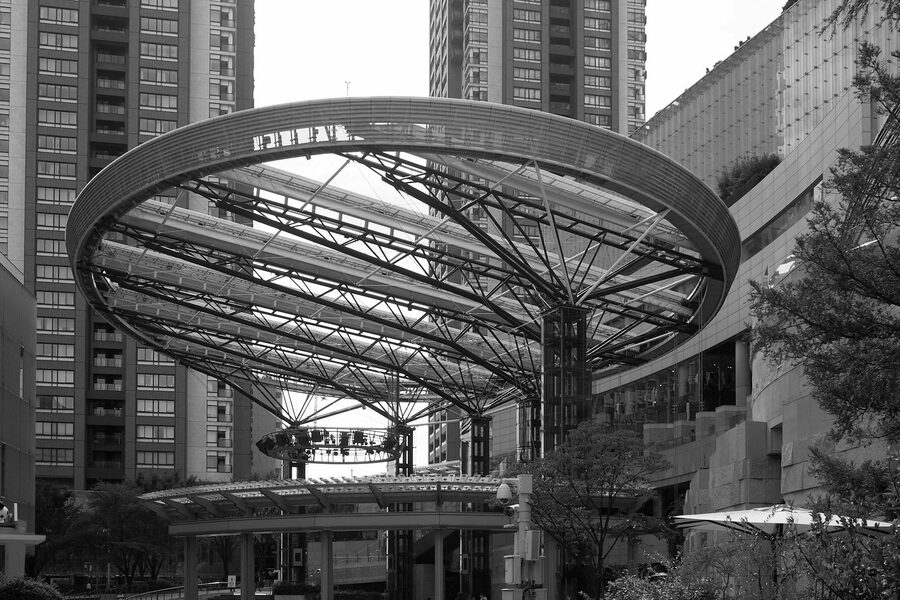
Tokyo Midtown is the 2007 answer to Roppongi Hills, 400 metres north-west, and arguably the more civilised of the two. The 248-metre Midtown Tower was Tokyo’s tallest building for seven years. The top floors (45-53) house the Ritz-Carlton Tokyo, which has the Michelin-starred Héritage by Kei Kobayashi and a bar with genuinely extraordinary views. The rest of the complex is shops, offices, a park, and — my favourite part — 21_21 Design Sight.
21_21 Design Sight
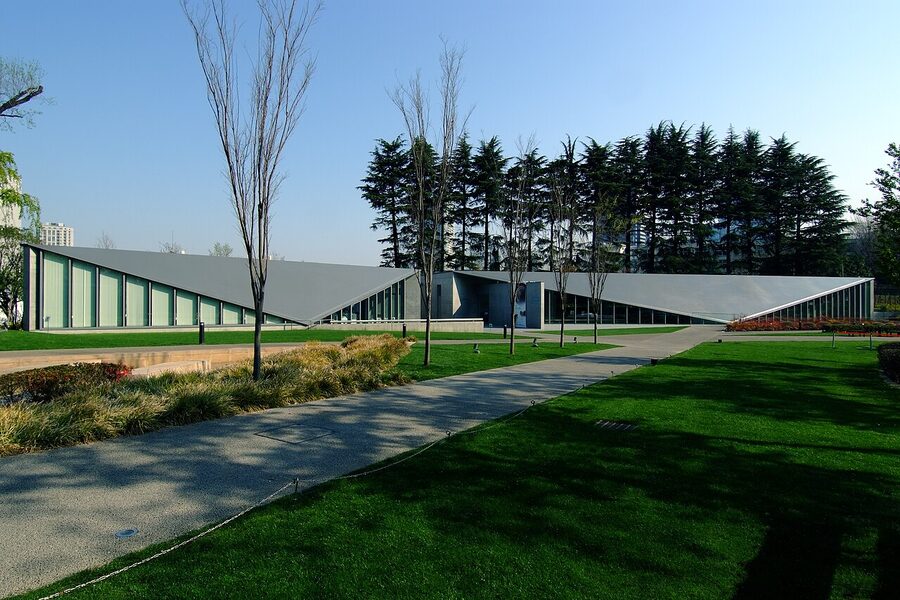

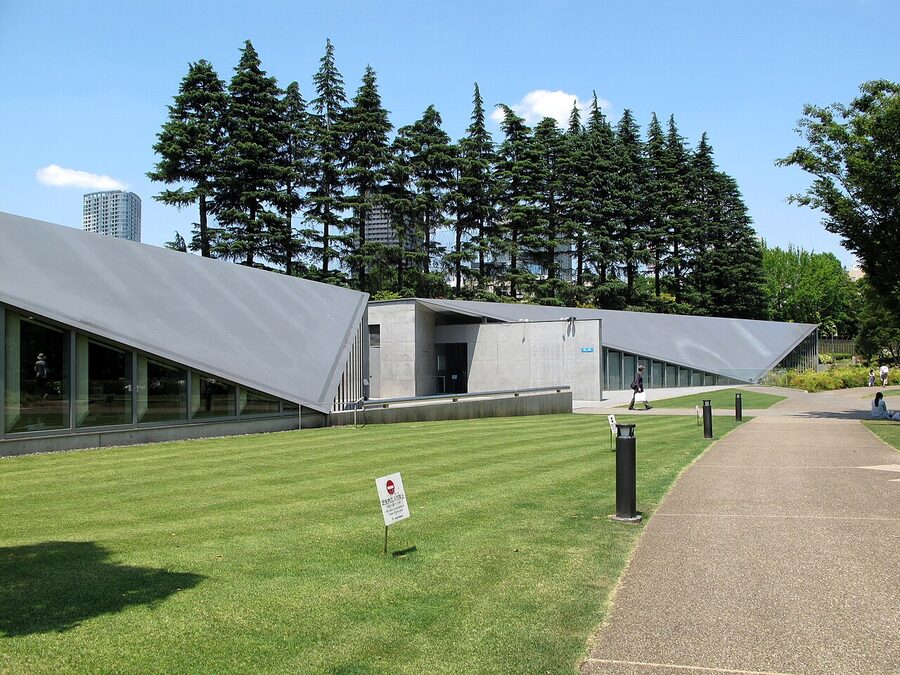
21_21 Design Sight is Issey Miyake’s design museum and one of Tadao Ando’s more mischievous buildings. From outside it looks tiny — two folded steel triangles emerging from the grass like two pieces of paper pressed into the ground. That’s because two-thirds of the building is buried. Ando designed the concrete spaces below like an inverted iceberg, with a skylit well down the middle. The name is a reference to the fashion term “20/20 vision” pushed one better.
Exhibitions rotate every few months and tend to focus on a single design question — “how do we make chairs?”, “what is colour?”, “what happens when it rains?”. They’re accessible in a way fine-art shows often aren’t. ¥1,400 entry, less for students. It’s in the grounds of Tokyo Midtown on the west side — walk through the garden past the Hinokicho Park area.

Billboard Live and the Ritz-Carlton bar
On the 4th floor of the Midtown’s Garden side, Billboard Live Tokyo is one of the better small jazz venues in the city. Most nights have two shows (19:00 and 21:30), and the artists range from touring US names to Japanese pianists you haven’t heard of and should have. Tickets run ¥8,000-16,000. You get a table and a small menu; the sound is excellent and the sightlines are better than at most blues clubs.
If you want the view without the cover charge, the Lobby Lounge bar at the Ritz-Carlton on the 45th floor lets anyone in. A cocktail runs ¥2,500-3,500 but the window seats look out over the Imperial Palace grounds. Dress smart-casual. They turn no one away but they also don’t reserve — arrive before 19:00 for a window seat.
Azabudai Hills (the newest one)
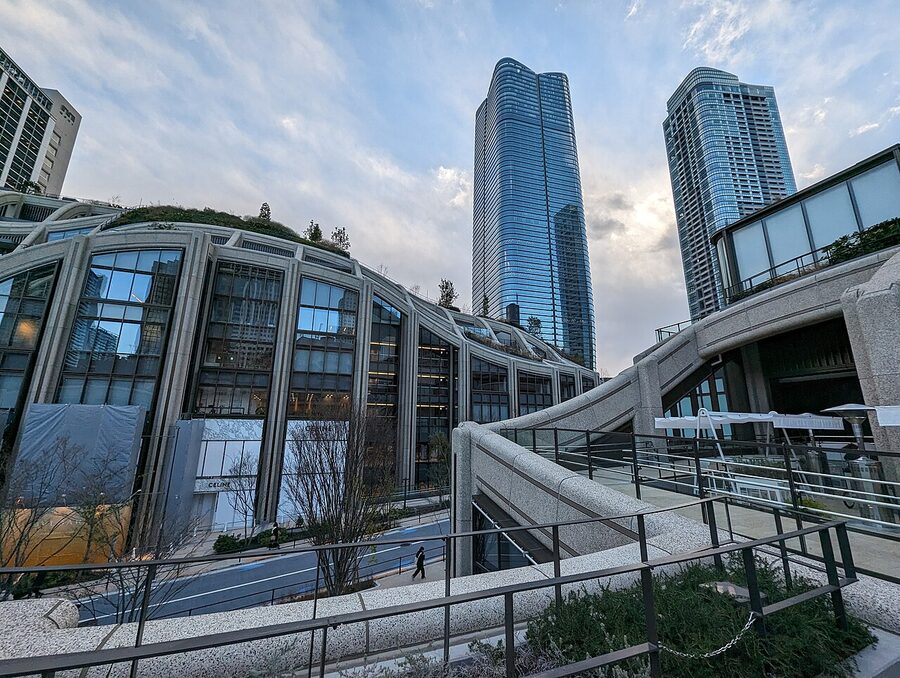

Azabudai Hills isn’t technically Roppongi — it’s about 10 minutes south, closer to Kamiyacho Station — but every local treats it as part of the same district. It opened in November 2023. At 330 metres, the main tower (Mori JP Tower) is currently the tallest building in Tokyo. The low-rise buildings with their curving white facades are by Thomas Heatherwick’s studio. Above, Aman Tokyo residences; below, a food hall, restaurants, gardens with installations by Olafur Eliasson.
teamLab Borderless
The headline attraction here is teamLab Borderless, which moved from Odaiba in February 2024 and took up residence in the Azabudai Hills basement. If you’ve heard of it you know the deal: rooms of immersive digital art, flowers that bloom around your feet as you walk, waterfalls down walls, forests of light where the artwork reacts to where you stand. It’s the most-photographed art installation in Japan.
Tickets are timed and must be booked in advance online — ¥3,800-4,400 depending on day. Don’t show up hoping to walk in; people do and they always get turned away. Allow three hours. Wear clothes you don’t mind kneeling on the floor in — most of the rooms involve lying down to see something, and the floors are spotless but dark. Book via the official teamLab site.
The gardens and plaza
The central gardens at Azabudai are public and free. Olafur Eliasson’s large sculpture A sensitive ensemble of forms sits in the main plaza, and the layout flows down a gentle slope toward Tokyo Tower. I like it as a picnic spot — grab lunch from the food hall (Akasaka Kikunoi has a to-go bento counter, ¥1,800) and sit on one of the stepped concrete platforms.
Nightlife, honestly
If you asked me whether Roppongi at night is safe, the answer is yes, absolutely. I’ve walked from Roppongi Crossing back to Hibiya Line at 1am alone and been fine. The hostess-bar touts still exist on the side streets — mostly African or Middle Eastern men with laminated menus, handing out flyers. Just say no, keep walking, don’t follow anyone anywhere. That’s the full protocol. It’s very rare for anything to happen beyond persistent pitching.
What Roppongi is, at night, has changed. The big foreigner-focused clubs are still there — V2 Tokyo, 1 OAK, ESPRIT — but they share the streets now with Japanese izakayas, craft sake bars, and jazz venues. A few recommendations from actual research, not my own attempts to stay up late:
- Billboard Live Tokyo (covered above) — top jazz venue
- Gen Yamamoto — an 8-seat cocktail bar in Azabu-Juban, five-cocktail tasting menu of seasonal Japanese ingredients, ¥8,000. Book weeks ahead.
- Tokyo Whisky Library — 1,100 whiskies on the wall in Minami-Aoyama, a 10-minute walk from Roppongi Crossing. Members-only on paper, but they accept walk-ins if there’s space.
- The Pink Cow — longtime expat institution for a proper drink and a burger, uncomplicated, near Shibakoen.
My honest take: if you’re coming to Roppongi specifically for wild nightlife, you’ll have a fine time but Shibuya or Shinjuku will be better. If you’re coming for art, architecture, dinner, and a nightcap with a view, Roppongi is the best district in Tokyo for that combination.
Azabu-Juban, the quieter neighbour
Walk south from Roppongi Crossing for ten minutes and you’re in Azabu-Juban. Physically, the two are almost continuous — you barely notice the transition. Culturally, they’re different worlds. Azabu-Juban is residential and low-rise: shopping streets with small family restaurants, a few embassies behind high walls, and a cluster of old-guard restaurants that have been there since the 1950s.
For dinner, I almost always end up in Azabu-Juban over Roppongi proper. The vibe is calmer, prices are a touch lower, and the food’s better.
- Naniwaya Sohonten — taiyaki since 1909. ¥180 a piece. The queue moves fast.
- Azabu-Juban Mamegen — bean snack shop, also 100+ years old, good for edible souvenirs.
- Tofuya Ukai — kaiseki in a replica Edo-era villa, beside Tokyo Tower. ¥15,000+ but a full two-hour experience.
The Azabu-Juban Matsuri in late August is one of Tokyo’s biggest local festivals — the streets close for two days and every embassy sets up a food stall. Indian samosas next to Brazilian churrasco next to grandma’s yakisoba. It’s genuinely worth planning a visit around if your trip falls in August.
Where to eat in Roppongi
Roppongi has more Michelin stars per square kilometre than most Tokyo districts. A few I can vouch for:
- Fukamachi — tempura counter of 8 seats, Michelin two-star. Lunch is the achievable version (¥8,000); dinner books out two months ahead.
- Sushi Saito — three-star sushi, ¥40,000+ a head, famously hard to book. Usually only takes returning customers via hotel concierges. Grand Hyatt Tokyo has an allocation.
- Grand Hyatt’s The Oak Door — a very solid steakhouse if you want a quality dinner without reservations drama. ¥15,000-20,000.
- Downtown B’s Indian Kitchen — proper home-style South Indian curries, one of the best in Tokyo, around ¥2,500 a head.
- Afuri (Roppongi branch) — yuzu-shio ramen, ¥1,100. Quick, reliable, late-night open. If you want a proper ramen run-through, my full Tokyo ramen guide has it.
What I’d skip
A few things I wouldn’t bother with, by way of honest opinions:
- The selfie queue under Maman. The sculpture is great. The queue is unnecessary. Walk 30 metres back and take the wide shot.
- Hostess bars. Obvious but worth saying — the ones on Roppongi-dori marked in English as “gentlemen’s bars” run a straightforward scam: you think it’s ¥1,000 drinks, it’s actually ¥30,000 with a surcharge and they hold your passport until you pay. Never go.
- The Snoopy Museum. It left Roppongi in 2018 — the current Roppongi Museum building sometimes still comes up in outdated guides. Rotating pop-up exhibitions now, quality varies; only visit if the current show specifically interests you.
- Tokyo City View in bad weather. It’s fine if the weather is perfect. In haze it’s pointless — you pay ¥2,200 for grey. Check the morning forecast.
The Tokyo Tower connection
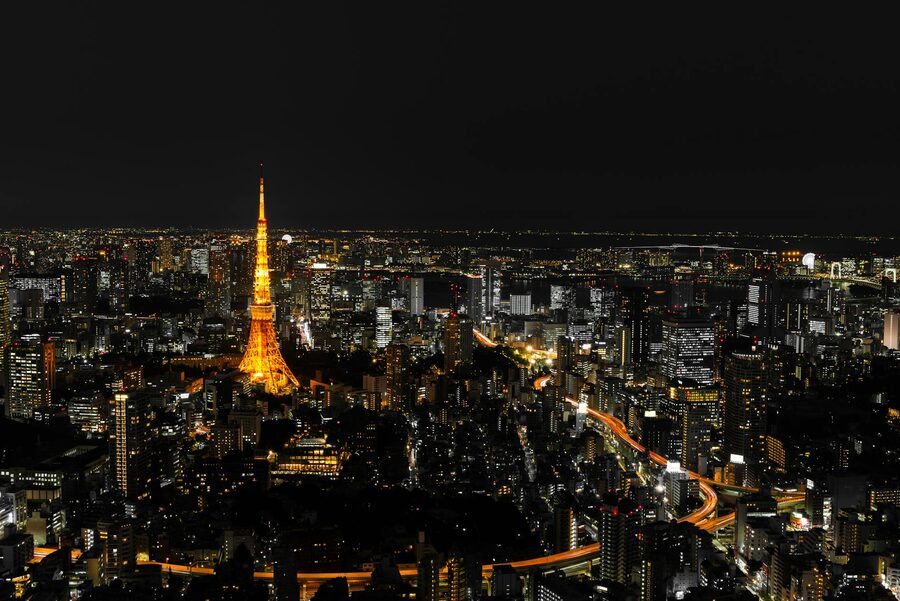
Tokyo Tower is a 15-minute walk south of Roppongi Hills, through Azabudai and Shiba Park. This is the best walk in the district. It crosses the Roppongi Hills plaza, dips through Azabudai Hills’ gardens, passes the entrance to Zojoji Temple, and ends at the foot of Tokyo Tower. If you’re doing both in one trip — and you should — walk the route, don’t take the subway. Full details on the tower itself are in my visiting Tokyo Tower guide.
Practical info
- Best time to visit: Weekdays, morning for photos and museum quiet, evening for views. Avoid Golden Week (late April/early May) and the first weekend of August when the Midtown Rugby event fills the district.
- How long to allow: Half a day for the main sights. Full day if you’re doing all three museums plus teamLab Borderless.
- Budget: ¥6,000-8,000 for three museums + observation deck + a drink at the Ritz. ¥4,000 if you skip the paid museum tickets and stick to the free atriums.
- Accessibility: All three towers are fully accessible. NACT and 21_21 Design Sight both have free wheelchairs. Roppongi Station has elevators but some exits don’t — Exit 1C of Roppongi Hills is the most accessible.
- Money: Mori Art Museum tickets are cheaper online. The Sky Deck charges cash only for the ¥500 upgrade. Most other places take IC cards or credit.
- Luggage: Coin lockers at all three complexes. Tokyo Midtown’s B1 lockers are the most reliable; Roppongi Hills’ fill up fastest.
Three ways to plan your time
Three routes, depending on what you care about.
1. Art Triangle one-day circuit
- 10:00 — Start at the National Art Center, Tokyo. Enter via Nogizaka Station Exit 6 (direct access). Spend 90 minutes on whatever exhibition is on. Have coffee in the Salon de Thé Rond on top of the big cone.
- 12:00 — Walk 8 minutes east to Tokyo Midtown. Lunch on the B1 food floor (Toraya for wagashi if you want something Japanese, Dean & DeLuca if you want a quick sandwich).
- 13:30 — Suntory Museum of Art on Midtown’s 3rd floor. 1 hour.
- 14:45 — Walk 15 minutes south-west to Roppongi Hills. See Maman in Roku Roku Plaza.
- 15:30 — Up to the Mori Art Museum on the 53rd floor. Exhibition + Tokyo City View + Sky Deck. Allow 2 hours.
- 18:00 — Dinner in Azabu-Juban, 15 minutes south.
2. Skip-the-queue Tokyo City View
- Book your Mori Art Museum ticket online the night before — saves ¥200 and skips the ticket queue.
- Arrive at Roppongi Hills Exit 1C around 17:00.
- Go straight to the Mori Art Museum entrance on the 3rd floor, take the express lift to 52F.
- See the current exhibition while it’s still daylight.
- Move to the Tokyo City View deck around 18:30 for the sunset-to-night transition.
- Take the ¥500 Sky Deck upgrade (pay on arrival at the gate on 54F) for the full open-air view.
- Return to 52F, grab a drink at Mado Lounge with the city lit up below you.
3. Azabu-Juban dinner walk
- 18:00 — Start at Roppongi Crossing.
- Walk south down Roppongi-dori, past the Grand Hyatt, down the hill.
- 18:15 — You’re in Azabu-Juban. Grab a taiyaki from Naniwaya Sohonten as a starter.
- Wander the shopping street (Azabu-Juban Shotengai) for 20 minutes.
- 19:00 — Dinner. Options: Tempura Fukamachi (if you booked), Ukai-tei for teppanyaki, or any one of the dozen small izakayas on the side streets.
- 21:00 — Walk to Tokyo Tower for the illumination, 10 minutes.
How I’d do half a day in Roppongi
If you’ve only got four or five hours and you’ve already done Shinjuku and Shibuya, here’s the condensed version I give friends. Take the Oedo Line to Roppongi Station, Exit 1C. Walk out into Roku Roku Plaza and say hello to the giant spider. Take the elevator up Mori Tower to the 53rd-floor Mori Art Museum (book online the night before). Do the exhibition in 90 minutes, then swap to the Tokyo City View observation deck next door. Do the ¥500 Sky Deck upgrade if the weather’s clear. Come back down.
Walk 10 minutes north to Tokyo Midtown. Skip the Suntory Museum this time (save it for a longer trip) and go straight to 21_21 Design Sight in the garden — 45 minutes is plenty. From there, walk 15 minutes south-west down to Azabu-Juban for an early dinner. Get a taiyaki from Naniwaya, sit down somewhere small, and then either head for Tokyo Tower (10 minutes) or call it a night on the Hibiya Line back to your hotel.
If you’re still building your Tokyo itinerary, my three-day Tokyo itinerary has Roppongi slotted as a half-day option on Day 2, and the where to stay in Tokyo guide has a section on whether Roppongi is worth basing yourself in. For nearby districts, Shibuya and Ginza are both within 15 minutes on the subway.
The single sentence I’d send to a friend about Roppongi: don’t come here for the nightlife the old guides sold you. Come for the view from the 54th floor of Mori Tower at dusk, a spider the size of a house, and a cluster of art museums no other Tokyo district can match. Dinner in Azabu-Juban after. Then home.