
Ramen arrived in Japan from China around 1910. For its first forty years in the country it wasn’t called ramen at all — it was called Shina-soba, which means Chinese noodles, and you ate it mostly in port towns and working-class neighbourhoods. The bowl of perfect tonkotsu you can buy in Shibuya tonight for ¥1,200 is not a thousand years old, or a hundred. The modern Tokyo ramen scene is barely older than the average person reading this. That short history matters more than you’d think when you’re trying to work out where to eat it.
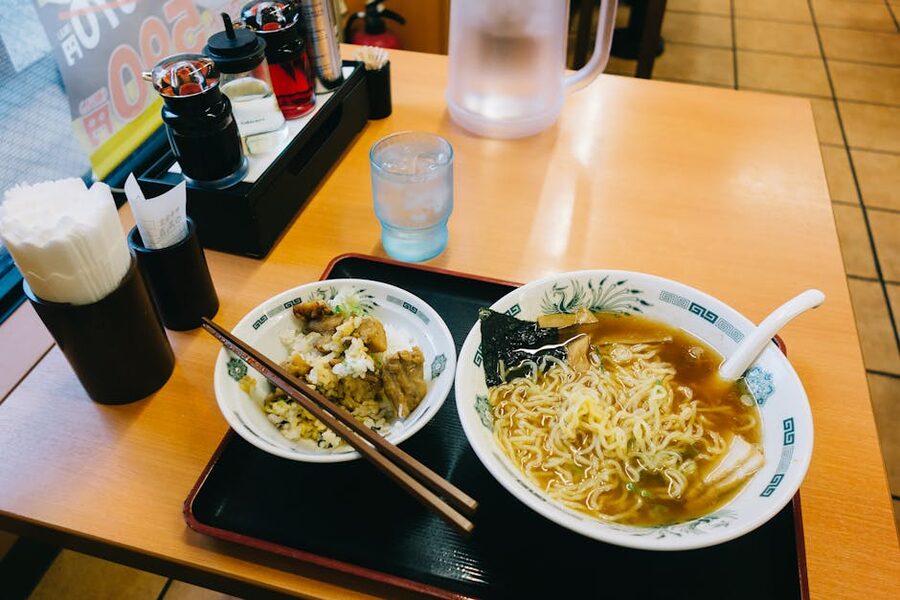
I’ve been chasing ramen around Tokyo for years now and I still occasionally wander into a 7-Eleven for an instant cup because I can’t face another 40-minute queue. That’s fine. This guide is the thing I wish I’d had the first time I arrived with a four-day plan and a list of “must try” shops scraped off Instagram. Half of them had closed. A third had moved. Two were so hyped I waited 90 minutes for ramen I could have beaten at home.
What follows is the stuff I actually use: a tight history of how ramen ended up here, the four broths you’ll see on every menu, how to read a ticket-vending machine before you’re sweating at the front of the queue, and the specific Tokyo shops worth your appetite.
In This Article
- A thirty-second history of ramen in Japan
- The four broths, and what they actually taste like
- Shoyu — soy sauce
- Shio — salt
- Miso — fermented bean paste
- Tonkotsu — pork bone
- Tsukemen, the dipping cousin
- Tokyo’s own ramen style (and the regional-ramen buffet that Tokyo now is)
- Where to actually eat it, by neighbourhood
- Shibuya and Harajuku
- Shinjuku and Ikebukuro
- Ginza, for the refined bowls
- Tokyo Station: Ramen Street
- Jiro-kei: the other ramen
- How to order at a ramen ticket-vending machine
- A few rules about eating it
- Skip these
- First-timer mistakes I made so you don’t have to
- How I’d do a Tokyo ramen crawl in an afternoon
- Practical info at a glance
- One last thing
A thirty-second history of ramen in Japan
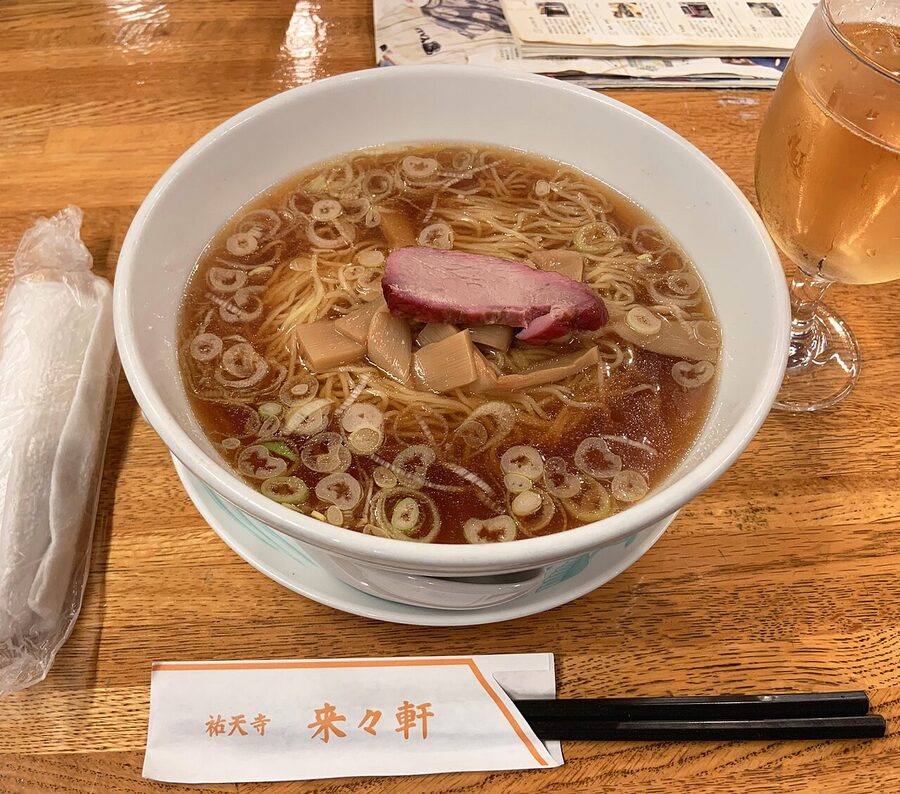
Here’s the potted version, because it does actually change how you eat.
Around 1910 a man named Ozaki Kanichi opened a place called Rairaiken in Asakusa, near Senso-ji Temple. He employed Chinese cooks from Yokohama’s Chinatown and served a bowl of Chinese-style wheat noodles in a salty soy broth to working men for about 6 sen — a reasonable lunch. The dish was called Shina-soba. It stayed that way, more or less, for four decades. A plate of post-work food for stevedores, factory workers, and students in cheap neighbourhoods.
Then the war happened. Rice became rationed and then almost unobtainable. Wheat, mostly American-donated, was sometimes more available than rice after 1945. Ramen didn’t boom — it survived — in the street-stall economy of the postwar years. The name “ramen” displaced “Shina-soba” partly because the Chinese associations had become uncomfortable.
The real turning point came in 1958, when a Taiwanese-born man named Momofuku Ando — working out of a backyard shed in Osaka — invented instant ramen. He called it Chikin Ramen. By the 1970s, instant ramen had made the dish nationally beloved, cheap, and portable. By the 1980s the country was in the middle of the “regional ramen boom”: Hakata tonkotsu, Sapporo miso, Kitakata light shoyu, and a hundred smaller styles each suddenly had a marketing identity and started appearing in Tokyo.
The Michelin-starred, two-thousand-yen, truffle-oil-finished modern bowl? That’s a development of roughly the last fifteen years. Tsuta in Sugamo became the world’s first Michelin-starred ramen shop in 2015. Before that, ramen was cheap eats. So when a Tokyo ramen shop owner tells you he’s been perfecting his broth for thirty years, believe him — the whole ramen-as-craft culture here is genuinely only about that old.
The four broths, and what they actually taste like
Every ramen conversation starts here. There are four classic broth styles you’ll see on signs and menus all over Tokyo. Learn these four words and you can order in any shop in the country.
Shoyu — soy sauce
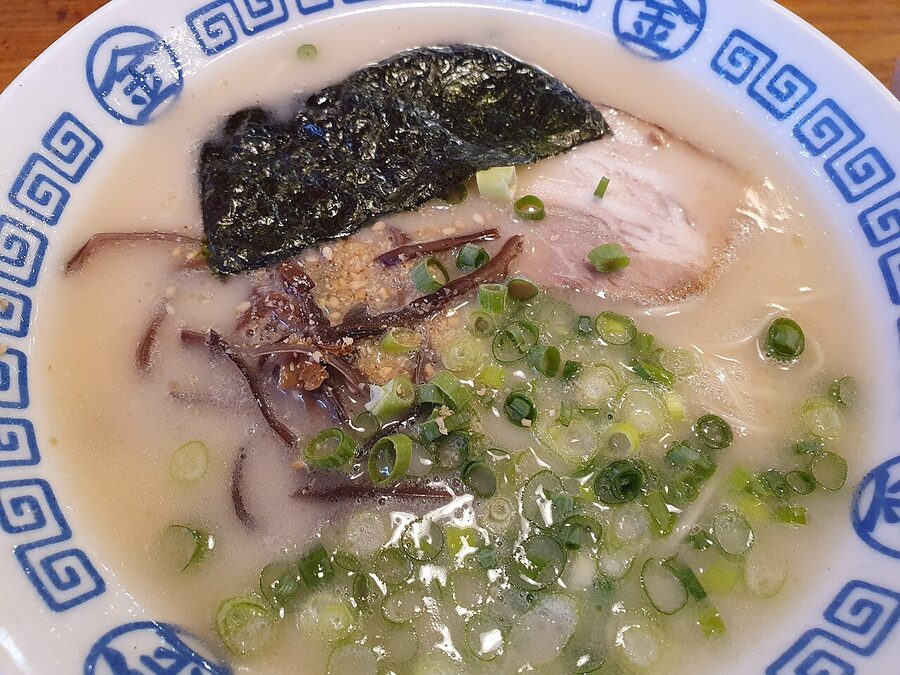
Clear, brown, soy-sauce seasoned. This is the OG Tokyo ramen — the one that descends most directly from Rairaiken’s 1910 bowl. Broth is usually chicken-based, sometimes with a little pork or dried fish (niboshi, katsuobushi) for depth. Straight thin-to-medium noodles, a slice of chashu pork, a sheet of nori, a knot of menma (bamboo shoots), chopped green onion. If the menu doesn’t specify and you’re in a classic Tokyo shop, this is probably what you’re being served.
Taste: savoury, salty, aromatic, not heavy. If you’re nervous and the queue is in front of you, order shoyu. You won’t regret it.
Shio — salt
Pale yellow, light, clean. Shio uses salt as the primary seasoning — no soy sauce masking the broth — so the base stock has to be beautiful. Often chicken and seafood (clam, scallop, dried fish), sometimes with a little pork. Thin noodles, delicate toppings. Afuri’s yuzu-shio is the famous modern example — a citrus peel at the bottom of the bowl gives it a lemony tang that’s oddly refreshing in January.
Taste: the lightest of the four. Some people think it’s too plain the first time. Give it a second chance.
Miso — fermented bean paste
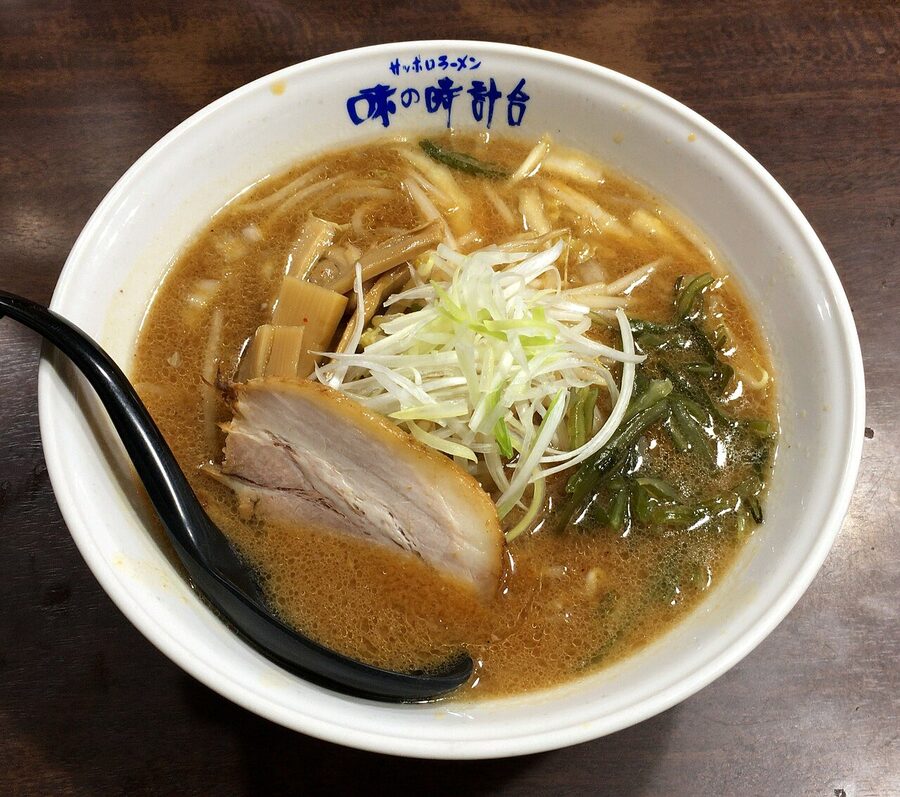
Miso ramen is a Sapporo invention from the 1950s, not a Tokyo original — but it’s on every good menu now. Miso paste is stirred into a pork or chicken base. Noodles are usually thicker and curlier to hold the heavier broth. Toppings lean earthy: pork mince, sweetcorn, bean sprouts, butter, occasionally a hit of chilli.
Taste: deep, savoury, slightly sweet, a little fermented funk. Great for cold weather. If the shop also sells Sapporo-style, that’s usually a sign they take miso seriously.
Tonkotsu — pork bone
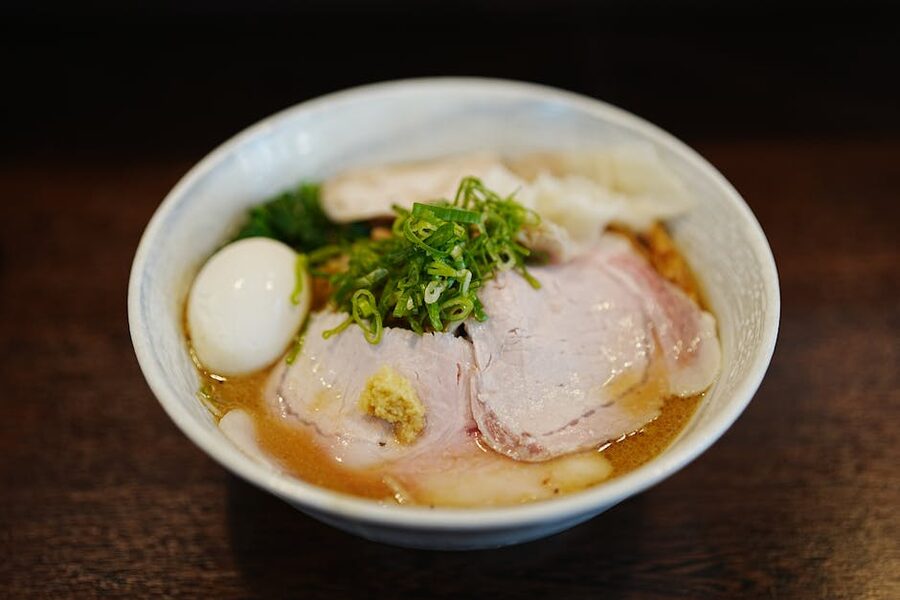
This is the cloudy-white one. Pork bones boiled at a rolling boil for somewhere between ten and twenty hours, until the collagen breaks down into the water and turns the broth opaque and creamy. It is not a soup — it is a heavy thing, more like gravy. Originally from Hakata in northern Kyushu, tonkotsu is what most westerners think of when they think of “real” Japanese ramen, largely because Ippudo and Ichiran exported it globally.
Traditional Hakata tonkotsu comes with very thin, firm, straight noodles, cooked for 30 to 60 seconds. You can order kaedama — a refill of fresh noodles into your remaining broth — for around ¥150 at most tonkotsu shops. The first bowl is noodle-forward; the second noodle portion is broth-forward. Learn that word; it pays off.
Taste: rich, porky, unctuous, fatty. Can be overwhelming on a hot day.
Tsukemen, the dipping cousin
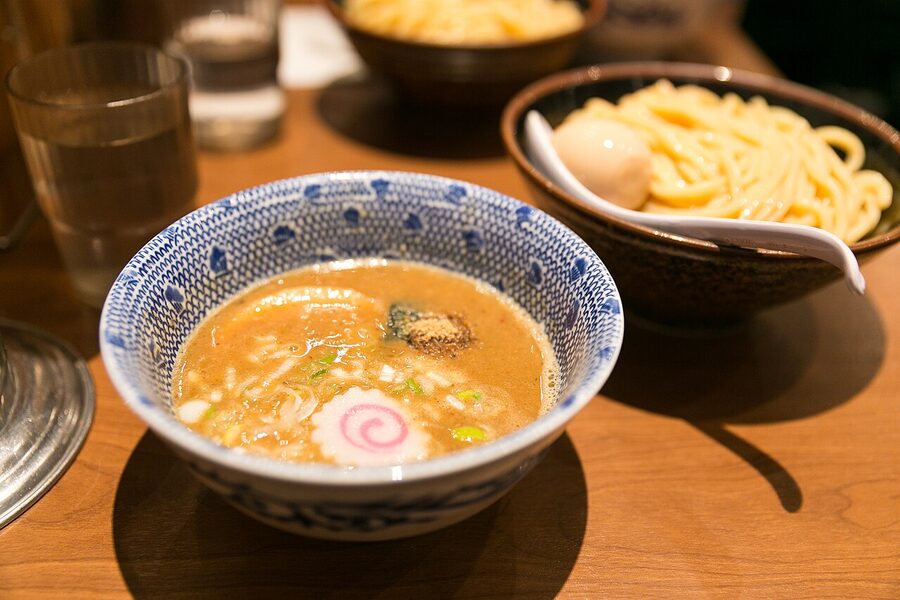
Tsukemen (つけ麺) is ramen’s cold-noodle cousin. The noodles come chilled and drained on one plate; the broth comes hot, thickened, and heavily concentrated in a separate bowl. You dip each bite of noodle into the broth and eat it while the noodles are still chewy-cold. It was invented in Tokyo in the 1960s by a chef named Kazuo Yamagishi at Higashi-Ikebukuro Taishoken. It is absolutely its own thing and worth ordering at least once.
The pleasure of it is textural. Regular ramen softens as it sits — tsukemen doesn’t, because the noodles and broth are separated until each bite. The noodles stay springy for the whole meal. The broth is much richer than a bowl ramen because you’re eating less of it per bite.
Rokurinsha at Tokyo Station’s Ramen Street is the famous one and the queues tell you how famous — at peak lunch, 90 minutes is not unusual. There’s a second Rokurinsha at Tokyo Skytree if the Tokyo Station queue is too brutal, with a substantially shorter wait. The queue there usually runs 20 to 40 minutes instead.
When you’re finishing a tsukemen meal, don’t just pay and leave. Ask the staff “wari suru onegaishimasu” or just slide your broth bowl gently toward the counter. They’ll top it up with hot dashi, diluting the concentrated dipping broth into a drinkable soup. Drink it. That’s where a lot of the flavour has been accumulating as you dipped.
Tokyo’s own ramen style (and the regional-ramen buffet that Tokyo now is)
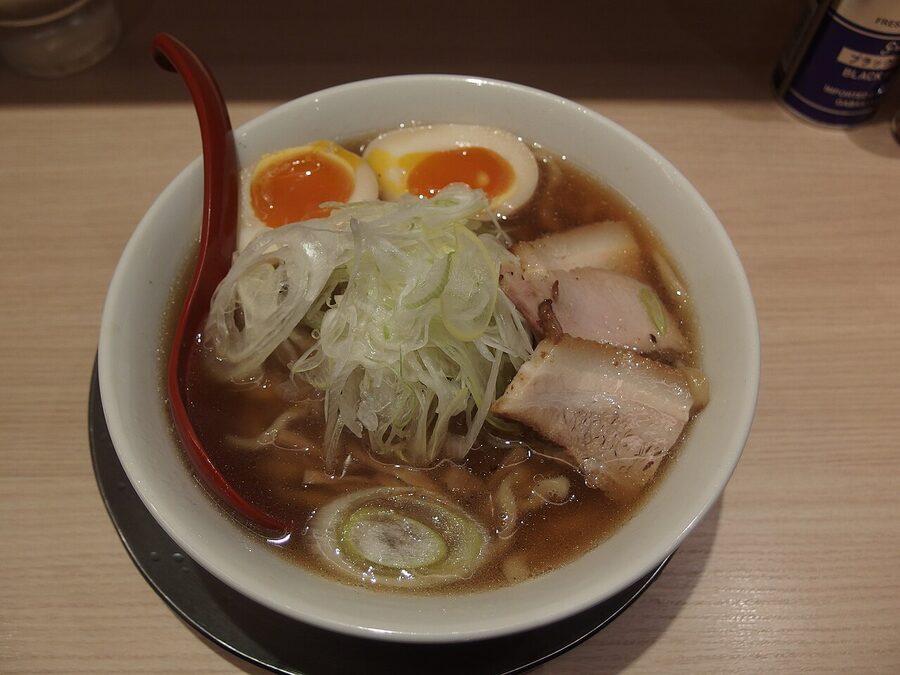
Tokyo has its own historical ramen style. It’s a clear, soy-forward shoyu broth made from chicken and katsuobushi (bonito flakes), served with thin wavy noodles. The neighbourhood most associated with it is Ogikubo, in the western suburbs — if you search “Ogikubo ramen” you’ll find a string of old shops that have been making more or less the same bowl for fifty years. Shops like Harukiya and Kohmen are the classic spots.
That’s Tokyo’s native bowl. But the real superpower of modern Tokyo is that every regional Japanese ramen style is also available here. You can taste-test the country without leaving the city:
- Hakata tonkotsu — Ippudo, Ichiran, Mutekiya, Kyushu Jangara. Thin firm noodles, milky pork broth, kaedama refills.
- Sapporo miso — Sapporo Junren has Tokyo outlets; many Tokyo shops also have a miso bowl.
- Kitakata shoyu — light, flat-noodled, niboshi-finished. Shichisai at Tokyo Ramen Street serves this style.
- Chuka soba — the historical Chinese-style ramen. Kagari in Ginza; Motenashi Kuroki in Asakusabashi.
- Jiro-kei — the Tokyo-born mountain-of-pork-and-sprouts genre. Its own section below.
Where to actually eat it, by neighbourhood
All of these are shops I’ve either been to or that turned up in multiple 2025–2026 ramen round-ups from serious Tokyo food writers. Verify hours online before going — ramen shops close early when the soup runs out, and some of the smaller spots close for unscheduled days.
Shibuya and Harajuku
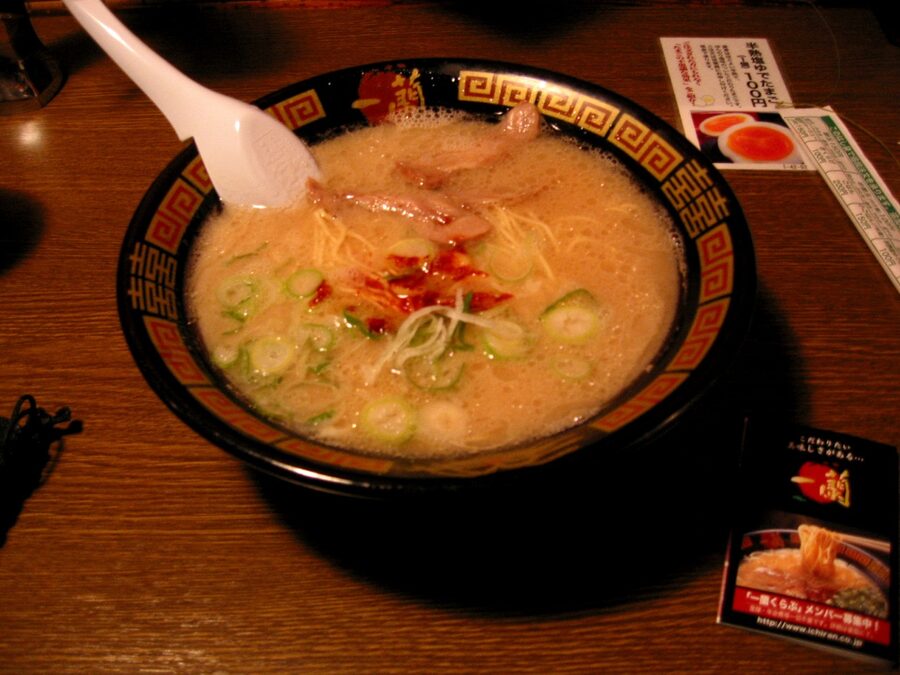
Ichiran Shibuya. The one everyone’s heard of. You sit in an individual cubicle with a bamboo-curtain partition that rises when your bowl is delivered. You order via a paper card marked with sliders for each flavour axis. It’s gimmicky and it works. The ramen itself is a decent Hakata-style tonkotsu — not the best in Tokyo, but consistently good, open 24 hours, and accessible to anyone nervous about the ticket-machine-in-Japanese experience.
My take: if you want the absolute best tonkotsu in Tokyo, go to Mutekiya in Ikebukuro or Kyushu Jangara in Harajuku instead. Ichiran is fine, overhyped for what it is, but worth one visit for the experience. Don’t do all your ramen meals there.
Kyushu Jangara (Harajuku). The Harajuku branch on the main Meiji Dori road, two minutes from Omotesando exit. A real Kyushu tonkotsu shop that’s been serving Harajuku since 1984. Queues happen but move fast. Kaedama is cheap. If you want Hakata-style with less theatre than Ichiran, come here.
Afuri (Ebisu, Harajuku, several other Tokyo locations). The yuzu-shio place. A light citrus-finished salt broth — a Tokyo-born style — that genuinely tastes different from everything else on this list. If you’re ramened out and want something that cleanses rather than fills, this is the one. The Harajuku branch (Afuri Harajuku) sits inside the Gyre building off Omotesando.
Menya Musashi Bukotsu (Shibuya). Another Shibuya shop. Their signature is a seafood-pork tsukemen that works for me more than most tsukemen. The squid-ink version is a Tokyo specialty. Small shop, young staff, hip-hop playing.
Shinjuku and Ikebukuro
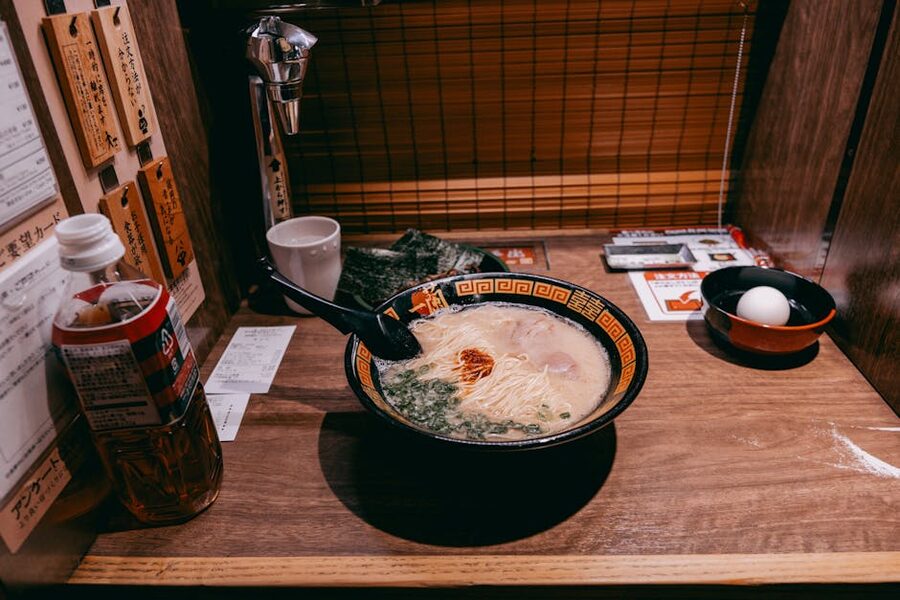
Ippudo (Nishi-Shinjuku and many others). The other famous tonkotsu chain. Ippudo started in Fukuoka in 1985 and now has branches across Tokyo, plus global outposts. The signature Shiromaru Motoaji is a classic Hakata bowl — thin noodles, milky broth, chashu, spring onion, a soft-boiled egg. Menus are in English. A very soft landing if you’re worried about ordering.
Mutekiya (Ikebukuro). The queue tells you this is the place. A ten-minute walk from Ikebukuro East Exit, Mutekiya is a small counter shop serving brutally good Hakata tonkotsu. Queues start forming at 10am for an 11am opening. The menu exists in English, Thai, French, and Korean — worth their time because everyone wants in. Order the standard Mutekiya bowl with Tokumaru (extra chashu) if you can. Cash only.
Fuunji (Shinjuku). A Shinjuku tsukemen shop with a famously thick, dark broth made from dried sardines and pork bones. Located five minutes from JR Shinjuku New South Exit, in a small block. Queues are manageable if you arrive at 11am or 2pm, brutal at lunch peak. Bring cash.
Konjiki Hototogisu (Shinjuku Gyoen-mae). Michelin-rated — currently Bib Gourmand after holding a full star for several years. Tiny shop with a signature shoyu bowl finished with homemade black truffle paste, porcini oil, and a clam-and-pork broth. It’s not for everyone — the truffle is divisive — but it’s one of the most technically impressive bowls in Tokyo for about ¥1,350. Two-minute walk from Shinjuku Gyoen-mae Station. Closed Sunday and Monday.
Ginza, for the refined bowls
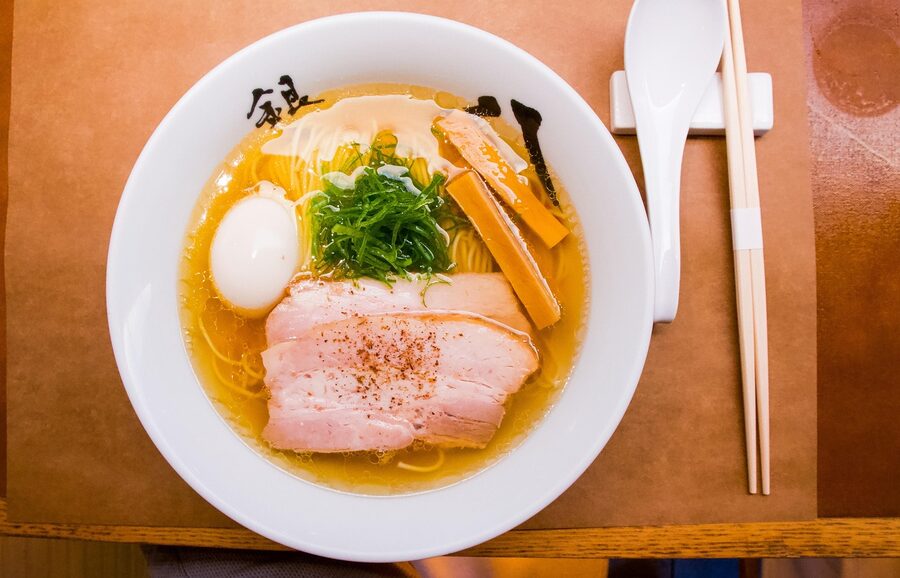
Ginza Hachigo. Six seats. Michelin-starred. A chef who spent three decades in Paris kitchens before bringing classic French consommé technique to ramen. Around ¥2,000 for the chef’s special with a foie gras dumpling. Address: 3-14-2 Ginza, Chuo City. You can now reserve via TableCheck, but lunch slots are blocked off narrowly (12:30 to 2:30pm) and there’s a ¥500 per-seat reservation fee that doesn’t go toward your bowl. If you miss reservations, the old queue-for-a-timed-ticket system still runs from about 8am.
Kagari Ginza Honten. Tucked in a Ginza alleyway, 6-4-12 Ginza. Famous for tori paitan (chicken bone) ramen — creamy, yellow, incredibly rich. Open 11am-9:30pm. Queues are normal but move. There’s a second branch in Roppongi Hills that has the same bowl indoors and much less of a wait, if the Ginza queue puts you off.
Motenashi Kuroki (Asakusabashi). Moved from its old Hatchobori location to Asakusabashi recently. Award-winning shio bowl with a broth made from two chicken breeds, duck, pork, niboshi, and kombu. The top-left button on the machine is the tokusei (signature) shio ramen — that’s the one.
Tokyo Station: Ramen Street
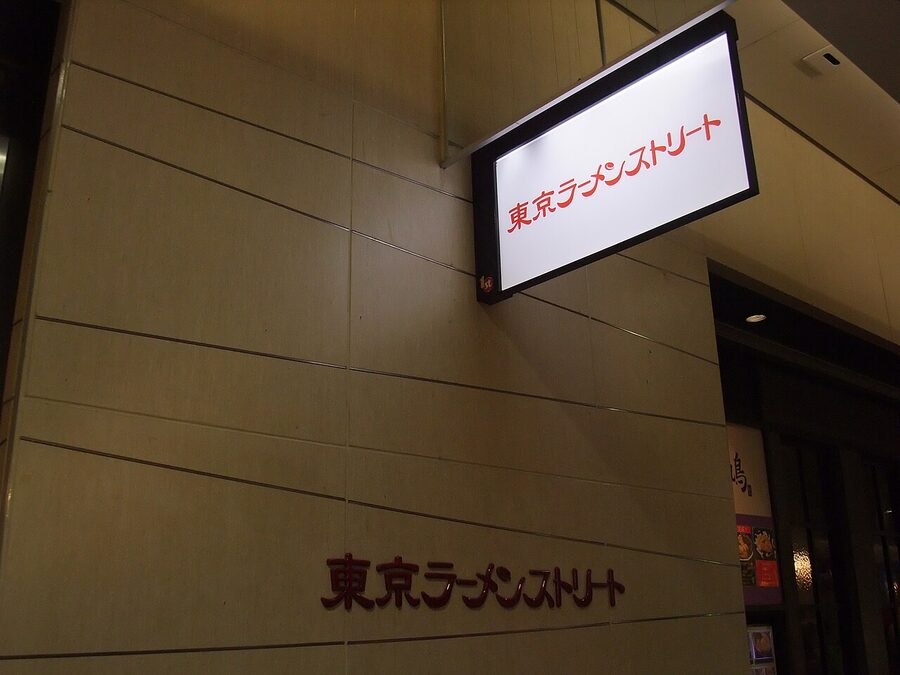
Inside Tokyo Station, in the Tokyo Ichibangai basement near the Yaesu Central Exit, is Tokyo Ramen Street — a corridor of eight specially picked ramen shops collected from around the country. Each is a proper shop, not a mall concession. The line-up rotates over the years; at time of writing it includes:
- Rokurinsha — the most famous tsukemen shop in Tokyo. Thick springy noodles, a concentrated bonito-rich dipping broth with a hit of yuzu on top. Queue runs 60-90 minutes at peak lunch. Worth it once, if you like tsukemen, or skip to the Skytree branch.
- Oreshiki-Jun — straightforward Hakata tonkotsu, better than you’d expect for a station branch.
- Shichisai — MSG-free Kitakata-style shoyu with sardines. House-made noodles on site. One of the few Kitakata shops in central Tokyo.
- Hirugao — a proper shio ramen shop from Ebisu, with one of the clearest, most elegant broths on the floor.
- Plus rotating spots serving miso, niboshi, and Aomori-style broths.
If you’re transiting through Tokyo Station or meeting a Shinkansen, it’s genuinely one of the best single moves in this guide. Arrive at 11am or at 2:30pm to skip the worst queues.
Jiro-kei: the other ramen
Ramen Jiro is its own genre. The original is a small counter shop near Mita Station, opposite Keio University, that’s been serving the same thing since 1968. What you get: a mountain of boiled bean sprouts, a ladle of garlic, a fist-sized hunk of fatty pork, a generous slick of back-fat, and a dense tare-heavy broth at the bottom that you essentially dig down to. The noodles are thick, hand-cut, and almost udon-like.
It is not to everyone’s taste. It is genuinely heavy — most first-timers feel ill afterwards. Portions are huge. The ordering is its own ritual: when you hand over your ticket, the staff ask if you want any modifications. You can answer with a single quick word:
- “Yasai mashi” — extra vegetables (the pile of bean sprouts)
- “Abura mashi” — extra back-fat
- “Ninniku arimasu” — yes, garlic
- “Zen-bu futsuu” — all standard, no modifications (safe first-timer answer)
If you want to try Jiro-kei and the original Mita queue is too brutal (often 90 minutes), look for Jiro-inspired shops — they’ll have “Jiro” or “Jirou-kei” in the name and serve the same style with slightly less punishing queues.
My take: try it once for the experience. Don’t make it your only Tokyo ramen meal. You will be unable to move for several hours afterwards.
How to order at a ramen ticket-vending machine
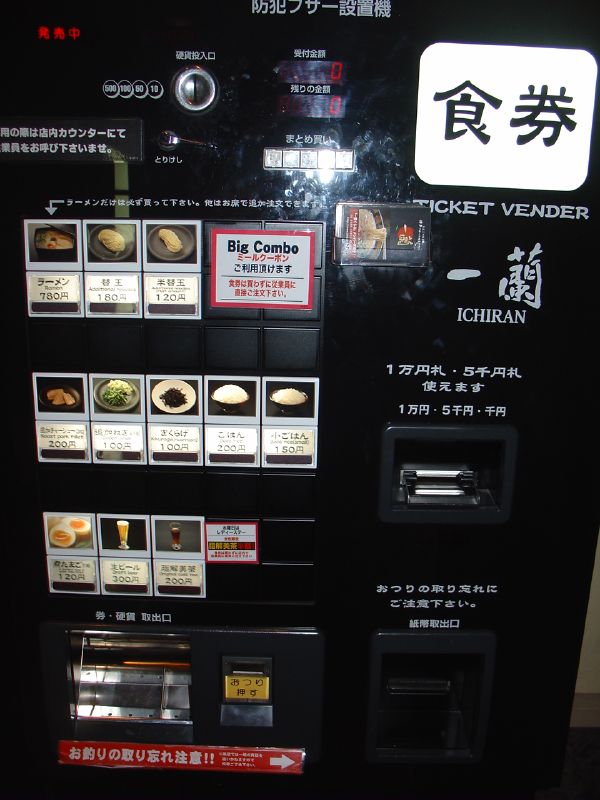
Most Tokyo ramen shops — especially the small good ones — don’t take orders at the counter. You order and pay at a machine at the front of the shop, collect a paper ticket, and hand it to the staff when you sit. Here’s the actual sequence:
- Queue outside if there is one. Don’t walk past the line to the machine. People are queueing for their turn at both.
- Look at the machine before you reach it. If there are photos, photograph-the-button strategy works. If it’s all kanji, the top-left button is almost always the shop’s signature bowl and what you want. Most are around ¥900-1,400.
- Insert cash (mostly) or tap IC card. Older machines only take ¥1,000 notes and coins — check for a ¥5,000 / ¥10,000 slot before you feed a big note in. Newer shops take Suica, Pasmo, and credit cards, but plenty don’t. Always carry cash.
- Press your button(s). Signature bowl first. Then add toppings if you want — aji-tama (seasoned egg, usually ¥100-150), extra chashu, a side bowl of rice (hanmei). The extra-topping buttons are usually below the main bowl buttons.
- Press the green “order” / change button. Collect your tickets and change. The machine dispenses one paper ticket per item pressed.
- Sit down when the staff wave you in, and place the tickets face-up on the counter in front of you. The staff will collect them and start cooking. You don’t pay again at the end.
Useful survival Japanese at the counter: “kaedama onegaishimasu” (noodle refill please — mostly at tonkotsu shops), “katame de” (make the noodles firm), “eigo no menyu wa arimasu ka?” (is there an English menu?). Staff in small ramen shops rarely speak English. A polite gesture at the machine or the menu will almost always get you there.
A few rules about eating it
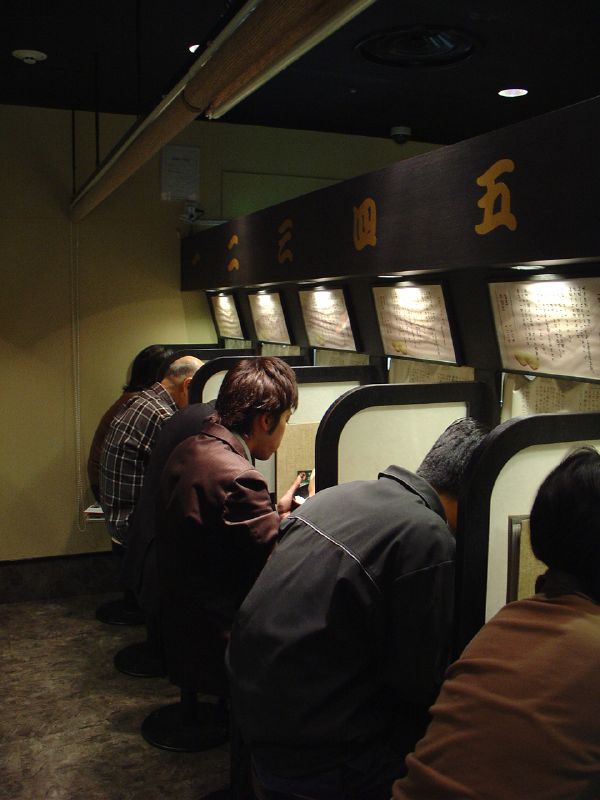
Ramen is fast, loud food. There are a few unwritten rules that apply here more than at a sit-down restaurant (if you want the full treatment, I’ve written a separate piece on dining etiquette in Japan):
- Slurping is encouraged. It cools the noodles as they go in and is a genuine signal that the bowl is good. No one is judging. Quiet eating is arguably more rude than loud eating here.
- Finish within about 20 minutes. There’s no formal time limit at most shops, but ramen is designed to be eaten quickly while the noodles are still firm, and the queue outside is waiting. A slow meal is slightly disrespectful to the shop and to the people behind you.
- Drink as much of the broth as you can. Chefs spend days on broth. Leaving a bowl with half the broth untouched at a serious shop reads as “this wasn’t good”. If you can’t finish it all, fine — but don’t make a show of leaving it.
- Don’t take long photos. A quick shot of the bowl is normal. A ten-minute Instagram shoot isn’t. Several shops explicitly ban filming kitchen staff.
- Don’t split a bowl. The portions aren’t designed for this, the staff get annoyed, and the shop would rather you ordered your own.
- Leave your rucksack on the hook. Most counters have hooks or shelves under the seat. Don’t wear it while eating — you’ll hit people behind you.
Skip these
Controversial bit of the guide. I stand by it.
- Ramen anywhere on Takeshita Street in Harajuku. The “authentic ramen” signs on Takeshita are mostly ¥1,500 tourist bowls made with shortcut broths and thin chashu. Walk five minutes to Omotesando for the actual shops.
- Rooftop ramen in Shinjuku with a view. If the selling point is a view, the selling point is not the ramen. There are excellent ramen shops in Shinjuku — none of them are on the top floor of a mall.
- Ichiran if the queue is over an hour. You can always find another Ichiran ten minutes’ walk away with no queue. Or walk past it and eat somewhere better. Ichiran is decent; it is not 90-minutes-of-your-life decent.
- The “ramen tour” experiences that charge ¥12,000 to take you to three shops you could find yourself. The shops are usually good. The tour is overpriced. Use this guide, use Google Maps, save the money for more ramen.
- 7-Eleven instant ramen is unironically great. If it’s midnight, your feet hurt, and everywhere’s closed, the microwave bowl from a conbini beats a mediocre restaurant bowl. This is not a joke.
First-timer mistakes I made so you don’t have to
Some of these I still make.
- Ordering the spiciest option to be tough. Spicy miso or tantanmen is a legitimate thing, but if the menu has a chilli-level selector, do NOT pick the maximum on your first bowl. The chilli drowns the broth the chef spent ten hours on. Order the signature bowl or mid-level at most.
- Not reading the ticket machine before the front of the queue. The people behind you will not rush you, but you will feel rushed, you’ll panic-press, and you’ll end up with three tickets for side dishes and no actual ramen. Stand to one side of the machine while someone else uses it and mentally rehearse which buttons you’re pressing.
- Wearing a huge coat in a tiny shop. There’s nowhere to put it. Layer up to the shop and strip before the queue.
- Trying to split a bowl with a friend. Don’t. Both order. A small bowl of ramen is still ¥900.
- Ordering rice with every bowl. A hanmei (small rice) is lovely with tonkotsu where you can dip it in the broth at the end, but it’s pointless with a light shio and you’ll be too full for dessert. Skip it most of the time.
- Walking past the “no-English-menu” shops. These are often the best. A gesture and a smile will get you there. Point at the top-left button.
How I’d do a Tokyo ramen crawl in an afternoon
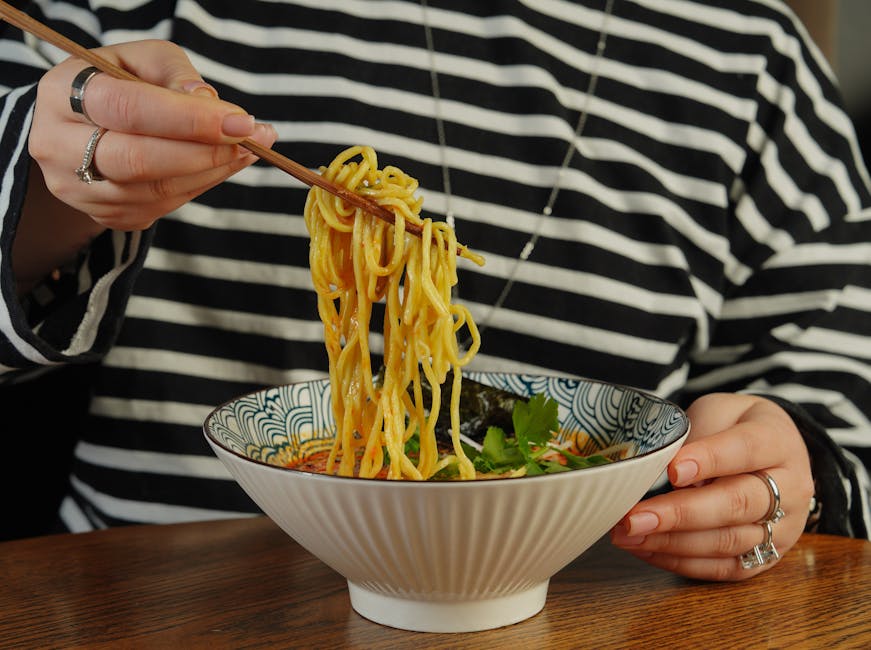
If you’re keen and want to pack three bowls into one day, space them out. Three full bowls eaten back-to-back is genuinely a bad idea — you’ll hate the third one and blame the shop. This is the route I use:
- 11am opening: Start in Shinjuku at Fuunji (tsukemen, lighter to digest than a full bowl). Takes about 20 minutes including queue.
- 1pm: Walk or short metro to Harajuku. Browse Omotesando for an hour to let the first bowl settle.
- 2pm: Afuri Harajuku for a light yuzu-shio. You’re not ordering a full bowl here — ask for the half-size if they have it. This is about tasting the citrus broth, not filling up.
- 3pm: Walk through Yoyogi Park to Shibuya. 20 minutes in the park clears the palate and your stomach.
- 5pm: Kyushu Jangara Harajuku for a proper Hakata tonkotsu with kaedama. Or, if you want to push into the evening, head to Ikebukuro for Mutekiya.
Three distinct styles (tsukemen, shio, tonkotsu) across five hours and two or three neighbourhoods. You’ll spend ¥3,500-4,500 total. It’s a great afternoon.
Practical info at a glance
- Typical prices: ¥800-1,400 for a standard bowl. ¥1,500-2,000 for toppings added. Higher-end Michelin-recognised places run ¥1,800-2,500.
- Opening hours: Most small shops open 11am-2:30pm for lunch and 6pm-10pm for dinner. Many close between. A surprising number only do lunch. “Until the soup runs out” is a real closing time.
- Cash: Bring ¥2,000-3,000 in cash per meal even if the shop looks modern. Many counter shops are cash-only.
- Queues: At the most famous shops, arrive 15-20 minutes before opening for manageable queues. For Ramen Jiro, Mutekiya, Fuunji, and Rokurinsha at peak: 60-90 minute queues are not unusual at lunchtime.
- Kaedama: Noodle refill (mostly at tonkotsu shops). Around ¥150. Ask for it when you’re two-thirds of the way through the first noodle portion, not after you’ve drunk all the broth.
- English menus: The big chains (Ichiran, Ippudo) have proper English menus. Smaller shops often don’t. The phrase is “eigo no menyu wa arimasu ka?”
- Vegan/vegetarian: Difficult. Traditional broths almost always contain pork or chicken. Afuri has vegan-friendly options at some branches; so does T’s Tantan at Tokyo Station. Check ahead.
- Accessibility: Most traditional ramen shops are counter-only, down a step, with narrow entrances. Tokyo Ramen Street at Tokyo Station is fully accessible.
One last thing
The bowl you remember from Tokyo probably won’t be the one from Michelin-starred Konjiki Hototogisu or the Instagram-famous Ichiran. It’ll be the one you ended up in by accident because it started raining — a small shop with four seats, a grumpy chef, a single shoyu bowl, and a clear golden broth that you finished to the bottom. That bowl exists on almost every street in Tokyo. Go looking. The worst outcome is you eat some decent ramen.