
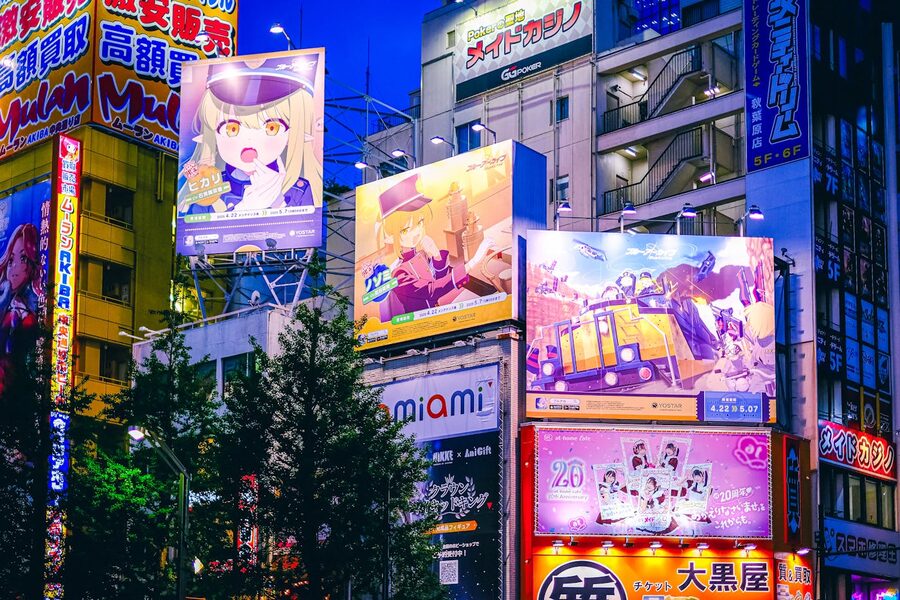
The first sound you hear climbing the steps out of Akihabara Station’s Electric Town Exit is pachinko. Not the neon, which you can see before the doors slide open. The sound. A wall of it, coming out of a parlour 30 metres away through shut doors and plate glass, tuned to a frequency that bypasses your ears and just sits behind your sternum. The second sound is an anime theme song, looped, playing from a claw-machine cabinet someone has wheeled onto the pavement. The third is a maid in a short black dress shouting “okaerinasaimase, goshujin-sama” at a passing salary-man who doesn’t even slow down. All of this before you’ve walked 10 metres.
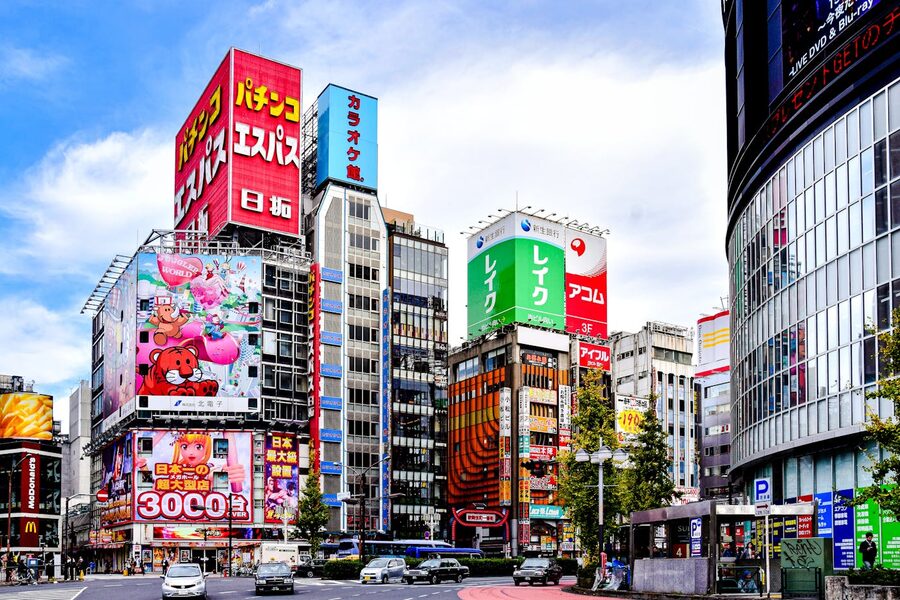
That’s Akihabara. Or Akiba, as everyone who’s been more than once tends to call it. It’s a district in Chiyoda Ward, about four minutes north of Tokyo Station on the JR Yamanote Line, and it is genuinely like nowhere else on earth. The official Tokyo tourism board calls it “an urban temple for worshippers of Japanese subcultures,” which sounds like marketing copy until you’re standing on Chuo-dori at 3pm on a Saturday watching three cosplayers photograph each other outside a seven-storey figurine shop while a man in a Famicom T-shirt carries a full retro arcade cabinet across the crossing on a flatbed trolley.
In This Article
- A short history: radios, GIs, and the slow drift into otaku
- Getting there (and which exit to use, because it matters)
- Walk Chuo-dori (and come on a Sunday if you can)
- Yodobashi Camera (yes, it’s as big as people say)
- How the tax-free thing actually works at Yodobashi
- The bit everyone’s actually here for: otaku shopping
- Super Potato (retro gaming, 3rd-5th floors)
- Mandarake Complex
- Akihabara Radio Kaikan
- Animate, Toranoana, Kotobukiya, Gamers
- The under-tracks stalls: Akihabara Radio Center
- Arcades: claw machines, SEGA, Taito
- Maid cafes (what they actually are)
- Walking into a maid cafe for the first time
- AKB48 Theater (if you can get in)
- Food worth actually eating
- Nearby: Kanda Myojin Shrine and 2k540 Aki-Oka Artisan
- How I’d spend an afternoon in Akihabara
- Practical bits
- Where to stay nearby
- Other Tokyo districts worth pairing with Akihabara
A short history: radios, GIs, and the slow drift into otaku
Akihabara wasn’t always like this. In the late 1800s it was a freight hub with a fruit and vegetable wholesale market. After World War II, a black market sprang up around the station selling electronics components to returning servicemen, US GIs, and anyone who needed a vacuum tube for a ham radio. That’s why the old-timers still call it denki-gai — “Electric Town” — and that’s why the Electric Town Exit is called the Electric Town Exit. The literal translation is still printed on the station signage in English.
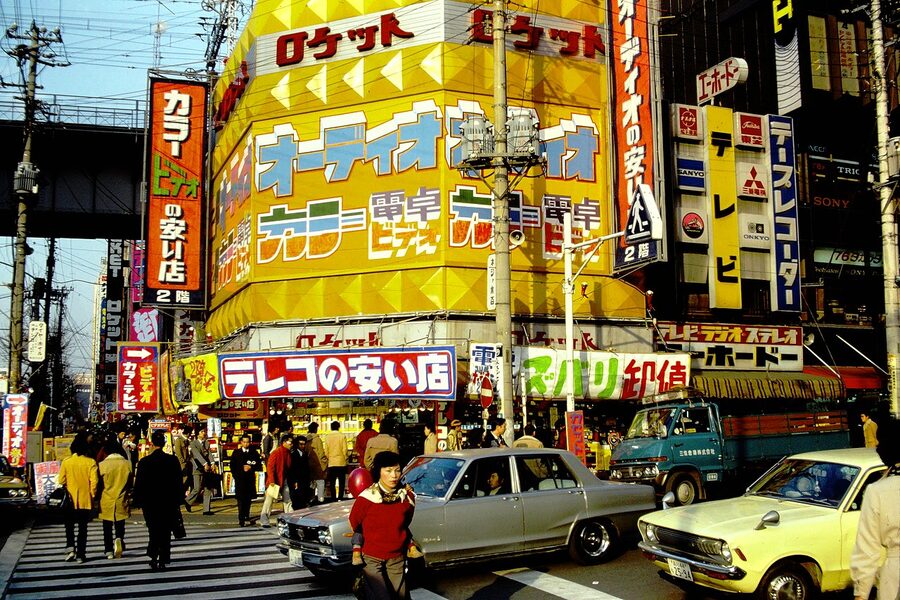

Through the 1950s it was vinyl record shops. The 1960s-70s brought colour TVs and the Japanese electronics boom — Sony, Panasonic, National, all of it sold out of tiny shopfronts stacked on top of each other. Then the 1990s computer craze. Then, sometime around 2000, the anime and manga shops started buying up floor space, and by the mid-2000s the balance had tipped. Akihabara Radio Kaikan — the landmark ten-storey building that used to sell vacuum tubes and amateur radio gear — was rebuilt in 2014 and now sells figurines, trading cards, dolls, and doujinshi. Which is a decent short summary of the whole neighbourhood.
What’s surprising is that the old Akihabara never quite disappeared. Under the JR tracks, about 60 seconds from the station, is a set of tiny stalls called Akihabara Radio Center, and the people running them still sell individual resistors, capacitors, and amateur-radio transceivers to a clientele that is mostly men over 70. You will not see a single tourist in there. It’s extraordinary.
Getting there (and which exit to use, because it matters)
Akihabara Station is served by five lines: JR Yamanote, JR Keihin-Tohoku, JR Sobu, Tokyo Metro Hibiya, and the Tsukuba Express. From Tokyo Station it’s four minutes and ¥160 on the Yamanote. From Shinjuku it’s 18 minutes on the Sobu (yellow trains) direct. Haneda Airport to Akihabara is about 45 minutes; Narita, about 90. Suehirocho Station on the Tokyo Metro Ginza Line also drops you at the northern end of the district if you want to walk through the whole thing on the way back to the JR station.
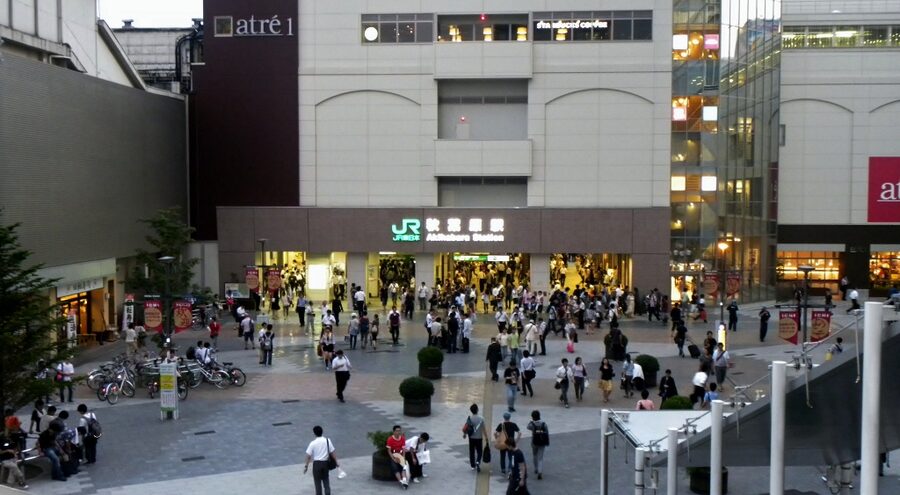
The exit you want is Electric Town Exit on the west side of the station. Follow the signs — they’re in English and they’re everywhere. Coming out any other exit dumps you in a quieter office area and you’ll spend 10 minutes wondering where the neon is.

Walk Chuo-dori (and come on a Sunday if you can)
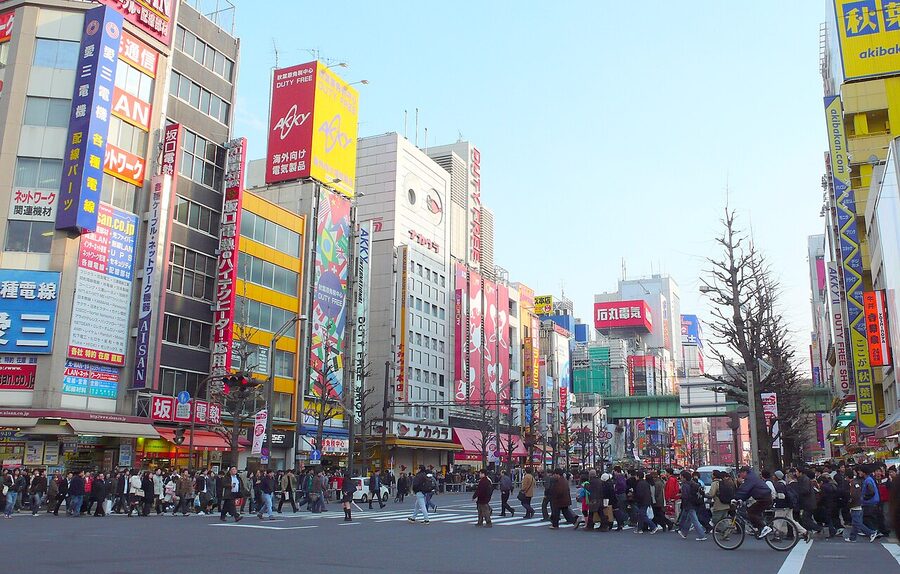
Chuo-dori is the main strip. It runs north-south and it’s where all the famous billboards, the big chain stores, and most of the arcades are. You can walk it end-to-end in about 15 minutes without stopping. You won’t walk it without stopping. Sunday afternoons the road is closed to traffic and turns into what the Japanese call hokosha tengoku, or pedestrian heaven — 13:00 to 18:00 from April through September, and 13:00 to 17:00 from October through March. Cosplayers use the empty road for photo shoots. Street performers turn up. The whole thing feels like a slow-motion festival.
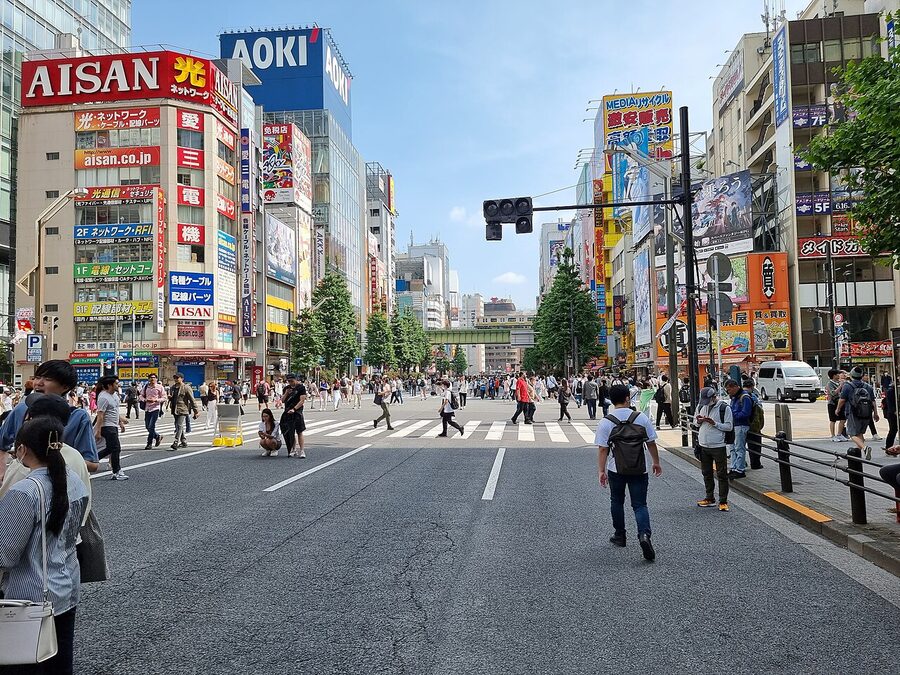

Weekdays the whole strip is still open and still loud but you’re sharing the pavement with cars and delivery bikes, and the cosplayers mostly stay off it. If you’ve got one visit and you’re flexible, pick Sunday. If you’ve got any visit at all, avoid Saturday between 14:00 and 18:00, which is when the tourist buses and school trips arrive and the whole place turns into a human pinball machine.
Yodobashi Camera (yes, it’s as big as people say)
Directly opposite the Electric Town Exit, across the square, is Yodobashi Camera Akiba. It opened in 2005 and it is — I don’t think this is hyperbole — the largest consumer electronics store in Tokyo, possibly in Japan. Nine retail floors. Hours: 9:30 to 22:00, with the restaurants on the 8th floor opening at 11:00. Cameras on B1. Computers on 5. Headphones on 3. Washing machines and vacuum cleaners on 2. There’s a Tsutaya bookshop, a dental clinic, a batting cage on the roof, and a restaurant floor with a Magurobito conveyor-belt sushi that’s actually decent. You can lose three hours in here without realising.
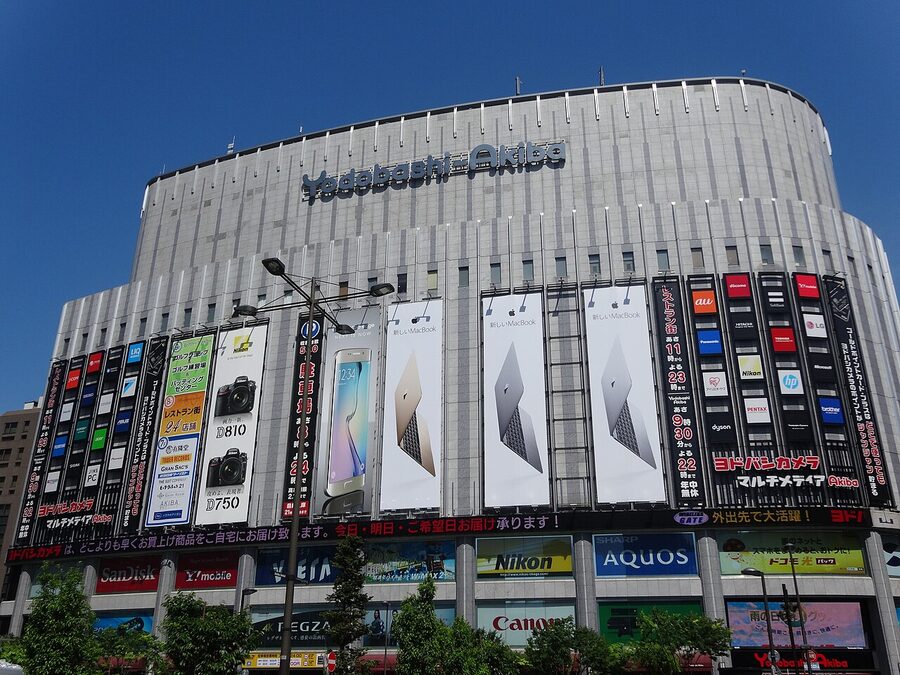

One thing worth knowing: the prices at Yodobashi are not cheaper than online. If you’re expecting a discount electronics wonderland you’ll leave confused. What Yodobashi has is the selection — every camera body, every lens variant, every pair of headphones, every mechanical keyboard, in-hand, set up on display, plugged in and working. You come here to try before you buy, not to bargain. And you come here because they do tax-free for foreign passport holders on purchases over ¥5,000, which gets you the ~10% consumption tax back.
How the tax-free thing actually works at Yodobashi
- Shop normally. Pick your stuff.
- Pay at any regular till. You’ll get a full receipt.
- Take the receipt and your passport to the tax-free counter on whichever floor has it (usually the main floor or the foreigner service desk — ask). It’s signposted in English.
- They’ll scan your passport, refund the tax to your card or cash, and attach a declaration form to your passport. Don’t remove this. Customs takes it when you leave Japan.
- Total extra time involved: about 15 minutes in a quiet period, 45 minutes on a Saturday afternoon. Go early if you hate queuing.
The bit everyone’s actually here for: otaku shopping
If you’re here for the anime, manga, retro games, figurines and collectibles scene — that’s 90% of the modern Akihabara experience — there are four or five shops worth making time for.
Super Potato (retro gaming, 3rd-5th floors)
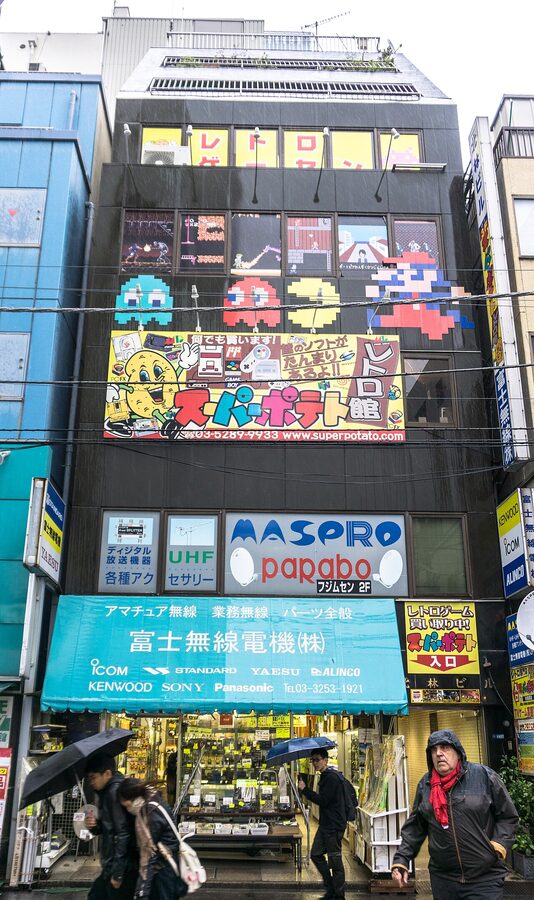

Super Potato is the retro game shop. It lives on the 3rd, 4th and 5th floors of a narrow building about three minutes’ walk from the station, decorated outside with oversized Mario and Pac-Man motifs so you can’t miss it. Every console from the Famicom onwards is here. Boxed PC Engine games. Sega Saturn obscurities. Loose Game Boy cartridges in baskets. The 5th floor has a small arcade of restored cabinets that you can play, including some that have been out of production for 40 years.
A heads-up on prices: the rare stuff is expensive. I’ve seen pristine boxed copies of obscure Famicom titles priced at over ¥300,000. A sealed, graded Virtual Boy will run into six digits. This is not a bargain bin. It’s a museum you can buy things from. Hours are 11:00 to 20:00; go on a weekday morning if you want elbow room in the aisles.
Mandarake Complex
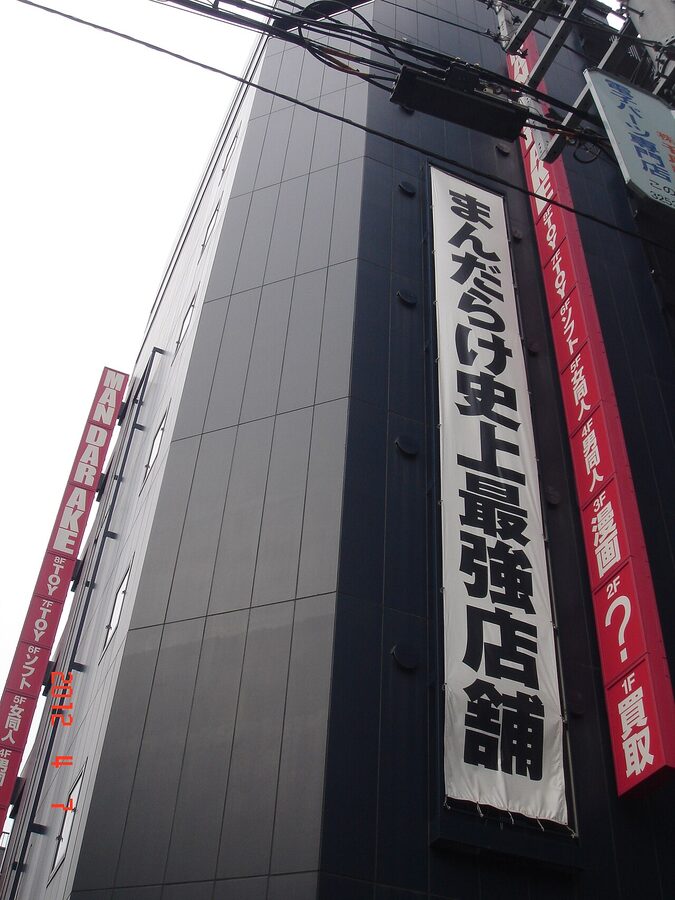

Mandarake has branches across Japan — the Shibuya one is smaller and cosier — but the Akihabara “Complex” is the flagship and it’s eight floors plus a basement. Each floor has a theme: shojo manga, shonen manga, dolls, doujinshi, cel art and original animation production material, cosplay gear, retro toys. Hours 12:00 to 20:00. It’s second-hand, not new, and the pricing reflects rarity — you’ll see a pre-owned Gundam figure for ¥1,500 next to a signed cel priced at ¥850,000.
Akihabara Radio Kaikan
.jpg)
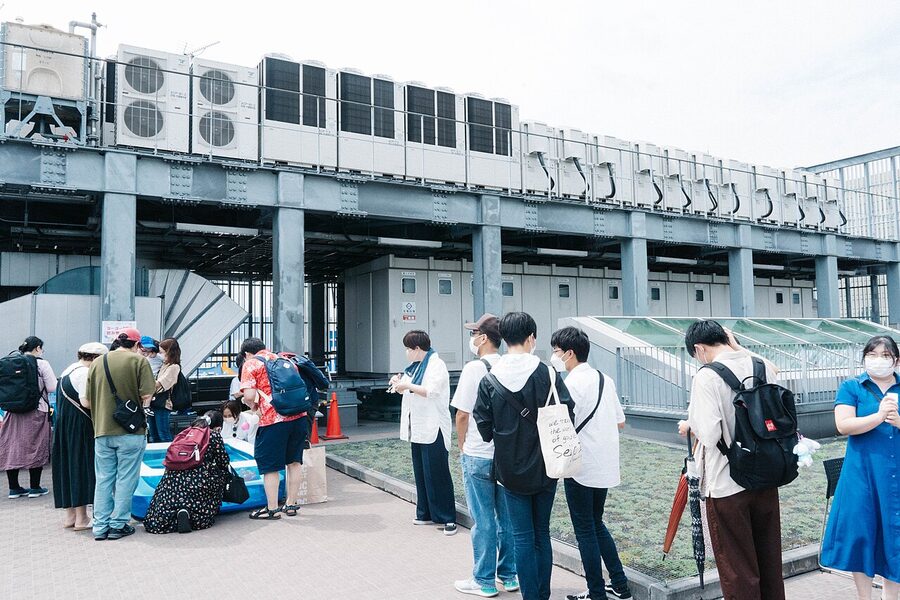
Right outside the Electric Town Exit, you can’t miss it — Radio Kaikan is the big glass-fronted tower with the K-Books sign glowing at street level. Inside are more than 30 individual shops over 10 floors, mostly specialising in figurines, trading cards, plastic models, and anime collectibles. Kotobukiya (ground floor and 5F) does the beautifully-made scale figures. Volks (7F) sells ball-jointed dolls that run into hundreds of thousands of yen. Yellow Submarine (4F) is a tabletop gaming shop that also carries Warhammer and Magic: The Gathering. Hours 10:00 to 20:00.
Animate, Toranoana, Kotobukiya, Gamers
All four are within three minutes of each other on Chuo-dori or the side streets. Animate is the mainstream anime merch chain — new DVDs, CDs, official merch, character goods. Toranoana is the doujinshi (self-published/fan comic) specialist; about a quarter of the floor space is age-restricted. Kotobukiya has the flagship figurine and plastic model shop I mentioned above. Gamers is 10:00-22:00 and has a lot of CD-first music merch — idol groups, voice actor releases, that kind of thing.
The under-tracks stalls: Akihabara Radio Center
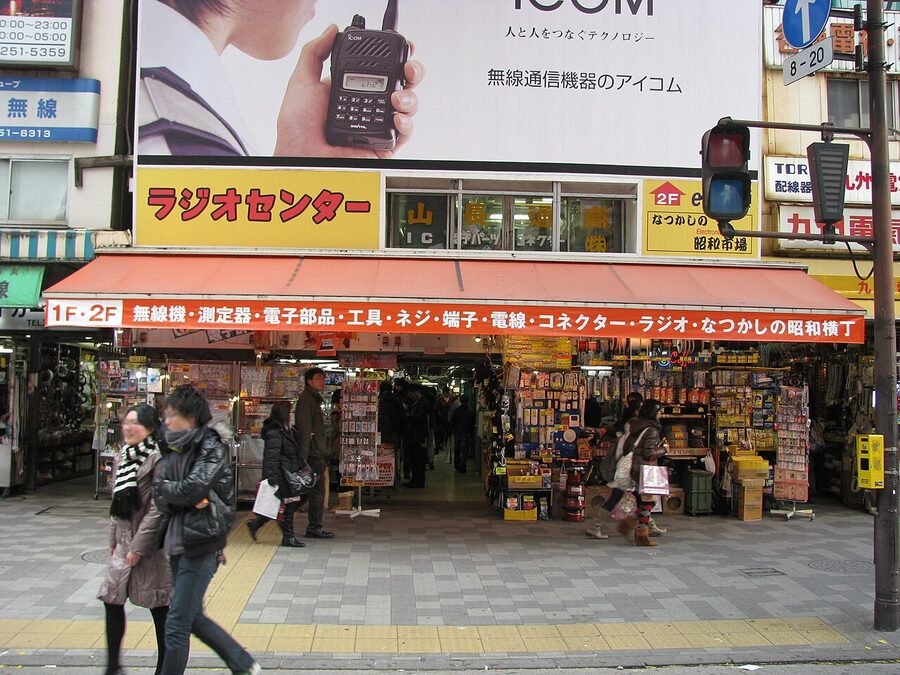

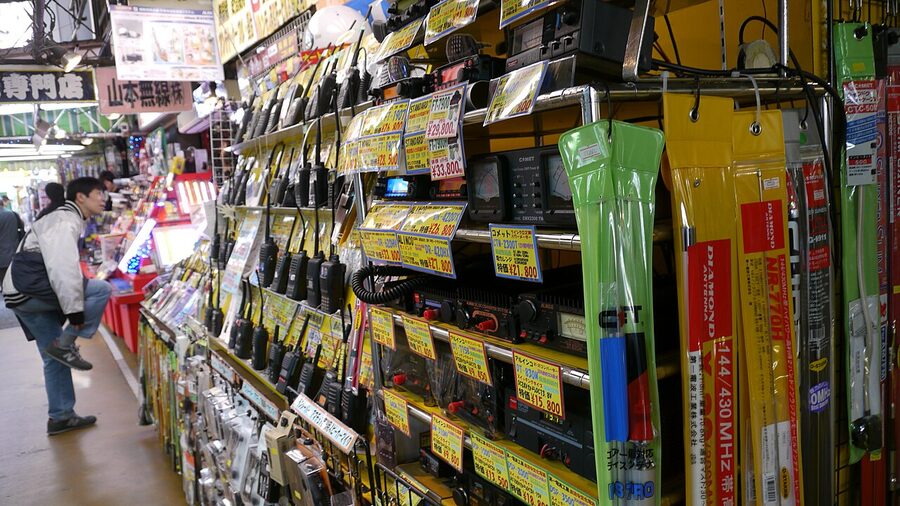
This is the thing I’d recommend most to people who have literally no interest in anime. Wedged against the underside of the JR elevated tracks, about 60 seconds’ walk from the station, is a warren of about 30 tiny stalls called Akihabara Radio Center. It looks like a set from a 1960s Japanese film and in practical terms it is one — the whole thing has barely changed since it opened, and half the vendors have been there for 40+ years. They sell individual electronic components — resistors, capacitors, vacuum tubes, soldering equipment — and amateur radio gear. The stalls are run almost entirely by men in their seventies who speak almost no English and who are genuinely delighted when someone under 40 buys a 10-yen resistor.
.jpg)
I bought a handful of 100-yen resistors on my second visit mostly because I felt like I should. The old man who sold them to me pulled out a magnifying lamp, inspected each resistor individually, then tested the resistance value on a multimeter that was older than I am, before wrapping them in paper and charging me 420 yen. The whole transaction took 11 minutes and was the best souvenir of the trip. Come here. Even if you have no idea what a resistor does.
Arcades: claw machines, SEGA, Taito
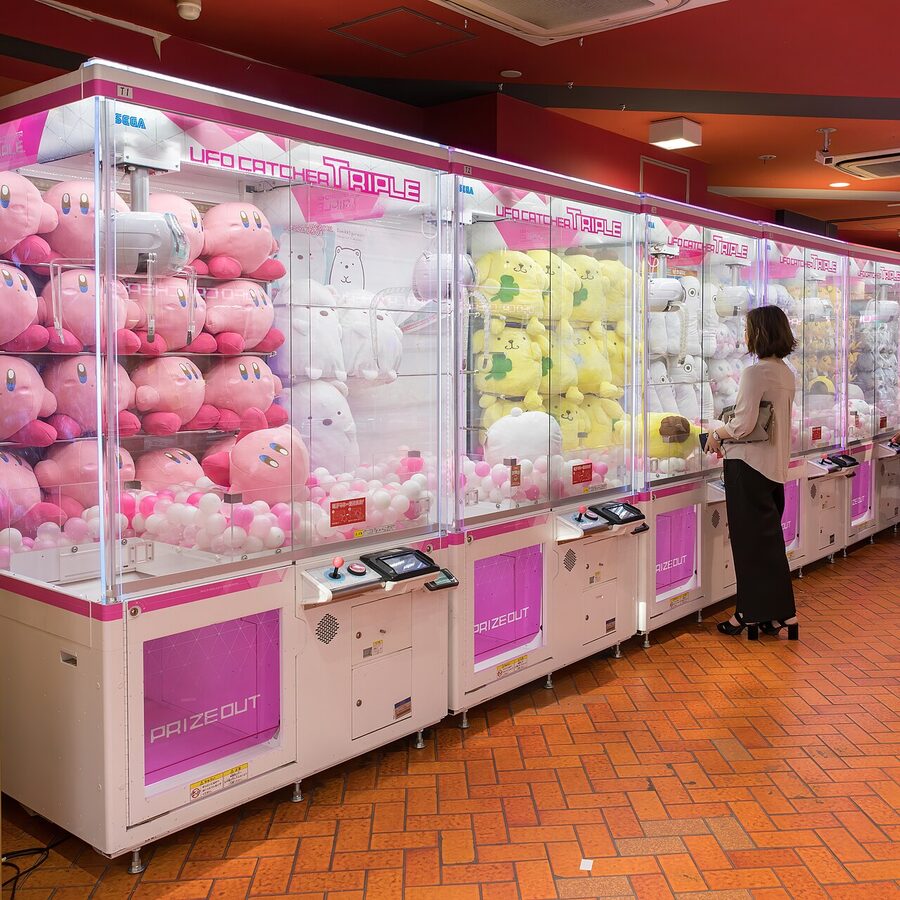

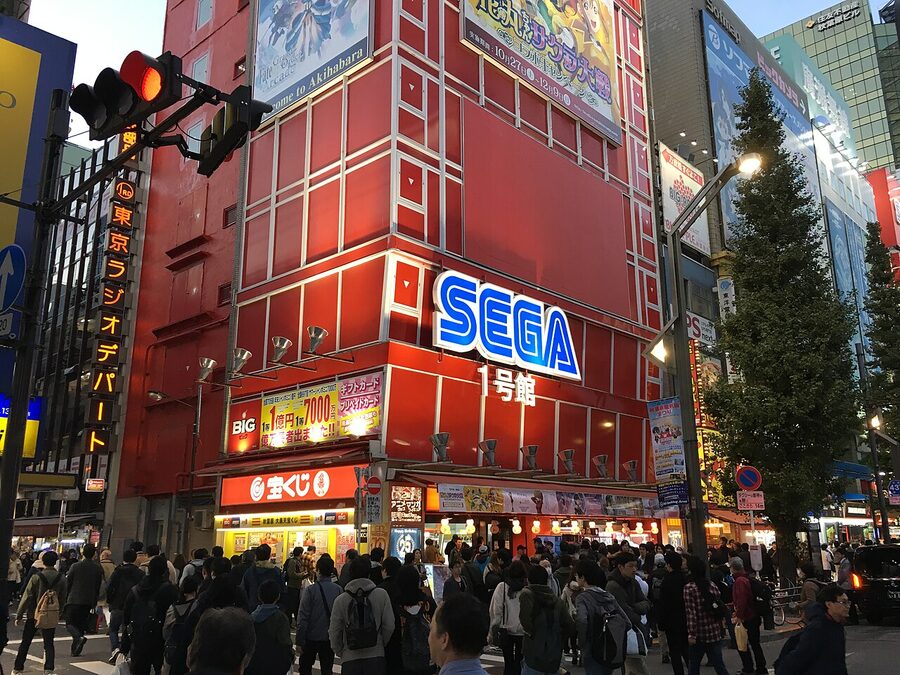
Akihabara has more arcades per block than anywhere else in Japan. The ground floor of most of them is UFO-catchers — the claw-machine games stuffed with plush mascots, figurines, and snack tie-ins — and then the upper floors are rhythm games, fighting games, gacha, medal games, and a bit of sketchier stuff tucked at the top. Taito Station (Chuo-dori, south end) is the biggest single arcade, open until late. Club Sega was the iconic one for years but the Sega arcades have been rebranded to GiGo since Sega exited the arcade business in 2022. If you see a shopfront still labelled Club Sega somewhere, it’s a historic sign — everything’s GiGo now.

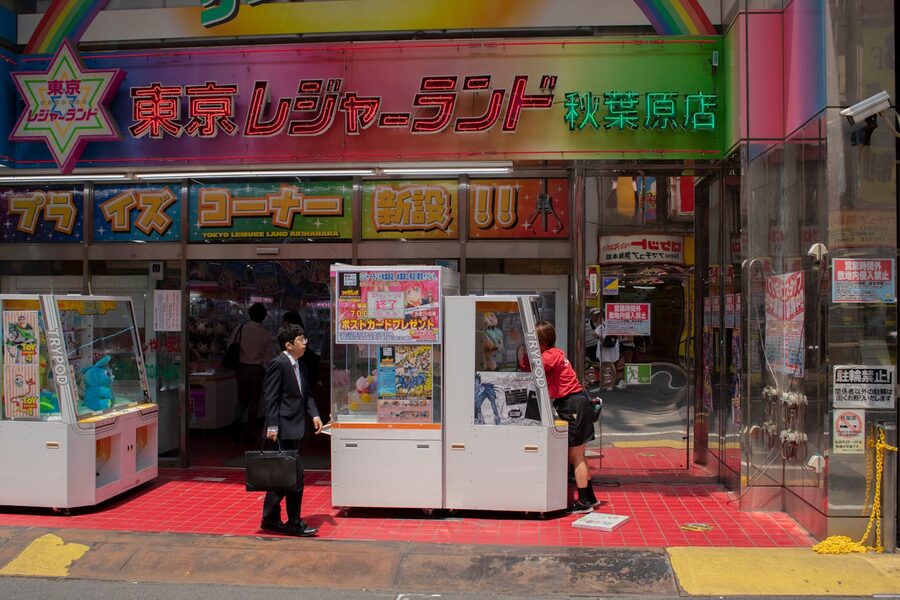
If you’re playing rhythm games, go find Tokyo Leisure Land on Chuo-dori. It’s spread over multiple floors and has the best maintained Dance Dance Revolution and Beatmania IIDX cabinets in central Tokyo. On weekends there’ll be locals playing at speeds that are genuinely difficult to watch, let alone attempt.
Maid cafes (what they actually are)
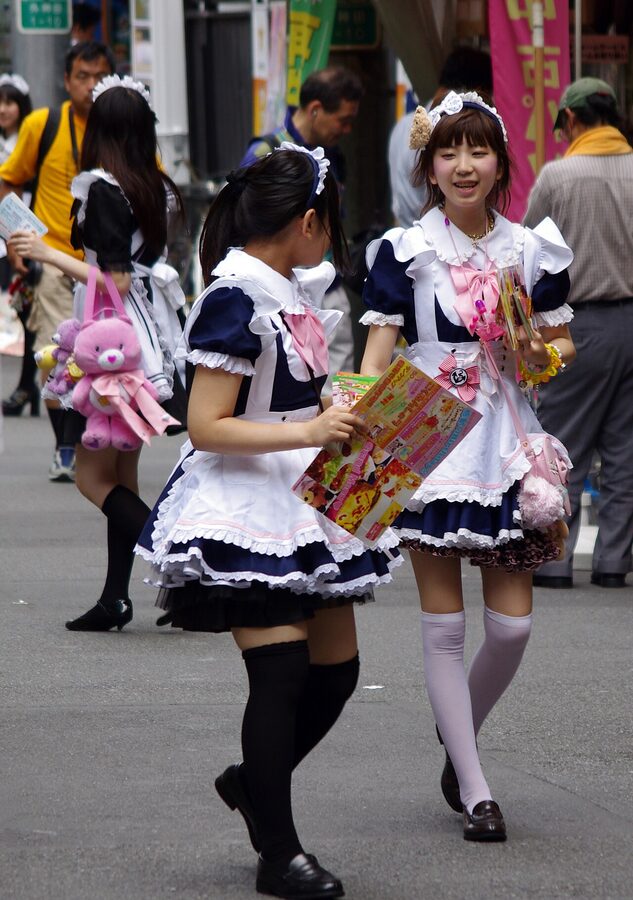
Here’s the thing most first-timers don’t realise. Maid cafes are not bars. They’re not strip clubs. They’re not even really cafes, in the coffee-and-cake sense. They are a piece of pop theatre where you sit at a table, a waitress in a frilly black-and-white uniform calls you goshujin-sama (“master”), serves you a ¥1,400 omelette with ketchup drawn into a cat face, and leads you in a small hand-clapping chant to “make the food delicious.” Most are surprisingly wholesome. Many are explicitly family-friendly. Almost all ban photography of the waitresses — you have to buy a ¥1,000–¥2,000 printed Polaroid-style photo taken by a staff member if you want a souvenir.

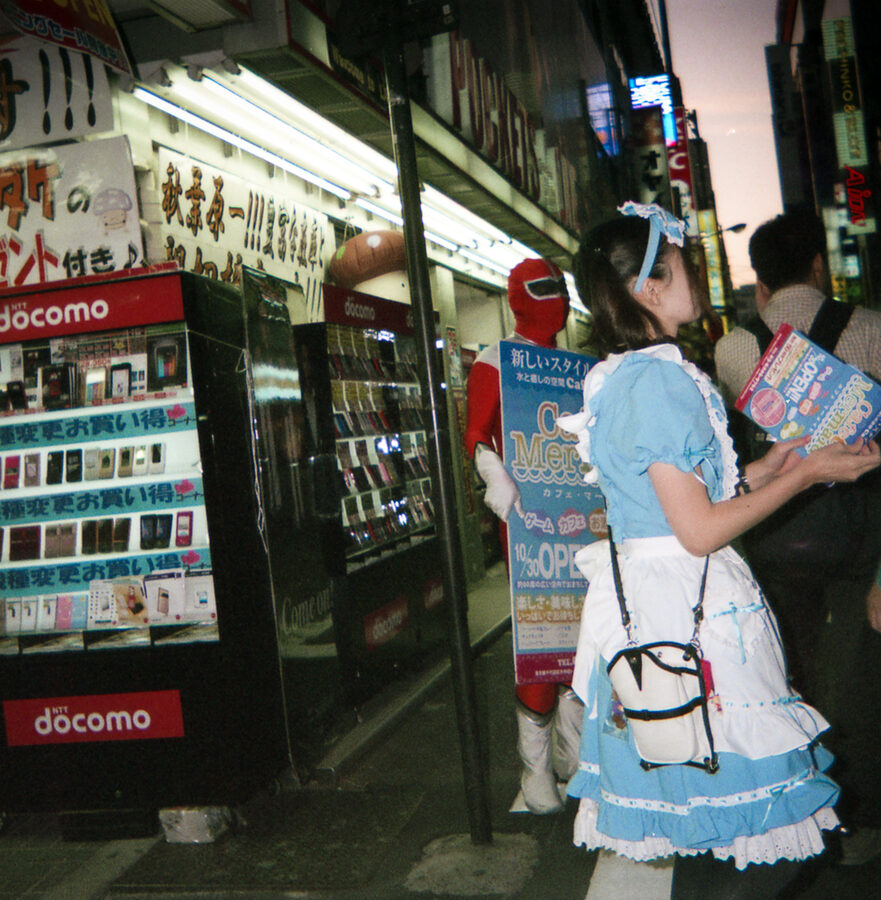
The biggest chains are Maidreamin and @Home Cafe. Maidreamin has English-speaking maids and a shorter cultural barrier for first-timers. @Home Cafe is on the 5th floor of the Don Quijote building and is the one most associated with the AKB48 idol scene. Expect a cover charge of around ¥700-¥1,000, a minimum-order requirement of one drink plus one food item, and a set of rules printed on the menu in English — no touching, no photographing the maids without explicit permission (and paying for it), no alcohol refills if you’re drunk.

My actual view: the cover charges are steep, the drinks are mid, and the “magical moe moe kyun” chant feels very long the second time you do it. Go once for the experience. It’s bizarre and, the first time, actually fun. I would not go again unless someone specifically asked me to bring them. If you do go, give yourself an hour, maximum, and budget ¥2,500-¥3,500 total.
Walking into a maid cafe for the first time
- Stand outside long enough to read the English menu on the door. Most places post cover charges and minimum orders clearly.
- Go up to the host stand. A maid will bow, ask how many people, and walk you through the rules in broken English. Don’t panic — they’ve done this thousands of times.
- Order one drink and one food item. The omurice with a drawing on it is the classic move. Don’t overthink it.
- Play along with the clap/chant thing. Takes 20 seconds. Everyone else is doing it.
- When you leave, bow slightly and say arigatou gozaimashita. They’ll all wave you off. It’s fine.
AKB48 Theater (if you can get in)
On the 8th floor of the Don Quijote building on Chuo-dori is the AKB48 Theater — a 250-seat venue where the massive J-pop idol group performs rotating line-ups most nights. Tickets are usually ¥2,400–¥3,400 depending on the team, and they are genuinely hard to get. The system runs on a lottery: you enter via the official AKB48 website, typically at least a week in advance, and you either get drawn or you don’t. For foreigners the process is opaque at best. If you’re a fan and you want to try, aim for a weekday show rather than a weekend. If you’re not a fan, don’t bother — from the outside the building just looks like a Don Quijote, and the “theater” isn’t something you can walk past and feel.
Food worth actually eating
Akihabara is not a food destination — it’s a shopping and entertainment one — but there are a few places that punch above the neighbourhood’s weight.
- Go! Go! Curry (original shop on Chuo-dori) — Kanazawa-style thick curry, fried katsu on top, shredded cabbage on the side. Around ¥900 for a regular. Open late.
- Tonkatsu Marugo (a few minutes from the station) — specialty pork cutlets. Crispy, tender, small queue at lunch. About ¥2,000-¥2,500 for a set.
- Kyushu Jangara Ramen — tonkotsu-style ramen. About ¥1,100 a bowl. Open until late.
- Magurobito — conveyor-belt sushi on the Yodobashi restaurant floor (8F). Decent quality, no reservations needed, mostly tourist-friendly.
- Hitachino Brewing Lab (inside mAAch ecute Kanda Manseibashi, a repurposed old train station) — craft beer from one of Japan’s best microbreweries, a small menu of food, outdoor seating by the Kanda river. Open from afternoon.
The 8th floor of the Yodobashi building has about 20 restaurants covering ramen, sushi, yakiniku, tonkatsu, tempura and pasta. It’s cheap, fast, and extremely useful if you’ve been shopping downstairs for three hours and don’t want to re-engage with the street.
Nearby: Kanda Myojin Shrine and 2k540 Aki-Oka Artisan
Five minutes’ walk north-east of the station, up a steep set of stone steps called the Myojin Otoko-zaka, is Kanda Myojin — a Shinto shrine more than 1,270 years old that has quietly become a pilgrimage site for anime fans. It’s the shrine that features in the Love Live! anime series, so you’ll see shrine staff selling official Love Live ema (wooden wishing plaques) and omamori (charms) next to the traditional ones. It’s a surreal place — centuries of Shinto tradition side by side with merchandised pop idol spin-offs — and it’s genuinely worth 20 minutes.
In the other direction, a 10-minute walk north under the JR tracks, is 2k540 Aki-Oka Artisan. It’s a small covered gallery of about 50 craft workshops — leather goods, ceramics, letterpress, wood — built under the viaduct between Akihabara and Okachimachi. It’s the complete opposite of everything else in this neighbourhood: quiet, lit with warm spotlights, full of people working at benches. If the noise and neon have started to break your brain, walk here.
How I’d spend an afternoon in Akihabara
If you have one afternoon and one evening, and you want to actually see what Akiba is rather than just pass through it, this is the route I’d use.
- 12:30 — Arrive at Akihabara Station, Electric Town Exit. Stop outside Radio Kaikan for a minute just to look up at the sheer density of shopfronts.
- 12:45 — Walk 60 seconds to Akihabara Radio Center under the tracks. Poke around. Buy a resistor you don’t need.
- 13:15 — Lunch at Go! Go! Curry or Kyushu Jangara Ramen. Both are on Chuo-dori and both are quick.
- 14:00 — Chuo-dori is now pedestrian-only (Sunday) or not (any other day). Either way, walk north slowly and stop in three shops that catch your eye. Don’t plan. Don’t make a list.
- 15:00 — Super Potato. Top floor first, walk down through the decades.
- 16:00 — Mandarake Complex. Same tactic: start at the top, walk down.
- 17:00 — 20 minutes at an arcade. Don’t blow more than ¥1,000 on claw machines. Don’t. DON’T.
- 17:45 — Walk east to Kanda Myojin Shrine for sunset.
- 18:30 — Back to Chuo-dori. It’s now fully dark and the neon is at full intensity. Take your best photos in this window — 18:30 to 20:00 is the sweet spot before the crowds peak.
- 19:30 — Maid cafe, if you’re doing one. 45 minutes to an hour. Leave before the second chant cycle.
- 20:30 — Hitachino Brewing Lab for a beer by the river. Or Yodobashi 8th floor for one final meal.
Practical bits
- Access: JR Yamanote, Keihin-Tohoku, Sobu lines; Tokyo Metro Hibiya Line; Tsukuba Express. All stop at Akihabara Station. Use Electric Town Exit.
- Opening hours: Most shops 10:00/11:00 to 20:00/22:00. Yodobashi and Don Quijote are the longest. Arcades stay open until 22:00 or later.
- Chuo-dori pedestrian zone: Sundays only. 13:00-18:00 (April-September), 13:00-17:00 (October-March).
- Best day: Sunday afternoon. Best time of day: 18:00-20:00 for photos, 14:00-16:00 for cosplayers.
- Avoid: Saturday 14:00-18:00, which is when the tour buses peak.
- Tax-free: Yodobashi, Don Quijote, Laox, Bic Camera all offer tax-free on ¥5,000+ purchases for foreign passport holders.
- Budget: ¥3,000-¥5,000 covers lunch, a couple of small purchases, an arcade session and a coffee. Add ¥2,500-¥3,500 for a maid cafe visit.
- Cash vs card: Most of the big chains take cards and IC cards (Suica/Pasmo). The under-tracks stalls and some smaller shops are still cash-only.
Where to stay nearby
Akihabara is unusually well-placed for a first Tokyo trip — it’s central, it’s on three JR lines, and it’s 30-45 minutes from both airports. Nohga Hotel Akihabara is the design-forward mid-to-upper range option (Pizza & Bar Nohga on the ground floor is decent). JR East Hotel Mets Premier Akihabara is directly connected to the station if you want to step straight off the train into reception. For cheaper options, there are half a dozen business hotels around Suehirocho and Asakusabashi, plus Akihabara Bay Hotel (women-only capsule) and a handful of manga kissa (manga cafes) offering overnight booths from around ¥3,000 if you’re on an ultra-budget or just arrived on a late flight. There’s a full rundown in my budget guide to where to stay in Tokyo.
Other Tokyo districts worth pairing with Akihabara
Akihabara sits on the north-east edge of central Tokyo, which makes it easy to combine with a couple of very different neighbourhoods on the same day:
- Asakusa — two stops north on the Ginza Line from Suehirocho, or 10 minutes by the Tsukuba Express. Temples, traditional food streets, a completely different century.
- Meiji Shrine — the opposite end of the Yamanote Line, but if you want to experience Tokyo’s pop culture peak and its contemplative peak in the same 24 hours, pair these two.
- Shibuya — same Yamanote Line, southern side. The other great pop-culture district of Tokyo, but louder, younger and more commercial.
For official visitor info, the Go Tokyo tourism board’s Akihabara page has event listings and a map. For train access and timetables, JR East is the cleanest English-language source.
One last thing. Everyone tells first-timers that Akihabara is overwhelming, and it is, but the overwhelm passes. By the third visit you stop noticing the sound. You start noticing which flyer-girl has the best pitch and which claw machine is set to let the prize fall on the fifth grab. It stops being a theme park and starts being a neighbourhood. That’s when you know you’ve been to Tokyo properly.