
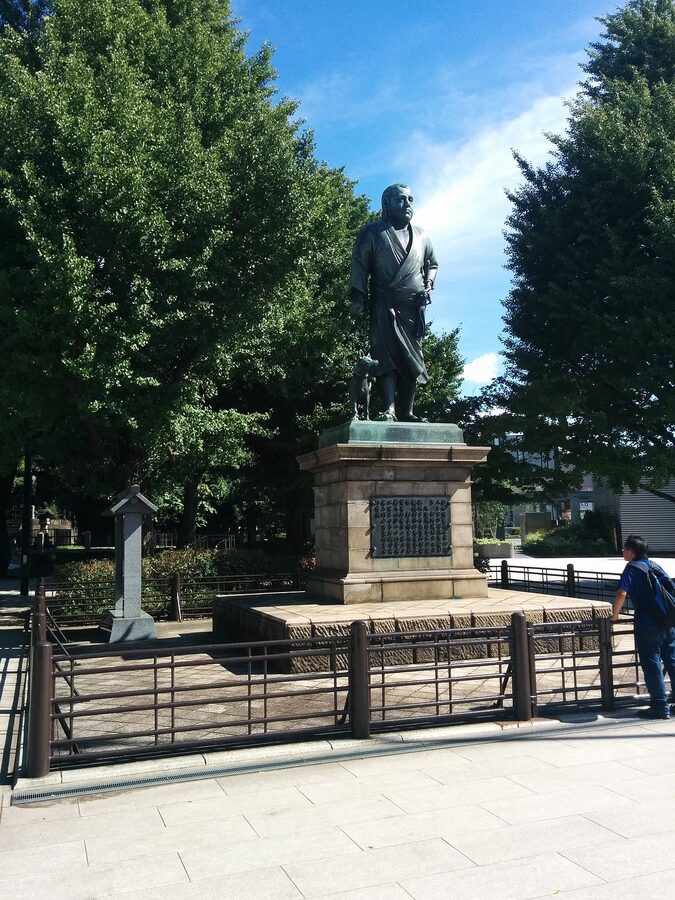
There is a bronze statue of Saigō Takamori at the south entrance of Ueno Park, and he is wearing a yukata and walking his dog. He is not on a horse. He has no sword. He is, as statues of national heroes go, extremely dressed down. The guidebooks mostly leave this out, and then leave out the fact that the dog has a name — Tsun, a hunting hound — and that Saigō himself is one of the most complicated figures in modern Japanese history, a samurai who helped bring down the shogunate, then led an armed rebellion against the same Meiji government he had created, then died with his soldiers in Kagoshima in 1877. The bronze went up in 1898. And the reason he is in a yukata with his dog, rather than in uniform with a weapon, is because the man who commissioned the statue wasn’t allowed to put the country’s most famous rebel up as a warrior. So here he is, in casual clothes, hand on the leash, as if he’s just on his way back from the bath. I think about this statue every time I come through Ueno, which is often, because Ueno turns out to be about this sort of thing all the way through — big historical stories tucked into very small, very specific objects if you bother to look.
In This Article
- Why Ueno is not like the rest of Tokyo
- Getting there (it is ridiculously easy)
- Ueno Park and the five museums you walk past without realising
- The head of a Great Buddha (and nothing else)
- Shinobazu Pond, the lotuses, and the temple on the island
- The golden shrine nobody talks about
- Ueno Zoo and the politics of pandas
- Ameyoko: a black market that never quite stopped
- Cherry blossoms, and why I’d actually send you elsewhere
- Practical info at a glance
- How I’d actually spend a morning in Ueno
- Where to stay near Ueno (and is it worth it)
- One last thing
Why Ueno is not like the rest of Tokyo
The short version: Ueno is the oldest public park in Japan and it shows. The Meiji government bought up the land here in 1873, partly because the area around Kan’ei-ji — a massive Tokugawa-era temple complex — had been burned down in the Boshin War and was just sitting there, ashy and unused, right next to a major rail terminus. A Dutch military doctor named Bauduin apparently talked them into a park rather than a hospital, and that was that. So Ueno is not a fashion district or a salaryman corridor. It’s a park with five big museums plonked inside it, a zoo, a lotus-filled pond, a couple of shrines hidden at angles, an old black-market shopping street that never quite stopped being a black-market shopping street, and a rail station that handles every bullet train heading north.
If you’re staying in Shinjuku or Shibuya and you come here, the first thing you notice is the pace. People walk slower. There are retirees on benches. There are kids on school trips in yellow hats being counted off by their teachers. Somebody is always feeding the pigeons, which is technically discouraged but happens anyway and has created a pigeon population of faintly ridiculous size. Tokyo has a reputation for being relentless; Ueno is where it stops to sit down.
Getting there (it is ridiculously easy)
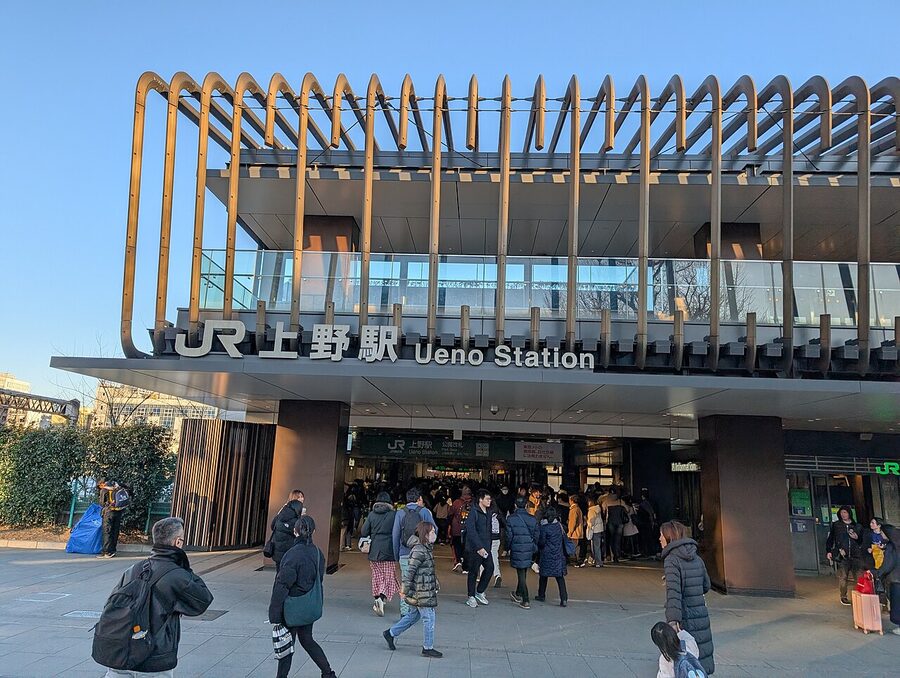
Ueno Station is on the JR Yamanote line, which is the circle line that most first-time visitors end up using for everything. That alone makes it easy — you can’t really get lost if you’re on a loop. It also sits on the JR Keihin-Tohoku, Joban and Utsunomiya lines, the Tokyo Metro Ginza and Hibiya lines, and — the one that actually matters if you’re arriving from Narita Airport — the Keisei Skyliner, which gets to Keisei Ueno Station in about 41 minutes for ¥2,580. Skyliner is the cheapest fast option from Narita. Don’t let anybody talk you into the Narita Express unless your hotel is on the Tokyo Station side of town.
From Ueno Station there are two exits you actually need to know. The Shinobazu exit (south side of the station) puts you right at the top of Ameyoko market. The Park exit, signposted as Kōenguchi, puts you next to the escalator up to Ueno Park. They are about five minutes’ walk from each other and the first time I came here I chose wrong and spent a confused ten minutes looking at traffic. Pick your exit based on what you want to do first.
Walking distance-wise: Ueno to Asakusa is about 20–25 minutes on foot if the weather’s nice (or one stop on the Tokyo Metro Ginza line if it isn’t). Kappabashi, the kitchen-knife and plastic-food-model street, is about 15 minutes from Ueno Station — technically its own neighbourhood but absolutely doable as a detour.
Ueno Park and the five museums you walk past without realising
Ueno Park is huge — around 53 hectares — and it is mostly wide gravel paths, big trees, and a scattering of museums that would be the main attraction in any other city. Most people only visit one or two, which is sensible because you’d lose your mind trying to do them all in a day.
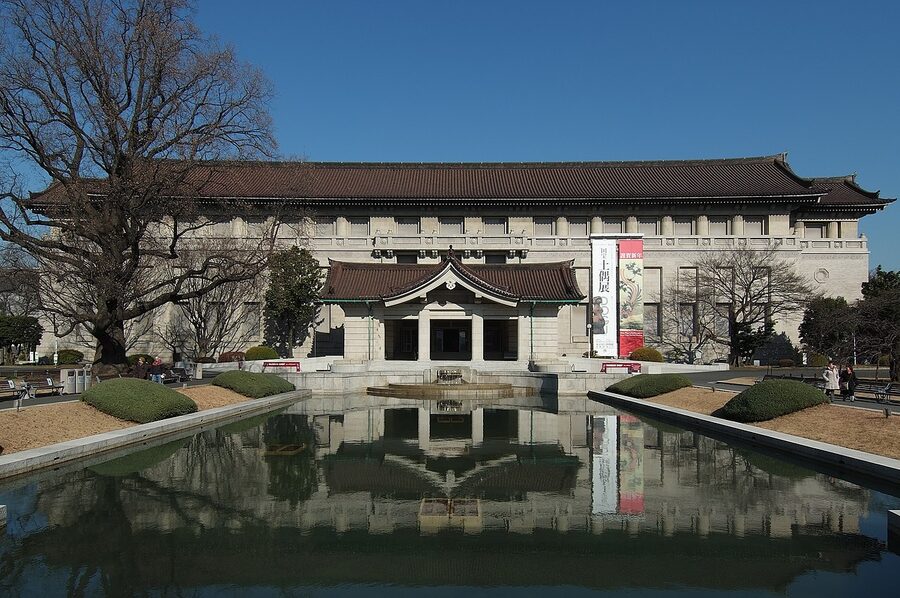
The flagship is the Tokyo National Museum. It is Japan’s oldest (founded 1872), largest, and most important museum of Japanese and Asian art — over 110,000 pieces in the collection, of which maybe 3,000 are ever on display at once. The main hall, the Honkan, is itself designated as an Important Cultural Property. If you only have time for one museum in the park, this is the one. Go for the swords, the lacquerware, and the Heian-period calligraphy even if you can’t read it. Entry is ¥1,000 for adults for the permanent collection. Closed Mondays.
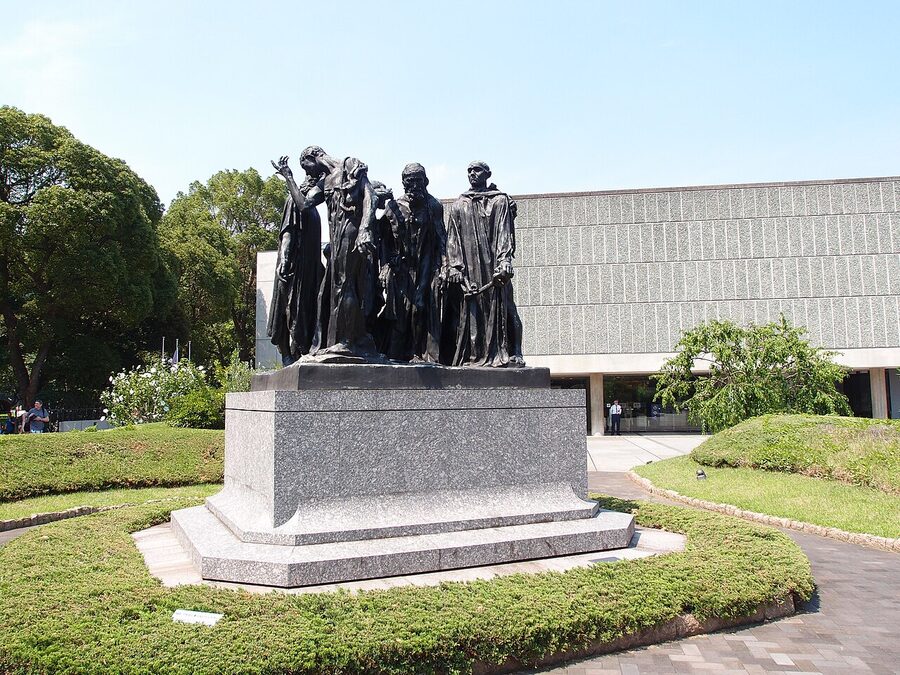
The National Museum of Western Art is the one by the main plaza with a garden of Rodin bronzes outside — the Thinker, the Gates of Hell, Burghers of Calais. The building itself was designed by Le Corbusier in 1959 and became a UNESCO World Heritage site in 2016, which is a slightly surreal thing to read on a sign on your way to see Monet. ¥500 for the permanent collection.
The National Museum of Nature and Science has dinosaurs, a blue whale skeleton outside that kids immediately want to touch, and a taxidermied version of Hachiko — the Shibuya loyalty dog — which is a quietly moving exhibit if you’ve ever seen the statue at Shibuya crossing. ¥630 for adults. Good rainy-day fallback with children.
The Tokyo Metropolitan Art Museum is the temporary-exhibition one — big international loans, long queues on weekends, and genuinely excellent shows if you happen to be here during the right one. Check what’s on before you go; a Vermeer or Monet blockbuster can run for three hours of queuing. Permanent galleries are free.
And then, a little further north, the Shitamachi Museum — small, and the one I’d send anyone who likes social history. It reconstructs a working-class Tokyo home and street-corner shop from before the Second World War, the kind of thing that’s all gone elsewhere in the city. There’s usually an English-speaking volunteer. ¥300. Note: the museum has been in a temporary annex while the main building is renovated — check the Taito City website before you go.
If you’re planning to do more than one, ask at the ticket counter about the Ueno Welcome Passport — it’s a combination ticket for several museums, the zoo, and some smaller attractions for around ¥2,500. Worth it if you’re doing three or more.
The head of a Great Buddha (and nothing else)
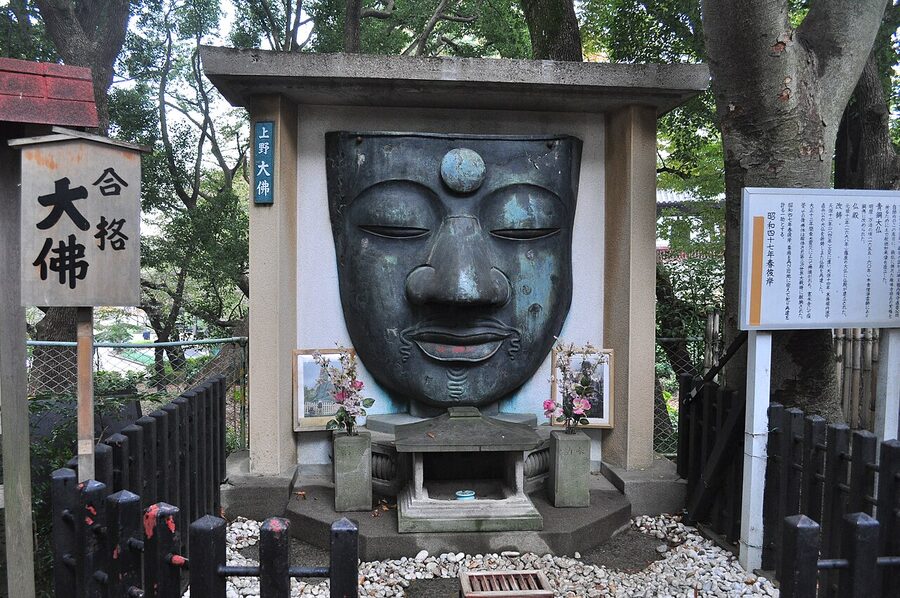
Now for my favourite monument in Ueno, which almost nobody visits. On a little rise on the eastern side of the park, tucked near the pagoda, there is a bronze face fixed to a low wall. That is the Great Buddha of Ueno. The original seated statue was cast in 1631 and stood about six metres tall. It lost its head in an earthquake in 1647. It was rebuilt. It lost its head again in another earthquake. It was rebuilt. It survived various fires, then lost its head a third time in the Great Kanto earthquake of 1923 — at which point the torso was damaged beyond repair. The body was melted down for metal during the Second World War. And this face, just the face, is what survived. The little shrine is called “Ueno Daibutsu,” and because this head has refused to fall off any further, it has become a quiet pilgrimage spot for students sitting exams. It’s the least triumphant monument in a park full of bronzes, and it’s the one I make a point of visiting every time.
Shinobazu Pond, the lotuses, and the temple on the island
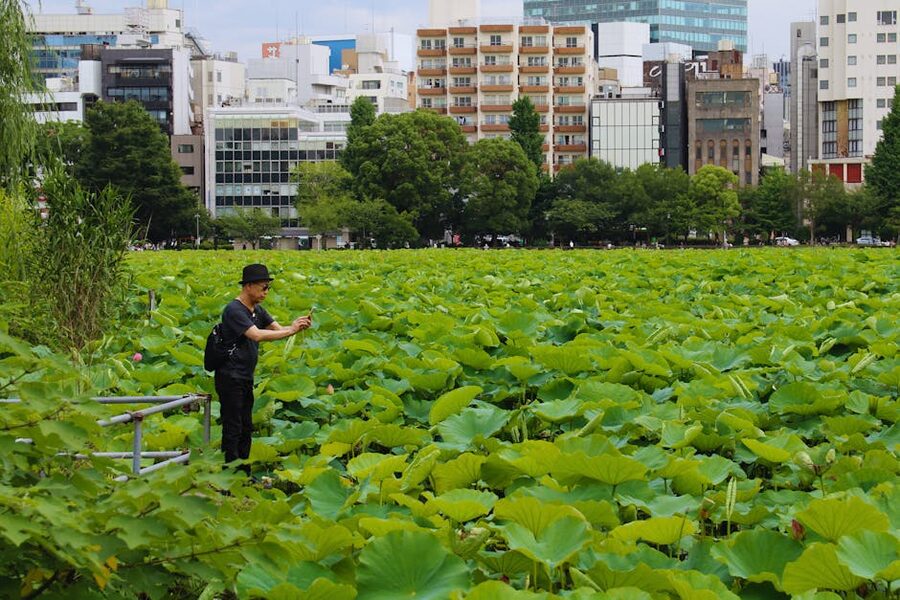
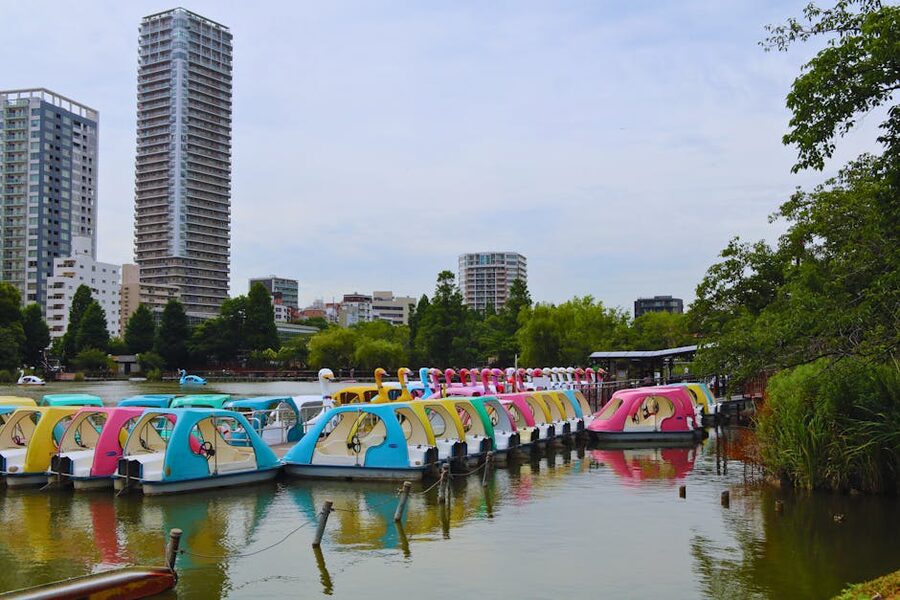
If you walk south through the park and keep going, you drop down to Shinobazu Pond, which is the other thing most visitors miss. Three sections — a lotus pond, a boat pond where you can rent pedal swans, and a smaller cormorant pond by the zoo — wrap around a small island in the middle. The lotus pond in August is one of the strangest sights in central Tokyo. The leaves stand a full metre above the water and by peak bloom the whole surface is packed solid — pink flowers the size of dinner plates and the Tokyo skyline behind, with Seibu Ikebukuro buildings poking up through the green. Come before 9am if you want it quiet; come in early evening if you want the city lit up behind the lotuses. Around the edge of the pond, board walks cut through the reeds and it’s a fine stroll even if you don’t care about aquatic plants.
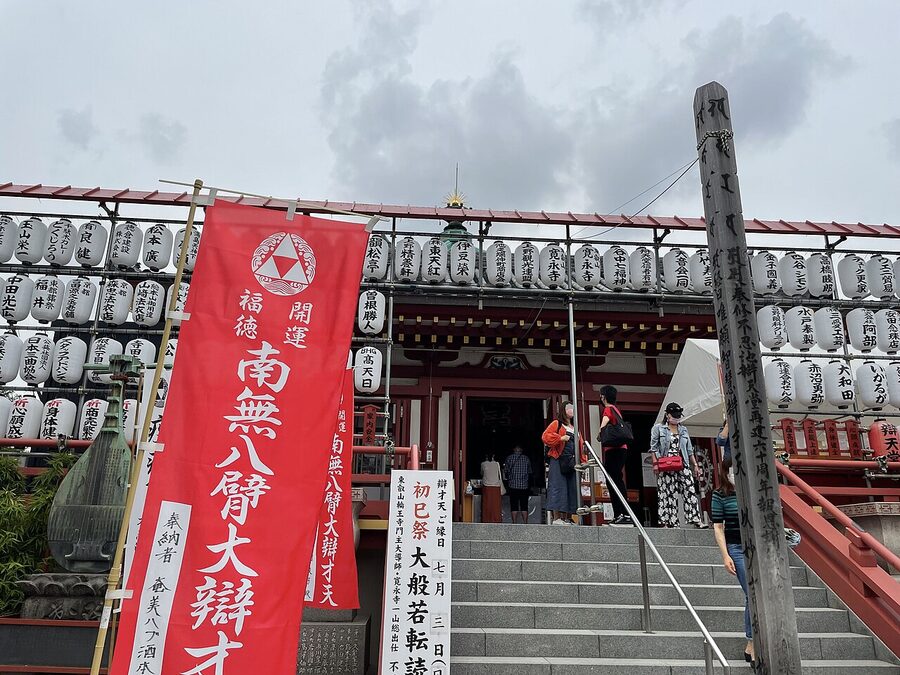
On the island in the middle is Benten-do, a red, hexagonal temple that is weirdly photogenic from every angle. It’s dedicated to Benzaiten — goddess of music, art, wealth and (the really useful one) matchmaking — and music students from the Tokyo University of the Arts, which is right next door, come to pray during exam season. The little covered causeway out to the island is lined with stalls on weekends selling dango and shaved ice. It’s free, it takes fifteen minutes, and it’s a fine place to sit for a bit and watch the turtles.
The golden shrine nobody talks about
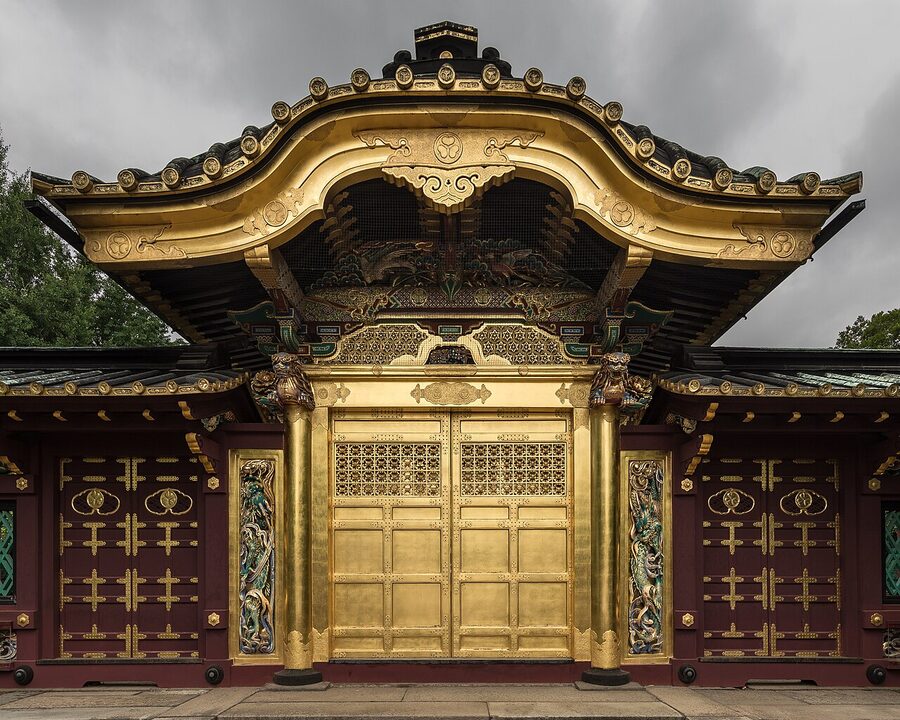
Back up in the park proper, Ueno Tōshōgū is one of those places almost everyone walks past because it’s signposted badly. You find it by heading through a long avenue of stone lanterns on the western side of the park. It was first built in 1627 and is dedicated to Tokugawa Ieyasu, the first shogun — same deity as the much more famous, much more out-of-the-way Tōshōgū at Nikkō. And here’s the thing: the main building is from 1651, survived every earthquake and war, and is a genuinely gorgeous piece of gilded Edo architecture. The outer grounds and the lantern avenue are free; the inner shrine costs ¥500 and is worth it. Visiting this one instead of Nikkō saves you about five hours.
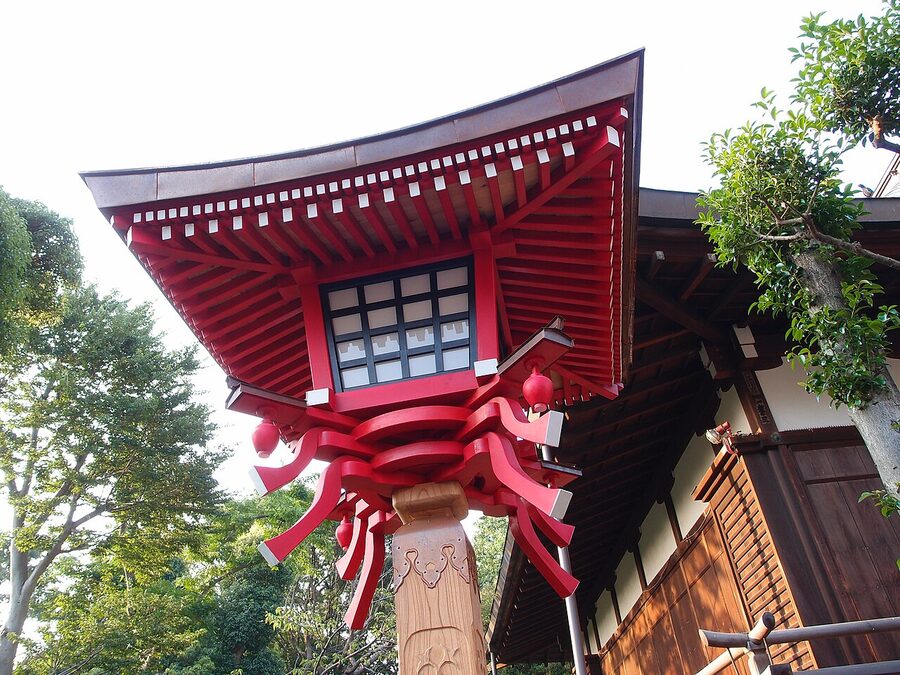
While you’re up here, look for Kiyomizu Kannon-dō on a little rise nearby. It’s a small wooden copy of Kyoto’s famous Kiyomizu-dera, with the same stage-jutting-out-over-the-slope design. Dates from 1631. It’s dedicated to a Kannon associated with fertility, so the precinct is hung with dolls from couples who’ve come to pray for a child — every September 25th the dolls are ceremonially burned in a ritual called Ningyō-kuyō. It’s not a major attraction in any guidebook sense but it’s a strange, quiet spot if you’re already walking past.
Ueno Zoo and the politics of pandas
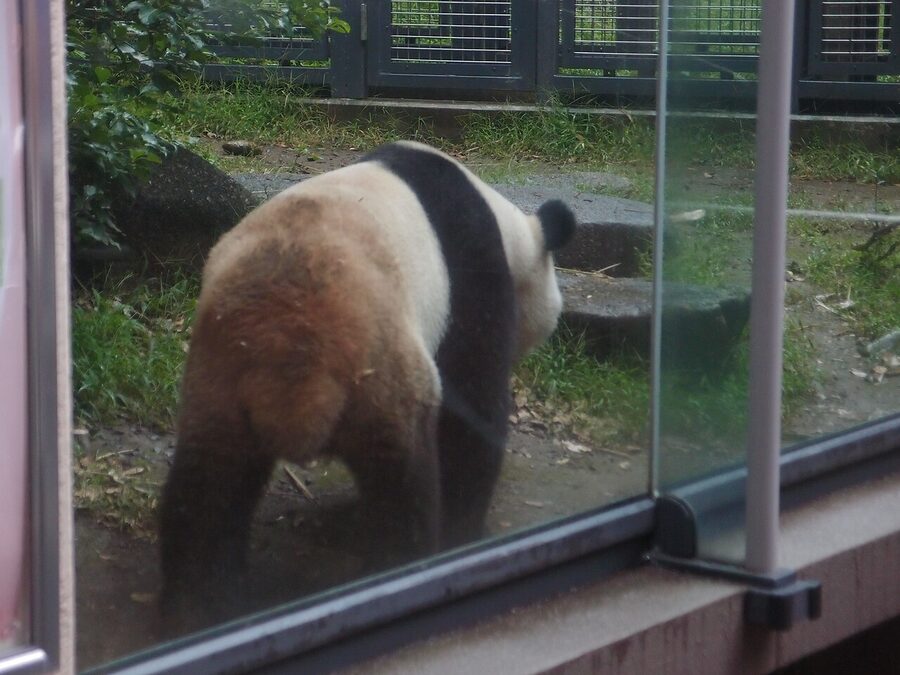
Ueno Zoo opened in 1882 and is Japan’s oldest zoo. It is also where Japan’s giant pandas live. The panda part of this is not a quirky aside — it is a genuine national phenomenon. China sent the first pandas, Kang Kang and Lan Lan, to Ueno in 1972 as a diplomatic gift to mark the normalisation of Sino-Japanese relations, and the country lost its mind. Every single panda at Ueno since has been news. When Xiang Xiang was born in 2017, her birth made the evening bulletins on NHK, as did her first steps, her weaning, her first tooth, and every one of her birthdays. She went back to China in 2023 under the terms of the loan and people cried on camera. The current pair, Ri Ri and Shin Shin’s descendants, live in a section called Panda Forest. If you are going to Ueno Zoo, you are essentially going for the pandas.
Practical note: the panda viewing queue on weekends is legitimately 90 minutes to 2 hours long, sometimes more. You get about 30 seconds at the glass. The rest of the zoo is perfectly fine — red pandas in a separate exhibit, elephants, the monorail that used to go between the two halves has been suspended since 2019 and probably won’t come back — but if you are time-pressed and not specifically here for pandas, I’d skip. Go look at the lotus pond instead. Entry ¥600 for adults, under-12s free. Closed Mondays.
Ameyoko: a black market that never quite stopped
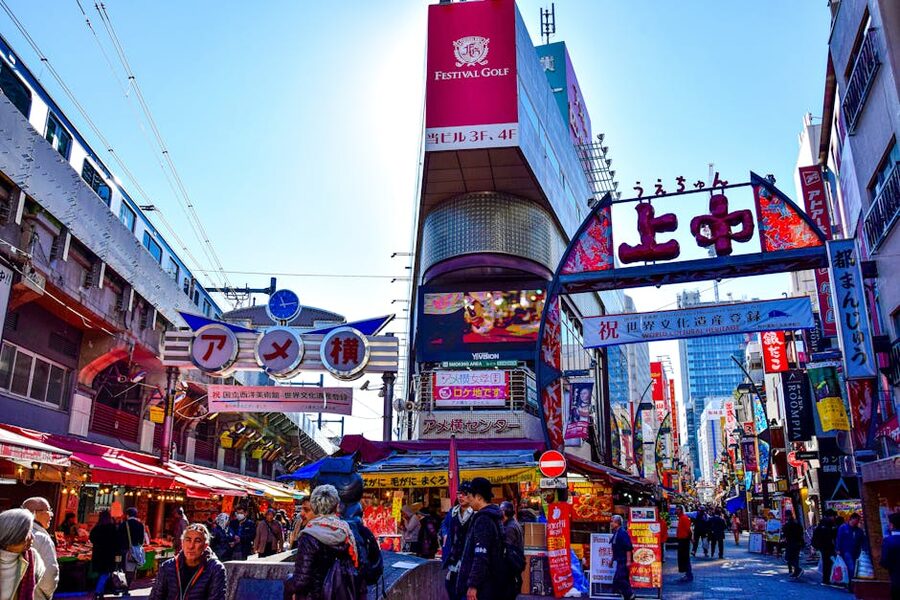
Ameyoko — properly Ameya-Yokochō, meaning “candy-seller alley” — is the strip of shops, stalls, restaurants and fishmongers that runs in a long crooked line under and alongside the JR tracks between Ueno and Okachimachi stations. It is one of the louder things in Tokyo, and that is saying something. Vendors shout. Customers haggle. Buckets of dried fish are out on trestles at 9am. Rolls of fabric and off-brand track suits hang from the beams. It smells like yakitori smoke and fresh citrus and, faintly, fish.
Its origin story is pure post-war. When Tokyo was in ruins after 1945, Ueno Station — still functional — became the hub for black-market trade, first in candy (hence the name) and then in US military surplus food, clothing, and medicine. The black market was officially dismantled by 1951, but the stalls never left; they just regularised into licensed shops. Today it’s a strange mix: tourist souvenirs on one side, actual working fishmongers on the other, and some very good cheap restaurants tucked in between.
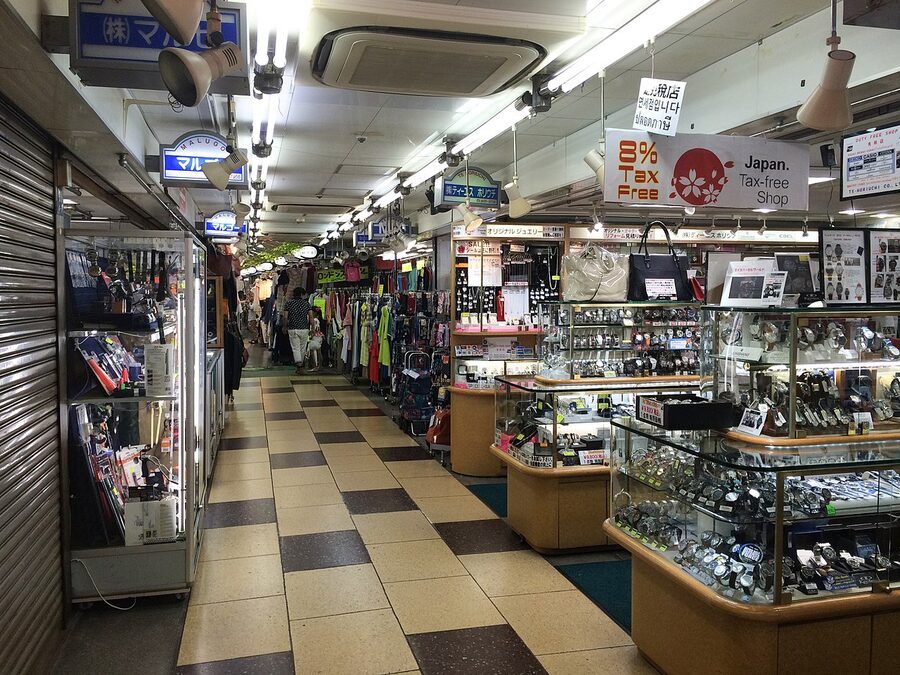
A few bits on how to actually use Ameyoko:
- The fishmonger stalls at the Ueno end are the real deal. Dried squid, fresh tuna, massive crabs, sea urchin — prices drop sharply in the last hour before close. If you’re staying in an Airbnb with a kitchen, this is cheaper than any supermarket.
- Most of the street food is worse than a convenience store. There, I said it. The takoyaki stands, the crepe stalls, the “fresh juice” in plastic cups — you’re paying twice what a 7-Eleven onigiri would cost and the quality isn’t better. The exception is Minatoya, a tiny standing-only sashimi-bowl place where you get a real tuna donburi for around ¥600. It’s in the middle of the alley. Ask for the maguro and bintoro combo.
- The clothing shops are a mixed bag. Knock-off Supreme, legitimate new-balance trainers at below retail, and at least one shop selling Japanese school uniforms nobody is wearing ironically. Go if you’re curious; don’t go specifically.
- Iseoto, near the Shinobazu exit, shaves bonito flakes to order from massive blocks. ¥500 will get you enough to make dashi for a week and the shop is around 100 years old.
- Niki no Kashi, the chocolate-and-snack discounter, is where locals stock up on imported goods. Half-price Toblerones and massive bags of Hi-Chew. Underrated souvenir stop.
Best time: early afternoon on a weekday is a decent middle ground. Saturday afternoon is pandemonium — fun for 20 minutes, exhausting after an hour. Most stalls open around 10am and start closing at 7pm; the food alleys run later.
Cherry blossoms, and why I’d actually send you elsewhere
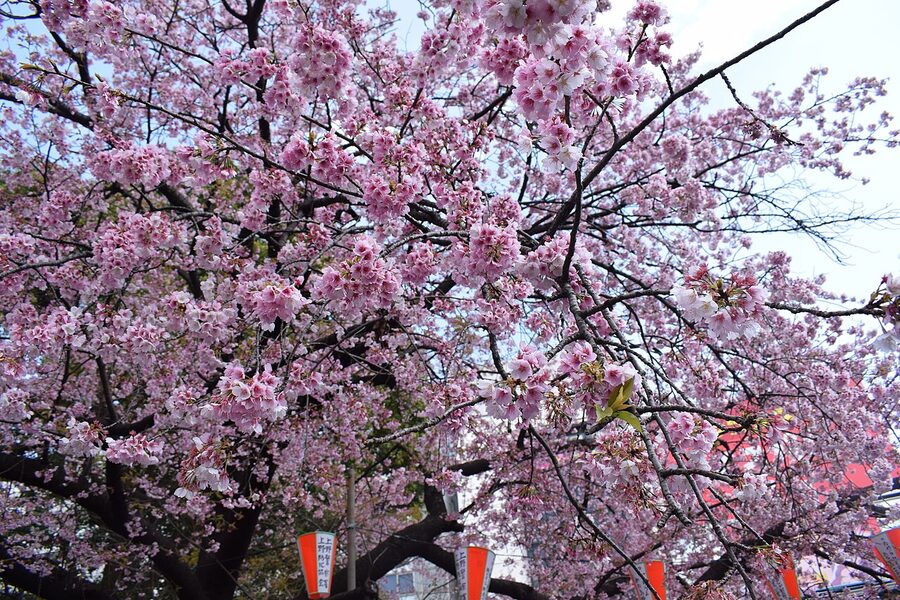
Ueno Park is one of Tokyo’s top-three hanami spots. Roughly 1,200 cherry trees line the main avenue. Peak bloom is late March to the first week of April in most years, and on that weekend the park is a single enormous picnic — blue tarps everywhere, beer cans, corporate groups, school groups, uncles falling asleep against trees. It is genuinely one of the great spectacles of spring in Japan.
It is also, and I say this as somebody who loves hanami, completely uncivilised during peak weekends. You cannot move. The paths are 90% blue tarp. The photos are not of cherry blossoms, they are of cherry blossoms plus 400 strangers. If you actually want to see the blossoms in any kind of peace, get yourself to Chidorigafuchi, the moat by the Imperial Palace, where you can rent a rowboat and drift under the branches. Or come to Ueno on a Tuesday morning at 7:30am when the park staff are still sweeping up from the night before — it’s stunning then.
Non-hanami tip: the trees in Ueno are a mix of Somei-yoshino (the classic pale-pink one, peaks early April) and a few early bloomers. If you check the pre-bloom date, there are often a handful of trees out two weeks before the main bloom. Come for those, the park is empty and the photos are better.
Practical info at a glance
- Ueno Park: open 5:00 to 23:00. Free. Some inner precincts close earlier.
- Tokyo National Museum: 9:30–17:00 (until 21:00 Fridays and Saturdays). Closed Mondays. ¥1,000 adults. Official site.
- National Museum of Western Art: 9:30–17:30. Closed Mondays. ¥500 permanent collection.
- National Museum of Nature and Science: 9:00–17:00. Closed Mondays. ¥630.
- Ueno Zoo: 9:30–17:00 (last entry 16:00). Closed Mondays. ¥600 adults, free under 12. Tokyo-zoo.net.
- Ueno Tōshōgū: 9:00–16:30 (inner shrine). Outer grounds free, inner ¥500.
- Bentendō (Shinobazu): open access, free.
- Ameyoko: mostly 10:00–20:00, food and izakaya alleys run later.
- Shinobazu boats: 10:00–17:30. Swan pedal boats ¥700 for 30 minutes, rowing boats around ¥500.
- Access from Narita Airport: Keisei Skyliner, ~41 min, ¥2,580.
- Nearest shinkansen stop: Ueno Station (Tohoku, Hokkaido, Hokuriku lines).
The Tokyo metropolitan government’s Go Tokyo page and the JNTO Ueno page are both worth a glance for current event info.
How I’d actually spend a morning in Ueno
- 8:30am — arrive via the Park exit. Walk up to the plaza, past the Saigō statue (stop, look at the dog, read the sign). Keep going up to the main avenue.
- 9:00am — Tokyo National Museum when it opens. An hour in the Honkan is enough for most people; a full morning if you’re into it. Aim for swords and Heian calligraphy at minimum.
- 10:30am — walk west through the park to Ueno Tōshōgū. Ten minutes along the lantern avenue. ¥500 to go inside the golden shrine.
- 11:00am — five-minute walk south, down the slope, to the Great Buddha face. Find the little shrine. Linger, read the sign, take a photo nobody else on your trip has.
- 11:30am — keep going south to Shinobazu Pond. Walk the boardwalks; in August the lotuses are unbelievable. Cross the causeway to Benten-do.
- 12:30pm — cut east across the park and down the steps to Ameyoko. Eat sashimi bowl at Minatoya. Stock up at Niki no Kashi.
- 2:00pm — walk or get on the Ginza line to Asakusa for Senso-ji in the afternoon. It is genuinely 20 minutes on foot.
That’s a good day. If you have a full day and kids, swap the museum at step 2 for the zoo, add the Nature and Science museum at 2pm, and eat in Ameyoko. If it’s raining, do the four museums in the park — they’re all about four minutes from each other — and skip the pond. If it’s late July, reverse the order and do the lotus pond first thing.
Where to stay near Ueno (and is it worth it)
Short version: Ueno is cheap. If you’re on a budget, it’s one of the most efficient bases in Tokyo — you have Yamanote line access, Keisei Skyliner direct to Narita, shinkansen north, and Asakusa next door. Rooms here tend to be smaller and older than the Shinjuku high-rises, but they’re also ¥5,000–8,000 a night cheaper for similar specs.
It’s not glamorous. You won’t get Tokyo skyline views. The area around the station at night is tired-looking — old izakayas, some cheap love hotels on the back streets, the kind of neon that looks better in photos than in person. If that’s fine with you, Ueno is an excellent base. If you want chic, stay in Ginza. See my full where-to-stay guide for specific hotels.
One last thing
Walk back through the park at dusk if you can. The pigeons settle. The vending machines near the zoo start glowing. The big bronze Saigō stands on his pedestal with Tsun straining at the leash, and from this angle, silhouetted against the sky, he does finally look a bit heroic. I think that’s the thing about Ueno. It’s not trying to impress you. It just waits, full of quiet stories, for you to notice.
For seasonal planning, see my Tokyo cherry blossom guide. If you want the faster, busier Tokyo afterwards, jump on the Yamanote line to Asakusa and keep going. Most of my favourite Tokyo days involve at least two of these places in a row.