
There are five mistakes foreign tourists consistently make at Japanese onsen. The first four will get you a firm but polite correction from an attendant. The fifth will get you asked to leave. I’ll list them up front so you know them before you take your shoes off: dipping your hair into the water, getting into the bath without washing first, bringing the small towel into the water, taking photos in the changing room, and wearing a swimsuit. You won’t be scolded loudly for any of them. Japan is rarely loud about anything. But you will feel the room go quiet, and that’s worse.
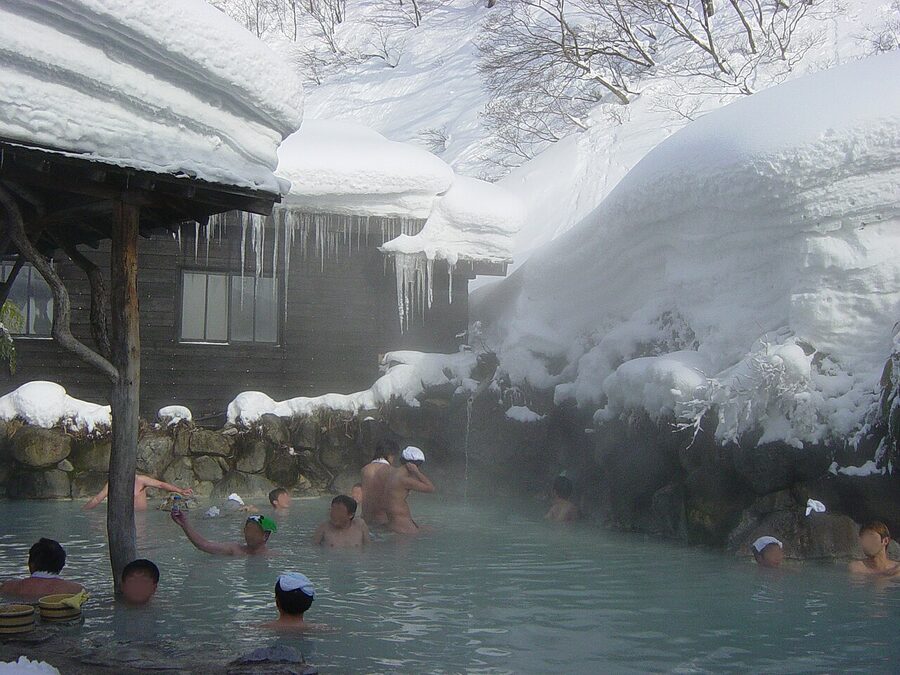
I’m going to walk you through the whole thing — from paying your ¥700 at a day-use bathhouse to standing in the resting lounge afterwards in a yukata, drinking cold barley tea and not quite remembering your own name. This is the guide I wish I’d read before my first onsen, which I got wrong in three different ways within about four minutes.
In This Article
- The five mistakes, in a bit more detail
- 1. Get into the bath without washing first
- 2. Put the small towel in the water
- 3. Dip your hair
- 4. Take photos
- 5. Wear a swimsuit
- What an onsen actually is (and how it’s different from a sento)
- The full eleven steps, from arrival to leaving
- Tattoos — the real answer
- Timing, temperature, and how long to stay in
- Money — what you’ll actually pay
- Where to go, if you’re based in Tokyo
- The ranking I’d give a friend
- A practical info block
- My first-onsen plan, if I was you
The five mistakes, in a bit more detail
Most onsen will quietly tolerate a clueless foreigner — I know because I was one and they did. But these five are the ones worth knowing before you walk in, because unlike most etiquette they’re not things you can pick up by watching someone else. You’ll already be naked by the time it matters.
1. Get into the bath without washing first
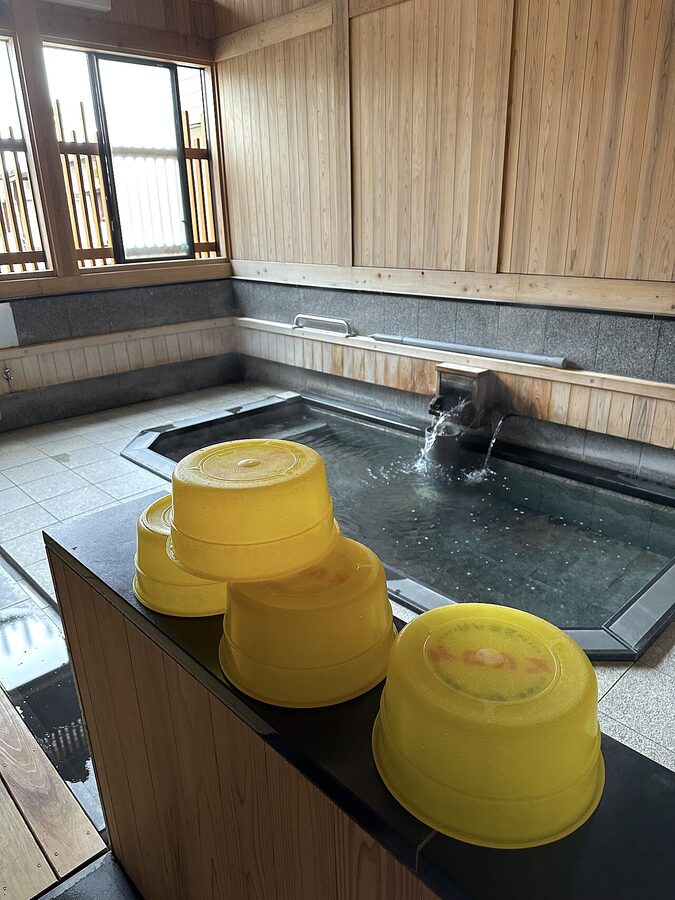
This is the rule. You do not get in the onsen without washing at the shower stations first. Every onsen has a row of small stools facing a wall of mirrors, with a handheld shower, shampoo, conditioner, and body wash at each station. You sit down, rinse, soap up, shampoo, rinse everything off completely, and only then do you walk over to the bath. There is no version of this where you skip the shower. The water in the bath is shared and not chlorinated to a pool level, so it stays clean because everyone arrives at it already clean.
A full pre-bath wash takes about five minutes. Don’t rush it. I once saw a tourist give himself a 30-second splash and head for the bath, and a Japanese man at a neighbouring stool made a very small sound — somewhere between a cough and a syllable — that made the guy stop mid-step and go back. I’ve thought about that cough a lot.
2. Put the small towel in the water
You’ll be given two towels, or you’ll buy them at the entrance. A big one stays in the changing room for drying off afterwards. A small one — about the size of a thin tea towel — goes with you to the bath. Its job is modesty while you’re walking about, and that’s it. Once you’re at the bath, you either fold it and put it on your head or you set it on the rocks or ledge at the side. It never touches the water. I have genuinely seen people wring their towel out into the bath at the end and watched three Japanese women exit en masse.
3. Dip your hair
If your hair is long enough to touch the water when you’re sitting up to your shoulders, tie it up. Most onsen have small hair ties at the wash stations or in the locker room, but bring your own if you’d rather not trust supply. Stray strands that fall in by accident aren’t going to earn you a glare, but a full ponytail trailing in the water will. Put it in a high bun. Same for beards long enough to wick — I’ve never seen a beard get scolded, but the logic is identical.
4. Take photos
No photos. Not of the changing room, not of the shower area, not of the bath. Not of your own feet in your own private mirror. Everyone in this building is naked. Your phone stays locked in your coin locker from the moment you walk in until the moment you come back out. Some ryokan private baths (kashikiri, which you book for an hour) allow you to bring a phone in, but assume no and check signage. I once saw a ryokan attendant walk across a changing room and ask a woman to delete a selfie before she could finish locking her locker. It was polite and it was immediate.
5. Wear a swimsuit
You do not wear a swimsuit in a traditional onsen. Not a bikini, not board shorts, not compression underwear. You are fully naked. This is the one that makes first-timers tense and, for what it’s worth, it stops mattering about four minutes in. Baths are segregated by gender (men 男, women 女, usually noren curtains in blue and red respectively though not always), and once you’re in the water everyone is up to their shoulders. You’ll forget faster than you think. The exception is some resort-style onsen that are designed as mixed-gender water parks — Oedo Onsen Monogatari in the past, some newer places now — where you wear a yukata or provided swimwear. Those aren’t traditional onsen and they’ll tell you clearly what to wear at the front desk.
What an onsen actually is (and how it’s different from a sento)
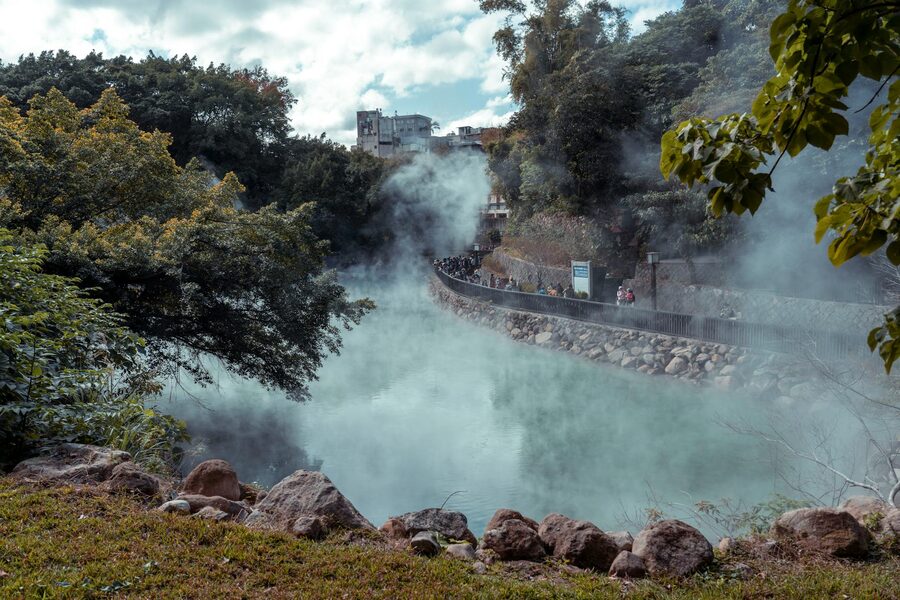
An onsen is a natural hot-spring bath. Under Japan’s 1948 Onsen Law, the water has to contain at least one of 19 specified mineral compounds and come out of the ground at a minimum of 25°C. That’s the legal definition. The colour of the water in a given onsen — milky white, rusty brown, clear with a greenish tint, faintly yellow — comes from whichever minerals dominate its particular source.
A sento is a public bathhouse using ordinary heated tap water. Sento are the neighbourhood version — urban, cheap (usually ¥500), no minerals, but the same etiquette. If you’re staying in Tokyo and you just want to understand what it’s like to get naked in a room full of strangers before you commit to a ryokan weekend, find a local sento and try that first. Kogane-yu in Sumida and Fukunoyu in Shinjuku are both sento I’d send a first-timer to. The rules for sento and onsen are the same — you’re just in hot tap water instead of mineral water.
A quick vocabulary list that will make the signs less mysterious:
- Rotenburo — outdoor bath. Usually the best kind, especially in winter when you’re in hot water and your hair is freezing.
- Datsuijo — the changing room.
- Kashikiri — a private bath you book by the hour, usually at a ryokan.
- Yukata — the light cotton robe you wear around the ryokan after your bath.
- Konyoku — mixed-gender bathing. Rare and mostly disappearing, but real; watch for the kanji 混浴 if you want to avoid it.
The full eleven steps, from arrival to leaving
I’m going to lay this out as if you’ve just walked in the door of a public day-use onsen, because the ryokan version is the same with one change — at a ryokan you do all this in your provided yukata, and the front-desk step is replaced by “point yourself at the baths, they’re free, take a towel from your room.”
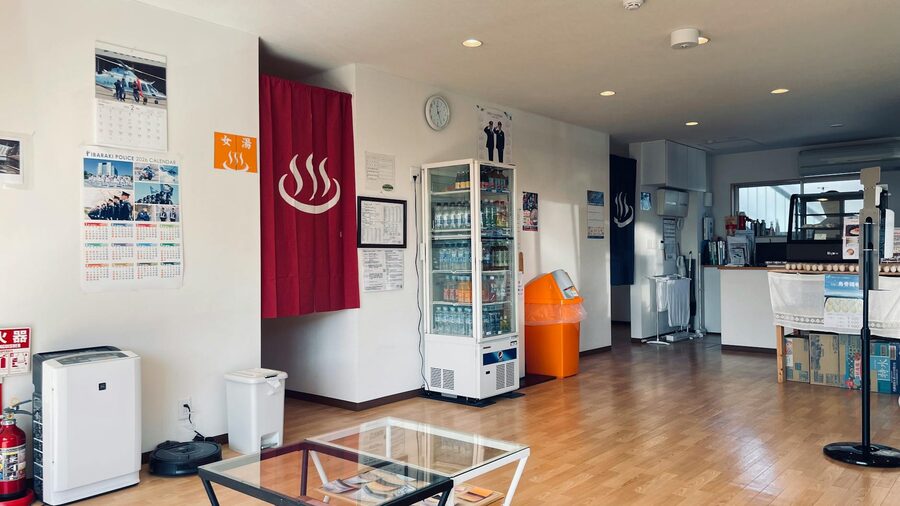
- Pay entry. Day-use onsen in central Japan run about ¥500-2,000. Boutique ones in Hakone or Kusatsu with outdoor views go ¥1,500-3,500. Ryokan guests bath for free — that’s most of what you’re paying for.
- Shoes off. There will be a bank of wooden shoe lockers at the entrance. Take your shoes off, put them in a locker, take the key (often a wooden tag with a number). Slippers are provided.
- Changing room (datsuijo). You’ll walk through a curtain — red noren for women, blue for men, with the kanji 女 or 男 — into the changing room. Take off your slippers before stepping onto the tatami or wood floor. Find a basket or locker, undress fully, lock your belongings, and take only the small towel with you.
- Wash station. Sit on a plastic stool at an empty shower station. Use the handheld shower to rinse, then shampoo and body-wash yourself completely. Rinse everything off. Put the shower back on its holder pointing at the wall when you’re done. This takes five minutes.
- Splash-rinse at the bath. Before you step in, scoop a bit of bath water over your legs with a wooden ladle or a small bucket. This is partly temperature check and partly courtesy.
- Enter slowly, feet first. Onsen water runs 38-44°C, and some baths go as hot as 46°C. Use your toes to test before committing. Step in gradually. If it feels searingly hot, don’t swim around trying to adjust — stay very still. Movement makes it feel hotter.
- Soak for 10-15 minutes at a time. Towel on head or by the edge. Hair up. Don’t talk loudly, don’t swim, don’t take a deep breath and submerge. I usually last about twelve minutes before my heart starts telling me to leave.
- Get out, cool down, and re-enter if you want. Most people do two or three rounds. Between rounds you sit on a stool, rinse lightly, drink some water. The bath attendant will often have a small cold-water tap or a jar of cucumber water nearby.
- After your last soak, decide whether to rinse. If you want the mineral benefits (iron, sulphur, sodium carbonate depending on the source), don’t rinse — pat yourself dry and go. If you don’t like walking around smelling faintly of sulphur, a light shower is fine.
- Dry off with the small towel. Use your small towel to pat yourself dry enough that you aren’t dripping when you step back into the changing room. The changing room floor is kept dry. Your big towel and clothes are waiting for you.
- Yukata and cold water. Put the yukata back on (or get dressed, if day-use without yukata), head for the resting lounge, and drink something cold. Most onsen have free cold water or tea. Give your body at least fifteen minutes to come back down before you get on a train or drive anywhere.
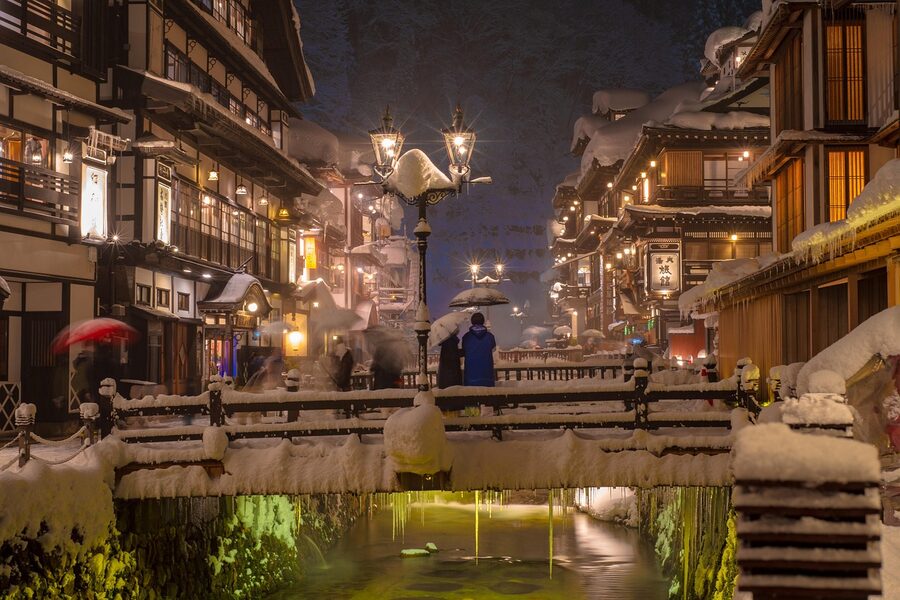
Tattoos — the real answer
This is the question I get asked most often. The short version: traditional onsen have historically banned tattoos because of their association with organised crime, and that ban is still common, but the situation has softened a lot over the past decade. Your options, in order of what I’d actually recommend:
- Book a ryokan with a kashikiri private bath or an ensuite room with an outdoor bath. This is the cleanest solution. You pay for the room, you get a private onsen, nobody cares about your tattoos because nobody else is in the water with you. Many Hakone, Yugawara, and Shima-area ryokan have this and list it on their site as “kashikiri” or “客室露天風呂” (guest-room rotenburo). If you have visible tattoos, this is the route to plan around.
- Go to a tattoo-friendly public onsen. These exist in growing numbers, especially in tourist areas. Kashiwaya Ryokan in Shima Onsen near Tokyo is openly tattoo-friendly; Hoshinoya Karuizawa is too; several Hakone onsen have relaxed their policies. JNTO and the Tattoo-Friendly Japan website both maintain current lists. Check before you go — the policies update.
- Use cover-up tape for small tattoos. Hadairo (skin-colour) cover-up tape is sold at Japanese drugstores like Matsumoto Kiyoshi and also on Amazon Japan. It covers small tattoos — a finger-sized flower, a wrist piece — reliably enough that attendants won’t raise it. It won’t cover a sleeve or a large chest piece; you’ll peel back into the water and it will come off. For small tattoos it genuinely works.
My firm opinion: if you have anything bigger than a palm-size tattoo, book the private bath and stop stressing about it. You’ll have a better soak, you won’t spend the experience watching the door, and most of the top onsen ryokan in Hakone have this option. It costs more, but it buys you the thing you actually came for.
Timing, temperature, and how long to stay in
Onsen water is hot. 40°C is mild, 42°C is what most public baths run at, 45°C will make you yelp when you get in. The old Japanese rule of thumb is 15 minutes total soaking time per visit, split across rounds. Everyone I’ve asked about this has said something similar — a fifteen-minute total cap for blood pressure, and if you get lightheaded at any point you sit out immediately.
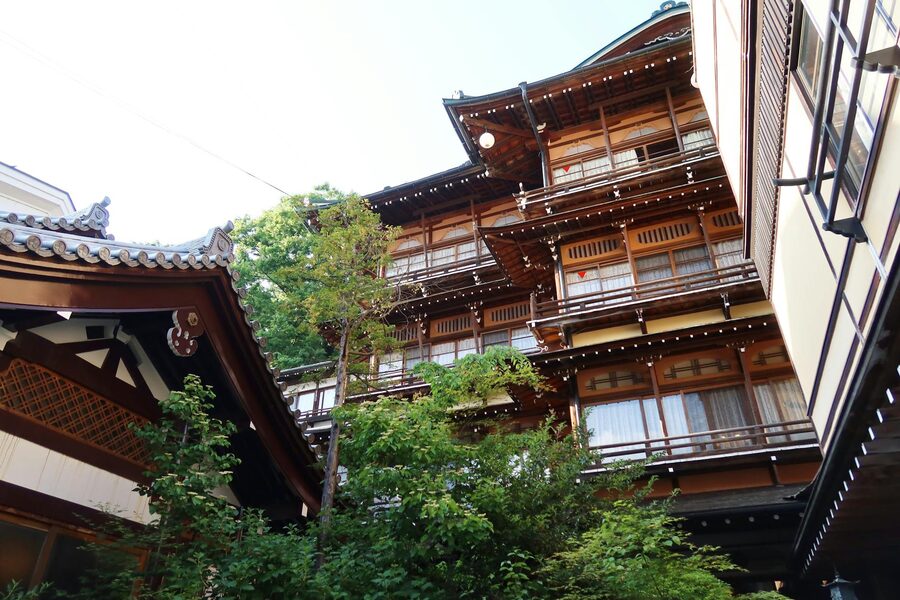
Things I’ve learned the hard way:
- Drink water before and after. The bath dehydrates you fast.
- Don’t drink alcohol before an onsen. In hot water with your blood pressure already doing interesting things, alcohol can make you actually pass out. Many onsen have a posted rule against this. The sake comes after.
- Don’t eat a big meal immediately before. Ryokan kaiseki is served after the evening bath for a reason.
- If you have high blood pressure, a heart condition, or are in the first trimester of pregnancy, don’t go in at all or only soak briefly in the 38°C shallow-water bath.
- If you’re menstruating, traditional etiquette is to skip the public bath. If you use an internal product, privately that’s widely tolerated in modern Japan, but a tampon string visible in the water is the kind of awkwardness worth avoiding. A private kashikiri bath is the cleaner answer.
Money — what you’ll actually pay
- Sento (public bath, tap water): ¥500 most places; ¥520 in Tokyo as a regulated price.
- Day-use onsen: ¥700-2,000 at most public facilities; towel rental is often an extra ¥200-400 if you don’t bring one.
- Boutique day-use onsen in Hakone, Atami, Kusatsu: ¥1,500-3,500, often with outdoor baths and rest lounges.
- Ryokan overnight with onsen and kaiseki dinner: ¥20,000-50,000 per person per night at mid-range places; ¥50,000-120,000 for the luxury end.
- Kashikiri private bath at a ryokan: usually included for guests of rooms with private onsen, otherwise ¥2,000-5,000 for a 45-60 minute booking.
Where to go, if you’re based in Tokyo
Hakone is the default. Ninety minutes from Shinjuku on the Romancecar, more onsen ryokan per square kilometre than anywhere else near Tokyo, and enough public day-use options (Tenzan, Hakone Yuryo, Yunessun) that you don’t have to stay overnight. If you’re going to do one onsen trip from Tokyo, this is it — I’ve written a full Hakone day trip guide with transport and timing.
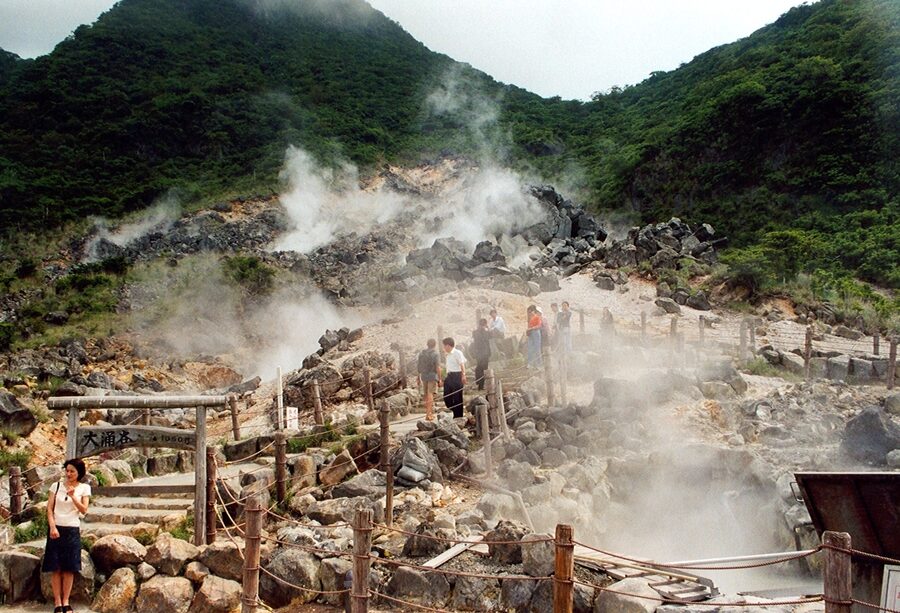
Kusatsu is where I’d send someone who wants the most atmospheric onsen-town experience near Tokyo, and it’s my personal favourite. Two and a half hours by highway bus, the yubatake (the wooden water-cooling troughs in the town square) runs 4,000 litres of hot spring water a minute and is lit up at night, and the whole town smells faintly of sulphur in a good way. Stay overnight — day-tripping it from Tokyo doesn’t give you the evening.
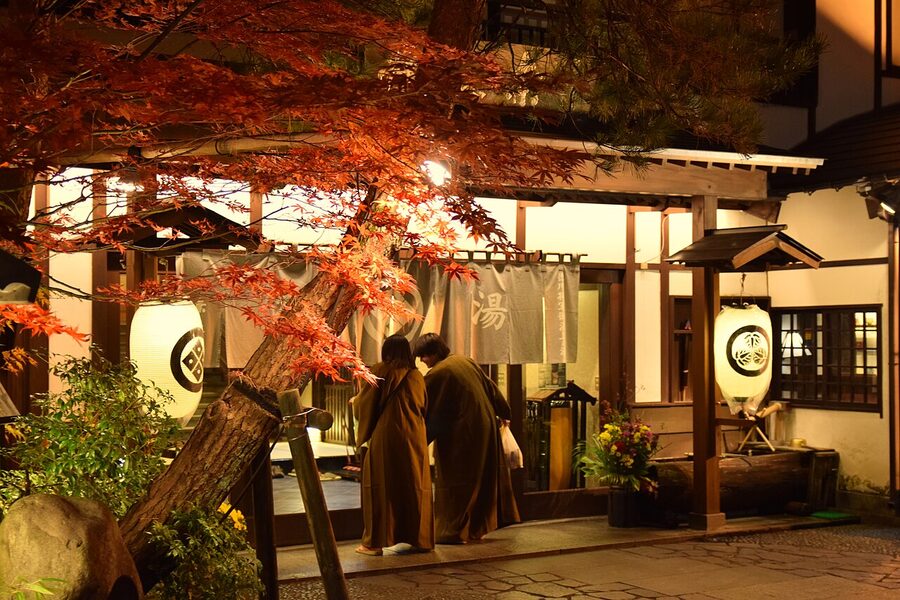
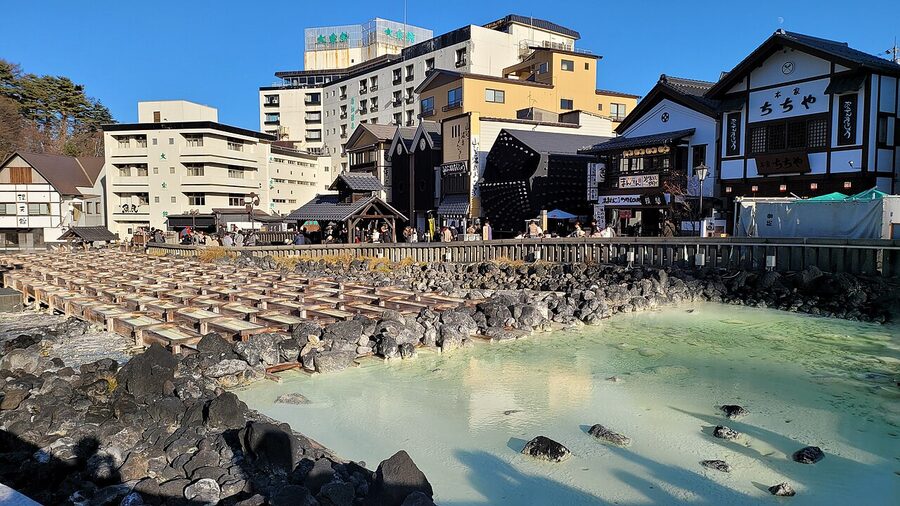
Yugawara is quieter, older, and closer than Hakone — about 80 minutes on the Odoriko line. Less visually dramatic, fewer tour buses, and a better shot at a weekend room if you’re booking late.
Atami is the seaside version. Shinkansen-accessible (50 minutes from Tokyo), gets you a sea-view rotenburo for not much more than a Hakone ryokan, and has a fading-resort atmosphere that I find quietly charming.
Oedo Onsen Monogatari in Odaiba — I’ll flag this because everyone asks. It closed its original Odaiba location in 2021, and the current Oedo Onsen Monogatari group runs theme-park-style onsen resorts at several locations around Japan. They are tattoo-friendly, tourist-friendly, and wildly inauthentic — the “onsen town” inside is a plastic shopping street, staff speak English, and you wear a yukata throughout. If you’re in Tokyo with one free evening before a flight and no time to get to Hakone, it’s a fun novelty. It is not the real thing.
Spa LaQua at Tokyo Dome is the city-centre option. Six floors of baths, saunas, relaxation rooms; genuine hot spring water piped up from 1,700m underground. Not atmospheric in the slightest — you’re on top of a shopping complex — but it is an actual onsen and you can walk out and be back on the Yamanote line in ten minutes.
The ranking I’d give a friend
If it’s your first onsen and you have two days: overnight ryokan in Hakone with an ensuite private bath, pay for the kaiseki dinner, and walk out onto your own balcony at 10pm in a yukata. This is the experience the brochures are selling and it’s correct.
If you have one evening in Tokyo only: Spa LaQua.
If you have a weekend and want to feel it: Kusatsu. Stay at a mid-range ryokan, walk the yubatake at night, use the free public sotoyu at least once. You’ll come back different.
If you have tattoos: go straight to option one, book the private bath, don’t fight the rule.
A practical info block
- Typical cost: Day-use ¥700-2,000 at public onsen; ¥1,500-3,500 at boutique ones; ¥20,000+ for a ryokan overnight with baths and kaiseki.
- Typical hours: Public onsen 10am-10pm, often closed one day a week (check in advance — usually Tuesday or Wednesday). Ryokan baths are open to guests from about 3pm to midnight, then 5am-10am the next morning.
- Best time to go: Weekdays, and between 4pm and 6pm at a public facility — ryokan guests bathe either before or after dinner, so you get the quietest window.
- What to bring: Your own small and large towel if you want to save rental fees; a hair tie if your hair is long; a water bottle for afterwards; cash for lockers (some take ¥100 coins only).
- Accessibility: Most traditional onsen have steps, wet slippery stone floors, and small shower stools. Wheelchair access is limited at ryokan. Boutique modern onsen like Yunessun in Hakone and Spa LaQua in Tokyo have better accessibility; confirm in advance.
- Phones: Stay in the locker. No exceptions.
- Official reference: the Ministry of the Environment’s onsen portal sets the legal definition and lists nationally-designated hot spring areas; JNTO is the best starting point for regional onsen trip planning.
My first-onsen plan, if I was you
Book a night at a mid-range Hakone ryokan with an ensuite onsen — you’re looking at about ¥25,000-35,000 per person for a weekend. Take the 9am Romancecar from Shinjuku. Drop your bags at the ryokan at 3pm, check in, change into the yukata they give you. At 4pm, walk to one of the public day-use onsen (Tenzan is the one I’d send you to, beautiful riverside rotenburo, ¥1,450 on weekends). Soak for an hour. Walk back. Have kaiseki at 6:30. Do the ryokan’s own bath at 9pm when most guests are winding down. Go back at 6am for the morning soak with the mist coming up off the valley. Then train back to Tokyo and do a slow lunch somewhere.
For what to do on the Tokyo side of the trip, I’d pair this with the rest of my 3 days in Tokyo itinerary, and if you’re still wary of Japanese cultural rules generally, the broader dos and don’ts guide covers the shoes, shrines, trains, and chopstick things you haven’t hit yet. For where to base yourself in Tokyo around an onsen trip, my Tokyo neighbourhood guide has the options near Shinjuku and Tokyo stations, which are both good starting points for Hakone.
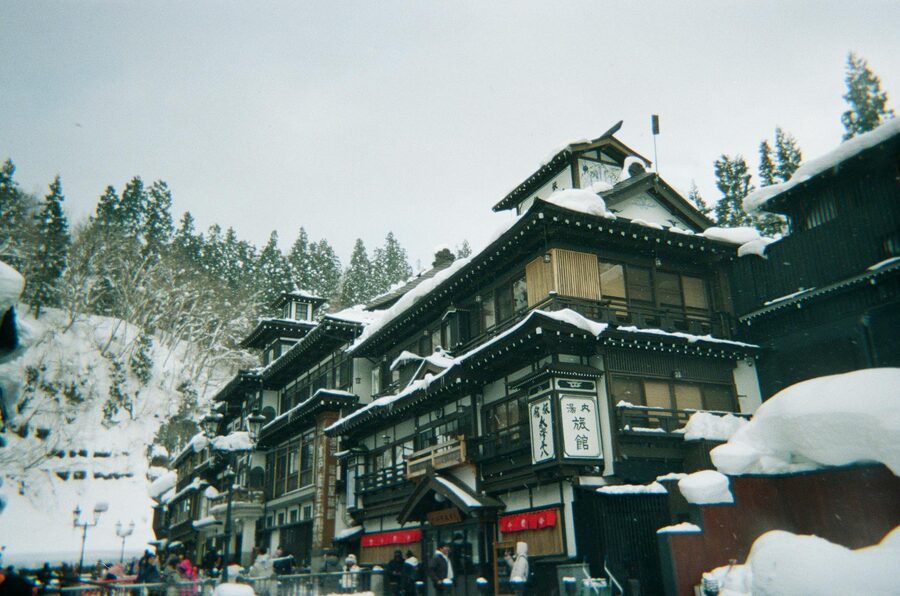
You’ll get something wrong your first time. Everyone does — I still, on occasion, confidently walk towards the wrong noren and have to turn around while pretending to check my phone. Japanese onsen staff have seen every possible mistake a foreigner can make. They’ll correct you quietly and kindly, and then they’ll pour you a cold cup of barley tea afterwards like nothing happened. Just don’t dip your towel.