
Haneda to Shibuya is 20 minutes on the Keikyu if you catch the right train, 45 minutes on the Monorail plus the JR Yamanote, 55 minutes on the Limousine Bus in average traffic, and close to an hour in a ¥7,800 taxi. Four very different answers to the same small journey, and Haneda is pretty much the only airport in Japan where all four are genuinely worth considering. I have landed at Haneda six times in the last three years. Three times I took the Keikyu, twice the Monorail, once the Limousine Bus. Only one was a mistake, and it is probably the one you are about to make.
In This Article
- TL;DR — pick one and keep walking
- A one-paragraph detour about Haneda itself
- Keikyu Line — the default answer
- Which Keikyu train to actually get on
- The through-running trick no guide explains well
- The luggage rack reality
- Tokyo Monorail — the JR Pass play
- Should you use a JR Pass?
- Five-step Monorail route to central Tokyo
- Limousine Bus — the undervalued one
- Which hotels the bus serves
- Cost and timing
- Finding the Limousine Bus desk
- Taxi and ride-share — almost always the wrong answer
- Terminal logistics — the unglamorous bit
- Luggage — takkyubin and storage
- Arrival-night practicalities
- Getting a Suica IC card
- SIM and Wi-Fi
- Edo-koji — the part of Haneda actually worth seeing
- Going back — departure-day timing
- Practical info
- What I would tell a friend landing tomorrow
TL;DR — pick one and keep walking
If you only read one paragraph, here it is.
- Keikyu Line for most people. ¥300-327 to Shinagawa in 11-13 minutes, or straight through to Asakusa in about 45 minutes for roughly ¥650. This is the default.
- Tokyo Monorail if you are carrying an activated JR Pass. ¥520 to Hamamatsucho in 13-17 minutes, covered by the Pass, and you swap to the JR Yamanote for everything else.
- Limousine Bus if your hotel has a stop. ¥1,200-1,400, door-to-door, no stairs, no transfers. The undervalued option when you are wrecked from the flight.
- Taxi only if you are four people plus bags. ¥6,900 flat rate to Tokyo Station, up to ¥8,400 to Asakusa, and a ¥1,000-ish expressway toll on top. Otherwise almost always the wrong answer.
The rest of this guide is the detail you need once you have picked — which Keikyu train to get on, where the Monorail luggage falls apart, which terminal the Limousine Bus counter hides behind, and how the last trains actually work at 23:00.
A one-paragraph detour about Haneda itself
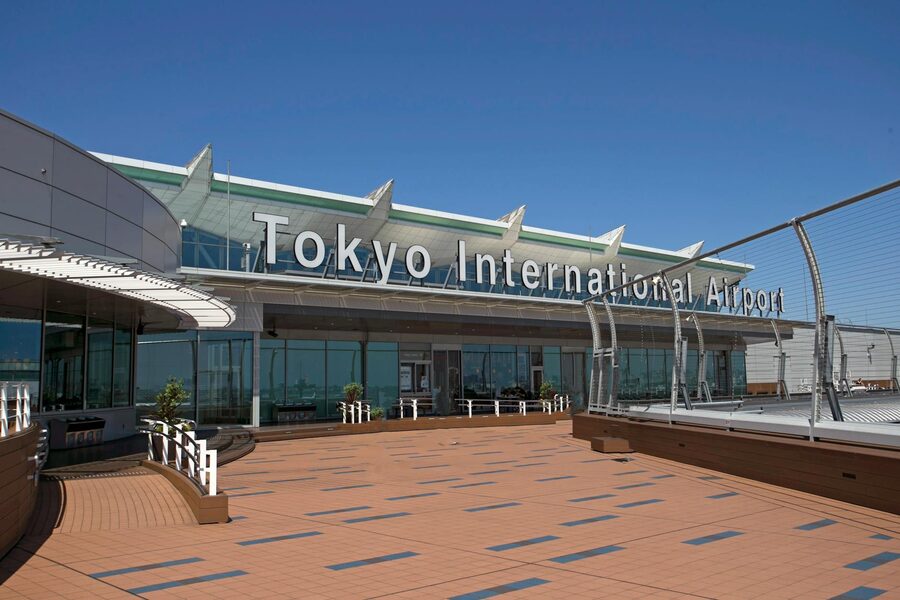
Haneda was a sleepy domestic airport for decades. It flew regional routes across Japan while Narita handled everything international. Then in October 2010 Haneda reopened as an international airport too, with a brand-new terminal (what is now Terminal 3) and a quiet understanding that the government wanted long-haul flights back in Tokyo rather than an hour out in Chiba. The result is that Tokyo has two international airports. Haneda is 15-20 km from the centre and handles a growing share of long-haul. Narita is 60-80 km out and still handles the majority of traffic to North America and Europe. If you can choose your flight on arrival airport alone, choose Haneda. The trip into town is simply not comparable.
Keikyu Line — the default answer
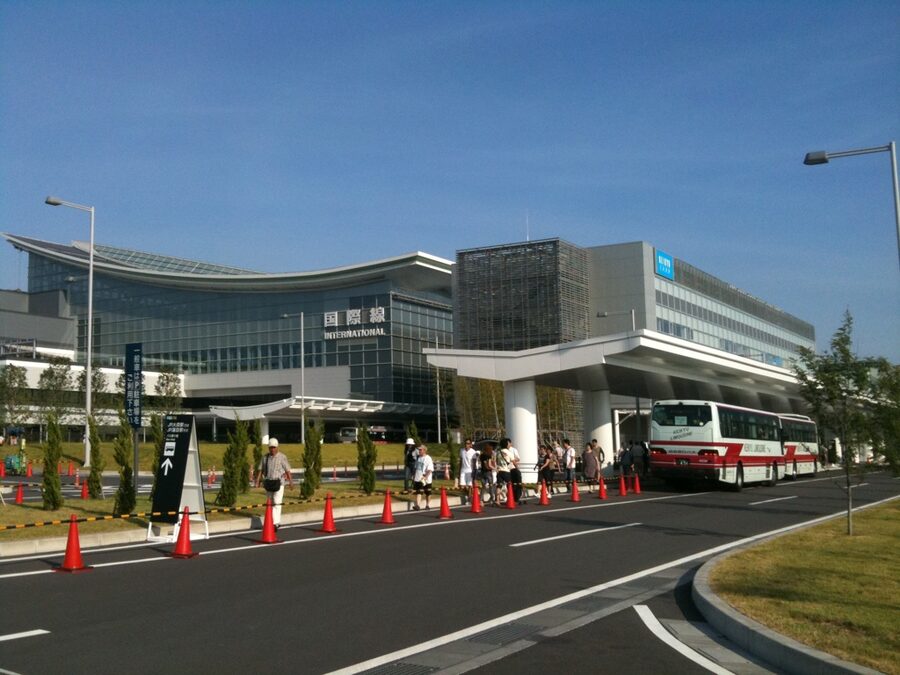
The Keikyu Airport Line is faster than the Monorail for most central Tokyo destinations, cheaper than every other option on the page, and runs straight from a platform connected to every terminal. If you do nothing else to prepare for arrival, know the word “Keikyu” and know that the ticket gate at Terminal 3 is signposted the moment you clear customs.
Which Keikyu train to actually get on
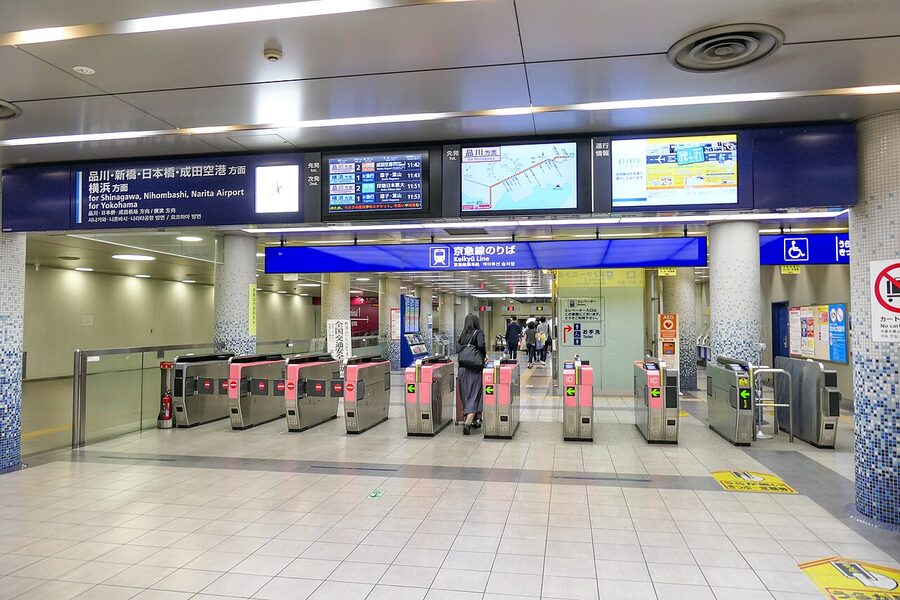
There are several types of Keikyu train leaving Haneda. The sign above the platform tells you which one is about to pull in. What you want is one of these two:
- Airport Limited Express (エアポート快特, shown “Airport Ltd. Exp.” in English). Fewest stops. About 11 minutes to Shinagawa. This is the fastest option. These are less frequent — roughly every 20-30 minutes at peak times.
- Airport Express (エアポート急行, “Airport Exp.”). A few more stops but still quick — about 13-15 minutes to Shinagawa. Runs every 5-10 minutes. This is the one most people end up on, and it is fine.
Avoid local trains if you can — they stop everywhere on the way up and take closer to 25 minutes. Avoid Yokohama-bound Keikyu trains unless you are actually going to Yokohama. Read the destination sign. “Shinagawa” or “Asakusa” or “Narita” heading north is what you want. “Yokohama” or “Kanazawa-Bunko” heading south is the other direction.
The fare is ¥300 to the T1-T2 station or ¥327 from T3 — buy a paper ticket from the machines (there is an English button) or, much better, tap a Suica or Pasmo IC card at the gate. The card saves you fumbling and gets you through the JR gates in Tokyo afterwards without a second purchase.

The through-running trick no guide explains well
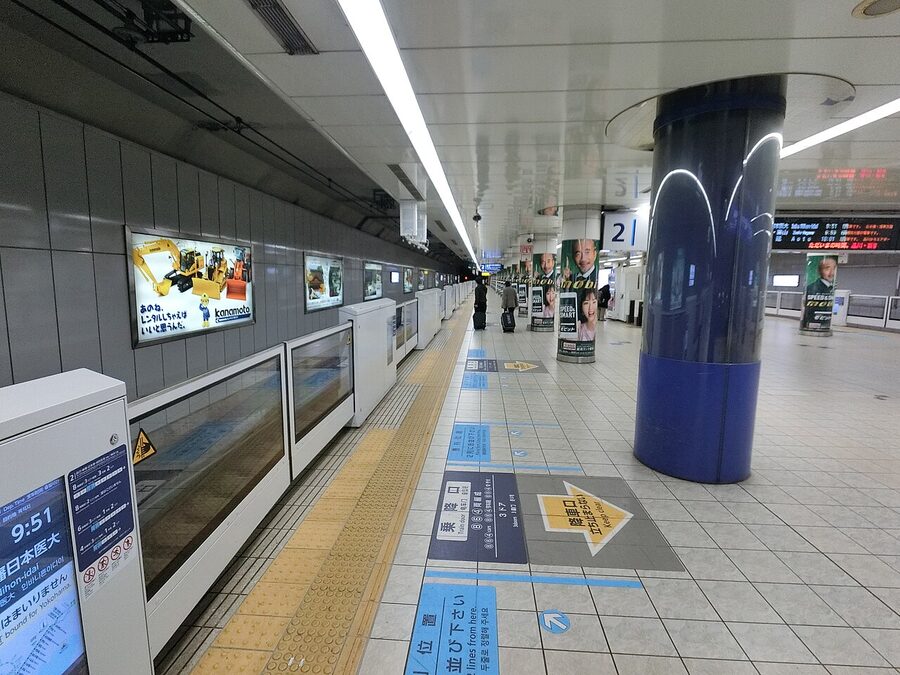
Here is the genuinely useful thing about the Keikyu. A lot of Haneda-bound Keikyu trains are actually the Asakusa Line and the Keisei Line wearing Keikyu colours for this stretch. Which means the same train you board at Haneda can keep going past Shinagawa, dive underground through Shimbashi and Higashi-Ginza, pop up at Asakusa, and in theory keep going all the way to Narita Airport. Useful in practice for two groups:
- If you are staying in Asakusa, board an “Airport Express for Narita” or “for Inba-Nihon Idai”, sit tight through Shinagawa, and get off at Asakusa. Around 45 minutes, roughly ¥650, no transfer, no hauling luggage upstairs.
- If you are flying out of Narita instead of Haneda and want to avoid a separate airport transfer, this same line takes you direct — about 2 hours and ¥1,840 end to end. Not fast but cheap, and you keep your luggage on one train.
The luggage rack reality
Keikyu trains are commuter trains. The seats run along the walls and the middle of the carriage is for standing. There are small luggage racks above the seats, but they are not designed for 28-inch suitcases, and during rush hour you will be sharing the carriage with salarymen in suits. It works — tens of thousands of travellers manage it daily — but do not expect dedicated luggage space like an airport express. If you are the last person on, you will stand with your suitcase wedged against the door. If the train is half-empty (mid-morning, early afternoon) you park the case by your knees and read a book. Peak hours at Haneda roughly mirror peak hours anywhere: 07:30-09:30 and 17:30-20:00 are the tight windows.
Tokyo Monorail — the JR Pass play
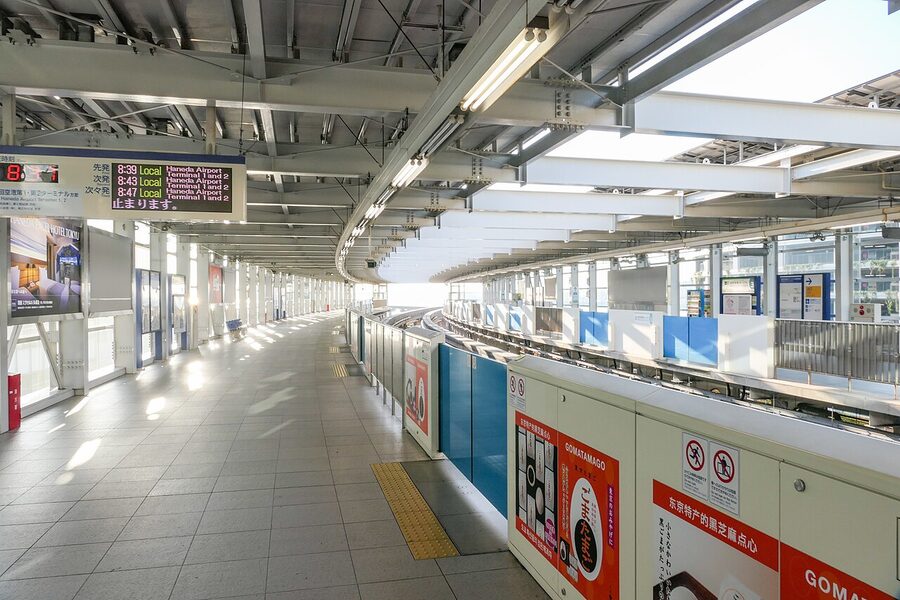
The Tokyo Monorail is the sentimental option. Built for the 1964 Olympics, still a slightly scratchy piece of period architecture, and the only way to ride an actual monorail into central Tokyo. Every Haneda terminal has a monorail station (on B1F at T1 and T2, on 3F at T3). The line runs along the Tokyo Bay coastline on raised track, past warehouses and a surprising number of shipping cranes, and terminates at Hamamatsucho — one stop south of Tokyo Station on the JR Yamanote Line.
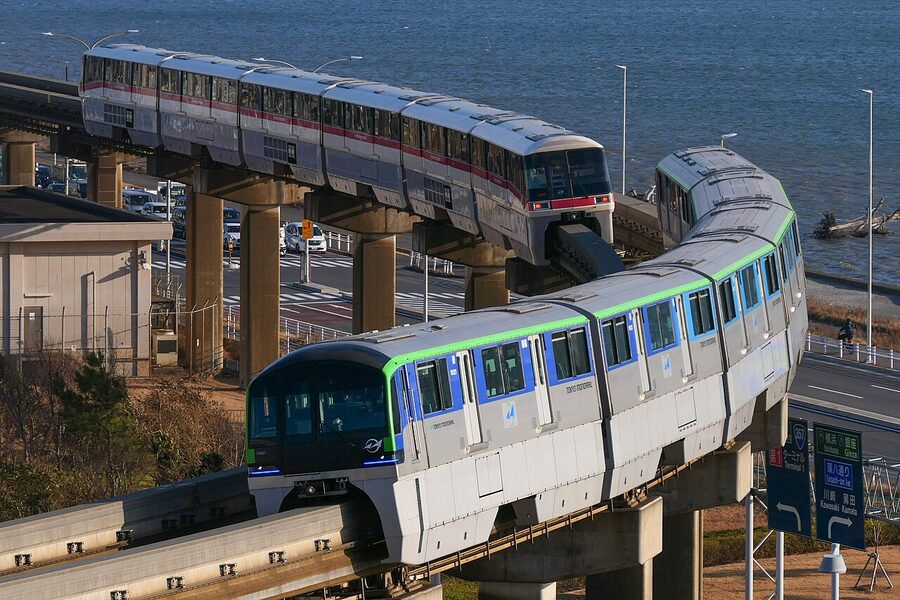

The fare is ¥520 to Hamamatsucho. Three service patterns run — Haneda Express (stops only at T1, T2, T3, Tennozu Isle and Hamamatsucho, 13 minutes), Section Express (a couple more stops, 15 minutes), and Local (everything, 17-18 minutes). In practice you get on whatever is at the platform. The Haneda Express is worth waiting one train for if the next Local is leaving now — it is rarely more than a 4-5 minute wait.
Should you use a JR Pass?
The Tokyo Monorail is not operated by JR, but the JR Pass covers it. This is the single reason to pick the Monorail over the Keikyu. If your Pass is already activated and you plan to ride the Yamanote Line the same day, the Monorail is free and the Keikyu is ¥300. Easy.
If your Pass is not yet activated — do not activate it for this trip. A single ¥520 Monorail ticket and a ¥170 Yamanote ride to Shinjuku is ¥690. The Pass is ¥50,000 over seven days. Burning a day of Pass validity on an airport transfer is a waste of roughly ¥7,000 of the Pass. Activate at Tokyo Station the morning of your first Shinkansen, not at Haneda.

Five-step Monorail route to central Tokyo
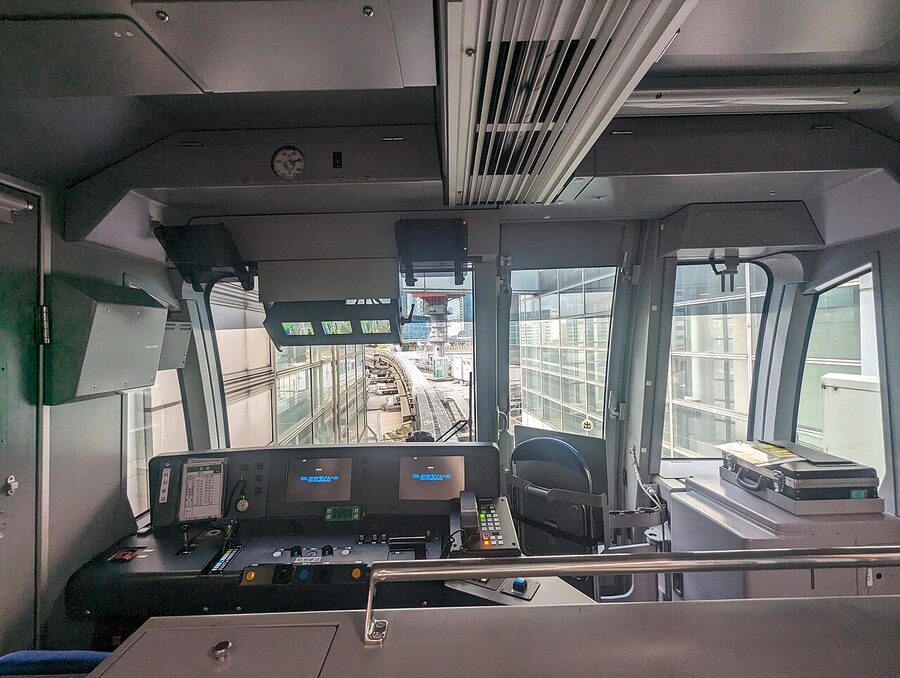
- From arrivals, follow the “Monorail” signs to the station. T3: 3F (walk across the pedestrian bridge from the terminal). T1 and T2: B1F (down one level).
- Tap your Suica/Pasmo through the gate or buy a ¥520 ticket. A machine sells the Monorail + Yamanote combo ticket for ¥540 if you are going direct to a Yamanote stop — a ¥150 discount.
- Board any train heading for Hamamatsucho. Sit on the left side heading into town for Tokyo Bay views.
- Get off at Hamamatsucho — 13-17 minutes later. Do not get off earlier unless you know you want Ryutsu Center, Showa Island, or the Haneda maintenance depot stops.
- Transfer to the JR Yamanote Line (same building, up one floor). Clockwise for Shinjuku and Shibuya, counterclockwise for Tokyo Station and Ueno.
Limousine Bus — the undervalued one
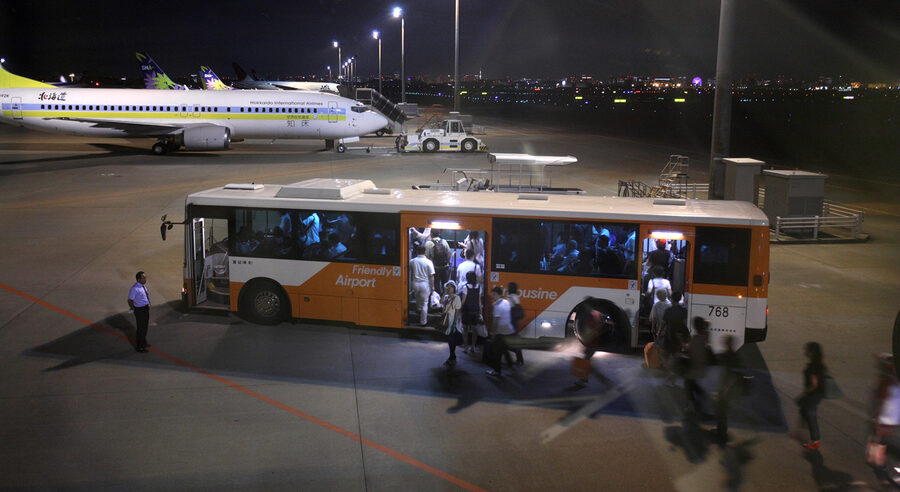
The Airport Limousine Bus is a coach — basically a slightly posh intercity bus painted orange and yellow — that runs between Haneda and a network of major hotels and rail stations. You buy a ticket, the driver puts your suitcase in the hold, you sleep for 45-60 minutes, and the bus stops at the door of your hotel. No stairs. No transfers. No wrestling a 28kg case onto a Yamanote train at 19:00.

Which hotels the bus serves
The Limousine Bus network hits most of the big hotels you would actually book in Tokyo: Shinjuku (Keio Plaza, Park Hyatt, Hyatt Regency, Hilton), Shibuya (Cerulean Tower, the Excel Tokyu), Ikebukuro (Sunshine City Prince, the Metropolitan), Ginza (the Imperial, Mitsui Garden), Akasaka (the ANA Intercontinental, the New Otani), Asakusa (the View), and Tokyo Disney (the official on-site hotels plus the Hilton Tokyo Bay). If your hotel is on the list, this is almost certainly your best option on arrival.
It does not serve hostels, capsule hotels, Airbnbs, or minor business hotels. If you are staying at a smaller place, check whether a major hotel on the Limousine list is a 5-10 minute walk away — often it is, and the bus is still worth it because you dump your luggage at that hotel’s lobby and walk the last bit empty-handed.
Cost and timing
Fares run ¥1,200-1,400 for most central Tokyo destinations, ¥1,800-2,200 for Tokyo Disney area and the further reaches of greater Tokyo. Tickets sell at the bus ticket counter on the T3 2F (look for the orange sign), at machines beside it, or online in advance for a small discount. Buses run every 10-30 minutes on the busy routes and less often on the minor ones. Check the route timetable for your specific destination — the Limousine Bus website (see the practical block at the end) has a full list.
The honest weakness: traffic. On a clear Sunday at 14:00, the bus to Shinjuku takes 45 minutes. On a Friday at 18:00 with a sumo tournament happening in Ryogoku, it can take 90. The Keikyu does not care about traffic. If you are arriving in a peak window and need to be somewhere fast, the train wins.
Finding the Limousine Bus desk
- Clear customs, exit into the arrivals hall.
- Follow the orange “Limousine Bus” signs (T3 arrivals hall, 2F, straight ahead as you exit customs). T1 and T2 have their own counters on the ground floor just outside the arrivals doors.
- Buy your ticket at the counter — you will be asked for your destination and they will print a ticket with the bus stand number and the next departure. Go to that bus stand, hand the driver your suitcase, board.
Taxi and ride-share — almost always the wrong answer
Taxis are available 24/7 outside every Haneda arrivals hall. Flat-rate fares exist to most Tokyo zones — Tokyo Station is ¥6,900, Shibuya is ¥7,800, Asakusa is ¥8,400, with a roughly ¥1,000 expressway toll added on for all of them. Between 22:00 and 05:00 there is an additional night surcharge that bumps the fare by around 20%.
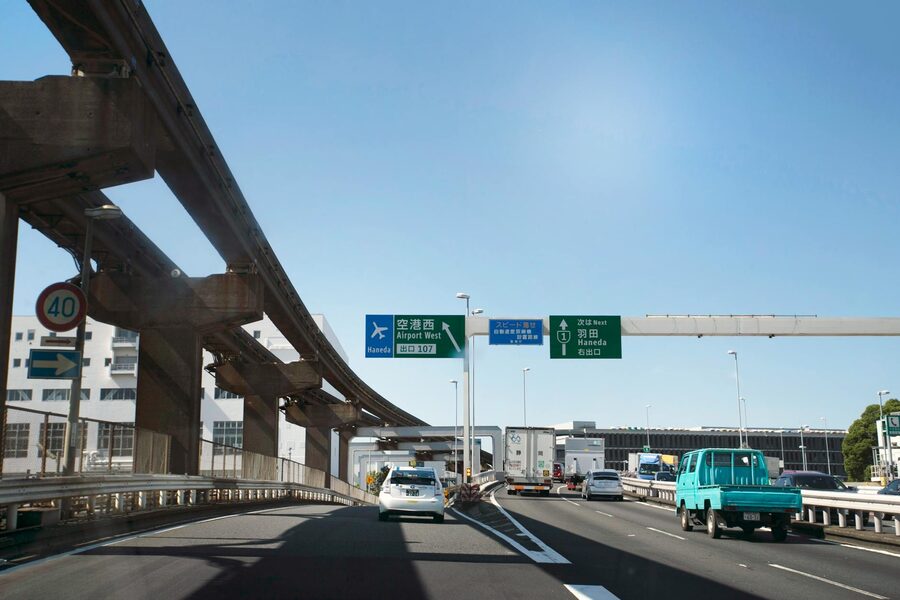
When it actually makes sense:
- Groups of four with full luggage. A taxi splits four ways. Four train tickets is ¥1,200-1,500 total, a taxi with tolls is ¥8,000-9,500. The train is still cheaper per person, but the convenience of door-to-door with four cases can tip the call.
- Late arrivals. Keikyu’s last train leaves around 23:15, the Monorail around 23:10, the last Limousine Bus varies by route (often 22:30 for central routes). After that, it is taxi or nothing until roughly 05:00. Some late-night buses run at doubled fares but do not cover many destinations.
- Heavy or awkward bags. Surfboards, folded bikes, instrument cases. The train is not going to be a great experience.
Ride-share apps work at Haneda but the operational model in Japan is essentially “the same official taxis through a booking app”. Uber is the most common. Pricing is similar to flat-rate taxis or a little higher. For arrivals with a language barrier, Uber is sometimes easier than the regular taxi rank because your destination is typed in and the driver just follows the route.
Pre-booked shared taxis exist through Klook and a few other platforms — around ¥3,125 per person if you share with other arrivals. Cheaper than a solo cab but the waiting time to fill the car can stretch to 90 minutes. I have done it once. I would not do it again.
Terminal logistics — the unglamorous bit
Haneda has three passenger terminals. T1 is the Japan Airlines domestic hub (plus Skymark and a few others). T2 is mostly ANA domestic (plus a small number of international flights). T3 is the international terminal — almost every long-haul flight into Haneda lands here. If you have flown in from outside Japan, you are at T3.
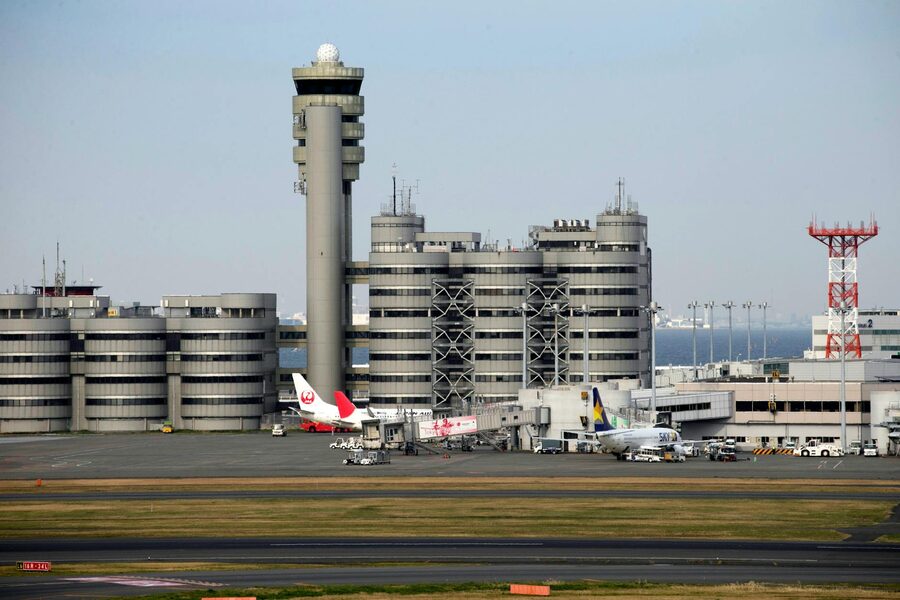
The Keikyu and Monorail stations are connected to every terminal. At T1 and T2, both stations share the same underground level (B1F). At T3, both stations are a short walk from the arrivals hall through dedicated pedestrian bridges. Signs are in English, and staff at the information desks will point if you ask.
If you land at T3 but need to go to T1 or T2 to meet someone or catch a domestic flight, there is a free inter-terminal shuttle bus (every 4-6 minutes, about 7 minutes between T3 and T1) and a free inter-terminal train on the Keikyu and Monorail lines between those same stations.
Luggage — takkyubin and storage
If the idea of dragging a suitcase onto the Keikyu makes you want to lie down, Japan’s takkyubin forwarding service is a genuine luxury. You hand your bag over at the airport, pay around ¥2,000 per case, and the bag is delivered to your hotel — usually same-day if you drop off before 12:00, otherwise next-day by mid-morning. You then get on the train luggage-free.
The main counters at Haneda are in the T3 arrivals hall — Yamato Transport (the Kuroneko logo, a black cat carrying a kitten in its mouth) and JAL ABC are the two major players. English is spoken. You will need the name and address of your hotel; most tourist hotels are already in their database and a single Japanese phone number from the hotel booking confirmation is usually enough.
Luggage storage lockers and manned storage counters also exist in every terminal. Lockers range from ¥400 for a small one to ¥1,000 for a big one per 24-hour period, and take coins or IC cards. Manned counters (around ¥800 per item per day) handle oversized luggage that does not fit the lockers.
Arrival-night practicalities
A few things worth sorting at Haneda before you leave the airport, because dragging yourself back is a pain.
Getting a Suica IC card
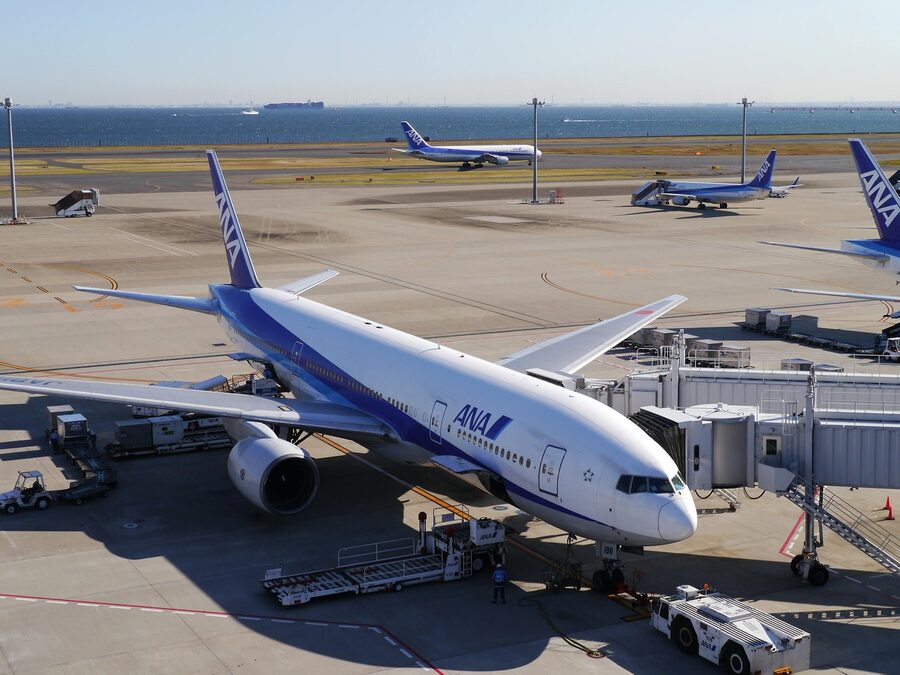
The Welcome Suica is a prepaid transit card valid for 28 days — no ¥500 deposit (a regular Suica charges one), and any unused balance is simply lost when it expires. Pick one up at the JR East Travel Service Center in T3, arrivals level 2F. It costs whatever you preload (¥1,000 or ¥2,000 is a good starting amount) and works on every train, subway, Monorail, Keikyu, bus, and convenience-store counter in the Tokyo region. Genuinely the single most useful thing to buy in your first ten minutes in Japan.
SIM and Wi-Fi
Counters for pocket Wi-Fi (Ninja Wi-Fi, Japan Wireless and a few others) and SIM cards sit in the T3 arrivals area and are signposted. Rentals run roughly ¥500-900 per day for unlimited data pocket Wi-Fi; prepaid SIMs are ¥3,000-5,000 for a week of data. eSIMs bought before you fly are usually cheaper and skip the counter entirely — but if you landed without one, the counters are fine.
Edo-koji — the part of Haneda actually worth seeing
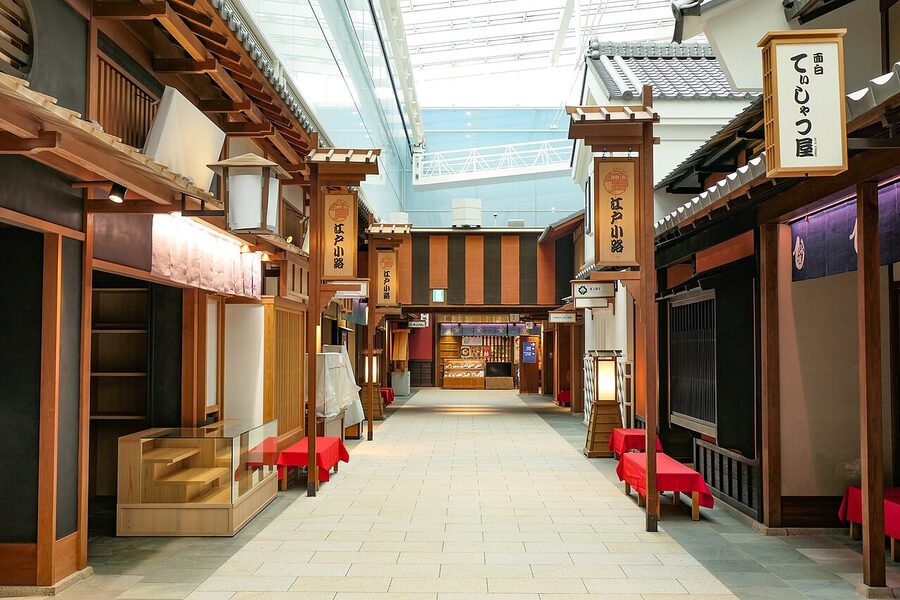

On 4F and 5F of Terminal 3 the architect of Haneda T3 built an improbable full-scale mock-up of an Edo-period Tokyo street. Wooden shopfronts, hanging lanterns, a bridge, ramen shops with wood-block-print menus. It is a proper tourist attraction — you can walk it even if you are not flying — but the real use is on the way out. You have two hours to kill before a night flight, you are sick of airport Starbucks, Edo-koji has a genuinely good Ichiran ramen and several decent donburi places. Gifts are cheaper than Narita Duty Free for most things below ¥5,000, and the conveyor-belt sushi on 5F is fine.
Going back — departure-day timing
The return is easier than the arrival because you know what you are doing. A few things to know:
- Keikyu: runs roughly 05:00-23:15. From Shinagawa to Haneda T3 is 13-15 minutes on an Airport Express, up to 25 on a local. Fare ¥300-327.
- Tokyo Monorail: runs roughly 05:00-23:10. From Hamamatsucho to T3 is 13-17 minutes. Fare ¥520.
- Limousine Bus: first buses from central Tokyo to Haneda run around 04:30 for early flights, last buses vary by route (usually 21:00-22:00). Check the timetable for your specific stop.
- Taxi: 24/7. Flat-rate fares the same in both directions.
For an international flight, arrive at T3 three hours before departure. For a domestic flight at T1 or T2, 90 minutes is usually fine. Haneda is efficient but not empty — security queues on a weekday morning at T3 can run 20-30 minutes.
Practical info
- Distance to central Tokyo: 15-20 km (compare: Narita is 60-80 km).
- Airport-to-central transit time: Keikyu 11-20 min; Monorail + Yamanote 20-35 min; Limousine Bus 40-90 min (traffic-dependent); taxi 30-60 min.
- Fares to central Tokyo: Keikyu ¥300-327 (direct Asakusa ~¥650); Monorail + Yamanote ¥520-690; Limousine Bus ¥1,200-2,200; flat-rate taxi ¥6,900-8,400 plus tolls.
- Last trains: Keikyu last around 23:15 from Haneda; Monorail last around 23:10.
- Terminals: T1 (mostly JAL domestic), T2 (mostly ANA domestic), T3 (international). Free shuttle bus between them.
- Luggage forwarding: Yamato Transport and JAL ABC counters in T3 arrivals. ~¥2,000 per bag, delivered same-day or next-day.
- Luggage storage: Lockers ¥400-1,000 per 24 hours, manned counters ~¥800 per item per day.
- Accessibility: Every terminal, station and Limousine Bus stop has lifts and step-free access. Keikyu and Monorail staff will help with wheelchairs if you ask at the gate.
- Airport website: tokyo-haneda.com — accurate terminal maps, flight search, shop listings.
What I would tell a friend landing tomorrow
Here is the matrix, because transport articles are useless without one.
- Solo traveller with a carry-on and a small checked bag, staying in Shinjuku/Shibuya/Tokyo Station/Ueno: Keikyu Airport Limited Express to Shinagawa, JR Yamanote from there. Welcome Suica at the JR counter in T3 first, then straight to the train. Around ¥470 total. 35-40 minutes door-to-door.
- Solo or couple with an activated JR Pass: Tokyo Monorail to Hamamatsucho, JR Yamanote from there. Free on the Pass.
- Couple staying in Asakusa: Direct Keikyu-Keisei through-train to Asakusa. One seat the whole way, no transfers, roughly ¥650 per person, 45 minutes.
- Couple with big bags staying at a Limousine-Bus hotel: Airport Limousine Bus. ¥2,400-2,800 total. Slightly slower but you arrive at your hotel door, no stairs.
- Family of four plus luggage: Flat-rate taxi if it is late or you are all wrecked. Limousine Bus if your hotel is on the route and it is daytime. Keikyu only if the kids are old enough to manage their own cases at Shinagawa.
- Landing after 23:30 with nowhere to stay at Haneda: Night Limousine Bus if one runs to your neighbourhood, otherwise taxi. Pack snacks — fewer things are open than you think.
If you are also flying in and out of Narita at some point on the same trip, my guide to getting from Narita to Tokyo covers the longer version of this same problem. The Tokyo trains and IC card piece gets into the Suica/Pasmo mechanics you will be using hourly once in town. And if you are still deciding where to stay, my first-timer’s neighbourhood guide explains which neighbourhoods put you on which line — because the Keikyu route to Shinagawa is a lot less relevant if your hotel is in Kichijoji and you should be thinking about the Chuo instead.
One last thing. On your very first Haneda arrival, you will walk off the plane exhausted, see a wall of Japanese signs with English helpfully underneath, and briefly panic about which exit, which train, which platform. You will get it wrong by going the wrong way down a corridor, turn around, ask a uniformed staff member, and they will walk you to the correct lift personally. That is my Haneda memory from trip one. It is unlikely to be very different from yours.