
You can spend ¥28,000 on a taxi from Narita to central Tokyo, or ¥1,060 on a train that takes about 45 minutes longer. Everyone warns you off the taxi. Almost nobody tells you that the real answer for most first-time arrivals isn’t the train everyone also defaults to (the Narita Express), but a quieter sibling called the Keisei Skyliner, at ¥2,310 if you buy online and 41 minutes door-to-Ueno with a guaranteed seat and a plug for your phone.
I’ve done the Narita-to-Tokyo trip in five different ways over the years. I’ve stood on a local commuter train at rush hour clutching a 30 kg suitcase and genuinely considered paying someone to throw me off at the next stop. I’ve taken a limousine bus that sat in Bayshore traffic for two hours while I watched the sun set over a petrol station. I’ve also walked off a 12-hour flight, clicked my phone, tapped through a JR gate, and been sat down in Ueno before my luggage had even warmed up. That last one is the one you want, almost always.
In This Article
- TL;DR — which one to pick
- How far Narita actually is (and why it matters)
- Keisei Skyliner — the first-timer default
- How to actually take the Skyliner
- Narita Express (N’EX) — worth it only in specific cases
- How to take the N’EX
- Keisei Limited Express — the budget option nobody recommends loudly enough
- Access Express: the Asakusa special
- Limousine Bus — door-to-door to your hotel
- Taxi and rideshare — when they make sense
- Terminal-specific tips (T1, T2, T3)
- Luggage forwarding (takkyubin) — the move nobody tells you about
- Arrival-night practicalities
- Going back to Narita
- Practical info at a glance
- What I’d tell a friend landing tomorrow
TL;DR — which one to pick
Three-second version, for the jet-lagged.
- Skyliner — first-timer default. ¥2,310 online, 41 minutes to Ueno. Pick this if you’re staying anywhere served by the JR Yamanote line (most of central Tokyo).
- Narita Express (N’EX) — ¥3,070 to Tokyo Station, and free if your JR Pass is already active. Pick this if you’re going direct to Shinjuku, Shibuya, Yokohama, or Tokyo Station without a transfer.
- Airport Bus TYO-NRT (low-cost bus) — ¥1,500, about 65-90 minutes straight to Tokyo Station. Pick this if you’re going to Tokyo Station and want the cheapest half-decent option.
- Limousine Bus — from ¥2,900 door-to-door to major hotels. Pick this if you’re arriving exhausted, your hotel is on a bus route, and you can’t face another transfer.
- Taxi — ¥25,000-32,000. Don’t. Unless you’re four people with four suitcases landing at 2am.
Everything below is the long version: when each option actually makes sense, what going wrong looks like, and the small things nobody tells you.
How far Narita actually is (and why it matters)

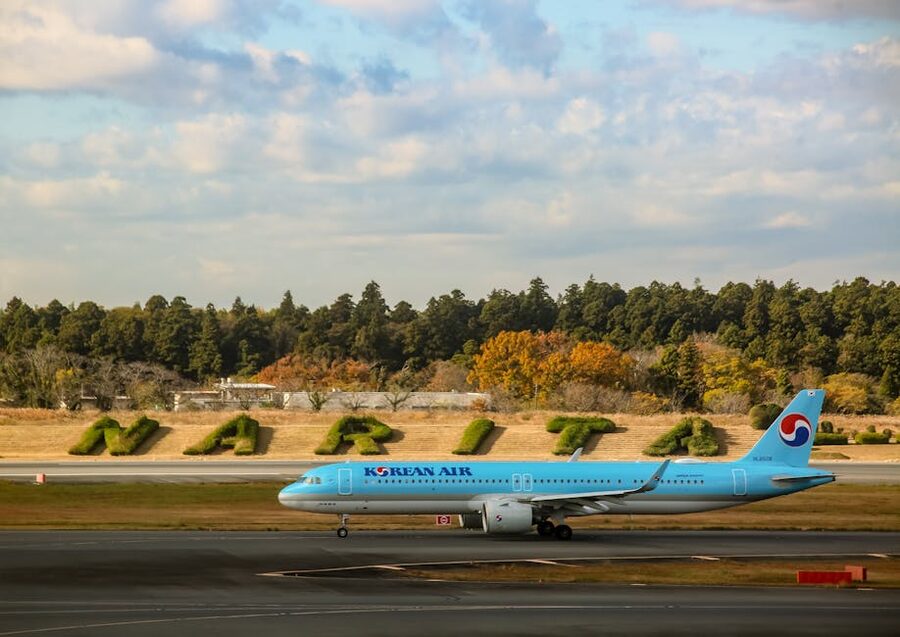
Narita International Airport sits about 60 kilometres east of Tokyo Station, in Chiba Prefecture. For reference, that’s further from central Tokyo than Gatwick is from central London, or Newark is from Midtown Manhattan. If you booked a “Tokyo flight” and landed expecting to see Shibuya Crossing from the taxi window, the first thing you’ll see from any of your options is rice paddies.
The practical consequence: every route takes 40 minutes minimum and most take 60-90. Budget two hours from plane landing to hotel check-in as your default, and be pleasantly surprised if you beat it.
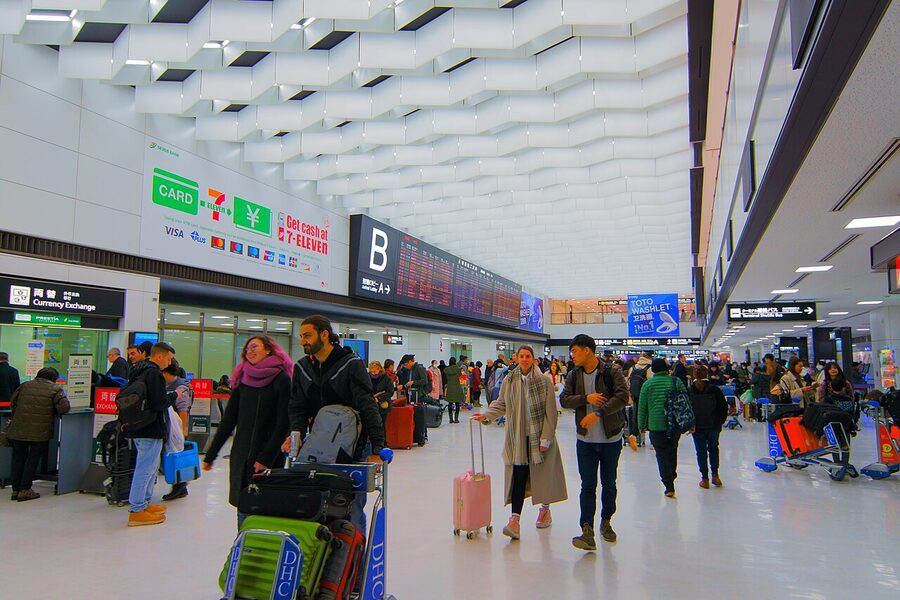
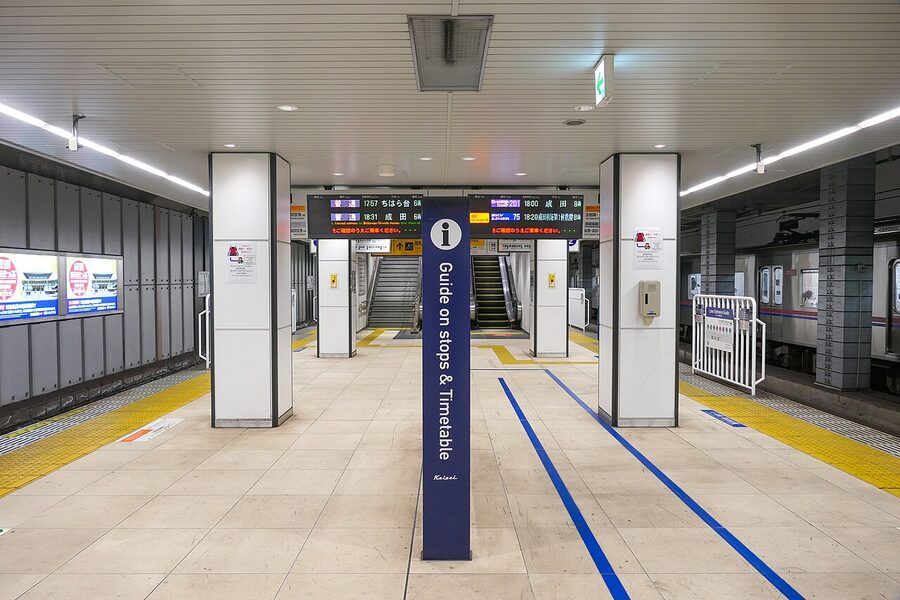
Three terminals to know. Terminals 1 and 2 each have a train station directly below them — escalators from the arrivals floor straight to the B1F platforms for both JR (Narita Express, Sobu Line) and Keisei (Skyliner, Limited Express, Access Express). Terminal 3 is the budget-airline terminal and has no train station at all — you walk about 15 minutes or grab the free shuttle bus to Terminal 2 for trains. Buses and taxis pick up directly from all three.
If you’re flying Jetstar, Peach, Spring Japan, or Zipair, you’re at Terminal 3. Factor in an extra 15-20 minutes to reach the station.
Keisei Skyliner — the first-timer default
.jpg)
If you’re arriving in Tokyo for the first time and you don’t have a JR Pass already burning a hole in your pocket, this is the one. The Skyliner is a dedicated airport service — meaning you’re not fighting commuters for space — and it goes from Narita Airport to Nippori in 36 minutes, then Ueno in 41. From either station you transfer to the JR Yamanote line, Tokyo’s central loop, which takes you to Akihabara, Tokyo Station, Shibuya, Shinjuku, Ikebukuro, and every other neighbourhood most travellers stay in.
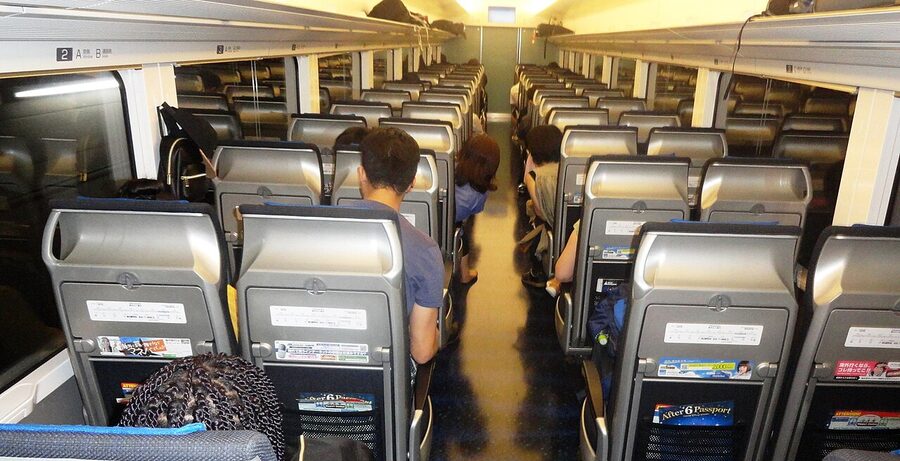
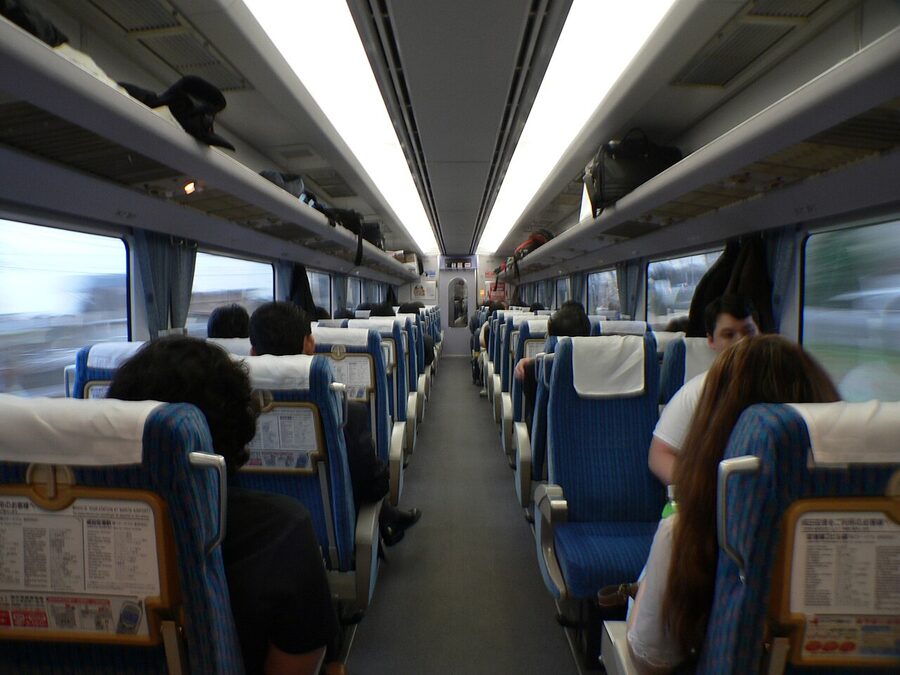
It’s called the Skyliner because it’s fast, not because it flies. The train is silver with a navy-and-red stripe and it’s impossible to miss on the platform — it’s the one that looks like it’s been designed for a Pixar film about trains. All seats are reserved (no standing), there’s dedicated luggage storage by the doors, each seat has a power socket, and the wifi actually works.

How to actually take the Skyliner
Landing → Skyliner → Ueno, in five steps:
- Before you fly, buy the Skyliner ticket online on the official Keisei site (keisei.co.jp) — you’ll get a QR code to your email. This saves you ¥270 and, more importantly, saves you queuing on arrival.
- At Narita, follow the signs marked “Trains” downstairs to B1F. Both Terminal 1 and Terminal 2 have their own Keisei Skyliner station.
- At the Skyliner gate, scan your QR code at the gate. If you didn’t buy online, there are staffed counters and ticket machines right there.
- Find your reserved carriage and seat — both are printed on your ticket. Put your suitcase in the luggage rack by the door, not in the overhead rack.
- Get off at Nippori if you’re transferring to the JR Yamanote line (most of central Tokyo), or Ueno if you’re staying in Ueno, Asakusa, or connecting to the Hibiya/Ginza subways.
There’s also a very good-value combo: the Skyliner + Tokyo Subway 24/48/72-hour ticket, which bundles your one-way Skyliner ride with unlimited Tokyo Metro and Toei Subway travel for up to three days. It saves you somewhere between ¥300-500 versus buying the two separately, and the subway pass is worth it on day one regardless.

Narita Express (N’EX) — worth it only in specific cases
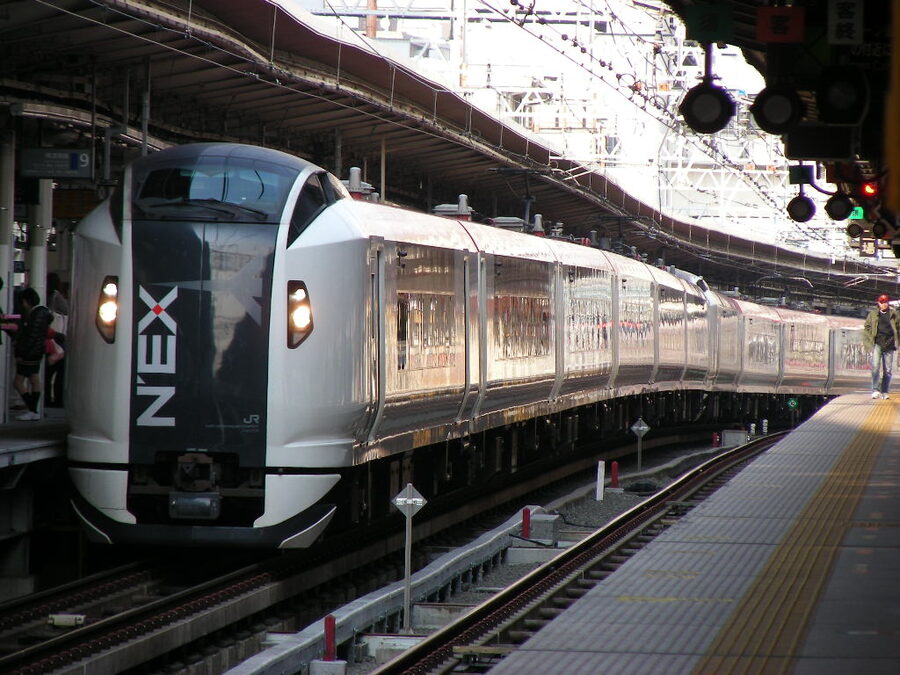

The Narita Express is the JR-run airport train. It’s sleek, it’s reliable, it’s the train every Tokyo article shows a photo of with captions like “iconic”. And it’s also — for most arrivals — overpriced.
Quick verdict: if you’re not arriving with an active Japan Rail Pass, the Skyliner is faster AND cheaper than the N’EX for most destinations. The N’EX makes genuine sense in three situations:
- Your JR Pass is already active — then the N’EX is effectively free (the pass covers it). Don’t activate a pass on arrival just for this; the pass is too expensive to waste on an airport transfer.
- You’re staying in Shinjuku, Shibuya, or Yokohama and want a direct train with no transfer. Not all N’EX services go to Shinjuku/Shibuya so check the departure board. Tokyo Station is always served.
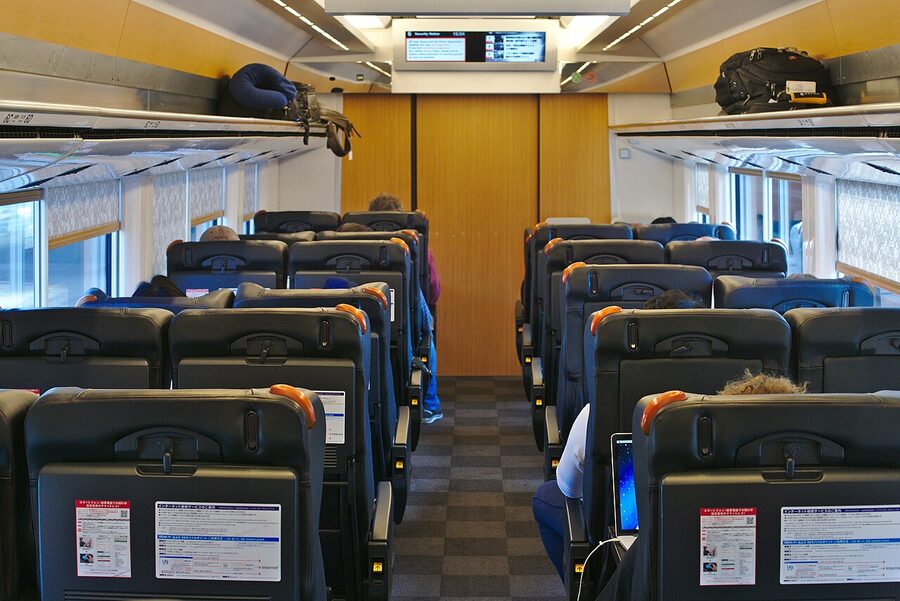
- You have genuinely unwieldy luggage and want a reserved seat with luggage racks specifically designed for airport travellers.
Fares, one way:
- Narita to Tokyo Station: ¥3,070 (53 min)
- Narita to Shinjuku or Shibuya: ¥3,250 (approx. 80 min)
- Narita to Yokohama: ¥4,370 (approx. 90 min)
The old NEX Round-Trip ticket for foreign passport holders got scrapped in 2023, replaced with a ¥5,000 round-trip version that you can only pick up at the Narita airport JR stations. If you know you’re flying out of Narita too, it’s worth asking about at the counter.
How to take the N’EX
If your pass is active, this is the easy version:
- Follow signs downstairs to “Trains” from arrivals.
- Go to the JR East Travel Service Center on the B1F (not the Keisei counter). Show your pass and passport.
- Ask for a reserved seat on the next N’EX to your destination. Get the printed ticket.
- Tap through the JR gates with the printed ticket (or, if you already activated the pass, walk through the staffed gate and show your pass).
- Board the N’EX. Find your carriage number on the platform markings. Reserved seat number is on your ticket.
- Luggage goes in the racks at each carriage end — use the strap to lock it so it doesn’t slide around.
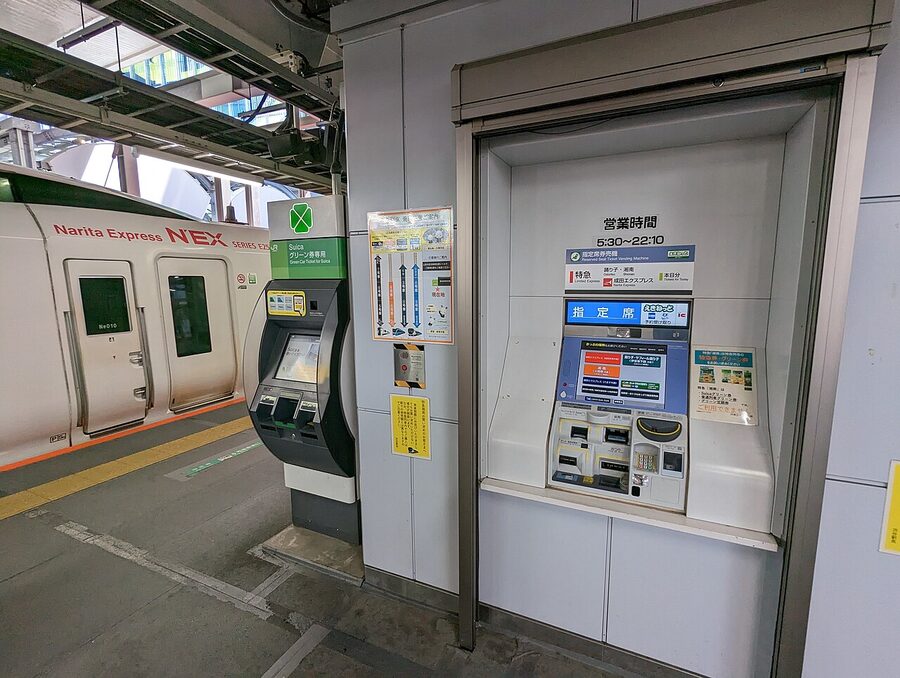
There’s a neat trick for skipping the queue that Chris at Truly Tokyo first flagged: if you have a digital Suica set up on your iPhone (Apple Pay with a compatible card), you can skip the JR Travel Service Center queue entirely. Tap through the gate with your phone, find the reserved-seat ticket machine on the platform itself, and buy your reservation there. I’ve done it when the counter queue was 20 deep. Worked perfectly.
Keisei Limited Express — the budget option nobody recommends loudly enough
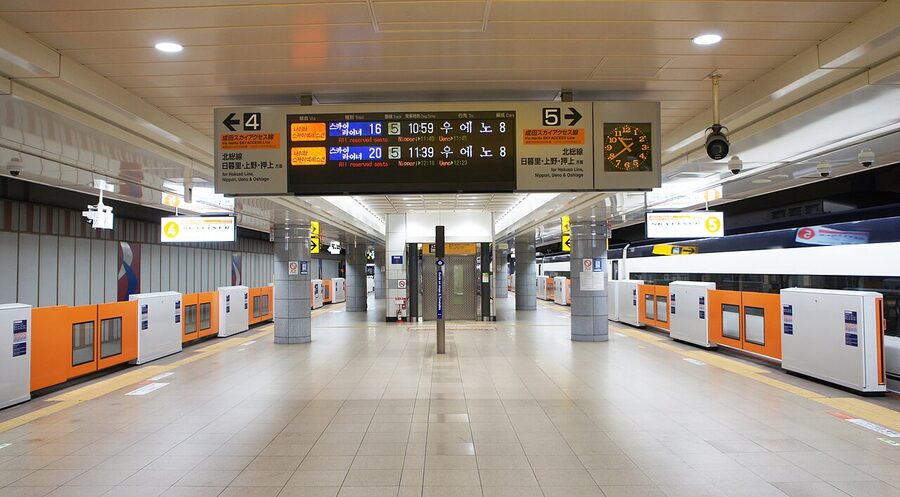

Keisei runs three very differently-priced services from Narita: the Skyliner (the ¥2,580 fast one), the Access Express (the in-between one, good for Asakusa), and the Limited Express (the cheap one). Critically, they all share the same platforms — but only the Skyliner requires a special ticket. The other two you can just tap through with a Suica or Pasmo IC card, the same way you’d board any Tokyo commuter train.
Fares and times on the Keisei Limited Express:
- Narita to Ueno: ¥1,060, about 80 minutes
- Narita to Nippori: ¥1,060, about 75 minutes (transfer to Yamanote from here)
- Narita to Asakusa (via Access Express with direct through-service to Toei Asakusa line): ¥1,310, about 60 minutes
It’s a regular commuter train. No reserved seat, no guaranteed space, no luggage racks. During peak commuter hours (roughly 7:30-9am and 5-7pm on weekdays) you’ll be standing, with your bag, surrounded by salarymen who did not sign up to play human Tetris with a 28 kg suitcase. I genuinely don’t recommend it if you’re arriving at those times — the ¥1,500 saving isn’t worth the experience.
Off-peak, though, and if you’re travelling light? It’s fine. Totally, unremarkably fine. I’ve taken it a dozen times and the only real difference from the Skyliner is the extra 40 minutes and the fact you don’t have a designated seat.
Access Express: the Asakusa special
One thing worth flagging. The Keisei Access Express (not to be confused with the Skyliner or the Limited Express) runs directly onto the Toei Asakusa subway line. Meaning: if you’re staying in Asakusa, Ningyocho, Nihombashi, Higashi-ginza, or Shimbashi, the Access Express drops you at your stop with no transfer. At ¥1,310 to Asakusa in about an hour, it’s the most under-rated route from Narita. Ask for “Access Express to Asakusa” at the ticket counter and they’ll point you to the right platform.
Limousine Bus — door-to-door to your hotel
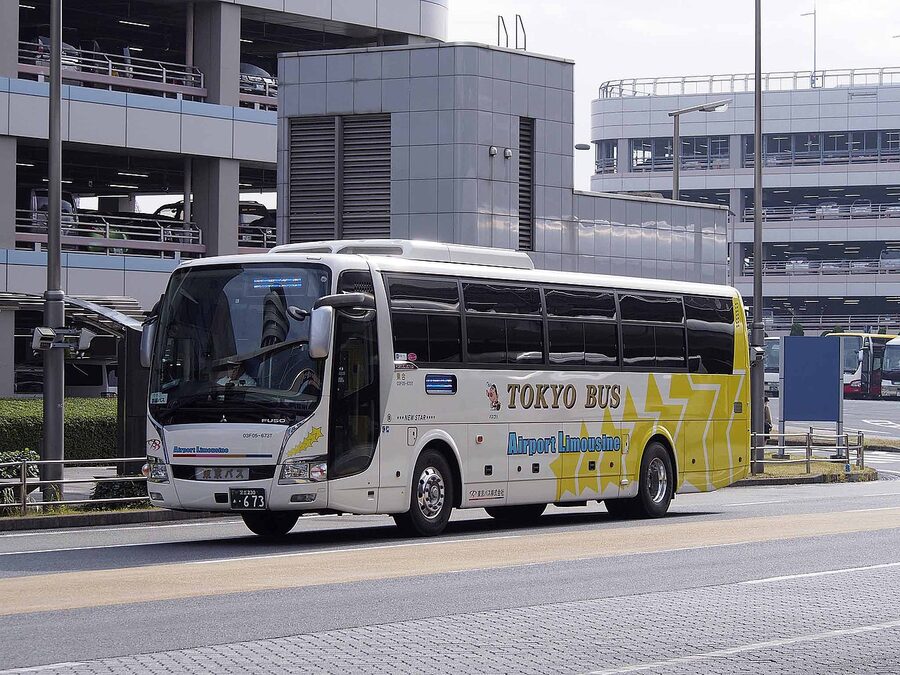

The Airport Limousine Bus (tokyo-airport-limousine.co.jp) runs from outside each terminal at 1F, with ticket counters and automatic machines right inside the arrivals hall. It’s ¥3,100 from Narita to most central Tokyo hotels, slightly more to outlying areas. Tickets cover up to two suitcases per passenger in the bus’s luggage hold.
Why you’d pick it over a train: the bus drops you at your hotel lobby (or within a short walk of it). The train drops you at a station, which is fine if you know Tokyo and don’t have 30 kilos of luggage. If it’s your first trip, you’ve been awake for 22 hours, and your hotel is in Shinjuku — being ejected at Shinjuku Station is a distinct kind of ordeal. I’ve seen grown adults cry in that station, and I genuinely don’t blame them.
Check tokyo-airport-limousine.co.jp before you fly — search by hotel name, and if yours is on the stop list, pre-book online. It guarantees your seat on a specific bus. Otherwise, buy at the counter on arrival (cash or card accepted, no queue usually).
Timings are the downside. The Limousine Bus takes anywhere from 75 minutes (off-peak, smooth run) to 120+ minutes (weekday evening rush hour, with Bayshore Expressway traffic). I’ve had both. The 75-minute one I felt smug. The 120-minute one I watched a Netflix film and started a second. Factor weekday 4-7pm and Sunday evenings as the danger zones.
There’s also the cheaper, faster cousin: the Airport Bus TYO-NRT (also called the Low-Cost Bus or LCB, tyo-nrt.com). ¥1,500 flat, no booking required, runs Narita to Tokyo Station Yaesu Exit, Ginza, and Shinonome. 60-90 minutes depending on traffic. Only one suitcase per passenger, no onboard wifi or toilet, but at half the price of the Limousine Bus it’s the sweet spot if you’re staying anywhere near Tokyo Station. The staff at Narita’s information desk told one writer the LCB is their personal favourite — cheaper than trains, faster than the Limousine Bus for Tokyo Station specifically.
Taxi and rideshare — when they make sense
I’ll be direct: a regular metered taxi from Narita to central Tokyo is almost always the wrong choice. It’s ¥22,000-32,000 one way, highway tolls are extra, and during rush hour you can still take 90 minutes to cover the distance. The only times I’d consider a taxi:
- You’re four adults with four large suitcases, and you can split the cost four ways.
- You land after the last train (Skyliner stops around 23:00, N’EX a bit later) and don’t want to nap on a bench.
- You’re travelling with small kids and the thought of a 90-minute train ride with a toddler makes you break out in a mild sweat.
If any of those apply, the smarter move is a pre-booked shared taxi. Companies like NearMe run shared minibuses from Narita to any Tokyo address for about ¥5,980 per person, door-to-door, for up to about an hour depending on who else is in the van. For two or three adults with a pile of luggage, it’s often cheaper than a regular taxi and about the same time as a limousine bus, without the last-mile walk.
Uber exists in Japan but it doesn’t work the way it does in the US or Europe — Japanese Uber is essentially a dispatcher for licensed taxi companies. Prices are broadly similar to a regular taxi, sometimes slightly higher. Useful if you don’t speak Japanese and don’t fancy miming your hotel address, but not a money saver.
Terminal-specific tips (T1, T2, T3)
All three Narita terminals are connected by a free shuttle bus that runs every 10-15 minutes. They’re on the same airport complex, but actually walking between them isn’t practical.
- Terminal 1 — used by ANA, United, Air Canada, and most Star Alliance carriers. Own station on B1F for JR and Keisei lines (Skyliner, Access Express, Limited Express, Narita Express, Sobu Line). Limousine Bus and LCB stops on 1F.
- Terminal 2 — used by Japan Airlines, Delta, American, British Airways, and most oneworld/SkyTeam carriers. Own station on B1F with the same train lines as T1. Limousine Bus and LCB stops on 1F. Capsule hotel (Nine Hours) on-site if you need a shower before going into Tokyo.
- Terminal 3 — low-cost carriers only (Jetstar Japan, Peach, Spring Japan, Zipair). Critically, no train station here. You either walk to Terminal 2 via a painted path (about 500 metres, 15 minutes with luggage) or take the free shuttle bus. Buses and taxis do pick up from T3 directly.
One small detail that catches people out. The train station at the airport is called “Narita Airport Terminal 1 Station” or “Narita Airport Terminal 2・3 Station” — NOT “Narita Station”. Narita Station is eight kilometres away in Narita town, and if you get off there by mistake you’re looking at a ¥500 local taxi to get back to the airport. When returning to fly out, check the destination on the train twice.
Luggage forwarding (takkyubin) — the move nobody tells you about
This one is genuinely transformative and too few first-time arrivals know about it. At both Terminal 1 and Terminal 2 arrivals you’ll find a luggage delivery counter — typically Yamato Transport or JAL ABC — where you can hand over your suitcase and have it delivered to your hotel the next day.
Cost is roughly ¥2,000-3,000 per bag for same-day or next-day delivery to a Tokyo hotel. You keep a backpack with your essentials for the night — change of clothes, toiletries, phone charger — and travel into Tokyo unencumbered. On a Skyliner with just a daypack, it’s a completely different arrival experience.
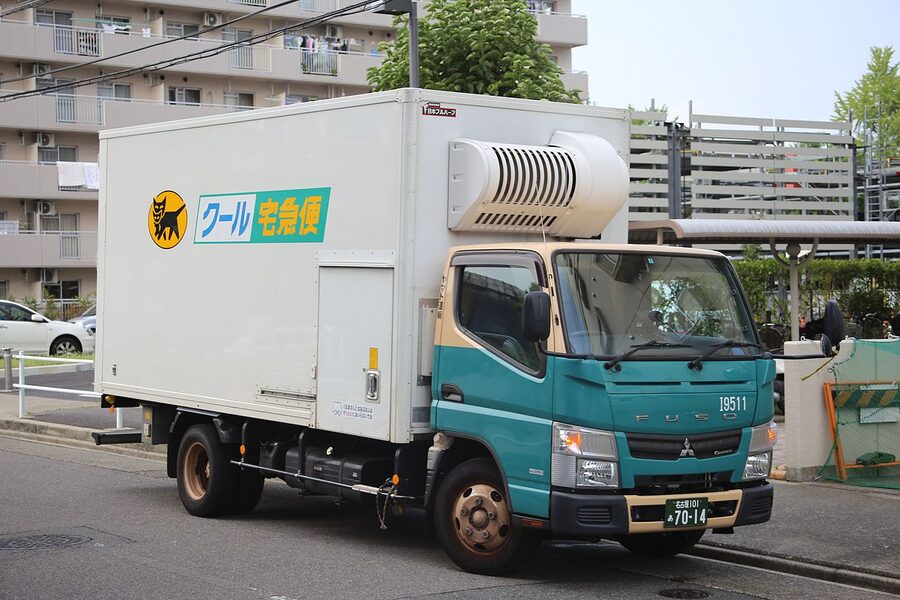

You fill in a slip at the counter (they speak English, they do this all day), pay, get a tracking number. The bag arrives at your hotel’s front desk the next afternoon. It’s especially worth it if you’re booked into a smaller hotel where lifts are tight, or if you’re planning to stop somewhere for dinner before checking in.
Same service works on the way back: your hotel’s front desk can usually arrange same-day or next-day forwarding to Narita. Drop the bag at hotel before your last day’s sightseeing, fly out bag-free, collect on the airport side.
Arrival-night practicalities
A short list of things you’ll need in the first two hours, and where they live.
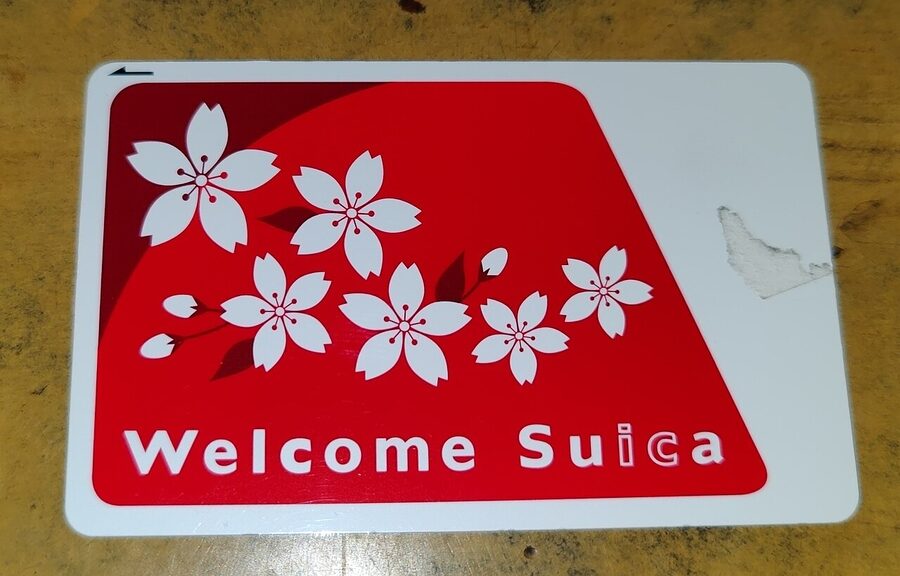
Welcome Suica / Pasmo Passport — Tokyo’s IC cards. If you don’t already have one, Welcome Suica is the tourist version (distinctive red-and-white Mount Fuji design, no ¥500 deposit, valid 28 days). Pick it up at the JR East Travel Service Center at either Terminal 1 or Terminal 2. Pasmo Passport is the equivalent from the other operator — pick up at any Keisei/metro counter. Either one works on every train, subway, and bus in Tokyo, plus most vending machines and conbini tills. Genuinely the first thing I’d buy.

SIM card or pocket wifi — counters for eSIM, physical SIM, and pocket wifi are right in the arrivals hall at both terminals (look for Mobal, Sakura Mobile, SoftBank). Prices start around ¥1,000-1,500 for a short-stay SIM. Pre-ordering online before you fly is cheaper — many companies let you collect at the airport counter with a QR code. If you’re arriving late, double-check your provider’s counter opening hours.
Cash and ATMs — counter-intuitively, the ATMs at Narita Airport itself can be finicky with foreign cards. I’ve had three cards work and two fail at the airport machines. The conbini ATMs in Tokyo — particularly 7-Eleven’s Seven Bank ATMs, which are genuinely everywhere — are more reliable for international cards and work 24/7. I’d take ¥3,000-5,000 out at the airport for transport and first-night needs, and withdraw a bigger amount from a 7-Eleven near your hotel the next morning.
Last trains from Narita: Skyliner ends around 22:30, Narita Express around 21:44 (last to Tokyo Station), Limited Express around 23:00. Limousine Buses run until about midnight depending on route. If you’re landing after 22:00, book your transport option before you fly — the last few services fill up and walking up to the counter at 22:15 for a 22:30 train is not the game you want to play with a 12-hour flight in your legs.
Going back to Narita
The way back is the same options in reverse, with one extra wrinkle: morning-rush N’EX departures from Tokyo Station (roughly 6:00-9:00) sell out on weekends and holiday Mondays. If you’re flying out on a Saturday or Sunday morning, reserve your N’EX seat online at least a day in advance. You can do this via the JR East Train Reservation site (jreast-shinkansen-reservation.eki-net.com) with the same foreign-passport discount that applied for your inbound trip.
Skyliner reservations for the return are similarly bookable online via the Keisei site — book the day before for peace of mind, same ¥2,310 online rate.
Luggage forwarding back to Narita is arranged through your hotel: ask at the front desk for kuuko takkyubin (airport courier) at least 48 hours before your flight. They’ll quote you ¥2,000-3,000 per bag, you hand the bag over, it shows up at the airport the next day ready for you to collect from the luggage counter airside.
Practical info at a glance
Prices accurate as of 2026. All trains run on time, the bus times are approximate.
- Keisei Skyliner: ¥2,310 online / ¥2,580 at counter. 41 min to Ueno. Runs 07:30-22:30. Reserved seat, free wifi, power sockets. Fully wheelchair accessible.
- Narita Express (N’EX): ¥3,070 to Tokyo, ¥3,250 to Shinjuku/Shibuya. 53-83 min. Runs 06:52-21:44. Reserved seat, luggage racks with locks, free wifi. Covered by JR Pass. Wheelchair accessible.
- Keisei Limited Express: ¥1,060 to Ueno. 80 min. Runs 05:42-23:00. No reservation, no guaranteed seat, no luggage racks. IC card compatible.
- Keisei Access Express (to Asakusa via Toei line): ¥1,310. About 60 min. No reservation. Great for Asakusa/Ningyocho stays.
- Airport Bus TYO-NRT (low-cost bus): ¥1,500 adult / ¥750 child (¥3,000 early/late). 60-90 min to Tokyo Station. No booking, buy at counter. One suitcase per person.
- Airport Limousine Bus: ¥2,900-3,600 to most central hotels. 75-120 min depending on traffic. Two suitcases per person, wifi, door-to-door to major hotels. Accessible to most hotels, but boarding-bus step for wheelchair users.
- Shared taxi (e.g. NearMe): ~¥5,980 per person. About 60 min. Pre-book only. Door-to-door.
- Private taxi: ¥22,000-32,000 plus 20 per cent night surcharge 22:00-05:00. About 60-90 min.
What I’d tell a friend landing tomorrow
If it’s your first Tokyo trip and you don’t have strong opinions yet — book a Skyliner ticket online right now, at the ¥2,310 fare. Pick the train that arrives about 45 minutes after your scheduled landing time (so you’ve cleared immigration, baggage, and walked to the station). Get a Welcome Suica at the airport counter and put ¥3,000 on it. Walk to the Skyliner gate, scan your phone, sit down, wake up in Ueno. Transfer to whichever Yamanote line station is closest to your hotel.
If your hotel is in Shinjuku, specifically, and the N’EX runs at a time that suits you — it’s worth the extra ¥940 to skip the transfer. That’s the one case where N’EX beats Skyliner for a first-timer without a JR Pass.
If you’re arriving after 22:30 — the Limousine Bus runs later than the trains, and a pre-booked shared taxi from NearMe is cheaper than a regular one.
And one more thing. Ship your big suitcase from the airport to your hotel. ¥2,500 for the version of yourself that walks into Tokyo with a small daypack and a clear head, rather than the version that drags a 28 kg suitcase up three flights of station stairs with their jacket still on. Best money I spend every time I come back.
Tokyo’s public transport is brilliant once you know it. See the Tokyo trains and IC card guide for what to do with that Welcome Suica, the JR Pass Tokyo guide for whether you actually need one, and where to stay in Tokyo for first-time travellers if you’re still deciding on a neighbourhood. If you’re Skyliner-bound and staying near the terminus, the Ueno neighbourhood guide covers everything within a ten-minute walk of the station. N’EX riders — the Tokyo Station area guide is for you.
Official booking and timetable links: Keisei Skyliner, JR East Narita Express, Airport Limousine Bus, Narita Airport official access page.