
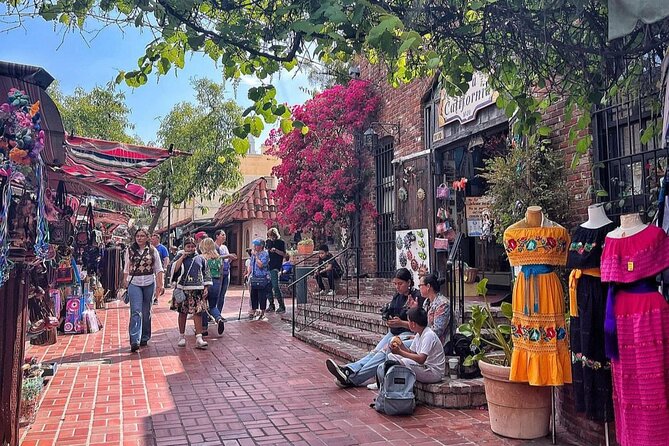
Reviewed · SELF-GUIDED TOURS
LA Little Tokyo to Olvera St Smartphone (App/GPS) Walking Tour
The most appealing part of this walk is the way it links two very different chapters of Los Angeles: Japanese American life in Little Tokyo and Mexican Los Angeles around Olvera Street. You finish at Cielito Lindo, a historic taquito stand, so the route ends with food rather than a vague promise of culture.
I like the freedom to pause the app for photos, snacks, or a closer look at a building. I also like the low price and compact route, which gives you a useful introduction without taking half a day. The tradeoff is that this is an app, not a person. You need your phone, enough battery, and some patience if GPS directions briefly lose track of you.
In This Review
- Key points at a glance
- A short walk through two Los Angeles stories
- Starting beside the Chiune Sugihara statue
- Little Tokyo and Japanese Village Plaza
- A note about food stops and pacing
- Los Angeles City Hall and its observation deck
- El Pueblo de Los Ángeles Historical Monument
- The Chinese American Museum stop
- Olvera Street and the Cielito Lindo finish
- What the $7.50 price really gives you
- Practical details before you set out
- Who will get the most from this app walk
- Should you book the Little Tokyo to Olvera Street walk?
- FAQ
- How long does the walking tour take?
- Where does the tour start?
- Where does the tour end?
- Is a live guide included?
- Are food and entrance fees included?
- Can I cancel for a full refund?
Key points at a glance
- Starts at the Chiune Sugihara statue: Meet at 192 South Central Avenue in Little Tokyo.
- Covers several major areas: The walk connects Little Tokyo, Japanese Village Plaza, Los Angeles City Hall, El Pueblo, and Olvera Street.
- Ends at Cielito Lindo: The final stop explains the taquito stand and the story of Olvera Street.
- Built for flexible pacing: Pause the narration to eat, take photos, or explore without holding up a group.
- Costs $7.50 per person: That is a small fee for a self-guided introduction to central Los Angeles.
- Takes about an hour to 75 minutes: Add extra time if you stop for mochi, bakery treats, or a meal.
A short walk through two Los Angeles stories
This tour is not just a stroll between landmarks. It creates a simple line through parts of Los Angeles that are close together but feel quite different. You begin in Little Tokyo, where the app introduces Japanese American history and points out places that are easy to pass without noticing.
From there, the route moves through Japanese Village Plaza and toward Los Angeles City Hall. It then reaches El Pueblo de Los Ángeles Historical Monument, the area associated with the city’s beginnings, before finishing on Olvera Street.
That sequence gives the walk a clear shape. You start with a neighborhood story, move through civic Los Angeles, and end in a historic Mexican marketplace. For a first look at downtown, that is a smart use of about an hour.
The app supplies the narration and directions. You are not joining a scheduled group, and no guide accompanies you. The activity is private to your party, but the experience depends on following the GPS prompts on your own phone.
If you're still narrowing it down, here are other tours in Los Angeles we've reviewed.

Starting beside the Chiune Sugihara statue
The meeting point is the Chiune Sugihara statue at 192 South Central Avenue. This is a precise starting address, which matters in downtown Los Angeles, where a few blocks can make a big difference.
From here, the app sets you toward Little Tokyo. The opening section introduces the history of Japanese people in Los Angeles and points out sites around the district. The supplied route gives this portion about 15 minutes, making it one of the longer stops on the walk.
I would give yourself a moment to get oriented before pressing ahead. Check your phone battery, confirm that the app has your location, and be ready to pause if you want to look at a building or take pictures. One useful feature is that the tour can be stopped while you explore, then continued when you are ready.
The GPS format is especially helpful if you do not want to keep checking a map. The directions are designed to keep you on track, and if you turn the wrong way, you can generally correct your route within a short time. Still, this is an app-based walk, so the instructions may feel less smooth than a person pointing out the next corner.
Little Tokyo and Japanese Village Plaza
Little Tokyo is the heart of the first part of the route. You will hear about Japanese life in Los Angeles while seeing several local sites. The goal is not to enter a long list of attractions. Instead, the app gives you enough context to understand why this district matters.
The next stop is Japanese Village Plaza. The route allows about five minutes here, including a look at the fire tower and the plaza’s history. This is a good example of the tour’s approach: small landmarks receive an explanation that helps you notice them, even if they are not major museum sights.
The plaza also gives you one of the best chances to slow down. The app can point you through the area, but you can pause to look around. A short stop may be enough for some people, while anyone interested in neighborhood details will want longer.
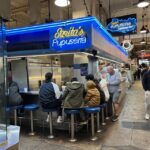
One of the strongest details from the route is the stop at Fugetsu-Do Bakery Shop, also allotted about five minutes. The app tells the bakery’s story and identifies it as a good place to eat. Food is not included in the $7.50 price, so plan to pay separately if you want something there.
The app’s food suggestions are useful because they turn the tour into more than a march between monuments. You can sample something, take a break, and resume the narration later. One person specifically appreciated being able to pause for food and explore at a comfortable pace. That flexibility is a real advantage for families and mixed-interest groups.
A note about food stops and pacing
This is not a food tour. The price includes the smartphone app only. You pay separately for anything at Fugetsu-Do, Cielito Lindo, or any other stop, and water is not included.
That said, the food stops add character to the walk. Fugetsu-Do gives you a reason to linger in Little Tokyo, while Cielito Lindo provides a tasty ending in Olvera Street. If you want to eat at both places, the advertised one-hour to 75-minute timing will become longer.
I would treat the stated duration as the walking and listening time, not as a strict schedule. You can move quickly and finish close to an hour, or pause for snacks, photographs, and side looks. Since this is a private activity, you do not need to match another group’s pace.
The app also works well for a family or couple with different priorities. One person can follow the history while another looks for photos or food. The narration continues when you are ready, rather than forcing everyone to stop at every point.
Los Angeles City Hall and its observation deck
The walk continues to Los Angeles City Hall, with about 10 minutes devoted to the building. You will hear the story behind its construction and have a chance to see the view from the observation deck.
The wording matters here: you get a chance to view the deck, but the information does not promise a guaranteed entry or specify access conditions. Treat the observation deck as an opportunity, not the central reason to book the tour.
City Hall gives the route a change of pace. After the neighborhood focus of Little Tokyo and Japanese Village Plaza, you are looking at one of the city’s major civic buildings. The app helps connect the building to Los Angeles history instead of leaving you with only a photo stop.
I like this inclusion because it keeps the experience from becoming narrowly focused on one cultural district. You see neighborhood life, local food, and civic architecture within a compact route. The downside is that ten minutes is not enough for a detailed architectural visit. If City Hall interests you greatly, you will need to allow extra time beyond the standard tour length.
El Pueblo de Los Ángeles Historical Monument
Next comes El Pueblo de Los Ángeles Historical Monument, another 10-minute section. This is described as the place where Los Angeles began, with an explanation of the city’s naming and a look at the historic park.
For someone new to Los Angeles, this stop supplies useful grounding. The modern city can feel enormous and scattered. El Pueblo gives the tour a clear historical center, helping you understand that the city’s story did not begin with its later downtown towers.
The park also sets up the final section on Olvera Street. Instead of treating the marketplace as an isolated shopping lane, the app explains how it developed within the older historic area.
As with several stops, the allotted time is brief. You will get an introduction rather than a full guided visit. If you want to read signs, take photographs, or explore the park in detail, pause the tour and continue at your own pace.
The Chinese American Museum stop
The route also takes you outside the Chinese American Museum. The app discusses a Chinese riot, murders, and the history of Chinese people in Los Angeles.
This is a serious part of the walk. It adds a difficult chapter to the city’s past and shows that the route is not limited to cheerful shopping streets and food. The supplied information does not give this stop a set duration, so you should expect its length to depend on how the app presents it and how long you choose to listen.
Because this is an outside stop, the tour does not include museum admission. The general terms are clear that entrance fees, food, and water are not included. If you want to go inside any museum or attraction, that would be a separate decision and expense.
The Chinese American Museum stop broadens the route’s subject matter. You move through Japanese American, Chinese American, Mexican American, and civic Los Angeles stories in one short walk. That is a lot of ground for the price, though the compact format means each subject receives an introduction rather than a full lesson.
Olvera Street and the Cielito Lindo finish
The final section takes you to Calle Olvera, better known as Olvera Street. The app explains that it was originally called Wine Street. In 1877, it was extended and renamed for Judge Augustín Olvera, the first elected county judge in Los Angeles.
You will also hear how local merchants adapted the street into the Mexican marketplace seen today in 1930. That background helps explain the festive setting. You are not simply arriving at a place to shop and eat. You are seeing a marketplace shaped by a deliberate effort to preserve and present an older part of Los Angeles.
The tour ends at Cielito Lindo, located at E 23 Olvera Street. The app tells the story of how the taquito stand began and explains how the food is made. The admission cost is free, but the food itself is not included.
This is a well-chosen endpoint. After an app-led walk, you finish somewhere concrete, historic, and easy to understand. You can stop for taquitos, continue through Olvera Street, or end the activity there.
The advertised opening information lists Cielito Lindo as open Monday through Sunday from midnight to 11:30 p.m. Because the tour information does not give a specific tour departure time, you should still confirm that the app route and food stop fit your plans before setting out.
What the $7.50 price really gives you
At $7.50 per person, this is inexpensive for a private walking experience through several central Los Angeles districts. The value comes from the narration, route planning, and the chance to see historic areas without hiring a personal guide.
You are not paying for transportation, food, water, tickets, or a human guide. That keeps the price low, but it also puts more responsibility on you. Your phone becomes the guidebook, map, and audio player.
For the right person, the format is excellent value. You get a compact introduction, clear directions, and freedom to stop when you want. The app also lets you avoid the fixed pace of a group tour.
For someone who wants conversation, spontaneous questions, or detailed explanations at every building, the price may feel less attractive. A live guide can respond to your interests in a way an app cannot. Here, you should expect a set narration and location prompts.
The strongest value is for a short visit or a first day in downtown Los Angeles. It gives you a framework for deciding which places deserve a longer return visit.
Practical details before you set out
The tour is offered in English and uses a mobile ticket with a location-aware smartphone app. Confirmation is provided at booking, and the experience is private, meaning only your group takes part.
You should bring a charged phone and allow enough time to use the GPS directions without rushing. The route is near public transportation, which makes the start and finish easier to reach without arranging a car.
Service animals are allowed, and most people can participate. The information does not provide a full accessibility assessment, so if you need specific details about surfaces, walking distance, or access to the City Hall observation deck, check before booking.
The stated duration is approximately one hour to one hour and 15 minutes. Add time for the bakery, photographs, the observation deck opportunity, the park, or taquitos. The tour is best treated as a flexible outline rather than a race.
Free cancellation is available if you cancel at least 24 hours before the scheduled start time. Cancellations within 24 hours are not refunded, and changes inside that window are not accepted.
Who will get the most from this app walk
I would recommend this experience to you if you like self-guided sightseeing and want a short introduction to central Los Angeles. It suits people who enjoy history but do not want a full museum visit at every stop.
It is also a good fit for families and couples with different interests. You can pause for a snack, look for photo opportunities, or listen to the next section while others take their time. The ability to stop and restart is one of the tour’s most useful features.
It may not suit you if you dislike phone navigation or want a person to answer questions. GPS can occasionally require a moment to catch up, and one account noted that the narration may stop when the app is waiting for the correct location.
There was also some concern about walking toward Chinatown and Koreatown. This route includes an outside stop at the Chinese American Museum, but the supplied tour details do not describe a full walking route through Chinatown or Koreatown. Keep your expectations tied to the listed areas: Little Tokyo, City Hall, El Pueblo, and Olvera Street.
Should you book the Little Tokyo to Olvera Street walk?
Book it if you want low-cost, flexible orientation to downtown Los Angeles, especially if Little Tokyo and Olvera Street are both on your list. The route covers a surprising range of subjects in roughly an hour, and the ending at Cielito Lindo gives the walk a clear purpose.
Skip it if you want a live guide, a food tasting package, or guaranteed attraction entry. You will need to buy your own food and manage the phone-based directions.
For most independent visitors, the balance is good: short, inexpensive, private, and easy to pause. I would schedule it early in your Los Angeles sightseeing plans, then return to the places that catch your interest.
FAQ
How long does the walking tour take?
The approximate duration is one hour to one hour and 15 minutes. You can take longer if you pause for food, photos, or extra exploration.
Where does the tour start?
It starts at the Chiune Sugihara statue at 192 South Central Avenue, Los Angeles, California 90012.
Where does the tour end?
The tour ends at Cielito Lindo at E 23 Olvera Street, Los Angeles, California 90012.
Is a live guide included?
No. This is a location-aware smartphone app walking tour. The app provides the narration and directions.
Are food and entrance fees included?
No. Food, water, entrance fees, and personal expenses are not included. You pay separately for items at Fugetsu-Do Bakery Shop or Cielito Lindo.
Can I cancel for a full refund?
Yes, if you cancel at least 24 hours before the scheduled start time. Cancellations or changes made less than 24 hours before the start are not refunded.
More tours in Los Angeles we've reviewed
Self-Guided Tours, compared.
 ★ 3.8Tokyo: Open Top Panoramic Sightseeing Bus with Audio GuideFrom $111h 10m
 ★ 4.0Tokyo: 60min Panoramic Open Top Bus Tour with Audio GuideFrom $141 hour
 ★ 3.7Akihabara: Self-Guided Tour with a special brochureFrom $61 day
 ★ 3.5Tokyo Self-Guided Audio TourFrom $9
 ★ 4.6Hakone: Self Guided Trip to Mt. Fuji // Made by Local GuidesFrom $31 day
 ★ 4.8Tokyo: Sumo Keiko Training Tour with Audio Guide & PhotoFrom $8540 - 90 minutes