
Reviewed · HISTORICAL TOURS
Downtown Los Angeles : Historic district & Little Tokyo
Downtown Los Angeles is where old movie palaces, food stalls, Japanese culture, and bold modern buildings meet on the same half-day walk. You begin at 300 South Broadway and finish in Little Tokyo, covering the city’s Historic Core, Financial District, Bunker Hill, and Civic Center on foot. Broadway’s grand theaters and Grand Central Market are the early highlights.
I like the small group, capped at 10 people, because a walking tour works best when you can hear the guide and ask questions. I also like the French-speaking format, especially if you want more than a quick photo stop and prefer detailed conversation with guides such as Charlotte and Eric, both praised for their friendly approach and strong knowledge of Los Angeles. The main consideration is simple: 210 minutes on city sidewalks calls for comfortable shoes, and the tour runs rain or shine.
In This Review
- Key points to know before you book
- Why this Downtown Los Angeles walk is worth your time
- Starting on Broadway, where Los Angeles went to the movies
- Grand Central Market, a compact taste of LA
- The Historic Core and the Financial District
- Bunker Hill and modern architecture
- Civic Center and the public face of the city
- Little Tokyo, the tour’s final change of scene
- The value of a French-speaking small group
- Practical details that affect your day
- Who should book this Downtown LA experience?
- Should you book it?
- FAQ
- Where does the Downtown Los Angeles tour begin?
- Where does the tour finish?
- How long does the experience last?
- What language does the guide speak?
- How large is the group?
- Is the route wheelchair accessible?
- What is included in the price?
Key points to know before you book
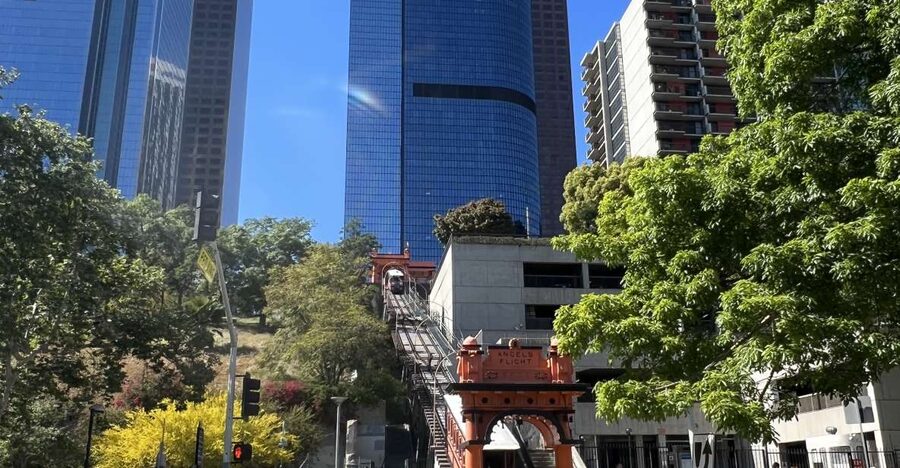
- Broadway’s movie-palace past: See the avenue that once hosted some of Los Angeles’ biggest film premieres, with theaters built in Art Deco and Beaux Arts styles.
- Grand Central Market at the start: This heritage-listed food hall gives you a quick, tasty look at the city’s many communities, though food and drinks cost extra.
- A changing Downtown: Follow the shift from an office district that emptied after work to a center for museums, concerts, restaurants, and new city life.
- Modern architecture on Bunker Hill: The route includes the Broad Museum and Frank Gehry’s Walt Disney Concert Hall from the outside.
- Little Tokyo finish: End among Japanese restaurants, manga shops, and Japanese Village Plaza, only a few blocks from the rest of Downtown.
- French guidance in a small group: The tour is limited to 10 participants and includes a map, recommended addresses, and a follow-up email with a souvenir photo.
Why this Downtown Los Angeles walk is worth your time
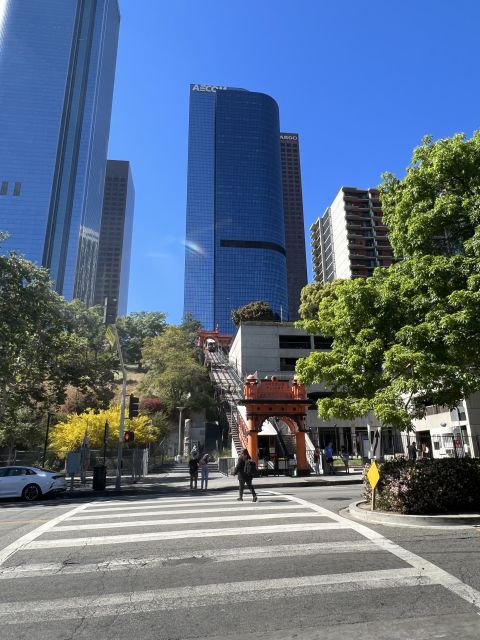
Many first-time visitors treat Downtown LA as a place to pass through on the way to Hollywood, Santa Monica, or a studio tour. I think that misses one of the city’s most revealing districts. Downtown shows Los Angeles in layers: early cinema, immigrant communities, finance, public buildings, museums, and ambitious new architecture.
This tour is useful because it connects those pieces on foot. You are not simply driven past a theater or pointed toward a concert hall. You move from one district to the next and see how the city changes block by block. The French-speaking guide can explain the links between the places, while the small group leaves room for questions.
The route lasts three and a half hours. That is long enough for a proper introduction, but not so long that the day disappears. You should still expect a steady walk, pauses for explanation, and city conditions that can vary from one part of Downtown to another.
If you're still narrowing it down, here are other tours in Los Angeles we've reviewed.

Starting on Broadway, where Los Angeles went to the movies
Meet your guide outside Blue Bottle Coffee at 300 South Broadway. The guide will carry a Los Angeles Off Road tote-bag, which makes the meeting point easier to spot.
Broadway is a strong place to begin. In the early days of cinema, this avenue was lined with prestigious movie theaters. More than a dozen theaters featured Art Deco or Beaux Arts design, turning a night at the movies into a grand public event.
As you walk, look up. The details are often above eye level, from ornate facades to old theater signs and decorative stonework. The point is not only to see attractive buildings. Broadway helps explain how Los Angeles became tied to the film industry before the modern studio system became the city’s main symbol.
You will not be attending a film screening, and the tour does not include theater admission. This is an architectural and cultural walk. If you enjoy old cinemas, urban design, and the story of how entertainment shaped a city, this opening section should feel especially rewarding.
Grand Central Market, a compact taste of LA
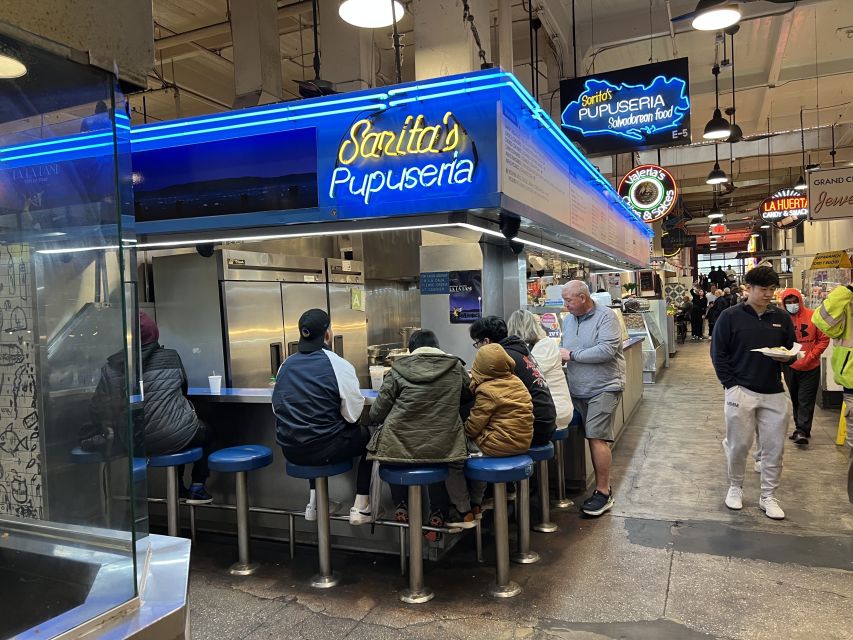
Grand Central Market has been a heritage site since 1917. The market’s many kiosks reflect Los Angeles’ cultural mix, making it a practical introduction to the city before the route moves deeper into Downtown.
I like this stop because it gives the tour a human scale. Broadway’s theaters can feel grand and formal. The market brings you back to everyday Los Angeles, with food counters and different culinary traditions gathered under one roof.
The guide provides a tour of the market, but beverages and personal purchases are not included. You can browse without buying anything, or return later if you want more time to eat. Keep that distinction in mind if you are hoping for a food tour. This experience uses the market as part of a wider city walk, not as a meal with included tastings.
Grand Central Market is also a good point to notice the contrast between old Downtown and its newer revival. A place that has served the public for more than a century now sits among offices, apartments, cultural institutions, and visitor attractions.
The Historic Core and the Financial District
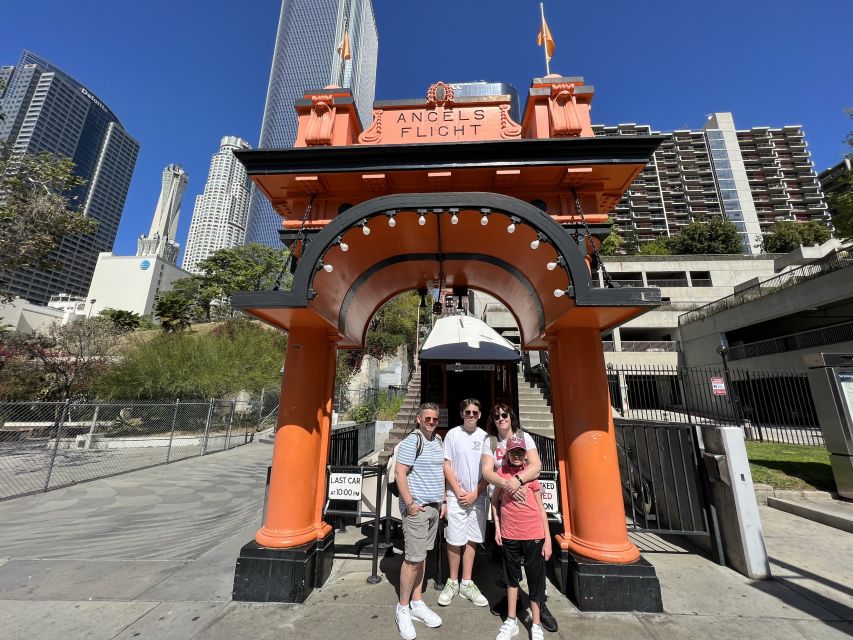
From the market, the route continues through the Historic Core and Financial District. These names can sound more formal than the experience feels. You are walking through the former heart of the city’s business and entertainment life, where older buildings share space with newer development.
The Historic Core is the best setting for understanding Downtown’s past. Its older facades and theater buildings show the city before freeways and suburban expansion changed how Angelenos moved and worked. The Financial District then shifts the mood toward offices, tall buildings, and the working side of central Los Angeles.
Until the early 2000s, much of Downtown emptied after office hours. Over roughly the past 15 years, the district has gained more museums, performances, restaurants, and cultural activity. The guide can help you read that change in the streets rather than treating Downtown as a frozen historic zone.
This part of the tour may appeal most if you like cities in transition. It is less about one single landmark and more about how several districts fit together. If you want a checklist of famous attractions with long interior visits, the pace may feel different from what you expect.
Bunker Hill and modern architecture
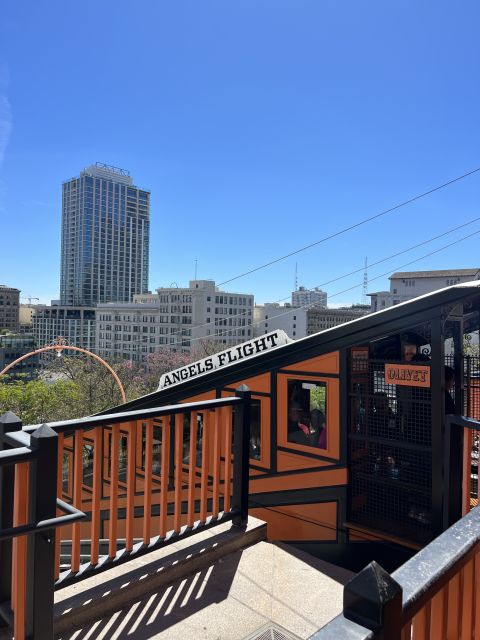
Bunker Hill brings some of the tour’s strongest modern design. The route includes the Broad Museum and Frank Gehry’s Walt Disney Concert Hall, two of Downtown’s best-known cultural buildings.
The Broad is known for its striking contemporary form, while the Disney Concert Hall is a bold piece of architecture that has become closely linked with the city. Seeing both in the context of the surrounding streets is valuable. You can compare their shapes and materials with the older buildings you have already passed on Broadway and in the Historic Core.
The tour does not list museum entry or a concert as part of the experience. You should plan on guided exterior viewing unless your guide explains otherwise. That is not a weakness for everyone. Architecture can be easier to appreciate when you have time to study the building from outside instead of rushing through a collection.
Bunker Hill also gives the walk a change of scale. After older commercial streets and market stalls, you encounter major cultural institutions designed to make a public statement. The result is a useful lesson in how Los Angeles has tried to rebuild Downtown as a destination after decades of decline outside business hours.
Civic Center and the public face of the city
The Civic Center section adds another layer to the route. This is where you see Downtown as the seat of public life, not only as a place for offices, shopping, or entertainment.
The supplied details do not identify every building visited in this area, so you should think of the Civic Center as a guided district walk rather than a promise of entry to a particular institution. Your guide will explain the area as part of the larger Downtown story.
That broader view is one reason I would choose a guide-led walk instead of exploring only with a map. Downtown’s districts can look disconnected when you visit them separately. A guide can show you how the Historic Core, Financial District, Bunker Hill, and Civic Center form one central city, even though each has a different feel.
The walking format also lets you notice small transitions that a vehicle would miss. A block can shift from commercial to civic, or from older architecture to a new cultural building. Bring patience and curiosity, not just a camera.
Little Tokyo, the tour’s final change of scene
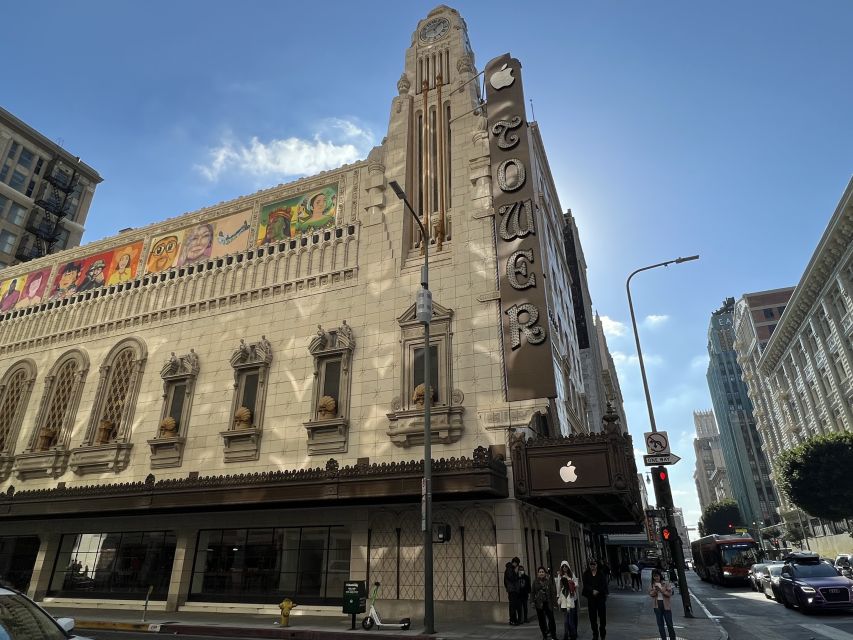
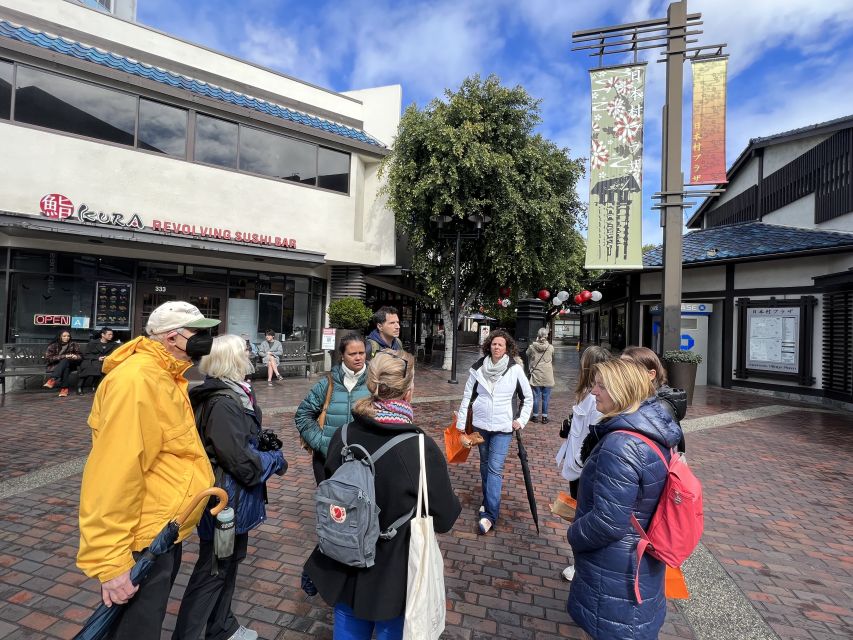
The route finishes in Little Tokyo, described as a concentration of Japanese culture across about four blocks. After the earlier sections, this feels like a clear change of setting without leaving Downtown Los Angeles.
Japanese Village Plaza is the focal point. You can find sushi restaurants and manga shops here, along with a strong sense of Japanese cultural identity. The guide gives context to the neighborhood as a center connected to Japanese immigration and community life.
I especially like ending here because Little Tokyo is not treated as an isolated attraction. You reach it after seeing several other parts of the city, so the neighborhood becomes part of a larger story about immigration and cultural diversity in Los Angeles.
The finish is also practical. You end near restaurants and shops rather than returning to the original starting point. That gives you the option to continue exploring Little Tokyo, stop for a meal, or use the map of recommended addresses included with the tour.
The four-block area is compact, but the tour does not promise unlimited free time for shopping or dining. Personal purchases are your responsibility. If you want to browse every store or sit down for a full meal, plan extra time after the official walk.
The value of a French-speaking small group
The price is $78 per person. I would judge that as a fair price for a 210-minute guided walk if you value context, conversation, and a route that links several Downtown districts.
You are paying for more than a basic orientation. The experience includes a French-speaking guide, a small group limited to 10 participants, a map with recommended addresses, and a follow-up email that recalls the places visited and includes a souvenir photo.
The group size matters. Downtown has traffic, street noise, and busy public spaces. With 10 people or fewer, you have a better chance of hearing the guide and getting answers that fit your interests. Past bookings have specifically praised Charlotte and Eric for friendly exchanges and an enjoyable visit, so the human side of the experience appears to be a real strength.
Still, value depends on your plans. If you already know Downtown well, speak fluent English, and only want to see the exterior of a few buildings, you could explore independently for less. If this is your first serious look at central Los Angeles, the guide’s explanations can save you time and help you understand what you are seeing.
Practical details that affect your day
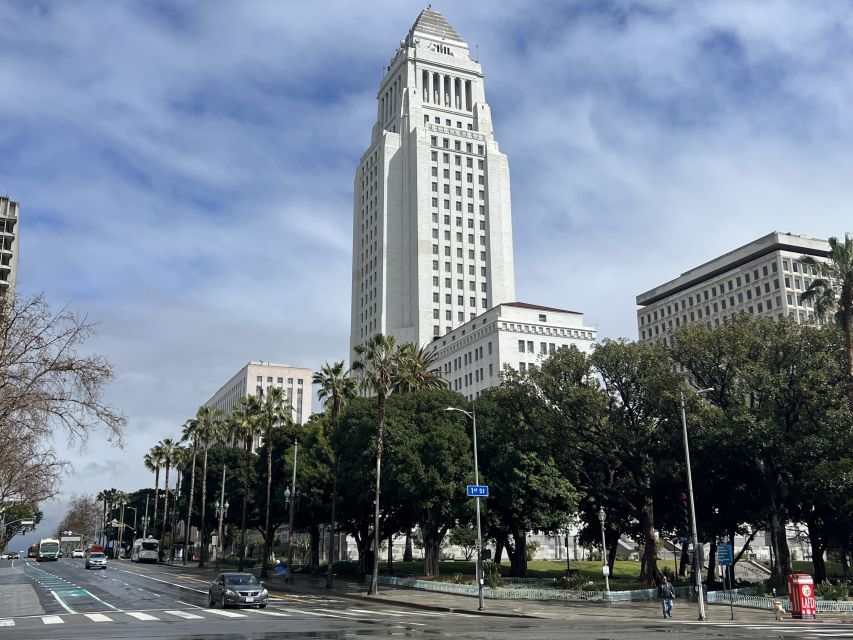
Wear comfortable shoes. The entire route is on foot, and three and a half hours is long enough for poor footwear to become the main story of your day.
The tour operates rain or shine. Check the forecast and bring suitable clothing, since the experience does not move indoors whenever the weather turns unpleasant. Be prepared for an urban walk rather than a sequence of air-conditioned attractions.
Wheelchair users can take the tour, with an adapted circuit. If you need a specific arrangement, confirm the details when booking so the adapted route matches your needs.
The guide speaks French. That makes this a particularly good fit for French-speaking visitors who want to ask questions about American architecture, city planning, cinema, and immigration in their own language. The format may be less suitable if you want a tour in English or prefer to explore independently.
Cancellation is free up to 24 hours before the start time, and you can reserve now and pay later. Those terms help if your Los Angeles schedule is still shifting, though you should still check available starting times before making plans around the walk.
Who should book this Downtown LA experience?
I would recommend this tour to a first-time Los Angeles visitor who wants to understand Downtown rather than simply photograph it. It also suits anyone interested in historic theaters, architecture, urban change, food markets, or Japanese-American culture.
French-speaking couples, families with older children, and small groups of friends should find the format comfortable. The 10-person limit gives the tour a more personal feel than a large city walk, while the map and recommended addresses help you plan what to do afterward.
I would be more cautious if you dislike walking, want extensive free time at each stop, or expect museum and theater admission to be included. You should also allow extra time after the tour if Little Tokyo interests you, since the official route ends there and does not include personal shopping or a full meal.
Should you book it?
Book this Downtown Los Angeles walk if you want a clear introduction to the city’s central districts and prefer French-language guidance. The combination of Broadway theaters, Grand Central Market, Bunker Hill architecture, the Civic Center, and Little Tokyo gives you a broad view in one outing.
The strongest reasons to book are the small group, the well-connected route, and the chance to finish in Little Tokyo instead of circling back to the start. The main limitations are the steady walking, rain-or-shine format, and the fact that food, drinks, shopping, museum entry, and concerts are not included.
At $78, I see good value for a visitor who would otherwise struggle to connect these neighborhoods. Bring good shoes, leave room in your schedule for Little Tokyo afterward, and expect a thoughtful city walk rather than a quick list of landmarks.
FAQ
Where does the Downtown Los Angeles tour begin?
The meeting point is outside Blue Bottle Coffee at 300 S Broadway, Los Angeles, California 90013. The guide will be carrying a Los Angeles Off Road tote-bag for recognition.
Where does the tour finish?
The tour finishes in Little Tokyo.
How long does the experience last?
The walking tour lasts 210 minutes, or three and a half hours. Starting times depend on availability.
What language does the guide speak?
The live guide speaks French.
How large is the group?
The tour is limited to 10 participants.
Is the route wheelchair accessible?
Yes. The tour is wheelchair accessible, with a circuit adapted for wheelchair users.
What is included in the price?
The price includes a French-speaking guide, a map of the visited places with recommended addresses, and an email after the tour recalling the places visited and including a souvenir photo. Beverages and personal purchases are not included.
More tours in Los Angeles we've reviewed
Historical Tours, compared.
 ★ 5.0Tokyo: Imperial Palace and Shogun Historical Walking TourFrom $22
 ★ 4.9Tokyo: Imperial Palace Japanese History Walking TourFrom $32
 ★ 5.0Yanaka Walking Tour: Historic and Traditional District of TokyoFrom $72
 ★ 5.0Tokyo: Shinjuku Historical Walking Tour & Secret BackstreetsFrom $25
 ★ 4.5Mt. Fuji Heritage Tour: Traditional Villages, Lakes & ShrineFrom $5010 hours
 ★ 4.9From Tokyo: Nikko World Heritage Site Private Full-Day TripFrom $4831 day