
The first time a friend of mine visiting Tokyo told me she’d eaten breakfast at 7-Eleven, I pulled a sympathy face. She looked at me blankly. In the next three days she ate breakfast at 7-Eleven twice more, grabbed a Lawson karaage at 11pm after a Shibuya night out, and declared the 7-Eleven egg sandwich the best thing she’d eaten on the whole trip. I was right to look sympathetic for about four seconds. She was right to eat three more.
In This Article
- What a Tokyo conbini actually is
- First, the honest bit
- The three chains, and what each one is known for
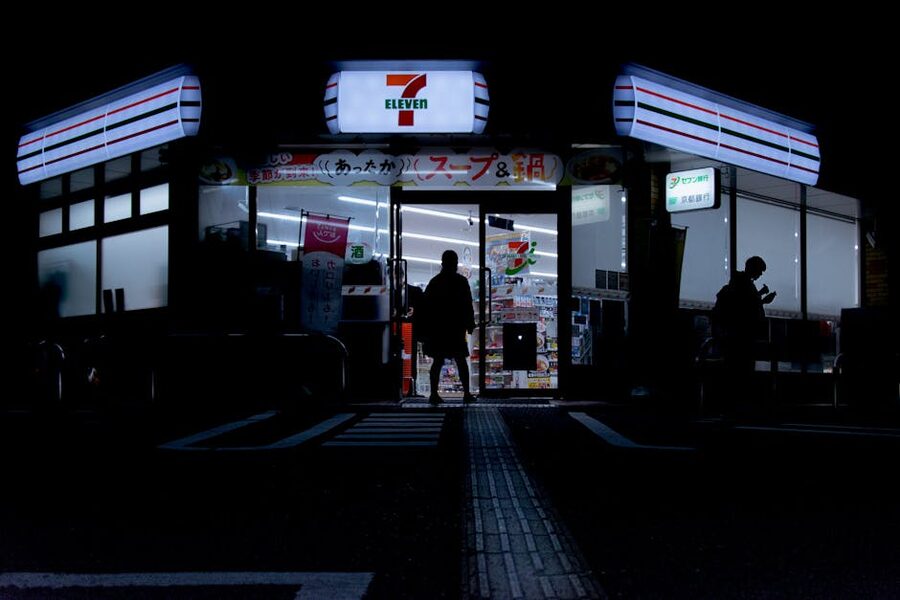
- 7-Eleven — the big one, the egg sandwich, and the only ATM that matters
- Lawson — fried chicken, roll cake, and the one with the best desserts
- Family Mart — Famichiki, soft-serve, and pudding
- The core categories, and what to actually buy in each
- Onigiri — the rice ball, and the packaging trick
- Sandwiches — tamago, katsu, fruit, and the milk bread magic
- Hot food counter — karaage, buns, and wintertime oden
- Bento — proper meals for ¥400 to ¥700
- Sweets — roll cake, dorayaki, mochi, purin
- Drinks — the coffee machine you didn’t know you needed
- How to actually order (and the single phrase you need)
- Conbini as tourist infrastructure
- Using a 7-Eleven ATM for foreign cards — the 5 steps
- Seasonal conbini food, because Japan does not do anything boring
- The single best thing in a Tokyo conbini
- Breakfast, lunch, and midnight — what I’d buy at each
- Breakfast (7am–10am)
- Lunch (11am–2pm)
- Train ride
- Midnight (11pm–3am)
- Practical info at a glance
- Honest takes — what to skip, and what’s overrated
- What I’d actually do with a day
What a Tokyo conbini actually is
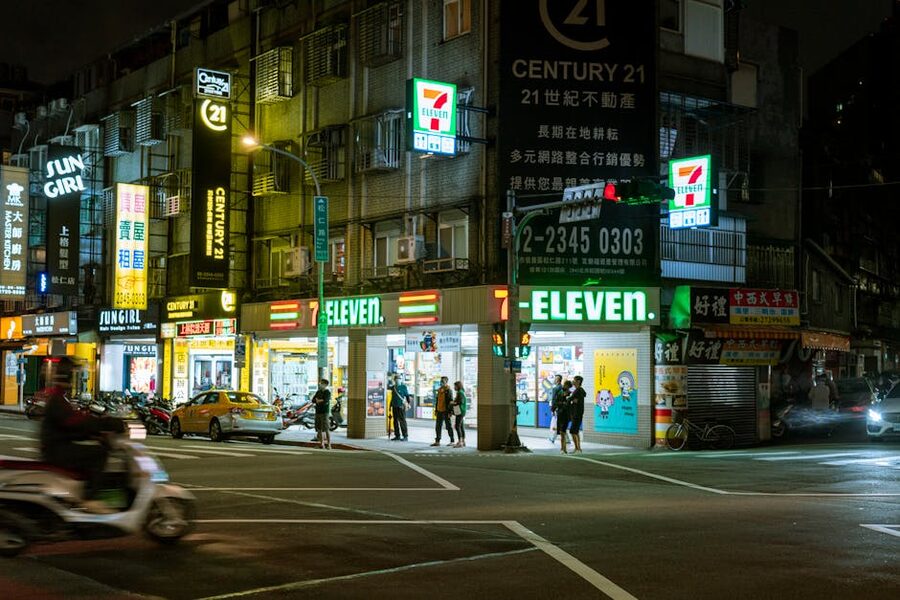
A konbini (convenience store, shortened) is not what you’re picturing. There are roughly 56,000 of them across Japan, with around 7,500 in Tokyo alone, and on most central Tokyo streets you’ll pass one every block or two. They’re open 24 hours, they sell proper food (not just crisps and reheated hot dogs), and the food is good enough that Japanese salarypeople eat it every day by choice, not out of desperation.
Three chains dominate. 7-Eleven is the biggest — about 22,000 stores nationally, an orange and green sign, and a private-label range called Seven Premium that tends to beat the name brands on shelves next to it. Lawson has the blue and white fronts, is slightly fewer in number, and is the fried-chicken-and-desserts chain. Family Mart is the green and white one, has the Famichiki fried chicken, and is the quickest of the three at hot food. You’ll also see Ministop, NewDays (on JR station platforms), Seicomart (mostly Hokkaido), and Daily Yamazaki, but the big three are what you want.
What matters: the quality is unreasonable for the price. A ¥460 egg sandwich from 7-Eleven tastes better than a ¥1,400 egg sandwich from most London or New York cafes. This isn’t a cute cultural observation, it’s just the baseline reality of eating in Japan, and once you accept it, your Tokyo food budget relaxes considerably.
First, the honest bit
On my second trip to Tokyo I spent an embarrassing amount of time walking to “proper” cafes for breakfast. Like an idiot. I’d walk twenty minutes to some serious-looking bakery, queue for fifteen minutes, pay ¥1,200 for a coffee and a pastry, and then realise on the way back that I’d passed four 7-Elevens and could’ve had an egg sandwich and a hand-drip coffee in seven minutes for under ¥600. I still do the “proper cafe” thing sometimes, because Tokyo cafes are gorgeous. But I have stopped pretending the conbini option is a compromise. It isn’t.
If you remember one thing from this article, it’s this: at least one of your Tokyo breakfasts should happen standing outside a 7-Eleven with an egg sandwich in one hand. You don’t need to force it. It’ll happen organically. Just don’t talk yourself out of it.
The three chains, and what each one is known for
7-Eleven — the big one, the egg sandwich, and the only ATM that matters
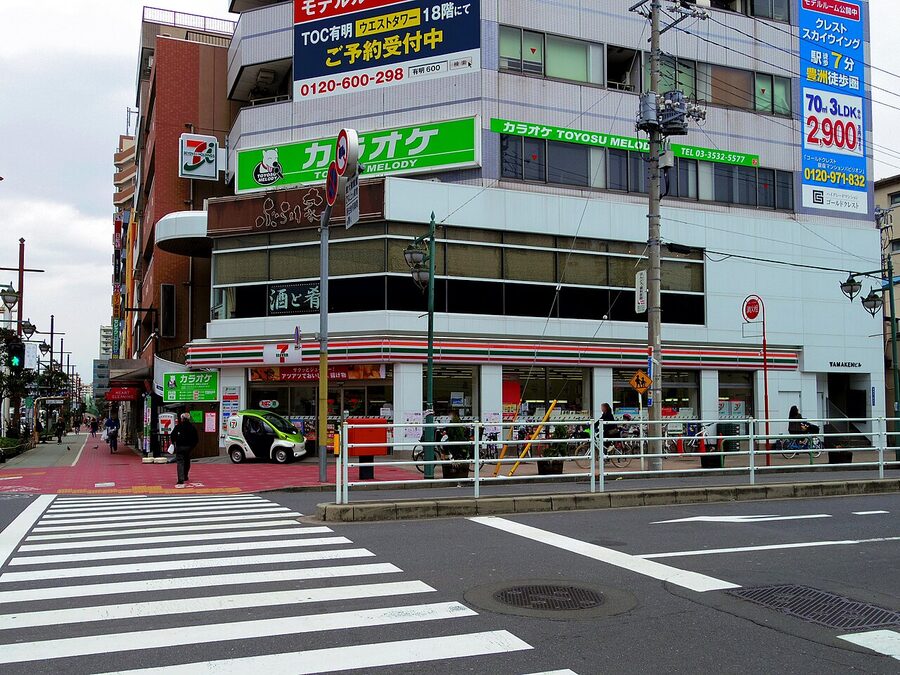
7-Eleven is the chain you’ll use most, because there are more of them and they tend to have the biggest food selection. Three things to know:
- The 7-Eleven egg sandwich (tamago sando) is the single best item in any Tokyo conbini. I’ll die on this hill. It’s ¥302 for three crustless halves on fluffy milk bread, with an egg salad that has slightly too much mayo in the most perfect way. Do not overthink it.
- Their onigiri selection is the deepest — 12 to 15 varieties in most stores, rotated seasonally.
- The 7-Bank ATM (the one inside 7-Eleven with the green-and-orange branding) takes pretty much every foreign card that exists and charges ¥220 per withdrawal. It’s the most reliable way for a tourist to get cash in Japan. I’ll come back to this.
Look for the Seven Premium label on snacks and drinks — private label, usually nicer than the name brand next to it at the same price. The Seven Premium Gold range (black and gold packaging) is a tier up again.
Lawson — fried chicken, roll cake, and the one with the best desserts
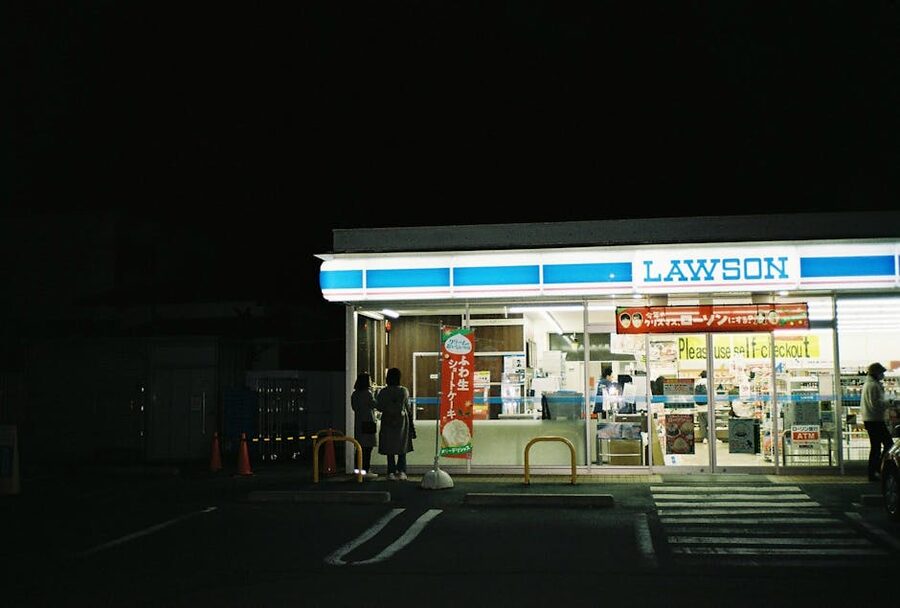
Lawson’s thing is hot snacks and desserts:
- Karaage-kun, their fried chicken — sold in little orange cardboard boxes of five nugget-sized bites for about ¥262. The “regular” flavour is the one. Available hot, any time of day.
- Lawson Premium Roll Cake, called the Premium Roll Cake exactly, which is a small ring of sponge wrapped around a disc of 100% Hokkaido fresh cream. ¥160, sits in the dessert fridge near the yoghurts, eaten with a plastic spoon they hand you at the till. If you only try one conbini dessert in Tokyo this is the one.
- Lawson Store 100 — a separate chain of smaller Lawsons where almost everything (onigiri, bento, snacks) is ¥100 before tax. Less common in central Tokyo but if you see one, go in.
Lawson also runs Natural Lawson (green logo, slightly pricier, heavier on organic and health food) in the central wards. Same hot counter, nicer bakery.
Family Mart — Famichiki, soft-serve, and pudding
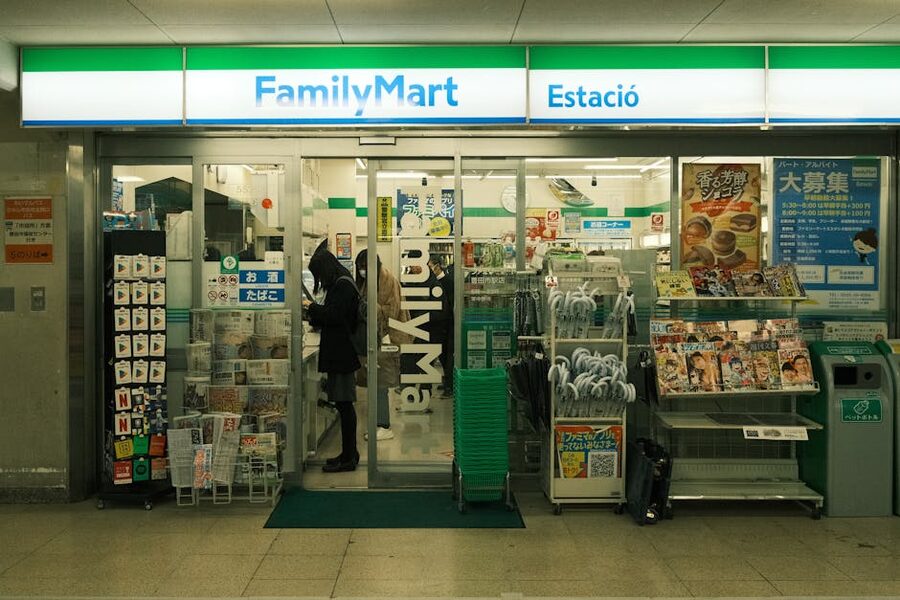
Family Mart (FamiMa, as Tokyoites shorten it) is the one with:
- Famichiki — a rectangular fried chicken breast, not a nugget, about the size of a large smartphone. ¥218. Juicy, peppery, actually great. If you like the 7-Eleven egg sandwich, the Famichiki is its protein equivalent — the item that defines the chain.
- Sweet potato soft-serve in autumn, which arrives in late September and stays until November, and which is the best seasonal conbini dessert of the year.
- FamilyMart Collection pudding (purin) — a small glass jar of cold custard with caramel at the bottom. ¥218. Better than it has any right to be.
Honest opinion: skip Family Mart sandwiches. The dessert and hot food games are strong, but the sandwich range doesn’t match 7-Eleven’s. Use Family Mart for Famichiki + pudding + soft-serve and let 7-Eleven do your sandwich.
The core categories, and what to actually buy in each
Onigiri — the rice ball, and the packaging trick
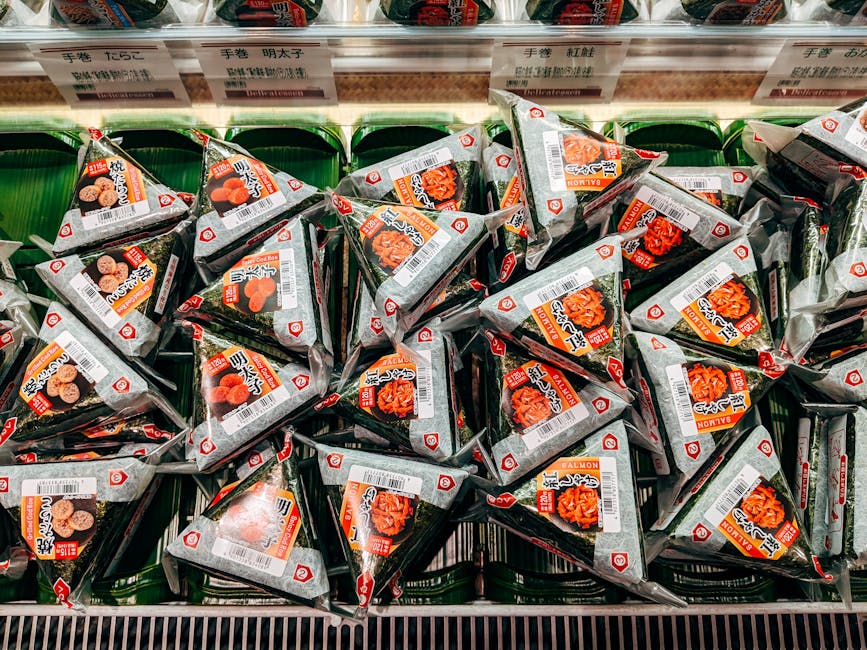
Onigiri are triangular rice balls, filled with something salty, and wrapped in a strip of nori (dried seaweed) that is cleverly separated from the rice until the moment you unwrap it. This keeps the nori crispy against warm rice. Which is lovely, except the packaging is borderline diabolical if you don’t know the trick.
How to open an onigiri without destroying it (this is the thing nobody tells you):
- Find the three small numbers printed on the packaging: 1, 2, 3, usually with little arrows. Hold the onigiri with number 1 at the top.
- Pull the clear plastic tab at position 1 straight down the middle, splitting the film in half all the way around the triangle.
- Pull the corner marked 2 and then 3, one at a time, to slide each half of the plastic off. The nori wraps itself around the rice as the inner plastic comes away. You’re done.
If you do it in the wrong order, the nori tears and you get a sad ball of rice. Everyone gets this wrong their first time. I have watched entire Japanese advertising campaigns for onigiri-opening technique and still occasionally bungle it when I’m hungry.
Best varieties to try: sake (grilled salmon, the classic, about ¥180), mentaiko (spicy cod roe, pink filling, ¥180), ume (salted plum, pale red, strong and sour — a taste you’ll either love or hate), tuna-mayo (sea-chicken-mayo, green label, mild and safe for first-timers), and kombu (simmered kelp, a sweet-salty seaweed filling). The 7-Eleven salmon onigiri has a loyal cult; I personally prefer the Lawson mentaiko.
Sandwiches — tamago, katsu, fruit, and the milk bread magic
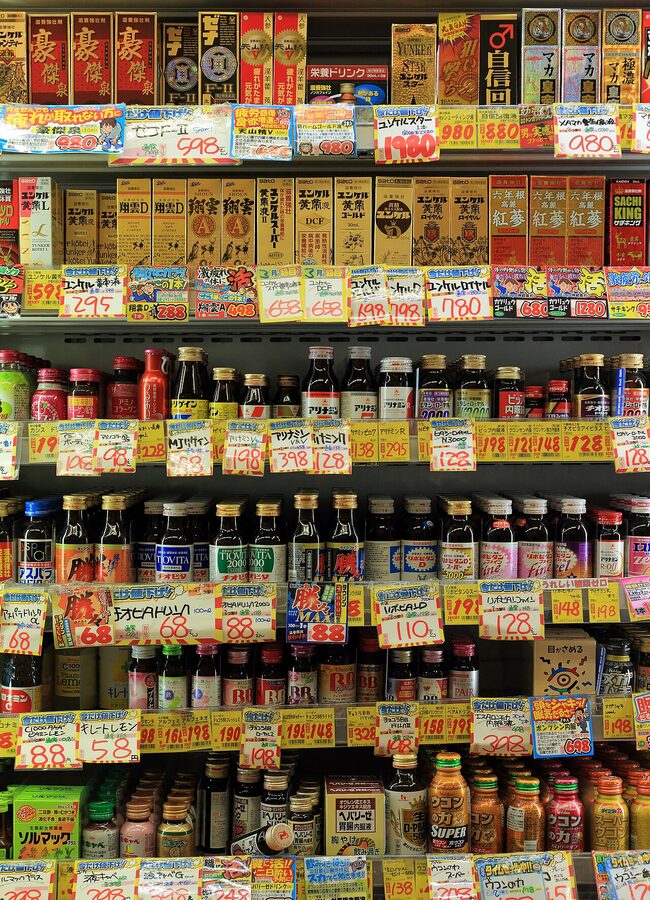
The conbini sandwich, or sando, is built on soft white milk bread called shokupan, crusts cut off, filling heavy, cut into neat triangles. The three to try:
- Tamago sando — egg salad on milk bread. The 7-Eleven version is ¥302 and borders on culinary sorcery. Anthony Bourdain famously called it out as one of the most memorable things he’d eaten in Japan and he was not kidding.
- Katsu sando — a breaded pork cutlet with Japanese brown sauce and cabbage between two slabs of milk bread, ¥450 to ¥580. Best at Lawson. Heat it up in the microwave at the till if you like.
- Fruit sando — slices of strawberry and whipped cream between milk bread, ¥380 to ¥450. Sounds unhinged, tastes like a polite dream. Peak season is winter when Japanese strawberries are in, but you’ll find some version year-round.
The milk bread is doing most of the work. It’s enriched, barely sweet, and holds moisture like nothing else, which is why the conbini sando format works and a ham sandwich on stale white toast back home doesn’t.
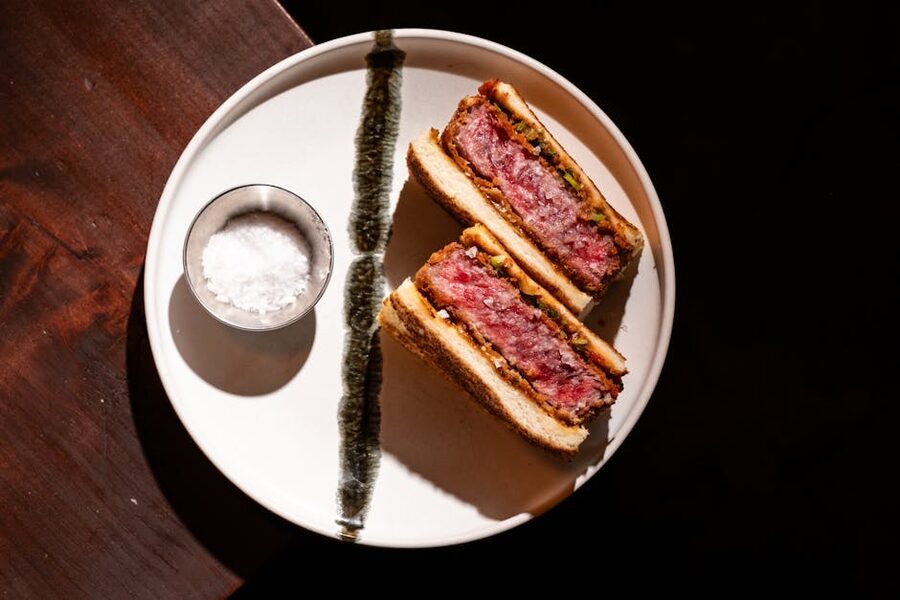
Hot food counter — karaage, buns, and wintertime oden
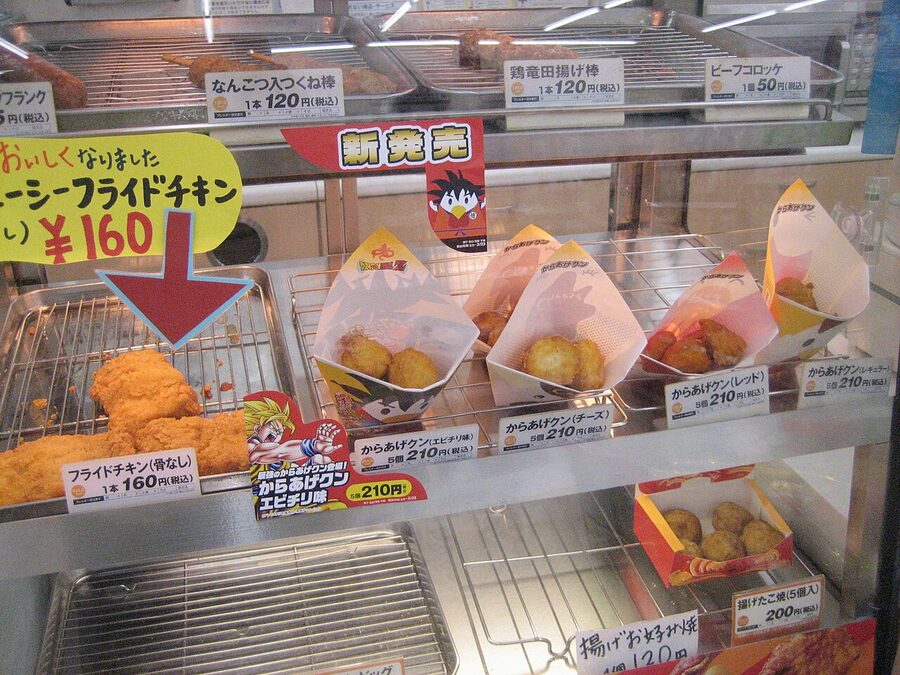
Behind the register at every conbini is a glass case with hot snacks and, from October to March, a stainless steel pot of oden. This is where the interesting stuff lives:
- Karaage (Japanese fried chicken) — the Lawson karaage-kun, the FamilyMart Famichiki, or 7-Eleven’s bite-sized karaage in a paper bag (¥270). Pick the chain first and the product you want second.
- Nikuman — steamed pork buns, about ¥150, warm and soft, usually kept in a separate heated cabinet. Eat straight from the paper.
- Chicken skewers — yakitori on sticks, ¥150 to ¥200 depending on style, dipped in tare sauce. The 7-Eleven grilled chicken skewer (yakitori momo) is strong.
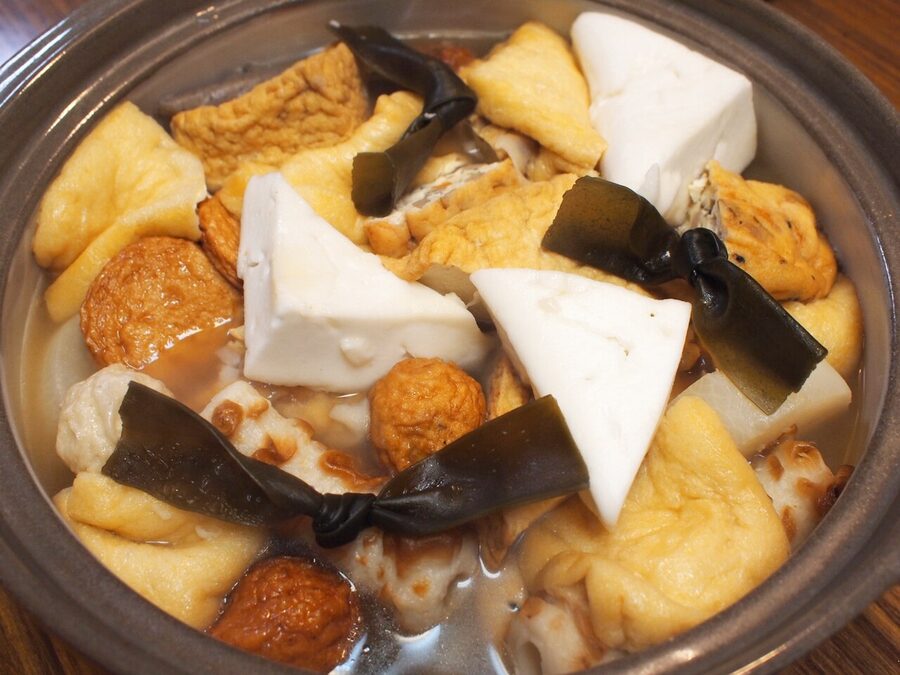
- Oden — a simmered one-pot dish of daikon radish, boiled eggs, fish cakes, konnyaku (a grey jelly block that you will either love or wrinkle your nose at), and tofu, in a delicate dashi broth. Lawson starts their oden pot when the weather turns around early October and it runs until spring. Point at what you want, staff ladles it into a bowl for you. Each piece is ¥80 to ¥150. This is one of the cheapest and most Tokyo-feeling meals you’ll eat.
To order at the hot counter, you don’t need Japanese. Walk up, point, and say “kore kudasai” (“this please”) or hold up fingers for how many. If staff ask “atatamemasu ka?” (sha-ta-ta-me-mas-ka), they’re asking whether to warm it — nod and say “hai” (yes) if it’s not already hot.
Bento — proper meals for ¥400 to ¥700
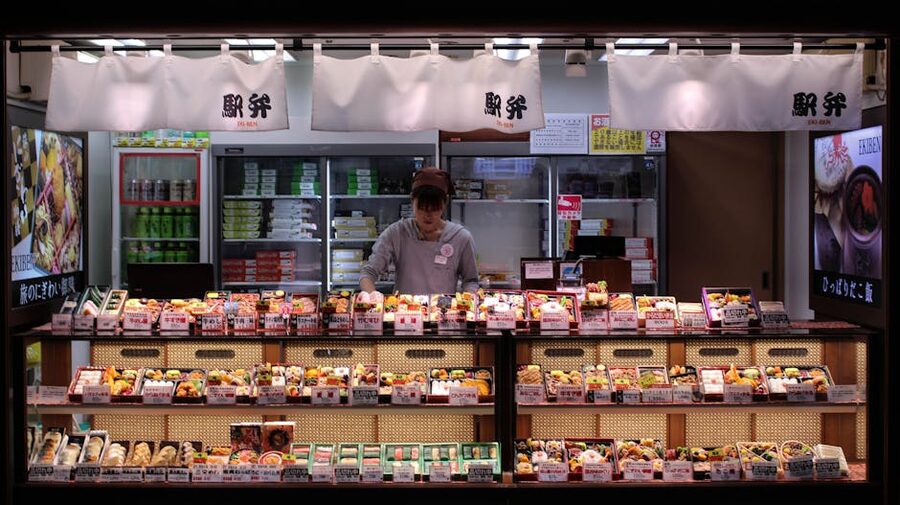
Pre-made meal boxes (bento) cover an unreasonable amount of ground for the price. Every store has a cold bento section with 10 to 20 options rotating. The staple combinations you’ll see:
- Karaage bento — fried chicken on rice with a corner of pickles and salad, ¥450 to ¥550.
- Hambagu bento — Japanese-style hamburger patty on rice, ¥450.
- Salmon bento — grilled salmon, rice, pickles, slightly more expensive, ¥500 to ¥650.
- Gyudon bento — beef and onion on rice (the Yoshinoya-style), ¥500 or so.
- Katsudon bento — breaded pork cutlet with egg on rice, ¥550.
The staff will always ask “atatamemasu ka?” — yes, always say yes to heating a bento. It transforms the thing. For a train ride, pair a bento with a bottle of barley tea or canned coffee and you’ve got dinner for under ¥700 that beats most airport food by a continent.
Sweets — roll cake, dorayaki, mochi, purin
The dessert fridge is right after the bento and before the drinks. Hit list:
- Lawson Premium Roll Cake — already covered; ¥160 and the best dessert in any Tokyo conbini, period.
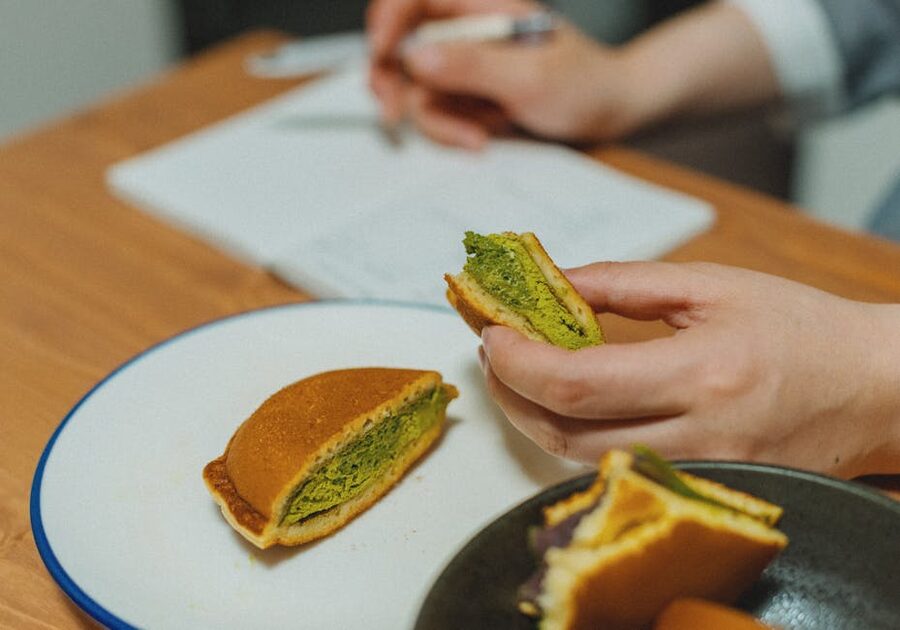
- Dorayaki — two small pancakes sandwiching sweet red bean paste (anko). 7-Eleven’s is usually ¥140, Family Mart does a cream-and-anko version for a bit more.
- Daifuku — a soft ball of mochi rice cake wrapped around something sweet. Strawberry daifuku (with a whole strawberry inside) is the winter one to try, ¥200 to ¥280.
- Purin (Japanese custard pudding) — the Family Mart Collection purin is famously good; Meiji also sells a ¥150 one that’s a national staple.
- Seasonal — sakura mochi in spring (pink rice cake wrapped in pickled cherry leaf), chestnut and pumpkin everything in autumn, strawberry Christmas cake slices in December.
Drinks — the coffee machine you didn’t know you needed
The drinks fridge is enormous and mostly self-explanatory, with two things worth flagging:
- Canned coffee — BOSS, Georgia, Wonda, in both hot (red label) and cold (blue label) cans, sitting in a warmer or the fridge accordingly. ¥130 to ¥180. The BOSS “Rainbow Mountain Blend” is my default.
- The hand-drip coffee machine — the one behind or next to the till where the staff hand you an empty cup and point at a machine. ¥110 for a small regular, ¥180 for a large. It is genuinely, seriously, very good coffee — fresh-ground beans, proper drip, arrives in under a minute. The ¥650 Starbucks next door is an insult by comparison.
- Bottled teas — Iyemon and Oi Ocha are the big green tea brands; barley tea (mugicha) in a brown bottle is cold, unsweet, and the best summer Tokyo drink.
- Seasonal sodas — Coca-Cola Plus (sugar-free Coke with added fibre, a wildly Japanese idea), CC Lemon (vitamin C soda, iconic), Pocari Sweat (pale blue electrolyte drink that tastes like a polite sports drink), and whatever unhinged autumn flavour is in the fridge that month.
How to actually order (and the single phrase you need)
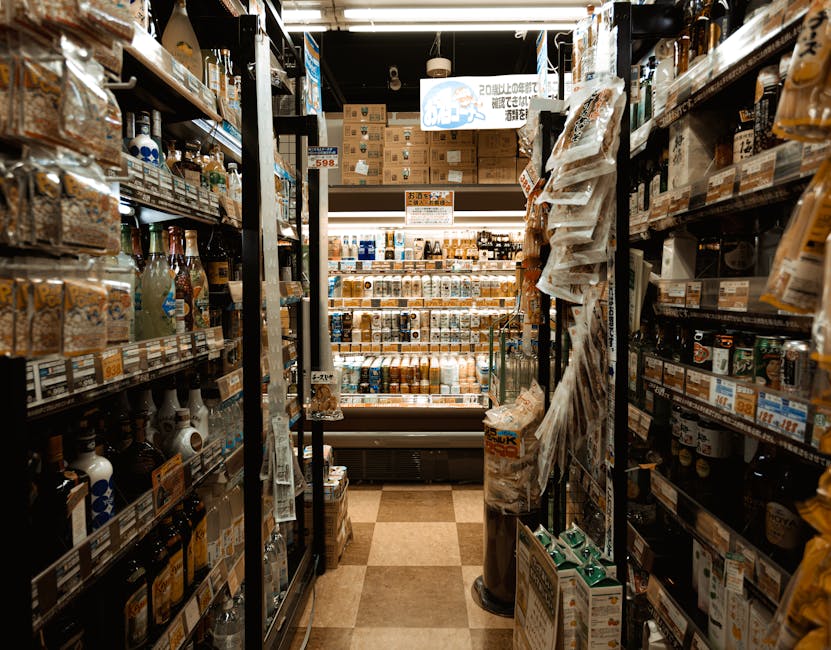
You don’t need Japanese. Almost nothing here will require words. But there is one phrase that will come up at the till, so learn it:
“Atatamemasu ka?” (ah-tah-tah-meh-mas-ka) — “Shall I warm it?”
Staff ask this when you buy anything from the fridge that’s better hot — bento, fried chicken, meat buns, anything with rice. Just say “hai” (yes) or “iie” (no) or nod or shake your head. They’ll microwave it behind the counter in under a minute.
Payment is easy:
- Put your basket on the counter. The till is usually staffed by one person.
- The staff member will scan everything. They’ll tell you the price out loud (numbers are the same as English with Japanese grammar — ignore the words, watch the number on the till display).
- If you’re using a Suica or Pasmo IC card, tap it on the pad. That’s it. This is by far the fastest way to pay.
- If you’re using cash, drop it in the tray (never hand it to the cashier directly — it’s the custom) and they’ll return change into the same tray.
- Foreign credit cards work almost everywhere; tap-to-pay is increasingly common. You may be asked for PIN on Visa/Mastercard over ¥10,000.
Staff will ask a few extra questions on longer orders — do you want a bag (plastic bags are ¥3 to ¥5 now, so they always ask), hot food in a separate bag, chopsticks or a spoon, a napkin, a straw. Shake or nod your head. Nobody expects you to speak Japanese.
Conbini as tourist infrastructure
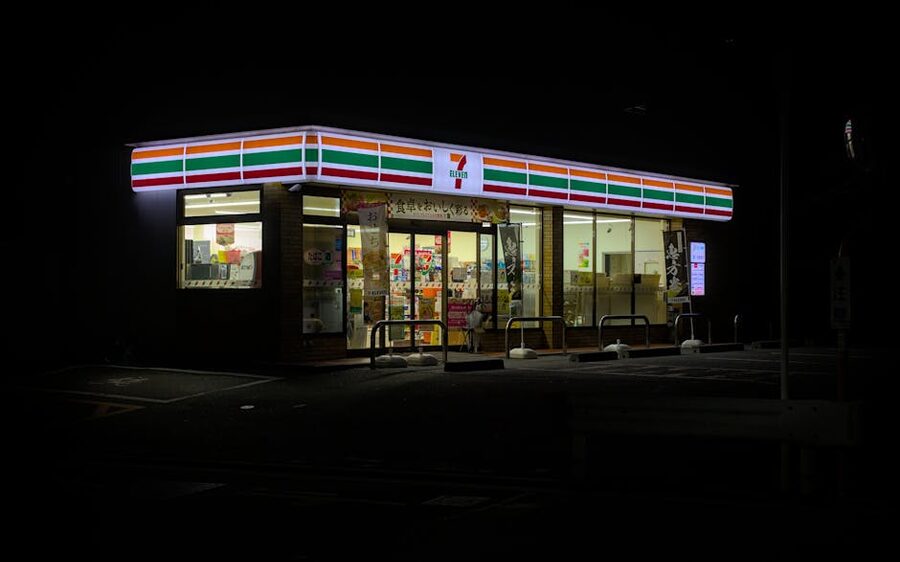
The other thing a Tokyo conbini does, which I wish someone had explained to me on my first trip, is function as a piece of public infrastructure. You can:
- Use the ATM to withdraw cash with a foreign card. 7-Bank ATMs (inside 7-Elevens) and Lawson Bank ATMs both accept international Visa, Mastercard, JCB, UnionPay, Maestro, American Express. The ATM has an English language option — it’s the first button. Plan on a ¥220 fee per withdrawal, plus whatever your own bank charges.
- Use the bathroom. Most conbinis have a small public bathroom at the back, behind the drinks fridge or in a corner near the magazine rack. You don’t need to buy anything to use it, but nobody’s going to stop you buying a ¥110 coffee while you’re there. Look for the kanji 御手洗 (or “お手洗い”, or an English “Toilet” sign).
- Print things. The big multi-function machines at the back of every 7-Eleven and Family Mart let you print documents from a USB stick or phone, scan, fax (yes, still), and make colour photocopies. For printing train tickets or emergency documents, this is a lifesaver.
- Buy concert and attraction tickets. Lawson’s Loppi machine (red kiosk, usually near the magazines) sells tickets to attractions, concerts, sumo, onsen discount passes, the Studio Ghibli museum when it opens up. 7-Eleven has a similar machine.
- Drop off or collect parcels. Takkyubin is the Japanese luggage forwarding service — you can send a suitcase from your Tokyo hotel to your Kyoto hotel for ¥1,500 to ¥2,500 and travel hands-free. Every conbini is a drop-off point.
- Top up your Suica or Pasmo. Both cards accept cash top-ups at the till. Hand over the card plus a ¥1,000 or ¥5,000 note and say “chaaji, onegaishimasu” (charge, please).
Using a 7-Eleven ATM for foreign cards — the 5 steps
- Find the ATM (usually near the front of the store, with its own green/orange screen).
- Tap the English button on the top-right of the welcome screen.
- Insert your card. Choose “Withdrawal” and then “Cash advance” if your card is credit, or “Savings” / “Checking” if debit.
- Enter your PIN. Choose the amount — the ATM offers fixed amounts from ¥10,000 to ¥100,000. ¥30,000 is a good default for a few days’ spending.
- Take your card, then the cash, then the receipt. The order matters — the ATM beeps at you if you miss a step. Beep means “you forgot something, please go back”.
Seasonal conbini food, because Japan does not do anything boring
Conbini rotate their food ranges every few weeks, which means the store you walk into in March is not quite the store you walk into in September.
- Spring (March to early May): sakura-flavoured everything — sakura mochi, sakura-flavoured Kit Kats, sakura lattes, sakura onigiri wrapped in a pickled cherry leaf. Strawberry fruit sandos are still in full force from winter.
- Summer (June to August): cold soba and hiyashi chuka (chilled ramen) noodle bowls, shaved ice at Ministop, cold mugicha (barley tea) in brown bottles everywhere, ice cream fridges you will absolutely raid.
- Autumn (September to November): pumpkin, chestnut (kuri), and sweet potato (imo) season. Family Mart’s sweet potato soft-serve is the best one I’ve eaten all year, every year.
- Winter (December to February): oden lives in the hot pot at the front of every Lawson and 7-Eleven. Nikuman sales triple. Strawberry Christmas cake slices appear around 20 December. Hot bottled tea sells out on commuter routes.
New Year has its own set of conbini items — osechi (lacquered boxes of traditional year-end food) is pre-ordered in December through conbini kiosks, and otoso (spiced sake) appears in a tiny cup. This is less relevant to most tourists but it’s a joy if you’re there for it.
The single best thing in a Tokyo conbini
I know I’ve said it three times already. Let me explain why.
The 7-Eleven tamago sando works because three things are doing a job perfectly in a very small space. First, the bread. Japanese shokupan is soft, slightly sweet, heavily enriched with butter and milk, and baked in a square tin. It holds moisture like a sponge. If you’ve had bog-standard Tesco white bread and you’ve had really nice Japanese milk bread, they’re different foods with a shared ancestor.
Second, the filling. It’s egg yolk blended with an unreasonable amount of Kewpie mayo (a Japanese umami-heavy mayo made with egg yolk only, not whole egg), then chunks of white-and-yolk egg stirred through. It’s rich enough that you don’t need anything else.
Third, the temperature. They’re chilled but not cold. They come out of the refrigerated wall at about 7 or 8 degrees, cold enough to taste fresh, warm enough that the bread isn’t hard.
No lettuce, no cucumber, nothing that goes soggy. Two soft triangles of fluffy milk bread, a thick layer of egg in the middle, for ¥302. Anthony Bourdain wasn’t exaggerating. It really is the thing to beat.
Breakfast, lunch, and midnight — what I’d buy at each
Breakfast (7am–10am)
The 7-Eleven egg sandwich, a ¥180 BOSS hot coffee from the counter machine, and a ¥140 yoghurt drink if you’re feeling healthy. About ¥620 total. Eat standing up outside the store. This is the breakfast.
Lunch (11am–2pm)
A warmed salmon or karaage bento (¥500), a pack of three onigiri (¥500), a green tea bottle (¥150), and if you’re being virtuous, a Lawson roll cake (¥160). About ¥1,300 for a proper meal. Eat on a bench in the nearest park.
Train ride
A katsu sando from Lawson (¥498), an onigiri (¥180) as backup, barley tea (¥130), and a Famichiki from Family Mart (¥218) for the first hour of the shinkansen. About ¥1,100, hands clean, no mess.
Midnight (11pm–3am)
A Famichiki straight out of the hot cabinet, a Lawson karaage-kun if you’re feeling greedy, a Coca-Cola Plus or CC Lemon, and a Lawson roll cake for the walk back to the hotel. About ¥750. The best hotel-room midnight snack in the world.
Practical info at a glance
- Chain density in central Tokyo: 7-Eleven most common (about 22,000 stores nationally), Family Mart second, Lawson third. You’re rarely more than a 3-minute walk from at least one.
- Hours: 24/7 for nearly all central Tokyo locations. Some neighbourhood stores close overnight from 1am to 5am, but these are exceptions.
- Price range: breakfast ¥400–600, lunch ¥500–900, dinner ¥600–1,200. A heavy conbini day rarely tops ¥2,500.
- Payment: cash works everywhere; IC cards (Suica, Pasmo) are by far the fastest; foreign credit cards are accepted at nearly every central Tokyo conbini; Apple Pay / Google Pay work via your IC card.
- Bags: ¥3–5 for a plastic bag, which staff ask about at the till. Bring your own or carry small items.
- Language: packaging is mostly Japanese. Pictures are obvious. Staff have a handful of English phrases. You don’t need Japanese beyond “atatamemasu” yes/no.
- ATM fee: ¥220 per foreign card withdrawal at 7-Bank and Lawson Bank ATMs.
- Takkyubin (luggage forwarding): ¥1,500–2,500 to forward a suitcase Tokyo to Kyoto. Drop at the till, staff fill out the form with you.
- Bathrooms: free, in most stores, near the back. Public but don’t loiter. Buy something if you’re in there ten minutes.
Honest takes — what to skip, and what’s overrated
I would skip, in rough order:
- Conbini sushi. This is the quality cliff. Rice in a chilled pack does not stay good, and the conbini versions are passable at best. If you want conbini sushi, get it from 7-Eleven (their version is the least bad), but honestly — sushi is one of the things you go to an actual sushi shop for. You’re in Tokyo.
- Family Mart sandwiches (already said). The dessert and Famichiki games are strong, the sandwich range isn’t. Just get your sandwich at 7-Eleven.
- Anything involving pasta. Pasta does not fare well in a plastic box. The carbonara onigiri is a confused object. Skip.
- The expensive ¥800 “premium” bento. The ¥500 tier is already excellent. Above that you’re paying for packaging.
What’s better than you’d think:
- The instant ramen cup section — there’s a ¥180 cup called Ippudo Shiromaru Motoaji that is genuinely good, and every hotel room has a kettle. Not Ippudo-in-person good, but better than it has any right to be for ¥180.
- The conbini coffee machine. Already mentioned, but worth repeating — at ¥110 it’s legitimately better than the ¥650 chain cafes. I’ll die on this hill, too.
- The ice cream fridge in summer. Seven Premium Gold Monaka (vanilla ice cream in a rice-wafer sandwich) is a revelation. ¥220.
What I’d actually do with a day
If you’re in Tokyo and you want to treat the conbini seriously as part of the trip rather than incidentally:
- Breakfast at a 7-Eleven near your hotel. Egg sandwich, hand-drip coffee, a strawberry daifuku for the walk.
- Mid-morning, hit a Family Mart on the way to Shibuya or wherever you’re headed. Pudding from the dessert fridge, eaten on a park bench.
- For lunch, warmed bento + onigiri at the Yoyogi Park benches (especially good after a walk through Meiji Shrine).
- Afternoon snack: Famichiki from a Family Mart, eaten walking between Harajuku and Omotesando.
- Sunset: Lawson roll cake and a cold barley tea. The roll cake holds up in the humidity.
- Dinner: go to a proper restaurant. Sushi at a proper sushi place (not conbini sushi — see the skip list). For the deep dive, I’ve written a separate Tokyo sushi guide, and the dining etiquette rules cover how to actually sit down and eat there.
- Midnight: back at the conbini for a Famichiki and a Coca-Cola Plus. This is the trip memory you’ll keep.
Tokyo has ramen shops I’d walk 40 minutes for — have a look at the Tokyo ramen guide before any winter visit — and it has the kind of tiny izakaya that change your year. But a chunk of the daily eating in Tokyo, for locals and for people who know the city, happens at a conbini. You don’t need to be embarrassed about it. You might end up preferring it. My friend did.
For background on the chains themselves: 7-Eleven Japan, Lawson, Family Mart. For IC card top-ups and travel logistics, the Japan National Tourism Organization site is the cleanest reference. If you’re sorting transit, the Tokyo trains and IC card guide covers the IC card basics (which is the same card you’ll tap at the conbini till).