
Reviewed · PHOTOGRAPHY SESSIONS
Private Kimono Styling with Memory Photos by a Bridal Stylist
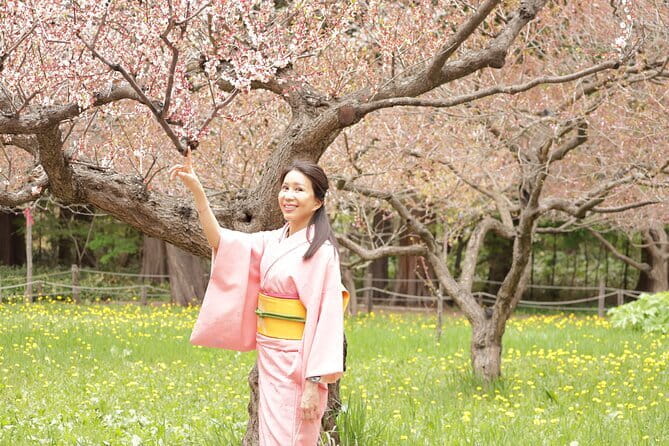
The best part of this Sapporo experience is the calm, personal attention. Keiko, a bridal stylist with more than 10 years of experience in Tokyo, dresses you in kimono, arranges your hair, and guides you through a shrine visit instead of rushing you through a costume rental.
I like the private car service and the thoughtful styling. You choose your kimono and accessories, then receive help with the details that make the outfit sit properly. I also like that the photos are memory photos rather than a stiff studio shoot, with outdoor locations chosen around the season and weather.
The main consideration is time. Dressing and hair styling take about 90 minutes, and the full outing lasts roughly four hours. Snow can also limit footwear choices, and the winter Japanese Garden at Nakajima Park is closed.
In This Review
- Key details to know before booking
- Why this feels like more than a kimono rental
- Starting at JR Sapporo Station or your hotel
- Choosing your kimono in Shinkawa
- Visiting Hokkaido Shrine
- Walking through Nakajima Park
- A quiet stop at Imihiko Shrine
- How the memory photos work
- What makes the $130.31 price worthwhile
- Weather, clothing, and comfort tips
- Who should book this Sapporo experience?
- Should you book it?
- FAQ
- Where does the experience start?
- How long does the kimono styling take?
- Is the experience private?
- Are kimono available for men and women?
- What are the size limits?
- What should women wear underneath the kimono?
- What happens in summer?
- Can I visit the Japanese Garden in Nakajima Park during winter?
Key details to know before booking
- Private styling with Keiko: You receive one-on-one help from a bridal stylist trained in Tokyo, not a quick rental-counter fitting.
- Hotel or station pickup: Pickup is offered, and the meeting point is also JR Sapporo Station Exit 6 at 9:00 a.m.
- Seasonal outdoor locations: Your route may include Hokkaido Shrine, Nakajima Park, and Imihiko Shrine, with choices shaped by weather.
- Memory photos included: Keiko helps take photos during the visit, and the service may provide a large set of professional images the same day.
- Summer and winter differences: Summer uses breathable kimono in an air-conditioned Western-style room. Snowy days require the shoes you already have.
- Sizing has limits: Men are accommodated up to 6 feet 11 inches and 187.3 pounds. Women are accommodated up to 5 feet 9 inches and 165.3 pounds.
Why this feels like more than a kimono rental
Many kimono activities are built around a fast fitting, a few minutes of posing, and a return deadline. This one gives the clothing a setting and a purpose. You dress in a quiet Japanese-style space, visit a shrine, learn basic etiquette, and take a walk through Sapporo with someone helping you understand what to do.
That difference matters. A kimono is not simply a robe you slip on over ordinary clothes. The dressing has structure, balance, and small adjustments. Keiko’s bridal background is useful here because comfort and appearance both matter. The obi, sleeves, collar, and hair arrangement need to work together, and you have someone paying attention to those details.
The private format also keeps the mood relaxed. Only your group takes part, so you do not need to pose beside strangers or match another party’s pace. If you are a couple, family, or solo visitor hoping for a quiet cultural morning, that privacy is a real part of the value.
The experience costs $130.31 per person. That is more than a basic kimono rental, but it includes the kimono accessories, styling, guide service, private transportation, shrine guidance, and memory photos. For you, the price makes the most sense if you want a full service outing rather than clothing alone.
If you're still narrowing it down, here are other tours in Sapporo we've reviewed.
Starting at JR Sapporo Station or your hotel
The listed start time is 9:00 a.m. If you meet at JR Sapporo Station, go to Exit 6 and wait at the bottom of the stairs. Pickup from your hotel is offered, and private transportation is included, but confirm the exact pickup plan when you book.
This is a useful arrangement in Sapporo. You do not need to work out a separate taxi ride to the dressing room, and you can begin the day without worrying about navigating in formal clothing. If you have a hotel pickup, be ready on time since the schedule has several moving parts.
The experience is near public transportation, and most people can participate. Still, a kimono is not ideal for hurrying through stations or walking long distances at speed. Give yourself a little extra time in the morning, especially if you are meeting at the station rather than being collected at your hotel.
Choosing your kimono in Shinkawa
The dressing portion takes place in an apartment in Shinkawa. Once inside, you choose your kimono and accessories, then Keiko helps dress you and arrange your hair. Allow about an hour and a half for this part.
That length of time is one of the clues that this is not a quick costume change. You have room to consider colors and accessories, and the stylist can make adjustments for comfort. The aim is a balanced appearance that works for photographs and walking outdoors.
For women, wear a soft bra if possible. Wired bras can affect the kimono’s smooth silhouette and may feel uncomfortable under the layers. You should also tell the provider in advance whether the participant is male or female, since the correct kimono must be prepared.
Men and women both have kimono options. The stated size limits are generous for men, with accommodation up to 6 feet 11 inches and 187.3 pounds. Women’s limits are up to 5 feet 9 inches and 165.3 pounds. If you are near or above those measurements, ask before paying so there is no surprise on the morning of the activity.
In summer, the experience changes in a practical way. Breathable summer kimono are provided, and dressing takes place in an air-conditioned Western-style room rather than a tatami room. That may sound like a small detail, but it matters in Sapporo’s warmer months, when heavy layers and formal dressing can become uncomfortable.
A pleasant extra may be green tea during the styling session. It is not listed as a core inclusion, so treat it as a possible courtesy rather than something to book for.
Visiting Hokkaido Shrine
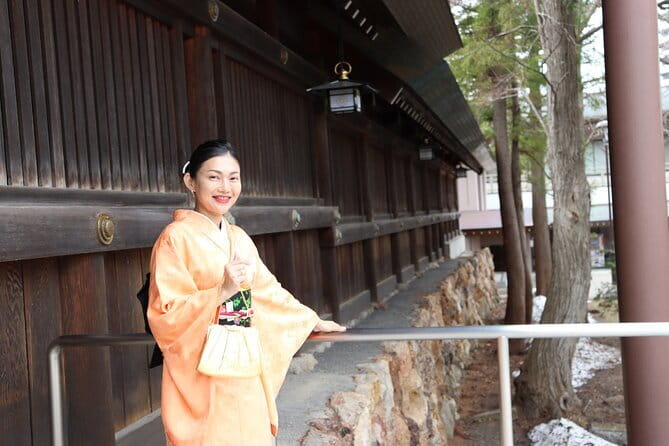
Hokkaido Shrine is scheduled for about an hour. Here you can stroll, visit the shrine, draw a fortune, and stop at recommended spots with Keiko’s help.
The value is not just getting a photograph in front of a Japanese building. You receive a basic explanation of shrine etiquette and guidance through a traditional prayer. If you have never visited a Shinto shrine, that instruction helps you feel less uncertain about the steps and gestures.
The shrine also gives the kimono a fitting context. You are not wearing it only for a posed picture. You are using it while walking, observing a place of worship, and taking part in a simple local custom. Keiko can help you understand the rhythm of the visit without turning it into a lecture.
The weather matters here. Outdoor photography is central to the experience, and the route can be adjusted to suit the season and conditions. A clear day may allow more strolling and better light. Rain or snow can shorten the walk or change the recommended stops. The private structure makes that flexibility easier than it would be with a large group.
You should remember that Hokkaido Shrine is an active religious site, not a photo set. Keep your behavior respectful, follow Keiko’s instructions, and let the visit come before the pictures.
Walking through Nakajima Park
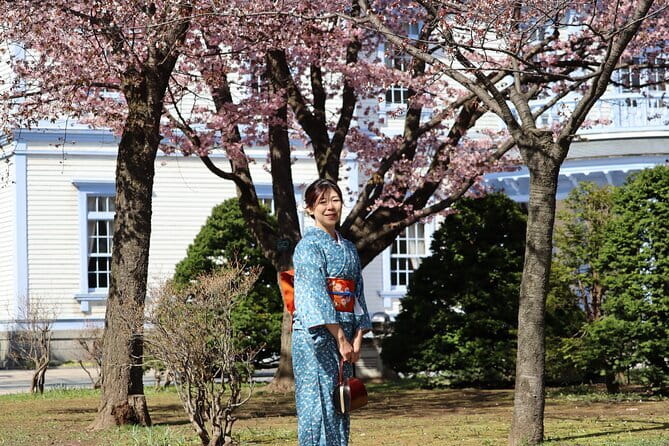
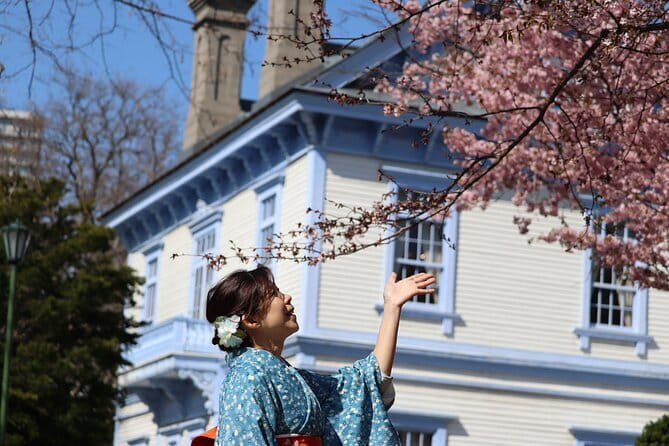
The next stop is Nakajima Park, with about 30 minutes for a leisurely walk. The park gives you a change from the shrine setting and a chance to show the kimono against seasonal scenery.
The Japanese Garden is part of the recommended route when open, but it closes during winter. If you visit in the snowy season, do not expect access to that garden. The park itself may still be used for a walk and photographs, depending on conditions.
This is also where footwear becomes important. When snow is on the ground, you take photos wearing the shoes you already have. That is a practical rule, not a glamorous one, but it keeps the outing safer and avoids pretending that delicate formal footwear is suited to icy paths.
Thirty minutes is enough for a gentle stroll and a few pictures, but it is not a long park visit. If you are hoping for an extended nature walk, this tour will feel more like a cultural outing with outdoor stops. The short time also helps protect you from becoming tired in layered clothing.
A quiet stop at Imihiko Shrine
The route includes about 15 minutes at Imihiko Shrine near Nakajima Park. Established in 1912, it is associated with craftsmanship and learning.
This smaller shrine offers a different mood from Hokkaido Shrine. It is a brief stop, so you should not expect a large sightseeing visit. Its appeal is the quieter setting and the connection to skilled work and study, which fits nicely with an experience centered on careful dressing, hair styling, and traditional craft.
The stop also gives the outing a local shape. You are not limited to one famous landmark. Instead, the morning moves between a major shrine, a city park, and a smaller place of worship. That variety makes the four-hour schedule feel more like a guided cultural walk than a simple studio appointment.
How the memory photos work
This is not described as a formal photo shoot with elaborate staging. Keiko assists with memory photos during the visit, helping you find suitable spots and making it possible for you to take your own pictures as well.
That distinction is worth noting. If you want a heavily directed fashion session with studio lighting, many outfit changes, and an edited portfolio, this may not be the right product. If you want useful photographs of a real morning in Sapporo, the approach should suit you better.
The service can send a substantial batch of professional photos within hours. One account describes receiving more than 100 images on the same day. Since image delivery details can vary, confirm exactly what will be sent, but the same-day timing is especially helpful if you are moving on from Sapporo soon.
Bring your own phone or camera if you want extra informal shots. The private format means your group can take personal pictures without adding another booking or separate photographer.
What makes the $130.31 price worthwhile
At $130.31 per person, you are paying for several connected services:
- A kimono and accessory set
- Dressing and hair arrangement
- A private guide
- Transportation
- Shrine etiquette and prayer guidance
- Outdoor assistance with photographs
- A four-hour cultural outing
The strongest value is the personal care. A cheap rental may get clothing onto your body, but it may not give you help with shrine behavior, route planning, weather changes, or photographs. Here, those pieces are tied together.
The price is less attractive if you only want to wear a kimono for a short time near your hotel. You may also find the cost harder to justify if you prefer independent sightseeing and do not care about professional photos. This experience is aimed at people who want the service around the outfit, not just the outfit itself.
Private transportation adds value for couples and small groups. You avoid organizing transfers while dressed formally, and you can move between the dressing space and outdoor locations with a guide. Since only your group participates, the pace can feel more personal, though the overall schedule still has a fixed morning structure.
Weather, clothing, and comfort tips
Plan your clothing with the dressing process in mind. Women should avoid wired bras when possible, and everyone should wear something that will not make changing difficult. Ask about pickup details and the planned route before the day arrives.
Sapporo weather can shift the experience. The outdoor locations are chosen around the season and weather, so the exact photo spots may change. Summer provides breathable kimono and air conditioning. Winter can bring snow, a closed Japanese Garden, and photos in your own shoes.
The experience lasts about four hours, with roughly 90 minutes for dressing, one hour at Hokkaido Shrine, 30 minutes in Nakajima Park, and 15 minutes at Imihiko Shrine, plus transportation and transitions. You should be comfortable spending much of the morning in formal clothing and walking at an easy pace.
Free cancellation is available if you cancel at least 24 hours before the local start time. Changes or cancellations inside that window are not accepted for a refund.
Who should book this Sapporo experience?
I would recommend it to couples wanting meaningful photographs, first-time kimono wearers, families seeking a private cultural activity, and solo visitors who want help navigating shrine customs. It also suits anyone who values personal attention and would rather have a guide shape the morning than plan every detail alone.
Keiko’s styling background makes this especially useful if you care about fit, hair, and the look of the final outfit. The same-day photo delivery is handy if your Japan trip has a tight schedule.
I would think twice if you dislike formal clothing, have mobility concerns with layered garments, or want a long independent visit at each site. The outdoor portions are fairly short, and winter conditions can change what you see and wear.
Should you book it?
Book this if you want a quiet, private introduction to Japanese clothing and shrine customs, with transportation and personal photographs built in. The strongest reasons are Keiko’s careful styling, the private pace, and the chance to wear the kimono in real Sapporo settings rather than only indoors.
Skip it if your main goal is a low-cost rental or a long photo session with controlled studio poses. At $130.31, the value comes from the full service: dressing, etiquette, transport, local stops, and memory photos working together.
FAQ
Where does the experience start?
The listed start time is 9:00 a.m. You can meet at JR Sapporo Station Exit 6, at the bottom of the stairs, or arrange pickup from your hotel.
How long does the kimono styling take?
The dressing and hair arrangement at the Shinkawa apartment take about one hour and 30 minutes.
Is the experience private?
Yes. Only your group participates in this private activity.
Are kimono available for men and women?
Yes. Kimono are available for both men and women. The provider asks you to state the participant’s gender in advance so the correct clothing can be prepared.
What are the size limits?
Men can be accommodated up to 6 feet 11 inches tall and 187.3 pounds. Women can be accommodated up to 5 feet 9 inches and 165.3 pounds.
What should women wear underneath the kimono?
Women should avoid wired bras when possible. Soft bras are recommended because wires can affect the kimono’s silhouette and comfort.
What happens in summer?
Breathable summer kimono are provided. Dressing takes place in an air-conditioned Western-style room rather than a tatami room.
Can I visit the Japanese Garden in Nakajima Park during winter?
No. The Japanese Garden is closed during the winter season. Nakajima Park may still be included for a walk and photographs, depending on the conditions.
More tours in Sapporo we've reviewed
Photography Sessions, compared.
 ★ 5.0Best Go Kart Experience in Shibuya Crossing with Iconic PhotosFrom $106
 ★ 4.8Tokyo Go-Karting Experience: Shibuya Crossing with PhotosFrom $901 hour
 ★ 5.0Tokyo Cyberpunk Street Photo TourFrom $184
 ★ 5.0Tokyo by Night Photography Tour (Private Option Available)From $105
 ★ 5.0Tokyo Shinjuku Night Photo Tour with Pro GotaFrom $85
 ★ 5.0Tour with Pro Tokyo Photographer and take Edgy Unique PortraitsFrom $145