
There is a counter on the first floor of Isetan Shinjuku, just inside the main entrance, where a woman in white gloves hands you a tiny pot of the cosmetic brand of the day — a Japan-only shade someone has queued for since the doors opened. Isetan puts new cosmetics out before anywhere else in the country, and there is a sub-culture of Tokyo women who make that first-thing-in-the-morning visit a routine. It is the reason this department store, which opened in 1933, still counts as the most serious shopping address in Tokyo. And it is 90 seconds from the east exit of the world’s busiest train station.
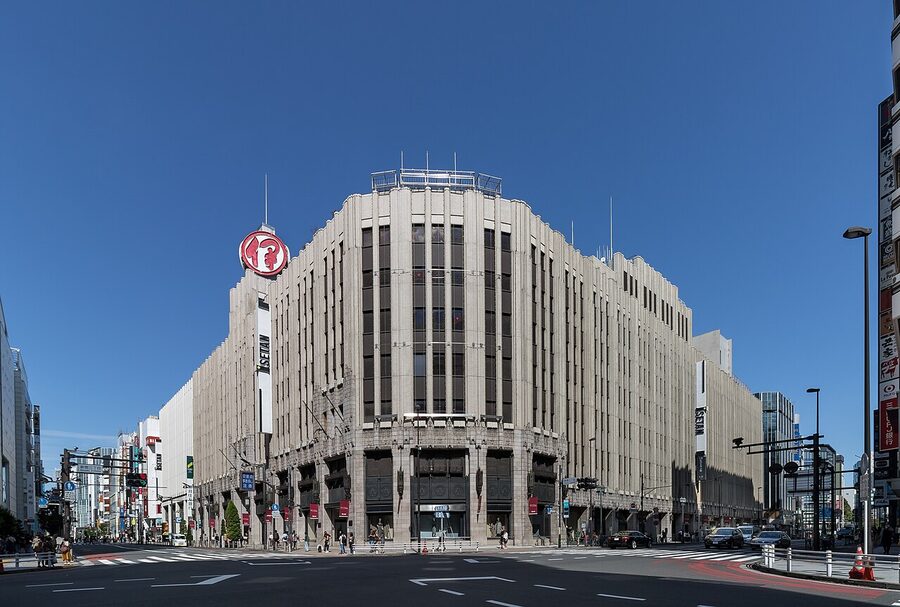
I’ve been doing a version of this shopping loop every time a friend visits Tokyo for the last eight years. What follows is the version I’d give you if you had one afternoon, the absolute basics you need to know about each place, and the “skip this, linger here” calls that no tourism board is going to make for you. Shinjuku is not a boutique district like Ginza or a teen-fashion warren like Harajuku. It’s a working, commercial, department-store-and-megastore neighbourhood where Tokyoites actually buy things — and that is why it’s the single best shopping area in the city if you’re visiting once.
In This Article
- A quick map of where to shop and why
- The department stores
- Isetan Shinjuku — the one to send your mum to
- Takashimaya Times Square — the one to actually shop in
- Keio and Odakyu — the station-attached classics
- Depachika — the reason to come at all
- Electronics — Yodobashi and Bic Camera
- Tax-free shopping in 3 steps
- Don Quijote Kabukichō — go once, as an experience
- Uniqlo, GU, and Muji — Japanese basics done properly
- Tokyu Hands — the most useful shop in Tokyo
- Lumine — station fashion for people in a hurry
- Kinokuniya — 8 floors of books, including English
- Omoide Yokocho — the tiny old alley that isn’t really for shopping
- How I’d actually spend a Shinjuku shopping afternoon
- Practical info
- Where Shinjuku sits in the Tokyo shopping map
A quick map of where to shop and why
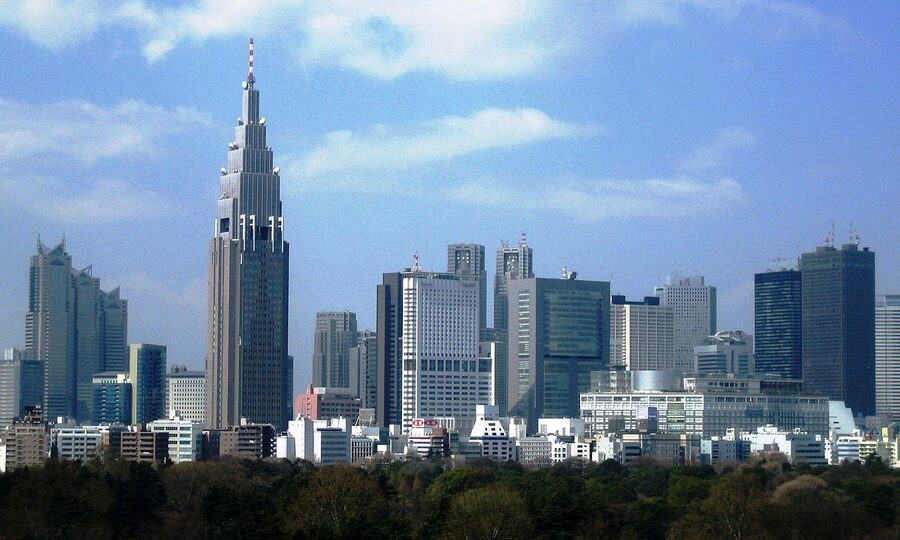
Shinjuku shopping splits into three rough zones around the station, and knowing which exit to use will save you 20 minutes of staring at signage. The east exit (Shinjuku East / Shinjuku-sanchome) is the old retail heartland — Isetan, Marui, Lumine Est, the Don Quijote in Kabukicho, plus Kinokuniya bookstore. The south exit is the modern complex zone — Takashimaya Times Square, Kinokuniya in the south building, and NEWoMan. The west exit is electronics and the older department stores — Yodobashi, Keio, Odakyu’s remnant (it’s being redeveloped), and Uniqlo’s flagship. Try to pick one zone for a half-day. Trying to do all three in one day is how you end up at 8pm sitting on the floor of Shinjuku Station with three carrier bags, no idea where you parked yourself, and a deep resentment for the entire concept of retail.
The department stores
Shinjuku is department-store country. There are six major ones within a 10-minute walk of each other, which is a density you won’t find anywhere else in Japan. If you’ve never been inside a Japanese depāto before, budget a morning for one. They are not the sad, dying department stores of Western cities — they are their own cultural institution, and the food halls in the basements are why I send every visiting friend to one.
Isetan Shinjuku — the one to send your mum to
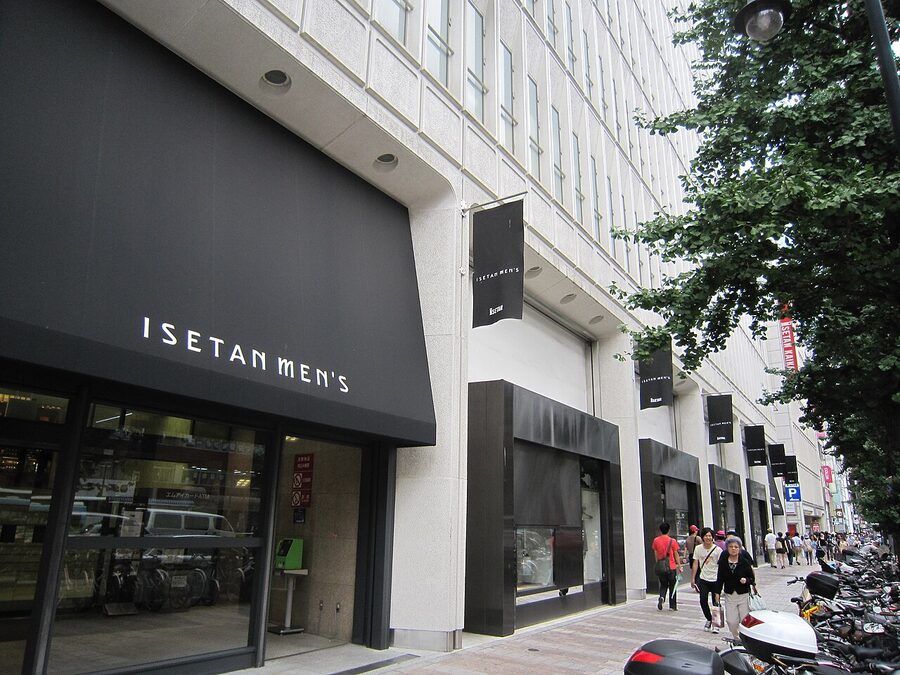
Isetan is where Japanese fashion people go when they’re serious. The first-floor cosmetics department carries Japan-only launches weeks before anywhere else — if you’re buying SK-II or Shiseido for someone back home, you’ll pay a bit more than at a drugstore but you’ll get shades and kits that don’t exist internationally. Floors 2 through 6 are womenswear, from international luxury to Japanese designers (Comme des Garçons, Sacai, mid-tier names you haven’t heard of but will like). The 7F restaurant floor is worth a look for lunch — Isetan restaurant floors are a tier up from the usual food court. The English support desk on 6F will do tax-free paperwork for you in one go rather than per counter, which saves genuine time.
The part of Isetan that actually matters, though, is the basement. More on that in a moment.
Hours: 10:00–20:00 daily, no regular closed days. Address: 3-14-1 Shinjuku. Website: isetan.mistore.jp/shinjuku.
Takashimaya Times Square — the one to actually shop in
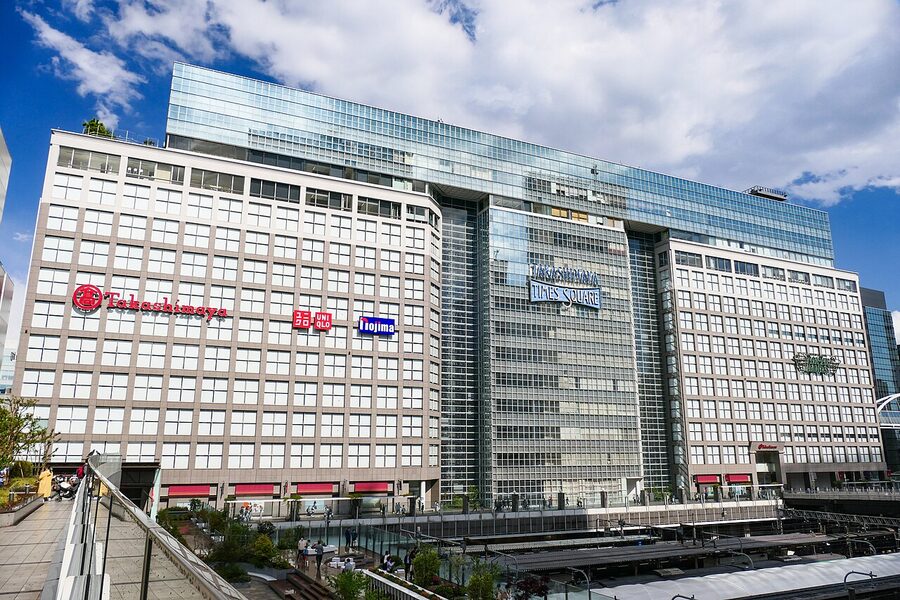
Takashimaya Times Square is 11 floors of department store plus a connected Tokyu Hands, a Kinokuniya, a Disney Store, and a Pokémon Center. It is the complex, not just the department store, that makes this worth a visit. I like Takashimaya better than Isetan for actual browsing-and-buying: it’s airier, the lighting is kinder, the layout is easier to read, and you can sit somewhere on every floor. Tiffany and Louis Vuitton live here. So do the KitKat Chocolatory (yes, gold-leaf KitKats, yes, they are a real thing), the ramen floor on the top level, and one of my favourite Tokyo buys: hand-printed stationery at the Itoya concession on 5F.
The Hello Kitty “Welcome Card” gets international visitors 5% off at the Takashimaya department store counters — ask at the information desk on 1F with your passport. It’s the one department-store discount card worth bothering with because it requires zero application paperwork.
Hours: 10:30–19:30 daily (restaurant floors later). Address: 5-24-2 Sendagaya. Website: takashimaya-global.com.
Keio and Odakyu — the station-attached classics
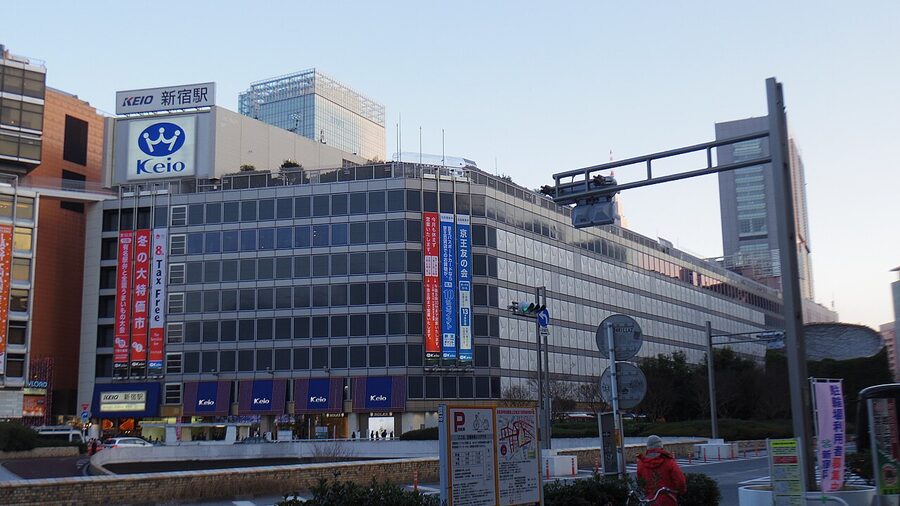
Keio and Odakyu are the two old department stores glued to the west-exit side of the station. Odakyu is under massive redevelopment — the main Odakyu building closed in late 2022 for teardown, and the current footprint is a reduced HALC building for sportswear, cosmetics, and homewares. Keio is intact and has a genuinely interesting Japanese crafts floor (kitchen knives, tea utensils, kimonos) that gets under-appreciated because Keio is less glamorous than Isetan. If you’re looking for a single serious souvenir rather than novelty — a Japanese santoku knife, a set of lacquer bowls, a proper iron kettle — Keio is quieter and the staff will take time with you.
Keio has a rooftop beer garden in summer (usually May through August). It’s a well-kept local thing rather than a tourist attraction, which is what makes it good.
Depachika — the reason to come at all
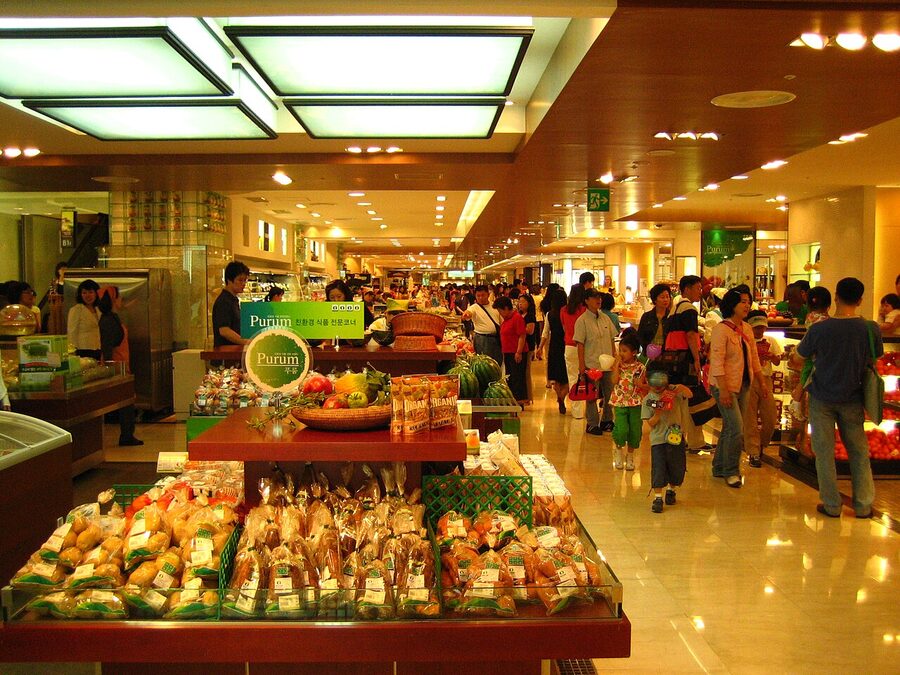
A depachika is a department-store basement food hall. That is a short sentence for a thing that takes over an hour to walk through properly. Isetan’s depachika, on B1 of the main building, is widely considered the best in Japan — not just Tokyo. Here is what’s down there, roughly: a wagashi counter from each of the famous confectionery houses of Kyoto, Kanazawa, and Tokyo; a French patisserie row with Pierre Hermé and Sadaharu Aoki; a prepared-food arc where you can assemble a dinner from twenty different cuisines and they’ll pack it in a bento; a wine cellar; a tea counter where they’ll brew you a single cup of gyokuro; a fruit counter where a melon costs ¥15,000 and is probably worth it; and a bakery corridor that will make you rethink your relationship to carbohydrates.
Even if you don’t plan to eat anything, the depachika is worth 90 minutes as a cultural institution. It’s one of the things nobody warns you about before your first trip to Japan — that a department-store basement would become a highlight.
How to do a depachika without being overwhelmed:
- Go between 11:00 and 12:00, before the lunch rush.
- Walk the whole loop first without buying. Shops cycle specials, and you’ll regret buying at counter one if counter seventeen is better.
- Free samples do genuinely exist — Isetan’s are served on tiny paper trays by staff in white caps, and you take one, not three.
- If you’re going to eat what you buy the same day, you’re fine. Most prepared food is labelled for same-day consumption (“本日中”).
- Cash and cards both work everywhere in 2026, but some smaller wagashi counters are cash-only — keep ¥2,000 in cash.
The wagashi you buy in a depachika are not the same as the wagashi in airport gift shops. These are fresh, from specific makers, and will only keep 3–5 days. If you’re flying soon, ask the staff to wrap for travel — “mochikaeri” (持ち帰り) means takeaway and they’ll put an ice pack in for you.
Electronics — Yodobashi and Bic Camera
Shinjuku is the better electronics shopping neighbourhood in Tokyo — and I’ll say that knowing people immediately want to argue for Akihabara. Akihabara is an experience. Shinjuku is where you go to actually buy. Yodobashi Camera Shinjuku West is the flagship, and it’s spread across nine separate buildings along the Yodobashi “street,” each specialising in a category (main building: cameras; appliance building: whitegoods; music building: audio, where an entire floor is turntables and nothing else). The staff on the camera floor will put a new Sony or Fujifilm in your hands and let you shoot for 20 minutes. The audio floor has dedicated listening rooms. It’s a ridiculous place and a great 90 minutes if you’re remotely into gear.
Bic Camera Shinjuku East is the other big electronics store and sits right outside the east exit. It’s smaller than Yodobashi, and it sells what Japanese drugstore electronics stores always sell: cameras, laptops, hair dryers, toothbrushes, and cosmetics. Bic’s trick is that the cosmetics section is genuinely good — you can pick up Shu Uemura cleansing oil and a Panasonic beard trimmer from the same till, which is odd but extremely convenient. The tax-free process is fast and they have English staff on duty at most hours.
Tax-free shopping in 3 steps
If you’re a foreign visitor with a valid tourist visa, you can shop tax-free on purchases of ¥5,000 or more in a single store in a single day. Here’s the actual flow, which is less confusing than tourism blogs make it out to be:
- Shop normally, keep receipts. You’ll pay the tax-inclusive price at the till.
- Before you leave the store, go to the tax-free counter (look for the “Tax-Free Shop” logo, usually on a dedicated floor or near the exit). Bring your passport and your receipts.
- They refund the consumption tax (10% on durable goods, 8% on consumables) in cash or onto your card. Consumables are sealed in a clear bag you’re not meant to open until you leave Japan.
Warnings: The tax-free counter queue at Don Quijote Kabukichō on a Saturday at 15:00 is genuinely 45 minutes. At Isetan and Takashimaya it’s closer to 10. Bic Camera processes tax-free at the till, so no separate queue. Don’t open the sealed bag — if customs opens it on your way out and things are missing, they charge the tax.
Don Quijote Kabukichō — go once, as an experience
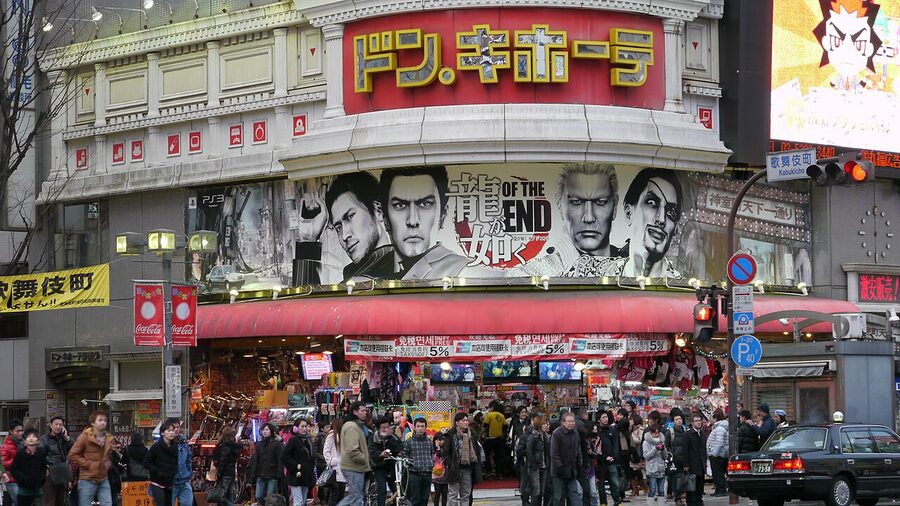
Don Quijote — “Donki” to locals — is a chain discount store with about 600 branches across Japan, but the Kabukichō one is the one foreign visitors talk about. The giant yellow-and-blue vertical sign on the corner is a landmark. Inside, it is four storeys of controlled chaos: skincare, cheap clothes, KitKats in every flavour Japan has invented (sakura, matcha, wasabi, sake-kasu), toys, luggage, costumes, kitchen knives, Hello Kitty everything, Godzilla figurines, and bargain-bin electronics. The soundtrack is the same 45-second Donki jingle on loop. There is a Ferris wheel on top of the building. I am not making that up.
The Kabukichō Donki is chaos you can’t fully decode as a tourist. Go once, spend an hour, enjoy the strangeness, buy a novelty KitKat for someone back home, and leave. If you go looking for serious deals you’ll find a few, but Japanese locals shop Donki for convenience more than prices, and the Kabukichō branch is priced up a bit because of foot traffic. The tax-free floor — you need to go up one level to the dedicated counter — is usually the bit that eats the most time.
Hours: 24/7. Address: 1-16-5 Kabukicho. Tip: the alleyway next to Donki Kabukichō has the best late-night ramen joints in the neighbourhood, so time your visit around dinner.
Uniqlo, GU, and Muji — Japanese basics done properly
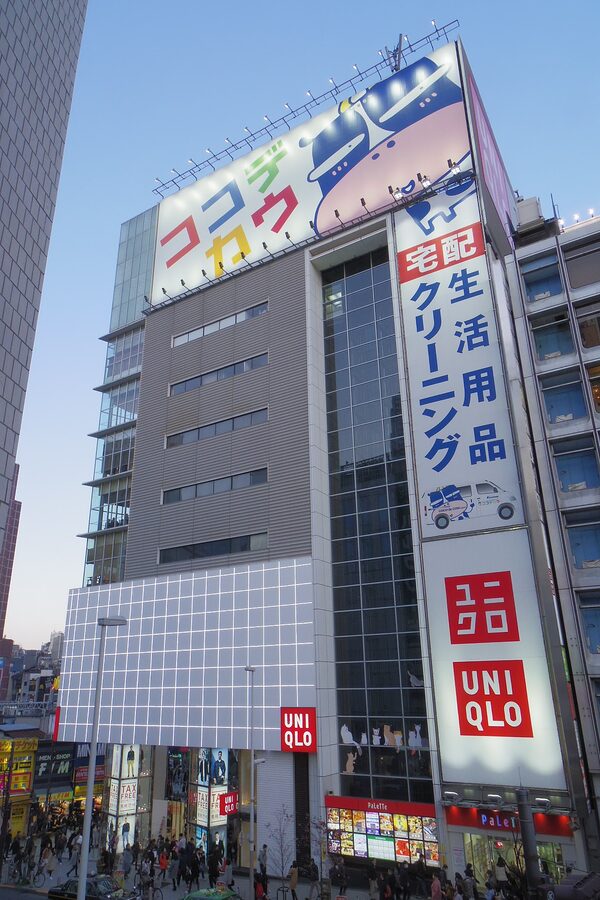
The Uniqlo flagship on the west side of the station carries the full range, including UT collaboration T-shirts and the Japan-only seasonal colours that don’t make it to overseas branches. The real reason to visit a Japanese Uniqlo is Heattech — the thermal underwear line that is better made and cheaper here than abroad. Extra-warm Heattech (the “Ultra Warm” version) is genuinely the only reason I no longer pack a proper jacket for winter Tokyo. Pick up 3–4 pieces for ¥1,500–2,500 each.
Airism, the summer counterpart (breathable, quick-dry tops), is likewise cheaper than overseas. Japanese Uniqlo sizing runs small — the XL on the rack here is closer to a Western L. Try things on.
GU is Uniqlo’s cheaper, trendier sibling (same parent company, Fast Retailing) and there’s a massive store also on the west side. Think Uniqlo quality minus the technical fabrics, at half the price, with younger styling. I buy basic-colour T-shirts and lounge pants here because you can get two for ¥2,000 and they wash well.
Muji has a large Shinjuku store on the east side. It’s fine but not remarkable — the Ginza flagship is the one to visit if you want the full Muji experience. If you just need stationery or travel-sized toiletries, the Shinjuku branch will do.
Tokyu Hands — the most useful shop in Tokyo
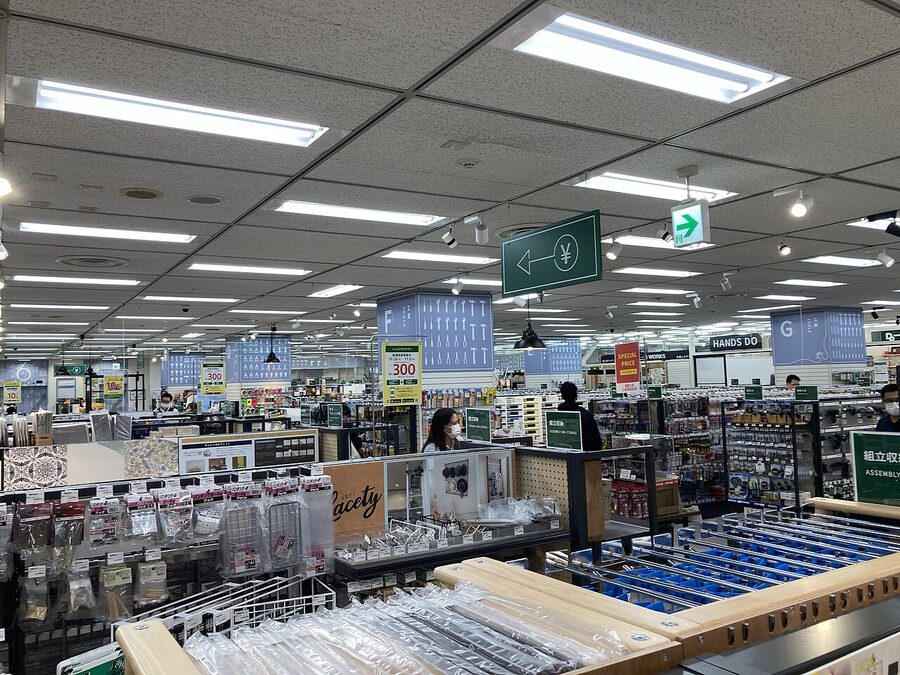
I will say this quietly: most of the souvenirs you actually bring home from Tokyo will come from Tokyu Hands, not from the shops your tour guide suggested. Hands is a 7-storey building of lifestyle goods — stationery, kitchen tools, craft supplies, travel accessories, bath products, gadgets, hobby kits, and a section for every niche hobby you didn’t know Japan had invented. The one inside Takashimaya Times Square connects directly via the south-exit skybridge and you don’t need to go outside to reach it.
Things I have bought at Tokyu Hands over the years, as a rough guide: beautiful pens that cost ¥400 and outlast every Muji fine liner; a set of stainless-steel chopsticks with individual rests; a silicone sponge that doesn’t mould; a collapsible rice scoop; Japanese-paper notebooks; luggage straps with train-station prints on them; and, one memorable time, a solar-powered mini-torii for my kitchen window that I cannot defend but do not regret. Budget 90 minutes and don’t plan to shop anywhere specific afterwards.
Floor guide at a glance: B2 is tools and hardware. B1 is kitchenware. 1F is travel and beauty. 2F is stationery. 3F is hobbies and DIY. 4F–7F is bags, health, and party supplies. Get an English floor guide at the entrance — Hands is famously signed only in Japanese.
Lumine — station fashion for people in a hurry
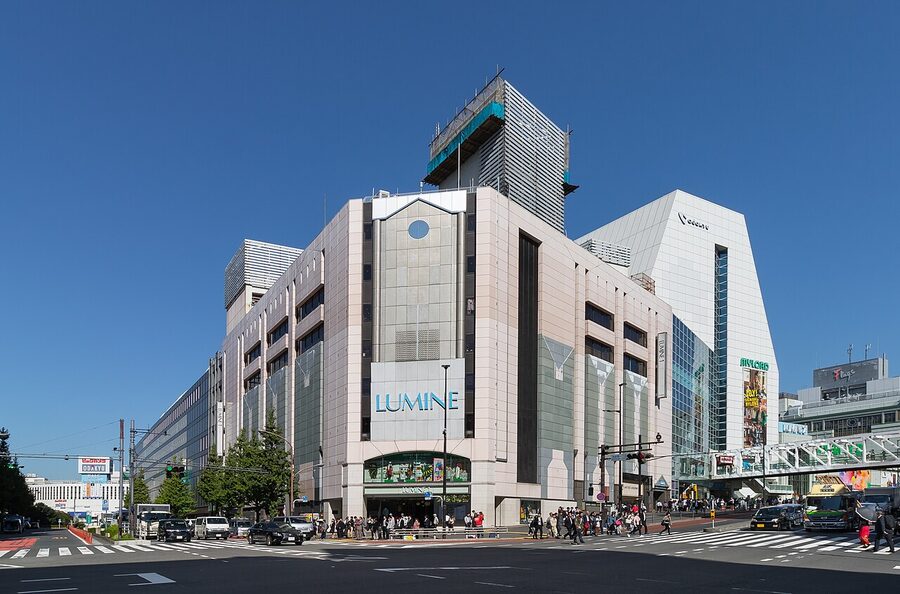
Lumine is a cluster of four shopping buildings physically attached to Shinjuku Station — Lumine 1, Lumine 2, Lumine Est (east), and NEWoMan (at the New South exit). These are station-mall fashion buildings, which sounds depressing but in Tokyo is different: the JR East group picks the tenants and they carry Japanese independent brands you won’t find in the department stores. Mid-range prices, mostly in their 20s-to-30s target demographic, good food floors. Lumine Est is the liveliest for younger fashion. NEWoMan is the upscale one and has a proper tea salon on the 2F.
You’ll hear about the Lumine Card discount — it’s a 5% discount for cardholders three specific weeks a year, and unless you live in Japan, it’s not worth applying for. For tourists, the value of Lumine is being able to shop without leaving the station on a rainy day, or grab a last-minute gift on your way to the airport express. That’s a genuinely good feature.
Kinokuniya — 8 floors of books, including English
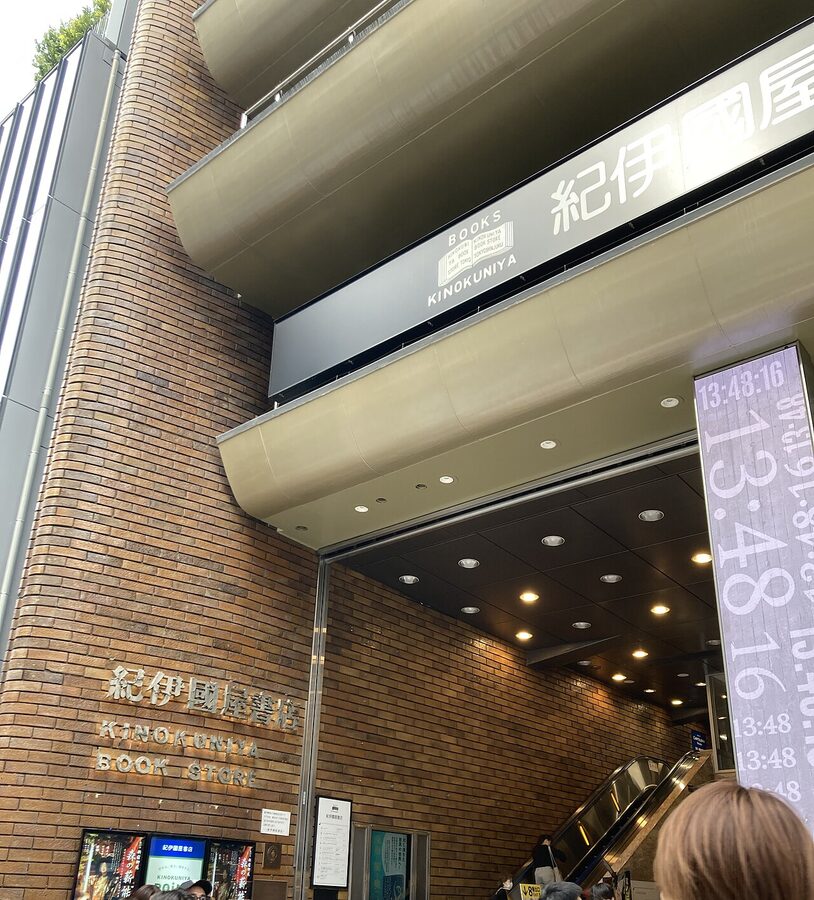
Kinokuniya is Japan’s biggest bookshop chain, and the 8-storey Shinjuku main store on the east side (not the smaller southern branch inside Takashimaya Times Square) is the flagship. If you’re the kind of traveller who wants a physical guidebook, a Japanese cookbook, or a beautiful art book, this is where to come. The 6F is the foreign-language floor with a massive English section — novels, art books, design, travel. It often carries remaindered stock (travel guides from 18 months ago at a third of the cover price) which is worth a look.
The manga and stationery floors are also genuinely good — Japanese stationery in particular is world-class and cheaper than you’d expect. A hobonichi planner, a set of Tombow Mono 100 pencils, and a sheet of Japanese masking tape makes a great small-scale gift set for anyone into paper things back home.
Omoide Yokocho — the tiny old alley that isn’t really for shopping
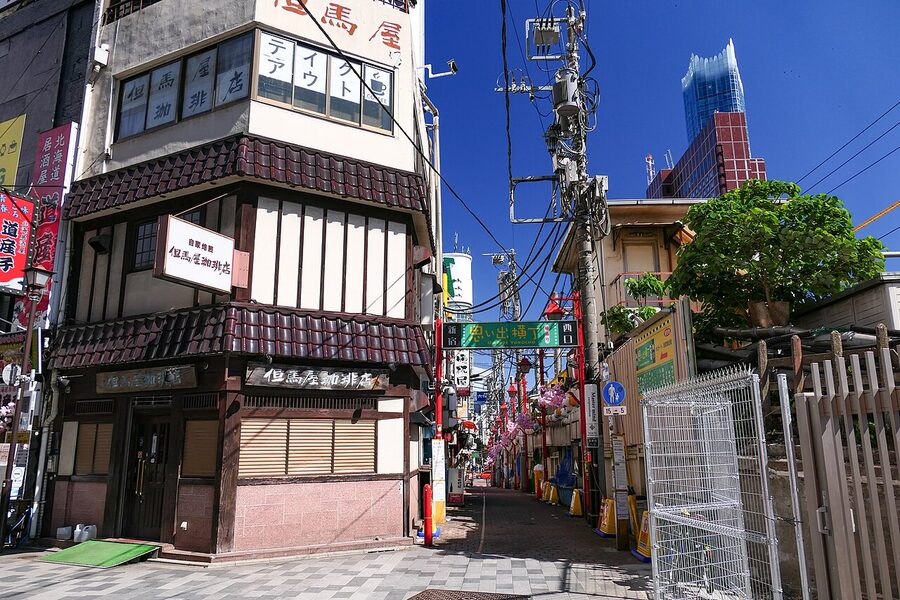
Omoide Yokocho — literally “Memory Lane” — is a tight cluster of tiny post-war alleys near the Shinjuku west exit, mostly famous as a yakitori and late-night-food destination. A handful of stalls do sell small souvenir items — hand-printed tenugui towels, postcards, old enamel signs — but this isn’t a shopping destination so much as a place to wander through on your way between the west-side department stores and the station. It’s worth the 20-minute side trip for the atmosphere alone. I’ve written more about the alley itself in my Shinjuku district guide.
How I’d actually spend a Shinjuku shopping afternoon
Here is the half-day loop I’d run if you have one afternoon and no particular shopping list.
- 11:00 — Enter Isetan via Shinjuku-sanchome Station exit B5. Go straight to the B1 depachika. Walk the full loop (30 minutes, no buying). Then buy something for tonight’s dinner and two small wagashi.
- 12:00 — Go up to 7F Isetan restaurant floor for lunch, or head to Omoide Yokocho (10-minute walk via west exit) for yakitori.
- 13:30 — Walk to Don Quijote Kabukichō (10 minutes from Isetan). Spend an hour. Buy three KitKat flavours and a face mask. Do the tax-free counter while you’re there if the queue is under 20 minutes — otherwise skip it for a smaller store.
- 15:00 — Cross to Takashimaya Times Square via the south exit passage. Do Tokyu Hands (60–90 minutes). This is where most of your actual souvenir shopping happens.
- 16:30 — Stop for tea/coffee at one of the restaurants on 12F Takashimaya.
- 17:00 — Walk to the west-side Uniqlo flagship (20 minutes across the station interior). Stock up on Heattech and Airism.
- 18:00 — Yodobashi Camera if you’re buying a camera or audio item, otherwise skip. Head back to your hotel via whichever exit is closest.
If you’re staying in Shinjuku itself, this loop is doable on foot. If you’re based elsewhere, allow 45 minutes at either end for station navigation. Shinjuku Station has 200-plus exits; the wrong one will put you a 15-minute walk from where you want to be.
Practical info
- Opening hours: most department stores 10:00–20:00, restaurant floors later. Don Quijote 24 hours. Tokyu Hands 10:00–20:30. Uniqlo and GU 11:00–21:00.
- Tax-free thresholds: ¥5,000 minimum per store per day on combined purchases. Durable goods (clothes, electronics, watches) are 10% tax. Consumables (food, cosmetics) are 8% tax and get sealed in a clear bag.
- Payment: every big store takes cards. Some smaller wagashi and depachika counters are still cash-preferred. Carry ¥5,000–10,000 in cash as backup.
- Peak crowds: Saturday and Sunday 14:00–17:00 is the worst for tax-free counter queues. Friday evenings are surprisingly busier than Saturday mornings.
- Best time of year: January (post-New Year fukubukuro “lucky bag” sales) and July (summer sales) if you want the best price drops. November–December for Christmas displays at Isetan and Takashimaya, which are something of a Tokyo event in themselves.
- Luggage: most department stores offer coin lockers or courier services that’ll send your purchases to your hotel for ¥1,000. Ask at the information desk on 1F.
Where Shinjuku sits in the Tokyo shopping map
Shinjuku is where you go for breadth. Ginza, a short train ride south, is narrower and more upscale — fewer stores, higher price points, and more of a 100-year-old department-store feel. I’ve written about it in my Ginza guide, and it’s where I’d send someone on a second Tokyo shopping trip rather than a first. Harajuku is a different beast again: teen fashion, streetwear, independent boutiques rather than department stores, and a completely different walking pace — I cover that in my Harajuku guide.
If you’re visiting Tokyo on one trip and can only shop in one neighbourhood, make it Shinjuku. Everything is here, the logistics are simpler than any other major Tokyo shopping district, and the train back to your hotel leaves from directly underneath the stores. If you need a place to stay in the area, I’ve put together a Tokyo budget accommodation guide that covers the options that keep you walking distance from Shinjuku Station.
For broader Tokyo shopping context, the Go Tokyo Shinjuku Shopping guide from the Tokyo tourism board has additional store listings and current event information — useful to cross-reference before a visit.
One last practical thing. Everything on this page assumes you’re travelling with a passport. Tax-free doesn’t work without it. Don’t leave the hotel without it if you plan to shop seriously — I’ve been that tourist twice, and one time I was queueing at the Isetan tax-free counter with a bag of ¥45,000 of cosmetics when I realised my passport was still in the hotel safe. The 30-minute round trip was entirely my own fault.