
Reviewed · TOKYO FOOD TOURS
Tokyo: Tsukiji Fish Market food Tour
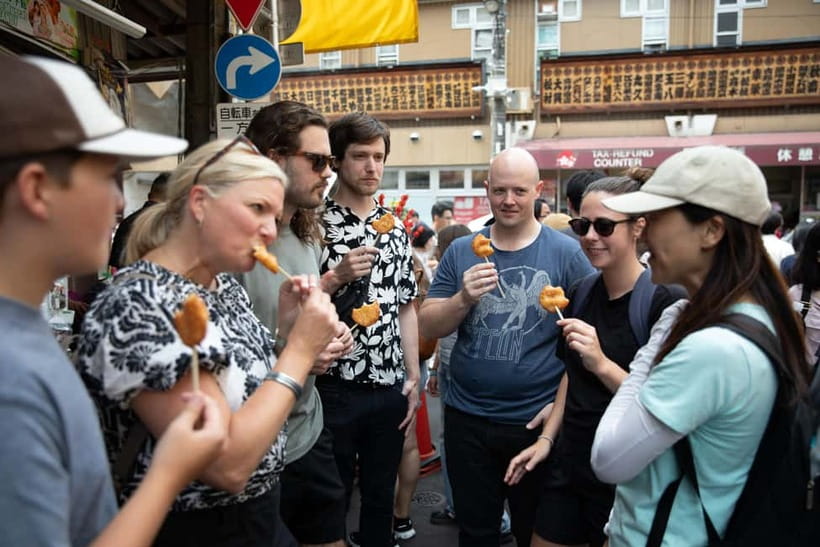
Tsukiji is at its best when you let someone else handle the first round of ordering. This 150-minute food walk takes you through the Outer Market for sushi, sashimi, fish cake, egg roll, dashi soup, green tea, and other tastes that may be easy to miss on your own.
I like the guide-to-vendor connections, especially with guides such as Keiko, who knows the market well and can explain what you are eating. I also like the range of food: this is not just a sushi stop, but a look at tea, fish, prepared foods, and Japanese breakfast habits. The main drawback is that the route and food stops are set in advance, so you may have less freedom to choose exactly where your group eats.
In This Review
- What makes this Tsukiji food walk worth your morning
- Meeting at Lawson and entering Tsukiji Outer Market
- The first tastes: tuna sushi and sashimi
- Beyond sushi: fish cake, egg roll, and dashi soup
- Tea, vendors, and the human side of the market
- A planned route, not a choose-your-own food crawl
- How much food should you expect?
- Is $83 a fair price?
- The best time to place it in your Tokyo plans
- Who will enjoy this experience most?
- Booking details that matter
- Should you book the Tsukiji food tour?
- FAQ
- Where does the Tsukiji food tour start?
- Where does the tour finish?
- How long does the experience last?
- What food is included?
- Is the tour conducted in English?
- Should I eat breakfast before the tour?
- Can I cancel for a full refund?
What makes this Tsukiji food walk worth your morning
- A full Japanese breakfast: Tuna sushi, sashimi, egg roll, fish cake, dashi soup, green tea, and more make this a substantial start to the day.
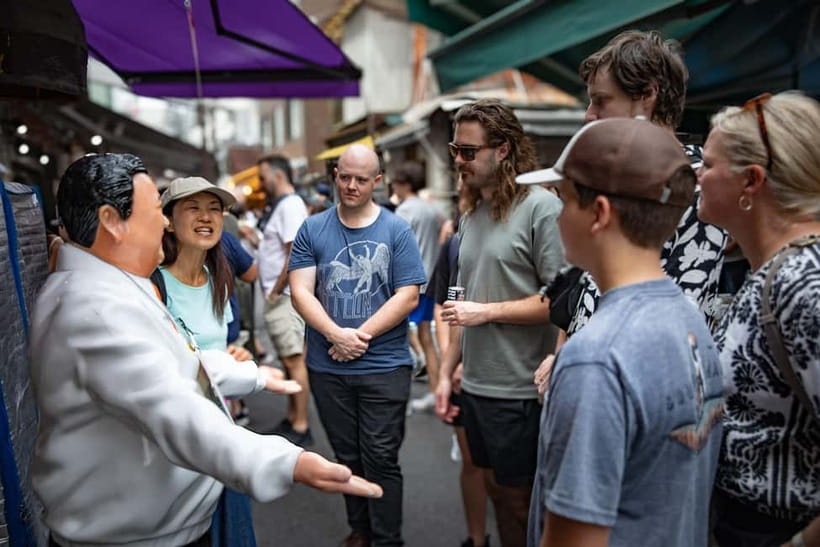
- Local market connections: Guides such as Keiko and Loc bring context about vendors, fish, beef, tea, and the market’s working life.
- A useful first Tokyo activity: The tour gives you food orientation and market background early in your visit.
- A short, manageable schedule: Two and a half hours is enough time to eat well without taking over your whole day.
- English guidance throughout: You can ask questions about ingredients, customs, and the market as you go.
- A flexible booking policy: You can reserve now and pay later, with a full refund available when you cancel at least 24 hours ahead.
Meeting at Lawson and entering Tsukiji Outer Market
Your starting point is the LAWSON Tsukiji 4 Chome Store. The guide will hold a board, and you should arrive 10 minutes early. That small buffer matters in Tokyo, where a few minutes spent finding the right convenience store can turn into a rushed start.
The market portion lasts about two hours, within the total 150-minute experience. You will walk from stall to stall as the guide explains what you are seeing, what is worth tasting, and how different foods fit into Japanese cooking.
Tsukiji is best understood as a working food district rather than a single enclosed market hall. The Outer Market is made up of shops and food counters selling seafood, prepared dishes, tea, cooking ingredients, and other specialty foods. The tour’s value comes from helping you make sense of that mix.
The guide also provides background on Tsukiji’s past and its place in Tokyo’s food culture. You are not simply moving from one snack to another. You get an explanation of the vendors’ work, the market’s history, and the customs behind the food.
A few more Chuo City tours and experiences worth a look

The first tastes: tuna sushi and sashimi
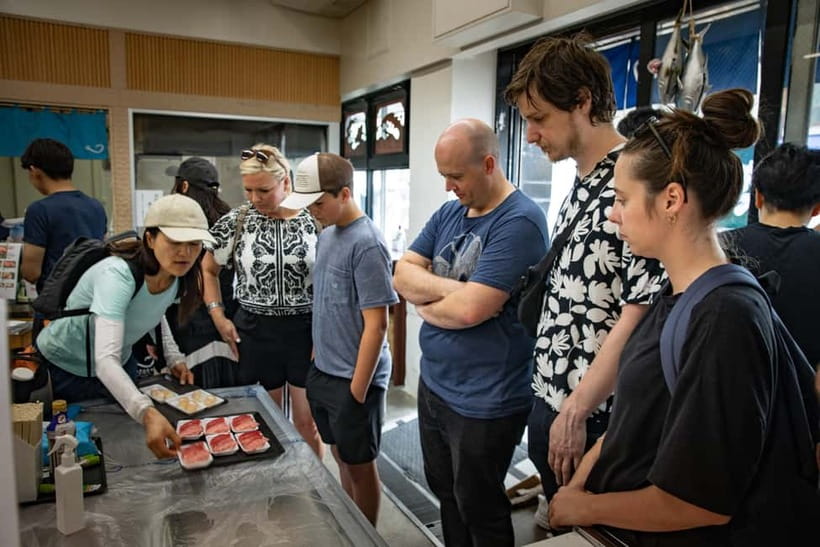
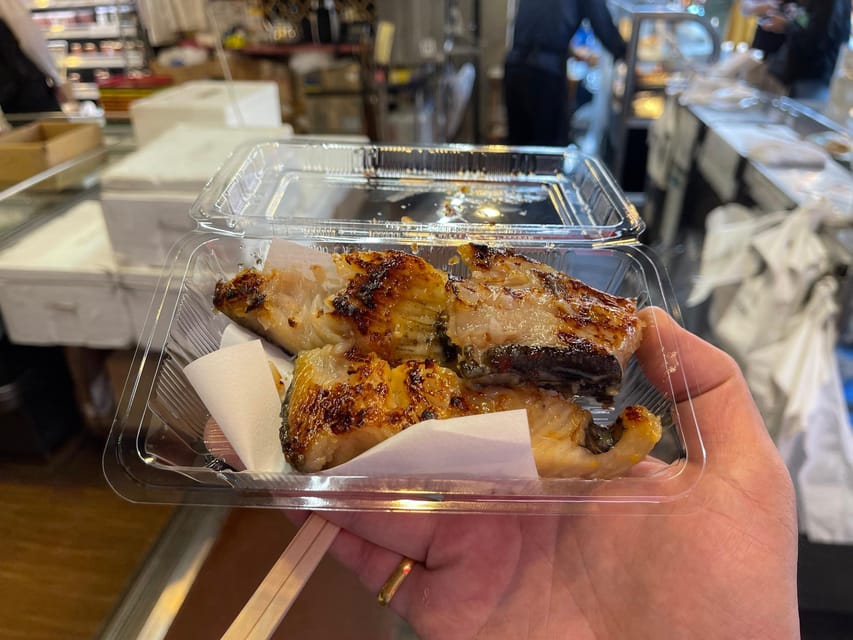
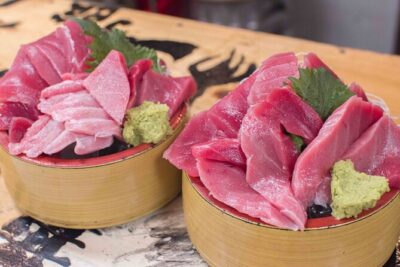
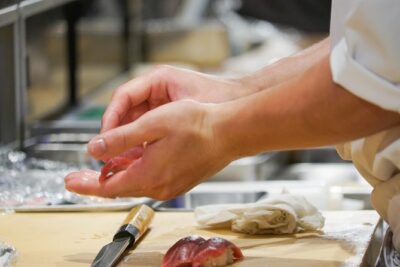
The food begins with seafood, including tuna sushi and sashimi. For many visitors, this is the part they already expect from Tsukiji, but the guide adds useful detail by explaining the difference between preparations and the care involved in serving fresh fish.
Sushi is familiar to most people, yet a market setting gives it a different meaning. You can pay attention to texture, seasoning, and how the fish is presented rather than simply ordering a standard restaurant set. Your guide can also answer questions as you eat, which is helpful if you are unsure about a particular cut or style.
Sashimi gives you another way to notice the quality and texture of the seafood. If you are cautious about raw fish, the guide’s explanations make the experience less intimidating. If you already enjoy sushi, you will likely appreciate having someone point out ingredients and customs you might otherwise pass over.
The strongest reason to take this tour instead of eating alone is confidence. You can try unfamiliar items with guidance rather than guessing from a menu or choosing only the foods you already know.
Beyond sushi: fish cake, egg roll, and dashi soup
The food selection moves beyond raw seafood. Fish cake, egg roll, and dashi soup show how much of Japanese food culture is built around prepared ingredients, gentle seasoning, and careful texture.
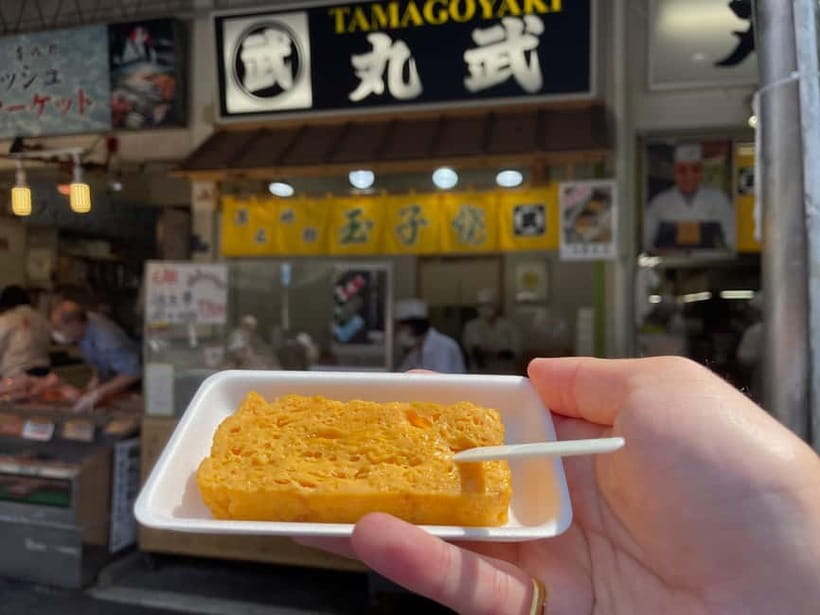
The egg roll is a useful contrast to sushi and sashimi. Japanese tamagoyaki is often lightly sweet and neatly layered, and it gives you a taste of a familiar market specialty in a simple form. Fish cake adds another texture and shows how seafood is used in a prepared food rather than served raw.
Dashi soup brings the focus to broth. Dashi is a foundation of Japanese cooking, and tasting it in soup helps you notice the savory flavor that appears in many dishes without being heavy or overpowering.
These stops make the tour feel like more than a seafood sampler. You get a broader picture of the everyday foods people eat and the techniques used to build flavor.
Tea, vendors, and the human side of the market
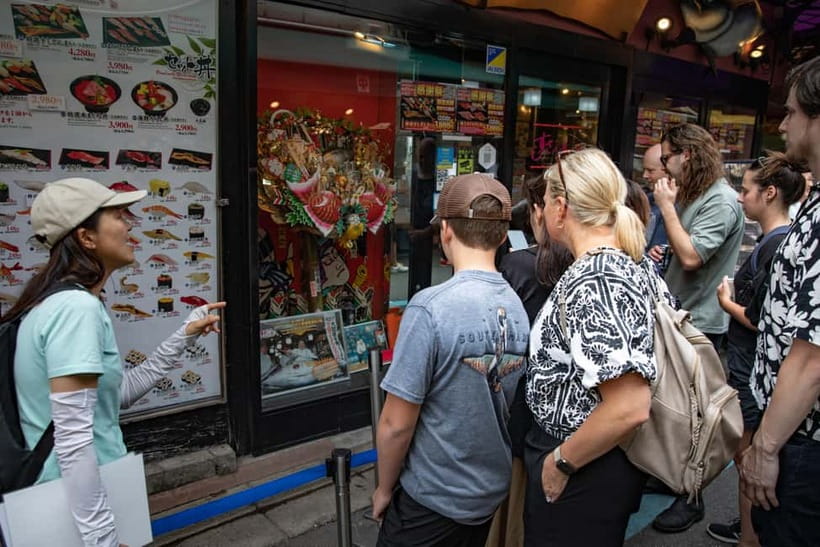
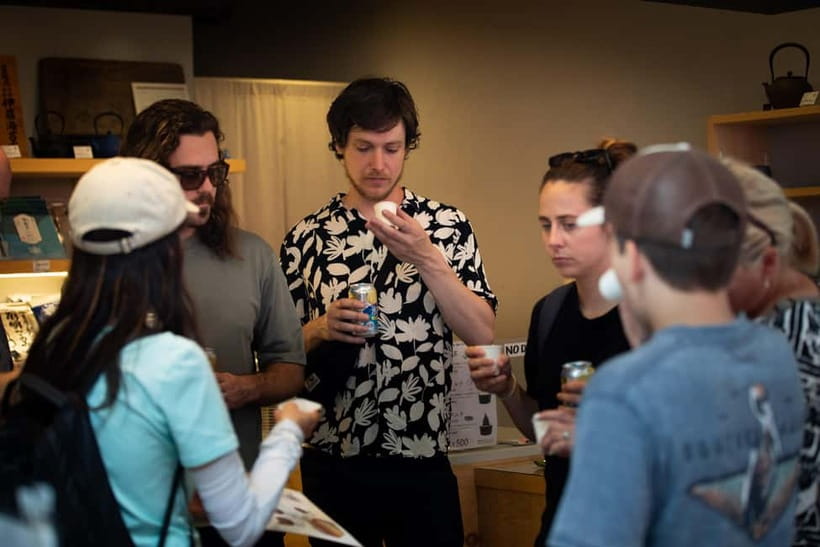
Green tea is included, and the tea stop helps widen the tour beyond fish. The guide can explain the role of tea keepers and the way Japanese food shops often specialize in one small part of the meal.
The conversations with vendors are another important part of the experience. You may hear about their craft, their products, and the daily rhythm of the market. The quality of these interactions depends partly on timing and the guide, but the tour is designed around those local connections.
Keiko receives especially strong praise for her warmth, market relationships, and ability to explain what you are eating. Loc is also described as clear, well informed, and good at keeping the group moving at a comfortable pace. Since guides can vary, you should think of these names as examples of the kind of leadership provided, not a guarantee that one particular person will lead every departure.
This people-centered approach is useful if you want more than photographs of food. You get a sense of the individuals behind the stalls and a better idea of why certain shops matter.
A planned route, not a choose-your-own food crawl
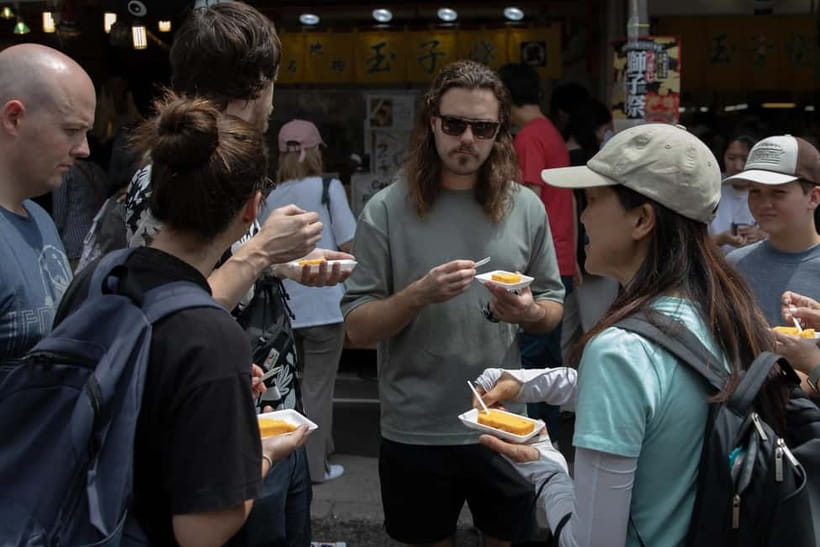
The tour follows a prepared route and takes you to selected vendors. That makes the morning easy, but it also creates the main point of tension for independent eaters: you may not be able to stop wherever you want.
One participant found the predetermined shops limiting and felt the experience could be done alone. That is a fair criticism. Tsukiji Outer Market is accessible, and an adventurous eater can certainly wander, point at food, and pay directly.
The difference is that going alone requires more planning and more guesswork. You need to decide what to eat, understand what you are ordering, judge portion sizes, and work out which stalls fit your interests. This tour removes much of that friction.
I would choose the tour if you are visiting Tsukiji early in your Tokyo stay, feel unsure about raw seafood, or want explanations with your breakfast. I would skip it if you strongly prefer total control, already know the market well, or enjoy spending hours making your own food discoveries.
How much food should you expect?
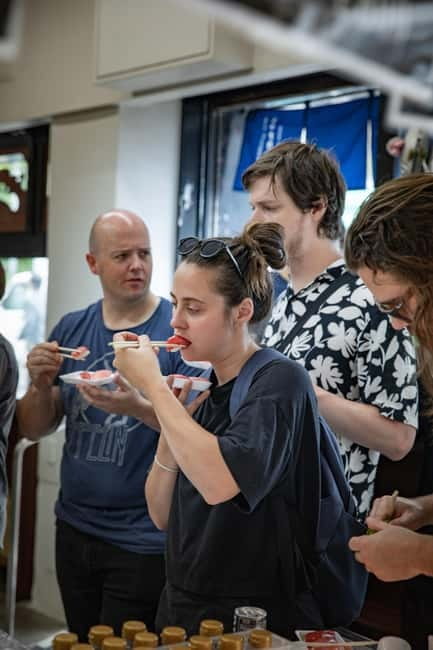
The practical advice is simple: do not eat breakfast first. The combination of sushi, sashimi, soup, egg roll, fish cake, tea, and additional samples is intended to leave you well fed.
The exact number and size of extra tastes can vary, so do not treat the listed foods as a fixed restaurant menu. Think of them as the core of a market breakfast with additional stops along the route.
The amount of walking is manageable, but you should still wear comfortable shoes. You will be moving through food-market streets and stopping at several vendors, so this is not a seated tasting with a fixed table for the full morning.
Because the market is active, keep your belongings close and follow the guide’s instructions around stalls. The supplied information confirms wheelchair accessibility, though the market’s busy shopfronts and walking route can still make careful pacing important.
Is $83 a fair price?
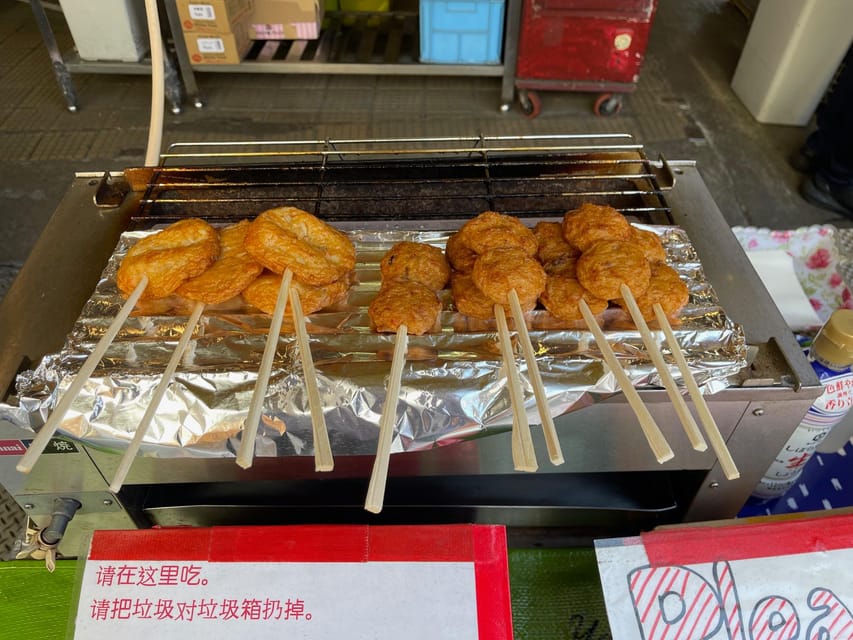
At $83 per person, this is not the cheapest way to eat at Tsukiji. You could buy individual items yourself for less, especially if you limit your meal to one sushi counter and a drink.
The price makes more sense when you count the guide’s time, the explanations, and the number of included samples. You are paying for a structured food introduction, not just a plate of sushi. Tuna sushi, sashimi, fish cake, egg roll, dashi soup, green tea, and additional tastes can add up, particularly when you would otherwise order several items without knowing which ones are worth trying.
I see the tour as good value for first-time visitors who want a guided introduction and a full morning meal. It is weaker value for confident repeat visitors who can navigate Japanese food markets without help.
The 4.8 rating from seven ratings suggests a strong record, but the small number means you should keep your expectations realistic. Most of the available feedback praises the food, the amount served, and the guides’ explanations, while one dissatisfied participant objected to the fixed stops.
The best time to place it in your Tokyo plans
This tour works especially well near the beginning of a Tokyo visit. One good use is as your first major activity, since it introduces Japanese ingredients, market manners, and several types of food before you begin ordering on your own.
The schedule lasts 150 minutes, with starting times shown according to availability. Since the tour is built around breakfast or brunch, check the offered start time when you book and plan the rest of your day around a substantial meal.
Afterward, you finish at Tsukiji Outer Market. That leaves you in a useful position to continue exploring the area on your own, though any extra eating should wait until you have digested the morning’s samples.
The tour is conducted in English with a live guide. That makes it a practical choice for anyone who wants questions answered in real time instead of relying on signs, translation tools, or guesswork.
Who will enjoy this experience most?
I would recommend it to first-time Tokyo visitors, food lovers, and people who want a friendly introduction to Japanese seafood. It is also a good fit for couples, families, and small groups who enjoy tasting many items without spending time choosing every stop.
You will get the most from it if you are open to trying foods outside your normal order. The guide’s role is most useful when you want to understand the unfamiliar parts, not just confirm that you like tuna sushi.
It may not suit you if you dislike raw fish, want a quiet meal, or prefer to wander without a fixed route. The tour includes prepared foods and soup, but seafood is central to the experience.
It is also not the right pick for someone looking for a detailed tuna auction visit or a long historical lecture. The stated route focuses on the Outer Market, food, vendors, and culinary context.
Booking details that matter
You can cancel up to 24 hours before the start for a full refund. The reserve-now, pay-later option is useful if your Tokyo plans are still changing.
Arrive 10 minutes before the scheduled start and look for the guide holding a board near the Lawson meeting point. The language offered is English, and the activity is listed as wheelchair accessible.
Because the group’s exact size is not provided, I would not assume a private experience or unlimited freedom to change the route. If you have dietary needs or strong food restrictions, the supplied details do not confirm special substitutions, so ask before booking.
Should you book the Tsukiji food tour?
Book it if you want a guided, filling introduction to Tsukiji and would rather learn what to order than make every choice alone. The strongest reasons are the broad food selection, the English explanations, and guides such as Keiko who have good relationships with market vendors.
Skip it if you already know Tsukiji, prefer spontaneous wandering, or feel the $83 price is too high for food you could buy independently. The fixed vendor route is a real limitation for self-directed eaters.
For most first visits, I think the tour earns its place, especially when scheduled early in your Tokyo trip. Arrive hungry, keep an open mind, and treat the morning as both breakfast and a lesson in how Japanese market food works.
FAQ
Where does the Tsukiji food tour start?
The tour starts at the LAWSON Tsukiji 4 Chome Store. The guide will be holding a board at the meeting point.
Where does the tour finish?
The tour finishes at Tsukiji Outer Market.
How long does the experience last?
The total duration is 150 minutes. The market visit itself is listed as lasting about two hours.
What food is included?
Included tastings are tuna sushi, fish cake, egg roll, sashimi, dashi soup, green tea, and additional food samples.
Is the tour conducted in English?
Yes. The experience includes a live English-speaking guide.
Should I eat breakfast before the tour?
No. The included food is substantial, so arrive hungry and skip breakfast beforehand.
Can I cancel for a full refund?
Yes. You can cancel up to 24 hours before the start time for a full refund. You can also reserve now and pay later.
More Tsukiji Market Tours in Chuo City
More tours in Chuo City we've reviewed
Tokyo Food Tours, compared.
 ★ 5.0Tokyo: Shinjuku Food Tour (13 Dishes at 4 Local Eateries)From $86
 ★ 4.9Tokyo: Shinjuku Food Tour (15 Dishes and 4 Eateries)From $853 hours
 ★ 5.0Best of Shinjuku: Izakaya Food Tour (4 Stops, 14+ Tastings)From $92
 ★ 5.0Tokyo Night Foodie Tour in Shinjuku – Seasonal Sushi, Wagyu BeefFrom $111
 ★ 5.0Eat and Drink Like a Local: Tokyo Ueno Food Tour-Taverns&RamenFrom $95
 ★ 5.0Tokyo: Shibuya Food Tour (13 dishes and 4 Eateries)From $77