
Reviewed · MUSASHINO
Tokyo Kichijoji Twilight: Explore Instagram-Worthy Hidden Spots
Kichijoji is at its best when the light changes. This two-hour walk takes you from Inokashira Pond at sunset to lantern-lit alleys and izakayas near the station, giving you two very different faces of the neighborhood in one evening. It is less about famous Tokyo sights and more about finding the small details that make a local district worth wandering.
I like the route for two clear reasons: you get both nature and city photography, and the small group of no more than six people should make it easier to stop for pictures or ask about shops. Guides including Suzuki, Hiro, and Sky have been praised for explaining local history, pointing out funny details, and suggesting places to eat. The main drawback is pace. Two hours is enough for a lively introduction, but not enough to browse the vintage shops, eat properly, and photograph every alley.
In This Review
- Key details before you book
- Why Kichijoji works for a twilight walk
- Meeting at Atre Kichijoji and starting at 5:00 pm
- Inokashira Pond: reflections, boats, and seasonal color
- Kichijoji Station and the city coming alive
- Tokyu Department Store rooftop: a short quiet break
- Streets, shops, and the value of local guidance
- Harmonica Yokocho: the strongest finish
- What $39.02 buys you
- Who will enjoy this walk most
- Timing, cancellation, and practical planning
- Should you book Tokyo Kichijoji Twilight?
- FAQ
- Where does the Tokyo Kichijoji Twilight tour begin?
- What time does the tour start?
- Where does the tour end?
- How long does the experience last?
- How many people can join the tour?
- Is food included in the price?
Key details before you book
- Sunset starts at Inokashira Pond: Allow time to reach the meeting point at Atre Kichijoji before the 5:00 pm start.
- The route changes character as darkness arrives: Expect park reflections first, then station traffic, storefronts, rooftop lights, and glowing alleyways.
- A maximum of six people keeps the walk personal: This is useful for photography and quick questions.
- The tour ends at Harmonica Yokocho: You can continue with a meal there, or ask for a restaurant recommendation.
- The cost is $39.02 per person: That is reasonable for a guided two-hour walk, though food, shopping, and personal expenses cost extra.
- Your best photos depend on the season and weather: Cherry blossoms, autumn leaves, sunset reflections, and neon all offer different rewards.
Why Kichijoji works for a twilight walk
Kichijoji gives you a softer, more local side of Tokyo. It has the broad appeal of a shopping district, but it also has Inokashira Park, old-fashioned side streets, cafés, small shops, and compact dining alleys. You are not being led from one grand landmark to another. Instead, you are watching ordinary city life become more photogenic as evening settles in.
That timing is the clever part. Inokashira Park is useful in daylight, when you can see the pond, trees, and boats. Later, the commercial streets take over, with signs, buses, shop windows, and small pools of artificial light. The route is designed around that shift, so you get a natural progression rather than a collection of unrelated stops.
I would think of this as a neighborhood orientation walk with a photography theme. You do not need expensive equipment. A phone is enough, and the guide can help you notice angles, reflections, colors, and small visual details that are easy to miss when you walk alone.
If you're still narrowing it down, here are other tours in Musashino we've reviewed.

Meeting at Atre Kichijoji and starting at 5:00 pm
The tour begins at Les Mille Feuilles de Liberte on the first floor of Atre Kichijoji, near Kichijoji Station. The listed start time is 5:00 pm, so plan to arrive early enough to find the meeting point inside the station complex. A mobile ticket is accepted, and confirmation is sent within 48 hours of booking, subject to availability.
The station area is busy and spread out, so this is one place where a few extra minutes will help. You do not want to begin the walk while still trying to work out which exit or floor you need. Since the experience is limited to six people, arriving late could be more disruptive than it would be on a large bus tour.
From the start, you will walk toward Inokashira Onshi Park. The park is free to enter, and the first section lasts about 40 minutes. That is the longest stop on the route, which makes sense. The pond deserves time, especially if the sunset is good.
Inokashira Pond: reflections, boats, and seasonal color
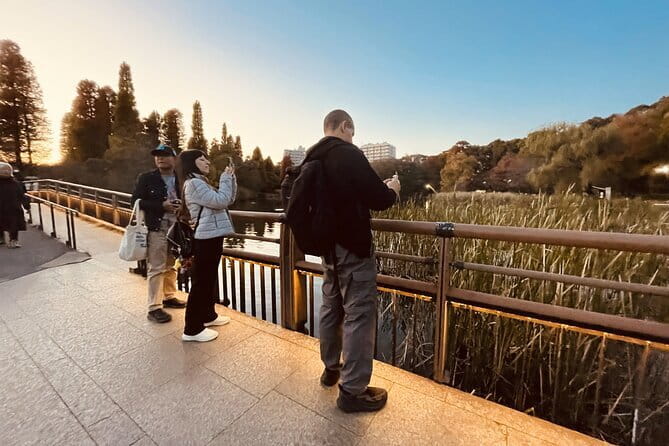
Inokashira Pond is the calmest part of the evening. The path around the water gives you chances to frame reflections, trees, boats, and the changing sky. In spring, cherry blossoms add color. In autumn, the leaves become the main subject. At other times, the appeal comes from the water and the contrast between the park and the city nearby.
The boat area adds a slightly playful touch. You might spot the distinctive swan-shaped boats, which give your pictures a more personal sense of place than a standard skyline shot. The point is not to collect a famous monument. It is to capture a scene that feels recognizably Kichijoji.
I like that the tour begins here rather than rushing straight into the shopping streets. The park gives you time to settle into the evening, and the guide can explain how this green space fits into local life. The published route allows about 40 minutes, so you should have enough time for a walk and several stops with your camera.
There are limits. The sunset cannot be guaranteed, and the mood will change with the season and weather. If clouds cover the sky, you may get more subdued pictures. The park is also not a private photo set, so other people, boats, and normal city activity will be part of the scene. That is a useful reminder: this is a walk through a real public park, not a staged shoot.
Kichijoji Station and the city coming alive
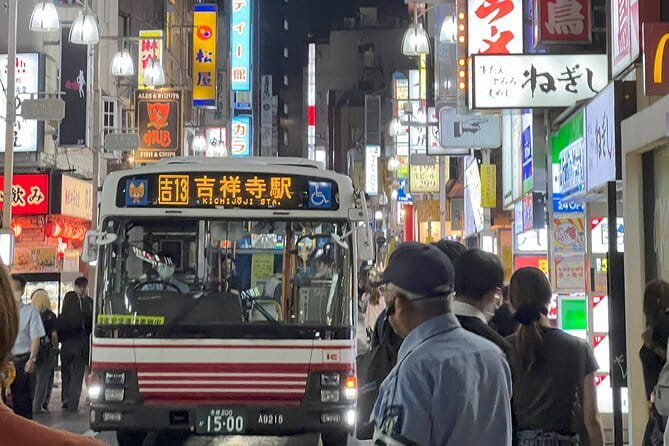
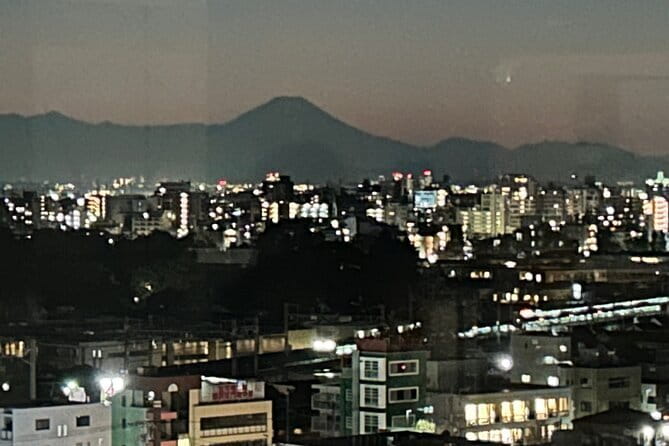
After the park, the route shifts quickly. You spend about 10 minutes around the south exit of Kichijoji Station, where buses, pedestrians, shops, and signs create a more active frame. This is where you can try motion, street scenes, and night photography instead of the slower compositions from the pond.
The station area may not be the most intimate part of the tour, but it helps connect the park to the everyday Kichijoji you came to see. You will pass boutiques, cafés, fashion shops, and other commercial details. Neon and vehicle lights can make phone photos more dramatic, especially once the sky grows darker.
A guide is particularly useful here because the best subjects are not always obvious. A storefront, passing bus, or unusual sign may last only a few seconds. You can also ask which streets are worth revisiting later if you plan to shop or eat in the area.
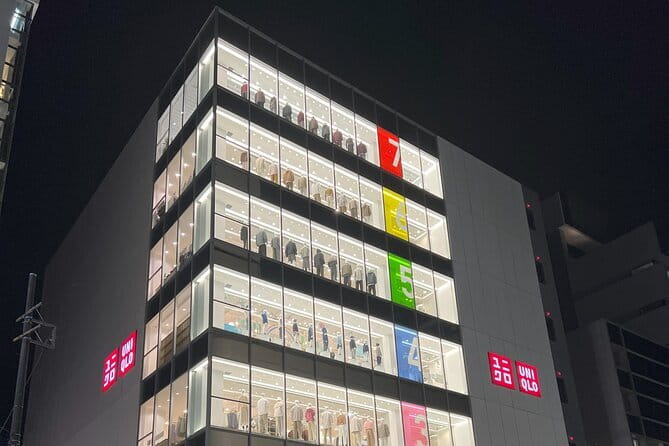
The route includes a stop near the large Uniqlo store. The store is treated as an urban photography point, with architectural angles that can work well for a city-themed photo. Do not expect a museum visit or a special shopping presentation. Think of it as a quick visual pause in the commercial district.
Tokyu Department Store rooftop: a short quiet break

The tour then heads to the rooftop garden at Tokyu Department Store Kichijoji. The listed visit lasts about 10 minutes, so this is a brief stop rather than a long rooftop session. You can look over the city, photograph rooftop lights, and enjoy a little greenery after the noise around the station.
This stop works because it changes your viewpoint. At the pond, you are close to the water. Around the station, you are at street level. On the rooftop, you get a wider view of Kichijoji and a few moments of calm. That variety gives the two-hour route a good rhythm.
Still, keep your expectations in proportion. Ten minutes is short, and the view is not presented as a major Tokyo skyline panorama. It is best understood as a compact urban overlook with a few useful photo angles. If you enjoy architecture, lights, and city details, you will probably get value from the stop. If you want a long sunset rooftop experience, this tour does not provide that.


Streets, shops, and the value of local guidance
Between the department store and Harmonica Yokocho, you walk along a lively street lined with shops, cafés, and restaurants. The exact street is not named in the tour details, but the purpose is clear: this section is for candid street pictures, seasonal decorations, storefronts, and signs of daily life.
This is also where the guide’s local knowledge matters most. Suzuki has been praised for explaining history and pointing out amusing details along the way. Hiro is known for enthusiasm about the neighborhood, while Sky has been described as helpful with suggestions for bars, shops, and places to return to later.
Those names may not tell you who your assigned guide will be. The provider is Musashino City Urban Tourism Corp, and the guide can vary. Still, the pattern is useful: this experience depends less on a formal lecture and more on someone who can add context while walking. If your guide is able to explain why a side street matters or point out a shop you would have walked past, the $39.02 fee becomes easier to justify.
The short duration means you will need to choose. One person might want vintage clothing, another may prefer cafés, and someone else may focus on photographing signs. One published experience wished for more time in vintage clothing stores, which is a fair criticism. You may see tempting shops without having time to browse. Treat the tour as a guided introduction, then return to the places that catch your eye.
Harmonica Yokocho: the strongest finish

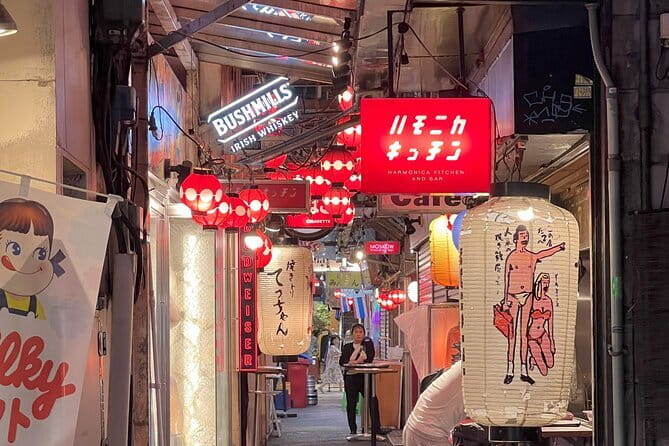
Harmonica Yokocho is the final stop and lasts about 20 minutes. Its narrow retro lanes, lanterns, compact restaurants, izakayas, and colorful shopfronts provide the most concentrated night photography on the route. After the open space of the park and the wider station streets, these alleys feel close, warm, and full of small details.
The name refers to the way the alleyways are arranged, with rows of narrow premises creating a visual pattern. You can photograph lanterns, signs, doorways, food displays, and the glow spilling onto the street. This is likely to be the tour’s most memorable setting if your main goal is atmospheric evening pictures.
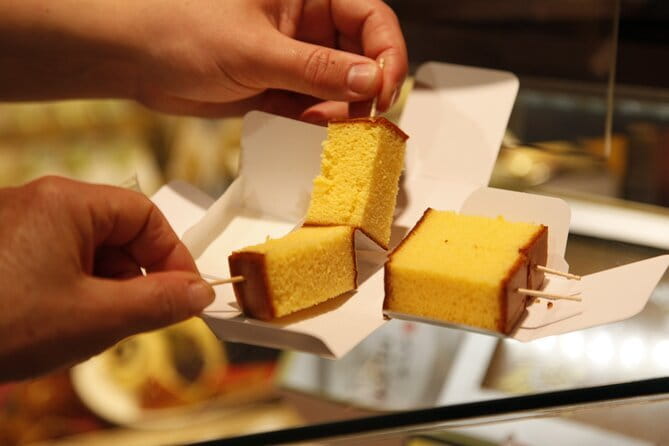
The ending is practical, too. You can stay in Harmonica Yokocho for dinner after the guide leaves. The tour provider can recommend a local restaurant, and the guide may accompany you for an additional fee. Food and personal expenses are not included, so budget separately if you plan to eat.
Twenty minutes is enough to introduce the area, but not enough to sample several restaurants or inspect every lane. I would save a little energy and appetite for the finish. If you already know you want dinner here, ask the guide for suggestions during the walk so you do not lose time deciding at the end.
What $39.02 buys you
At $39.02 per person, this is not a bargain-priced self-guided walk, but it is a fair fee for a two-hour experience with a professional guide and a maximum of six people. There are no admission charges at the listed stops, so you are paying for direction, local context, route planning, and company rather than entry tickets.
That distinction matters. If you are comfortable finding Inokashira Park, walking around the station, visiting Tokyu Department Store, and ending at Harmonica Yokocho on your own, you can recreate the basic route without paying for a tour. You may even have more time for shopping.
The added value comes from knowing where to look and how to connect the places. A guide can help you make sense of the neighborhood, explain local details, point out photo opportunities, and recommend shops or restaurants. For a first evening in Kichijoji, that can save you time and help you see more than the main shopping streets.
The value is weaker for anyone who wants a dedicated photography workshop. There is no mention of camera instruction, tripod work, editing help, or guaranteed sunset conditions. You are booking a guided neighborhood walk with good photo opportunities, not a technical class.
Who will enjoy this walk most
I would recommend this tour to you if you want a gentle introduction to Kichijoji and prefer local streets to Tokyo’s biggest attractions. It suits solo visitors, couples, friends, and small families who like taking pictures while learning where to eat and shop afterward.
It is also a good choice if you are staying in or near Kichijoji. The route gives you useful bearings quickly, and the finishing point leaves you in one of the area’s best-known dining zones. You can return later to explore the shops or spend more time in the park.
The experience is less suitable if you want a long meal, extended shopping, or a slow photography session. The walk covers several areas in two hours, so you will keep moving. Comfortable shoes are sensible, since the entire activity is on foot.
Most people can participate, and service animals are allowed. The tour is near public transportation, which makes the station meeting point and final location convenient. The small group also helps, though you should still expect to walk at the guide’s pace.
Timing, cancellation, and practical planning
The 5:00 pm start is designed to catch the change from late afternoon to evening, but the exact light will vary with the time of year. Spring may bring blossoms, autumn may bring colored leaves, and other seasons may place more emphasis on the pond, streetlights, and neon.
Check the local sunset time before booking if sunset photography is your priority. The tour schedule is fixed, and the park section comes first, so you cannot simply wait for ideal light later in the evening.
Free cancellation is available if you cancel at least 24 hours before the start time. Cancellations or changes made less than 24 hours in advance are not refunded or accepted. The cut-off follows local time.
The tour has an approximate duration of two hours. The listed stop times add up to about 80 minutes, with the remaining time used for walking between locations. That is normal for a neighborhood tour, but it confirms that you are booking a moving walk, not a series of long visits.
Should you book Tokyo Kichijoji Twilight?
Book it if you want to see a side of Tokyo built from park reflections, local shops, and small night streets rather than major landmarks. The route is well timed, the group is capped at six, and the finish at Harmonica Yokocho gives you a natural way to continue the evening.
I would especially choose it for a first visit to Kichijoji, a short stay, or a night when you want help deciding where to eat and shop. The strongest parts are Inokashira Park and Harmonica Yokocho, with the station and rooftop stops adding useful changes of pace.
Skip it if you already know Kichijoji well, want hours of shopping, or expect formal photography training. For $39.02, you are buying local direction and a compact introduction. That is a sensible deal when your time is short and you want someone to show you the neighborhood’s best evening details.
FAQ
Where does the Tokyo Kichijoji Twilight tour begin?
It begins at Les Mille Feuilles de Liberte on the first floor of Atre Kichijoji, near Kichijoji Station in Musashino, Tokyo.
What time does the tour start?
The scheduled start time is 5:00 pm.
Where does the tour end?
The walk ends at Harmonica Yokocho in Kichijoji.
How long does the experience last?
The walking tour lasts approximately two hours.
How many people can join the tour?
The tour has a maximum of six travelers.
Is food included in the price?
No. Personal expenses and food are not included. The provider can recommend a local restaurant, and the guide may accompany you for an additional fee.
More tours in Musashino we've reviewed
Musashino, compared.
 ★ 5.0The 10 Tastings of Tokyo With Locals: Private Street Food TourFrom $199
 ★ 5.0EXCLUSIVE Tokyo Secret: Kichijoji Small-Group Food & Bar HoppingFrom $105
 ★ 5.0Explore Kichijoji: Walk Through One of Tokyo’s Beloved DistrictsFrom $45
 ★ 5.0Samurai Guide Sho’s:Kichijoji Night Training–Drink & Dish PairingFrom $97
 ★ 5.03-Hour Manga Drawing Workshop in TokyoFrom $97