
Reviewed · TOURS
Day Tour from Tokyo : Experience Kawagoe and Edo Japan
Kawagoe gives you a taste of old Japan without sending you far from Tokyo. In one well-packed day, you can see temple buildings linked to Edo Castle, walk among clay warehouses, visit a shrine where you can fish for your fortune, and enter the rooms once used by the shogun’s household.
I like the mix of history and ordinary town life, since the day includes formal temples and castle rooms as well as coffee, local shops, and street snacks. I also like the guide-led approach, especially with Beth, whose flexible style helped one visitor focus on original buildings and architecture.
The main drawback is the pace. Six hours covers a lot, and you will spend much of the day walking, standing, and using local trains. Food, drinks, and train fares are extra, so the $135 price works best if you value a guide’s context and help with the day’s logistics.
In This Review
- Key reasons to choose this Kawagoe day trip
- Why Kawagoe makes a smart break from Tokyo
- Starting at Ikebukuro and finding the guide
- Kita-in Temple and its Edo Castle connection
- Walking into Little Edo through Kurazukuri streets
- Lunch in Kawagoe: eel, coffee, and sweet potatoes
- Fishing for a fortune at Hikawa Shrine
- Entering Kawagoe Castle’s Honmaru Palace
- One last hour for shops, museums, and photographs
- Is $135 a fair price?
- Who should book this six-hour outing?
- FAQ
- How long does the Kawagoe tour last?
- Where does the tour begin?
- How do I find the meeting point in Ikebukuro Station?
- Is an English-speaking guide included?
- Are train fares included in the price?
- Is food included?
- What admissions are included?
- Is the tour suitable for wheelchair users?
- Can I cancel the booking?
Key reasons to choose this Kawagoe day trip
- Original Edo Castle connections: Kita-in Temple includes part of its main hall made from buildings from Tokyo’s former Edo Castle.
- Kurazukuri warehouse streets: See Kawagoe’s famous clay-walled shops and old commercial buildings in the area known as Little Edo.
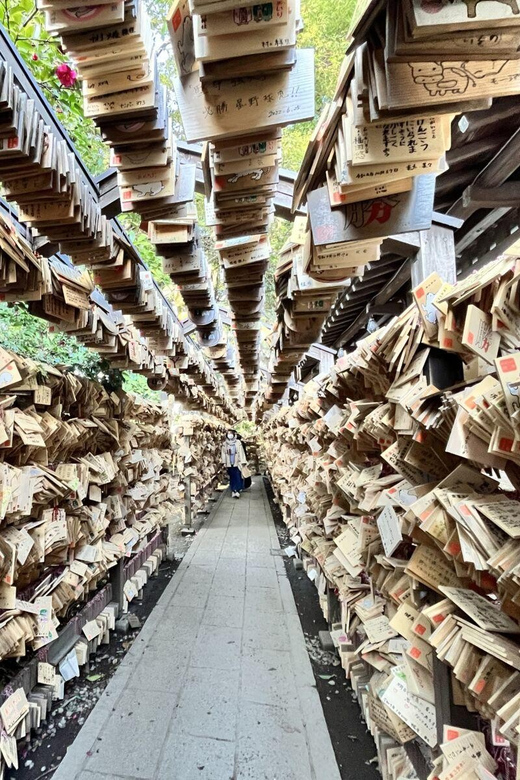
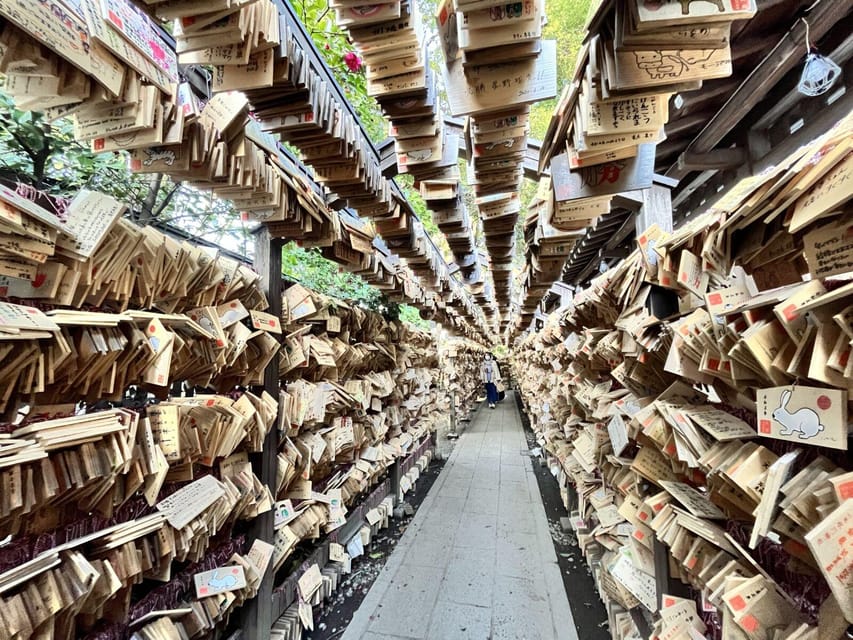
- A playful shrine custom: At Kawagoe Hikawa Shrine, you have the chance to fish for a fortune.
- A real castle interior: Walk through the preserved rooms of Kawagoe Castle’s Honmaru Palace.
- Sweet-potato country: Use your free time to try Kawagoe’s sweet-potato pie and other local treats.
- A guide who adapts: Beth has helped visitors adjust the day for architecture, food, rest stops, and practical Tokyo travel advice.
Why Kawagoe makes a smart break from Tokyo
Tokyo can fill your senses quickly. Kawagoe offers a useful change of scale. It is in Saitama Prefecture, close enough for a straightforward day out, yet its old center feels far removed from Tokyo’s train crowds and tall buildings.
From Ikebukuro, the journey is listed at about 55 minutes for this tour. Kawagoe is also reachable from Shinjuku or Shibuya in roughly an hour, making it a practical side trip rather than a major detour. The town can also fit into a route toward Nagano, though you should check your own luggage and train plans before adding a guided walking day.
The appeal is not that every street is untouched. It is that several types of Japanese history sit close together. You move from a Buddhist temple to an old merchant district, then to a shrine and a castle palace. That range helps you understand Kawagoe as a working town shaped by religion, trade, samurai government, and local food.
I especially like the contrast between the grand historical stops and the small pleasures in between. You can study a bell tower, then pause for a sweet-potato pastry. You can hear about castle politics, then browse a local craft shop. That balance keeps the day from feeling like a string of museum rooms.
If you're still narrowing it down, here are other tours in Kawagoe we've reviewed.
Starting at Ikebukuro and finding the guide
The meeting point is inside Ikebukuro Station at 9 a.m., outside the Tobu blue entrance gate. This detail matters because Ikebukuro is a large station with several rail operators and many signs. You need to follow the Tobu Line signs marked TJ in a blue square.
The directions take you down from the platform toward Central Gate 1. You pass a restaurant called Tantan on the left and a Uniqlo on the right. After continuing past the green JR ticket gates, you should see the blue Tobu entrance gate directly ahead.
Give yourself extra time. The instructions are clear, but Ikebukuro is not the place to arrive at the last second with a coffee in one hand and a suitcase in the other. Once you find the gate, the guide can help you get oriented before the train ride.
An English-speaking guide leads the day. Beth is the named guide associated with the strongest praise here, and her role goes beyond pointing at buildings. She has helped with train directions, restaurant suggestions, travel apps, and transport choices. That practical help can be valuable if Kawagoe is part of a longer Japan trip.
Train fares are not included, so bring money or a suitable payment method for your own transport. The tour price includes the admissions to Kita-in Temple and Honmaru Palace, which removes some small decisions during the day.
Kita-in Temple and its Edo Castle connection
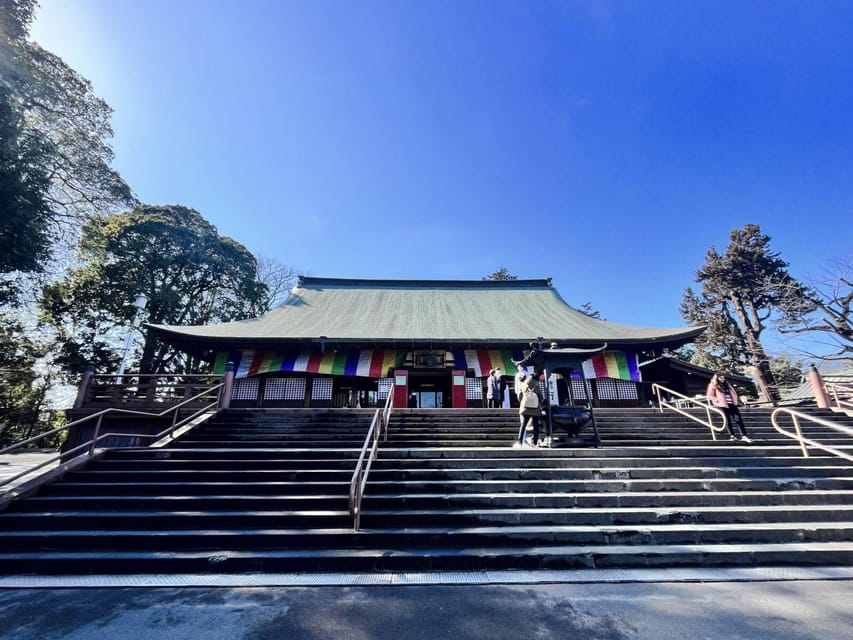
Your first main stop is Kita-in Temple, one of Kawagoe’s best-known Buddhist temples. You get about 50 minutes here with a guided visit and time for your own photographs.
The most unusual feature is the connection to Edo Castle. Part of the temple’s main hall was constructed from buildings moved from the original Edo Castle in Tokyo. This gives the stop a special value: you are not only looking at a temple in Kawagoe, but also seeing surviving material linked to the castle center of Tokugawa power.
The temple is also known for its 540 Rakan statues. These stone figures give the grounds a more personal and varied feel than a single monumental image would. Take time to look closely rather than rushing through them as a photo stop.
The admission fee is included, and the guide provides context while you walk. You will have time to enjoy the grounds at your own speed, but 50 minutes is not a long stretch if you want a slow photographic study of every detail.
This is one of the strongest parts of the tour for anyone interested in Edo-period government, architecture, or Buddhist art. If your main interest is shopping and food, it may feel more formal at the start, but the old town follows soon after.
Walking into Little Edo through Kurazukuri streets
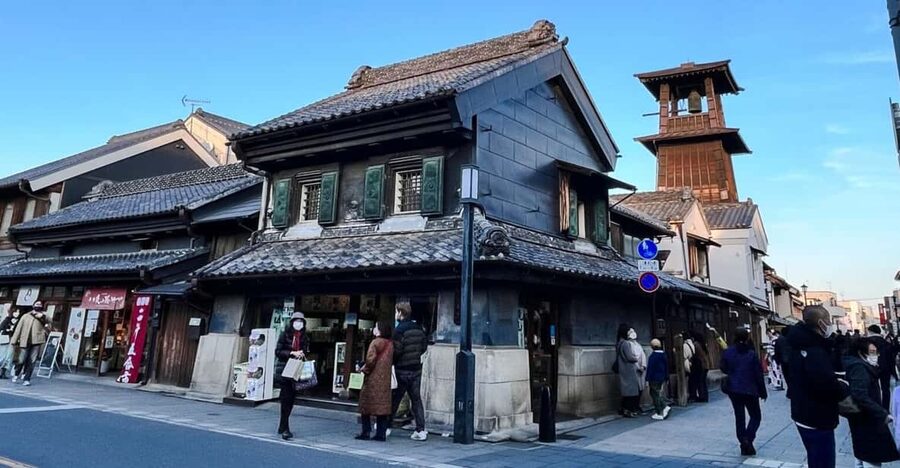
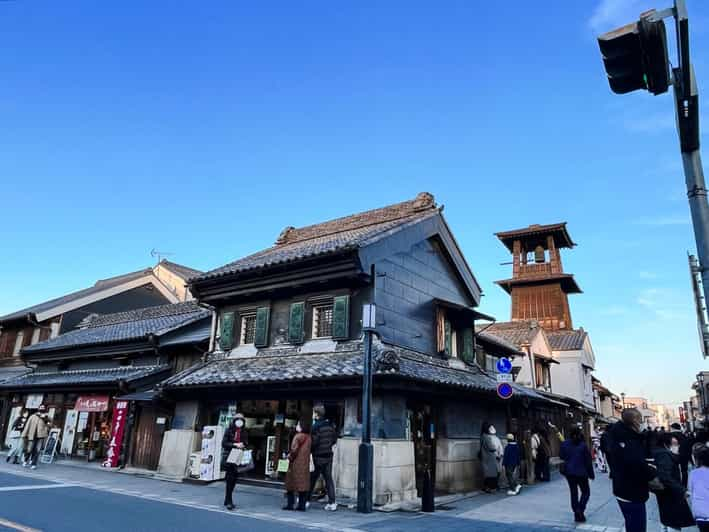
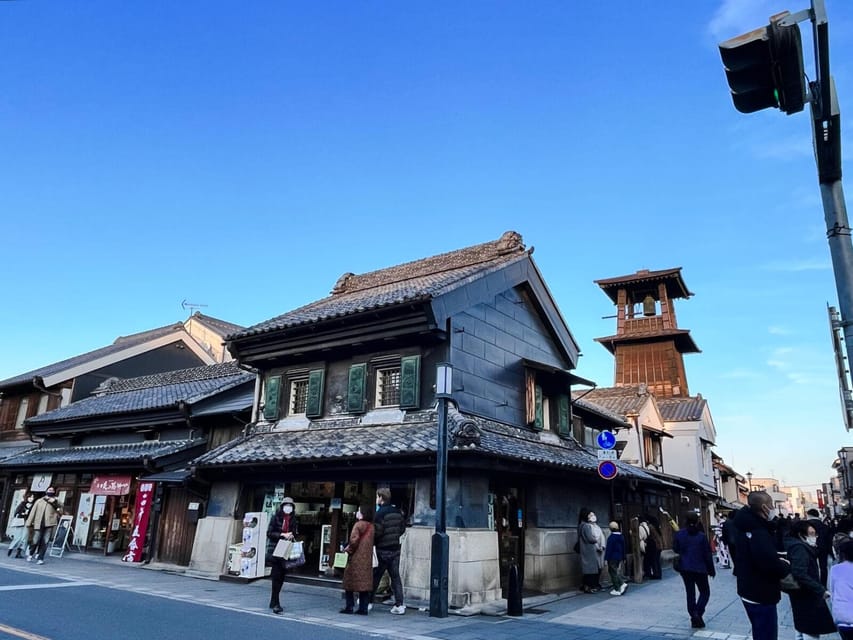
From Kita-in Temple, you walk about 15 minutes toward Kawagoe’s old town. The central district is known for Kurazukuri architecture, traditional clay-walled warehouses built to resist fire. Their thick walls, dark facades, and heavy-looking rooflines give the street its distinctive appearance.
This is where Kawagoe earns its nickname, Little Edo. The nickname is useful, but do not expect a preserved theme park. The area includes shops, food stalls, cafes, and active town streets. The pleasure comes from seeing old commercial forms still used in daily life.
The guided walk points out the main landmarks, including the famous Toki no Kane Bell Tower. The tower is one of Kawagoe’s best-known symbols, and it helps you read the district as a former merchant center rather than just a collection of attractive buildings.
You also pass an old sake brewery and a range of local shops. The guide can explain how the buildings and businesses fit into Kawagoe’s past, while you get a chance to notice smaller details on side streets. This is a good place to keep your camera ready, but also look up at roof tiles and down narrow lanes instead of photographing only the headline sights.
The old town portion lasts about two hours and 20 minutes, including lunch and free time. That is a generous share of the day. You will need it for food, shopping, photos, and the guided walk, but the time can still pass quickly.
Lunch in Kawagoe: eel, coffee, and sweet potatoes
Lunch is not included, so you choose and pay for your own food. That is a drawback if you prefer a fixed-price tour, but it gives you more control over the meal.
Kawagoe is especially known for sweet potatoes. You might find sweet-potato cakes, pastries, or other versions of the local specialty, and one visitor particularly enjoyed sweet-potato pie. I would save room for something sweet even if you choose a more substantial lunch.
Eel is another useful suggestion from the tour experience. Beth helped arrange a meal at a quaint old restaurant serving eel, showing how the guide can steer you toward a local option instead of leaving you to guess from menus. The exact restaurant and meal are not fixed in the tour details, so treat that as a possible recommendation rather than a guaranteed stop.
There is also time to sit in a local coffee shop. That matters on a walking day. A short pause can make the afternoon much more comfortable, especially if you want to keep your attention on the castle and shrine rather than simply get through the schedule.
Because the tour includes free time, you are not locked into one style of lunch. Ask the guide for help if you have food preferences or need a break. Just remember that the schedule still has fixed visits, so an extended meal could reduce your shopping or photo time.
Fishing for a fortune at Hikawa Shrine
Kawagoe Hikawa Shrine receives about 45 minutes of guided attention. It adds a different mood to the day after the merchant streets and Buddhist temple.
The memorable activity here is the chance to fish for your fortune. This is a small, playful custom, but it gives you something active to do at the shrine instead of simply walking through, taking a photograph, and leaving. It also makes the visit easier to remember.
The guide explains the cultural setting and points out the parts worth seeing. You should allow time for the fortune activity if it interests you, while keeping in mind that any optional purchase is not listed as included.
This stop is useful for showing the variety of Japanese religious spaces. Kita-in is a Buddhist temple with an Edo Castle link. Hikawa is a Shinto shrine with its own customs and visual character. Seeing both in one day helps you avoid treating all sacred places as interchangeable.
Entering Kawagoe Castle’s Honmaru Palace
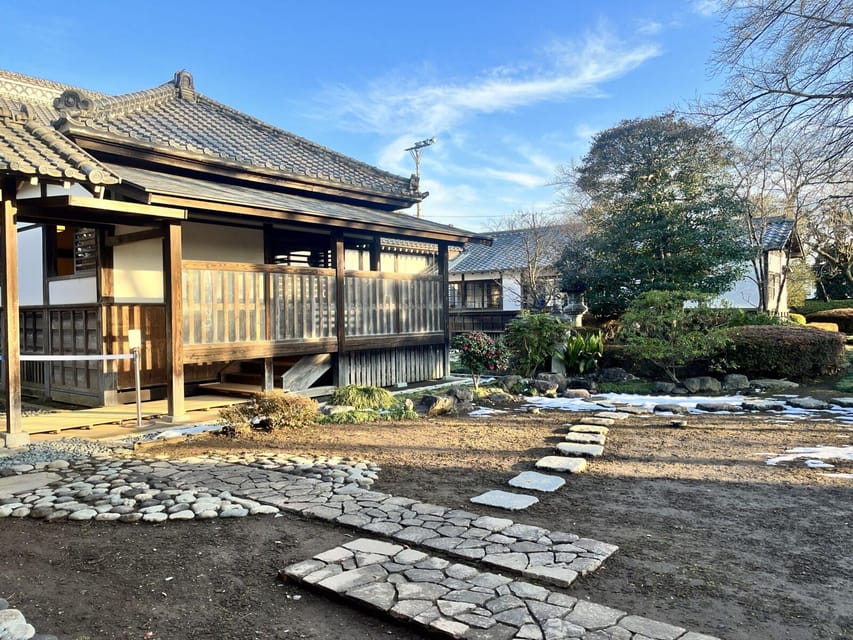
The final major historical stop is Kawagoe Castle Honmaru Palace, reached after the shrine. The visit lasts about 45 minutes and includes admission.
This is not simply a view of stone foundations. You can walk through preserved rooms and halls connected with the former flatland castle. The setting lets you picture the people who once moved through these spaces when samurai government shaped daily life.
For me, the strength of Honmaru Palace is its scale. A surviving room or hallway can tell you something a broad historical statement cannot. You notice thresholds, floor levels, empty tatami rooms, and the way movement through a residence was controlled.
You can also collect a castle stamp as a free souvenir. It is a modest detail, but a nice one for anyone keeping a record of Japanese castles and historic sites.
The palace is less theatrical than a reconstructed fortress with tall walls and dramatic views. If you want a classic castle exterior, adjust your expectations. The reward here is the preserved interior and the chance to walk through an actual remnant of Kawagoe’s castle complex.
One last hour for shops, museums, and photographs
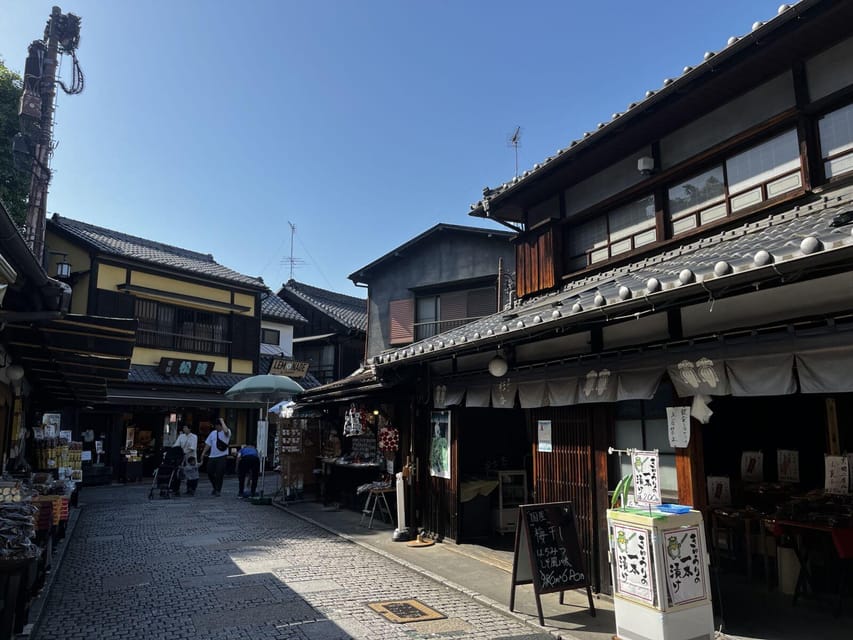
After Honmaru Palace, you return to the Kurazukuri district for about an hour of guided time and free exploration. This second pass is useful because the first visit includes lunch and the main walking tour. Now you can return to a shop, buy a souvenir, or take photographs without feeling you are missing the guide’s explanation.
You may also use this time for attractions not covered in the main route. The Kawagoe City Museum and Kawagoe Matsuri Museum are both suggested additions. The tour does not include their admission or a dedicated visit, so you need to judge the clock and any extra cost for yourself.
At the end, you meet the group and walk to Kawagoeshi Station for the return train. The ride back is listed at about 45 minutes, with arrival at Hattendo in Ikebukuro.
The full route involves trains and a good amount of walking. It is not suitable for wheelchair users or people with mobility impairments. Wear comfortable shoes and avoid planning a demanding evening immediately afterward if you prefer to travel at an easy pace.
Is $135 a fair price?
At $135 per person, this is not the cheapest way to reach Kawagoe. You still pay separately for trains, food, and drinks. If you are comfortable navigating Japanese railways, reading signs, and researching the temples yourself, an independent visit will cost less.
The value comes from the guide’s time and judgment. You get admission to the two main paid sites, an English-speaking explanation of the temple, old town, shrine, and castle, and help connecting the stops by train and on foot. Beth’s practical suggestions about restaurants, coffee, travel apps, and transport add value for anyone still finding their feet in Japan.
The price is easier to justify if you care about Edo history and want more than attractive streets. It is also helpful if you have only one day for Kawagoe and do not want to spend your morning working out the route.
The value is weaker if you mainly want unstructured shopping. Much of the old town is accessible without a guide, and the tour’s schedule means you cannot linger everywhere. Think of it as a guided history and food day with free time, not a fully private shopping outing.
Who should book this six-hour outing?
I would recommend it most to you if you want a manageable break from Tokyo, enjoy temples and historic buildings, and like having a local English-speaking guide connect the details. It suits first-time visitors to Kawagoe particularly well because the route covers the town’s main themes in one day.
It also fits solo visitors or couples who want company and local suggestions without committing to a long multi-day tour. Beth’s flexible approach is a real advantage if your interests lean toward architecture, food, or practical travel planning.
Families with older children may enjoy the fortune-fishing activity, street food, and castle rooms, though the walking and fixed schedule may be tiring for younger children. Anyone using a wheelchair or dealing with limited mobility should choose another outing.
Book it if you want context, structure, and an easy introduction to Kawagoe. Skip it if you already know the town, prefer to set your own pace, or are trying to keep the day as inexpensive as possible. With free cancellation up to 24 hours ahead and the option to reserve now and pay later, the booking terms also leave some room to adjust your plans.
FAQ
How long does the Kawagoe tour last?
The tour lasts six hours. The schedule includes the train journey from Ikebukuro, visits to the temple, old town, shrine, and castle palace, plus free time.
Where does the tour begin?
The tour begins at 9 a.m. inside Ikebukuro Station, outside the Tobu blue entrance gate.
How do I find the meeting point in Ikebukuro Station?
Follow signs for the Tobu Line, marked TJ in a blue square, and continue toward Central Gate 1. You pass Tantan on your left and Uniqlo on your right, then continue beyond the green JR ticket gates to the blue Tobu entrance gate.
Is an English-speaking guide included?
Yes. A live English-speaking local guide is included. Beth is the guide named in the supplied tour information.
Are train fares included in the price?
No. Trains and transport before and after the tour are not included.
Is food included?
No. Lunch, snacks, and drinks are not included. You have free time to choose and pay for food in Kawagoe’s old town.
What admissions are included?
Admission to Kita-in Temple and Kawagoe Castle Honmaru Palace is included.
Is the tour suitable for wheelchair users?
No. The experience is not suitable for wheelchair users or people with mobility impairments.
Can I cancel the booking?
You can cancel up to 24 hours in advance for a full refund. You can also reserve now and pay later.
More tours in Kawagoe we've reviewed
Tours, compared.
 ★ 5.0Mt Fuji and Hakone 1-Day Bus Tour Return by Bullet TrainFrom $163
 ★ 5.01-Day Tokyo Bus TourFrom $129
 ★ 5.0Tokyo: Shinjuku Food Tour (13 Dishes at 4 Local Eateries)From $86
 ★ 4.4Tokyo Mt Fuji 5th St & Hakone Cruise Bus Tour w/Bullet TrainFrom $15410 hours
 ★ 5.0Flagship 2-Hours Official Street Go-Kart Tour – Tokyo Bay ShopFrom $642 hours to 2 hours 30 minutes (approx.)
 ★ 4.7Tokyo: Mt. Fuji Tour, Hakone Ropeway, Owakudani, Lake AshiFrom $5410 hours