

Reviewed · TOKYO
Ecotourism and Woodcraft with a Mountain Artist Near Tokyo
The most unusual part of this short trip from Tokyo is the chance to enter a private working forest normally closed to the public. Shun, a 15th-generation forestry family member, explains how Nishikawa timber helped build Tokyo, then lets you handle the material yourself through log cutting and wood burning.
I like the mix of quiet forest time and practical work. You do not simply look at trees, you learn why thinning keeps a forest healthy and feel how much effort a saw requires. I also like the small Edo Castle craft, which gives you a useful souvenir rather than another disposable trinket.
The main consideration is the price, about $93.93 per person for roughly two and a half hours, with transport to Hannō and lunch extra. It is a good value for a small-group cultural outing, but less so if you only want a quick forest walk.
In This Review
- Key points to know before booking
- Why this Hannō forest experience feels different
- Meeting Shun at Higashi-Agano Station
- Inside Kirari, where timber becomes craft
- Cutting a log is harder than it looks
- Forest bathing without forcing the moment
- Burning your kanji onto an Edo Castle phone stand
- Is $93.93 a fair price?
- Timing, transport, and nearby plans
- Who will enjoy this most
- Booking details that matter
- Should you book this forest and woodcraft tour?
- FAQ
- Where does the experience begin?
- Where does the tour end?
- How long does the experience last?
- How do I reach the activity site from the station?
- Is lunch included?
- How many people can join the tour?
- What wood activities are included?
- What does the craft make?
- Is transportation from Tokyo included?
- Can I cancel for a refund?
Key points to know before booking
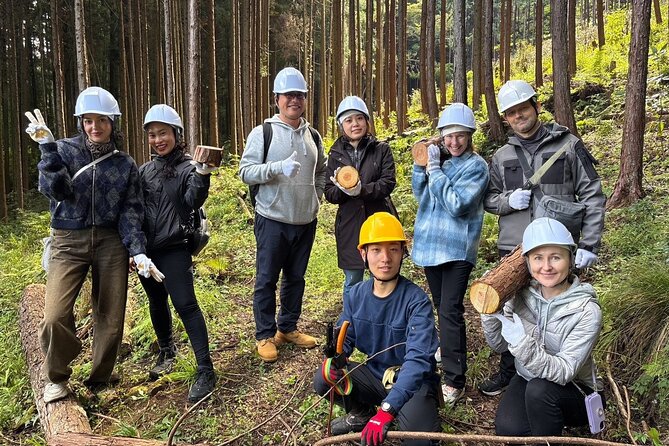
- A rare look inside a private forest: The woodland is usually closed to the public and carries an international certification for responsible management.
- A 300-year family tradition: Shun introduces Nishikawa timber and the forestry practices passed down through his family.
- Three hands-on forest activities: You learn about thinning, cut a log, and take time to rest beneath a tree.
- A thoughtful Japanese craft: You use a pyrography pen to burn a kanji onto a wooden piece shaped like Edo Castle.
- Small groups make the visit personal: The maximum group size is eight people.
- Easy Tokyo escape: The meeting point is Higashi-Agano Station in Hannō, about an hour by train from Tokyo.
Why this Hannō forest experience feels different
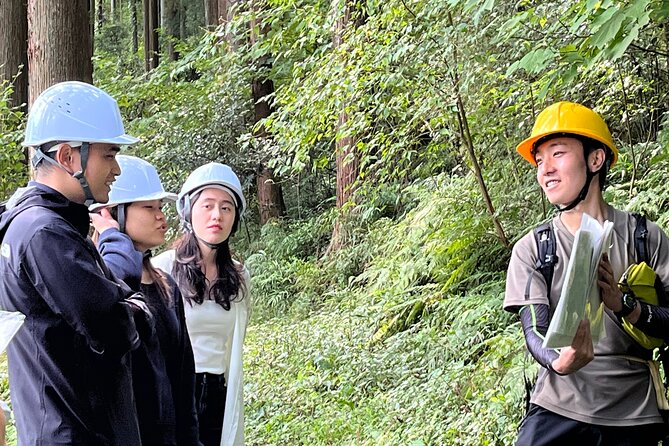
Many nature outings near Tokyo keep you on a marked path and offer a few scenic stops. This one gives you a closer look at the work behind the woods. Nishikawa timber is named for the area west of Tokyo, and it once held an important place in the city’s architecture.
That connection gives the visit more meaning. You are not looking at an ornamental park. You are entering a managed forest where trees are grown, selected, thinned, cut, and turned into useful objects. The forest is treated as a living resource, not just a backdrop for photographs.
The family behind the experience has more than 300 years of forestry tradition. Shun explains that tradition in plain, practical terms, including how foresters care for old trees while making room for younger growth. The phrase mountain artist fits the work well: the aim is not to overpower nature, but to guide it carefully.
The experience has earned a 4.7 rating from 21 reviews, with 100 percent recommending it. The praise centers on the same features that make the outing worthwhile: the forest walk, the physical log-cutting task, the chance to sit in silence, and the relaxed wood art session.
If you're still narrowing it down, here are other tours in Saitama Prefecture we've reviewed.


Meeting Shun at Higashi-Agano Station
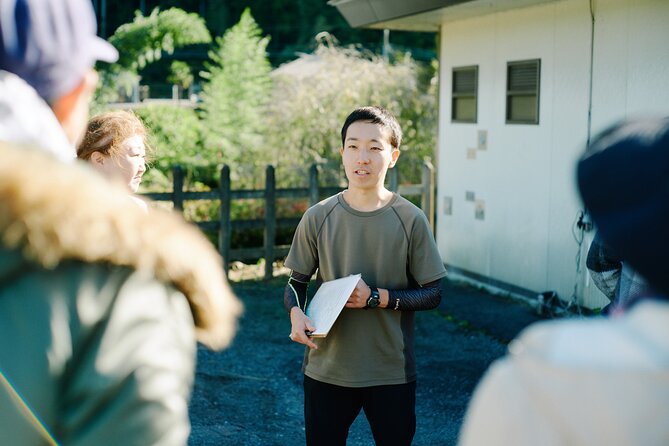
Your day begins at Higashi-Agano Station in Saitama Prefecture. After leaving the ticket gate, look for the guide holding a tour placard. This is a small station surrounded by countryside, so the meeting point is simple, but you should still arrive with enough time to identify the guide and group.
The station matters because the experience does not begin in central Hannō. You need to make your own way to Higashi-Agano, and the train fare is not included in the $93.93 price. The area is near public transportation, but this is not a hotel pickup from Tokyo.
Once the group gathers, you receive a briefing before riding in an air-conditioned vehicle to the activity site. The group limit is eight people, a useful detail if you prefer direct conversation and a calmer pace. A large bus tour would change the character of this visit, especially during the forest walk and craft work.
The transfer takes about ten minutes each way. That keeps the outing compact and leaves most of the two-and-a-half-hour schedule for the forest and studio.
Inside Kirari, where timber becomes craft
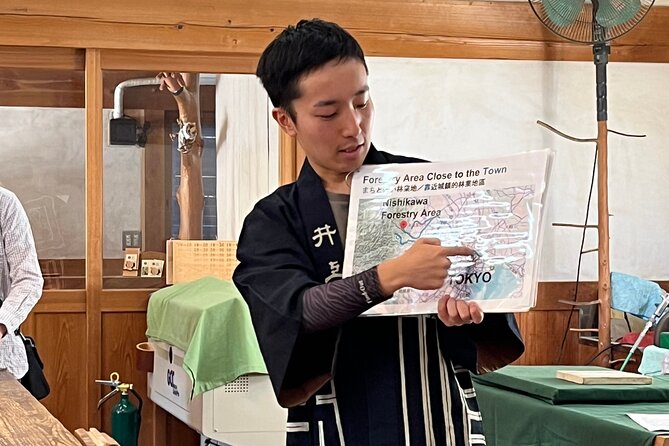
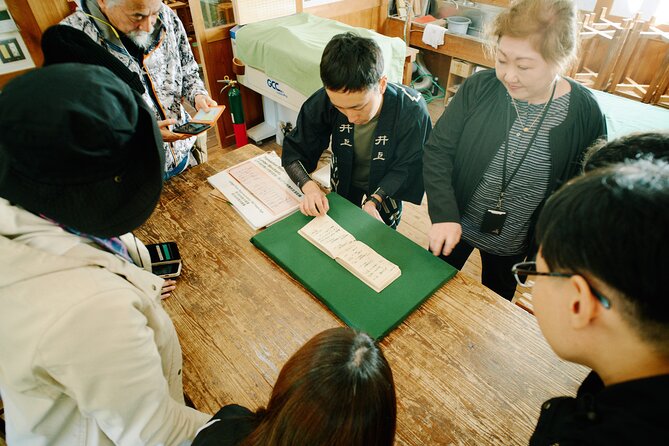
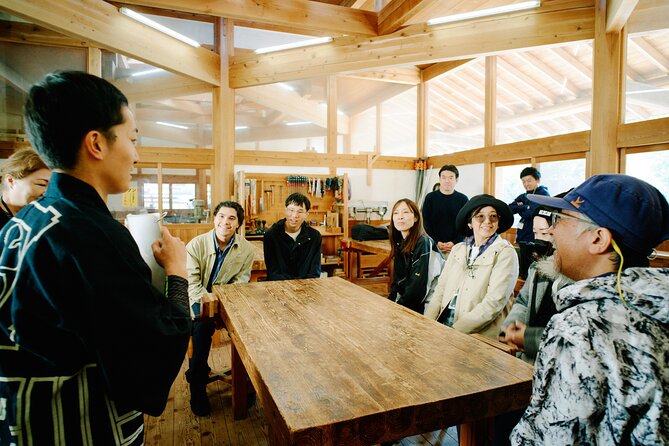
The hands-on portion takes place at Kirari, a woodworking studio. Here, you begin with an introduction to Nishikawa timber and the local forestry trade. The discussion links the trees around you to the buildings, tools, and wooden objects that have long shaped life in Tokyo and Saitama.
You also learn about three kinds of wood and their aromas. Cedar and cypress are specifically part of the forest experience, and the scent is one of the simplest ways to notice how different woods vary. This is a welcome change from a lecture based only on dates and technical terms. You get to use your senses as well as your ears.
The forestry lesson also covers thinning. In a managed forest, removing selected trees can give the remaining trees more room, light, and air. It is a basic part of keeping the woodland healthy, yet it is easy to miss when you only see a finished forest from a hiking trail.
I find this practical focus especially useful for anyone interested in architecture, design, carpentry, or Japanese material culture. You begin to understand wood as something with a place of origin, a growth pattern, a scent, and a long chain of human decisions behind it.
Cutting a log is harder than it looks
The log-cutting activity is brief, but it gives the forest lesson some muscle. You take a saw to a log and discover quickly that the tool does not glide through the wood by itself. The task demands steady movement and patience.
That small struggle is part of the value. It shows why forestry is skilled physical work and why wood should not be treated as an anonymous raw material. The people who manage the forest, harvest the trees, and shape the timber all work with weight, grain, moisture, and resistance.
Safety equipment is provided, including helmets and gloves. The activity is designed for most people, but you should expect to use your arms and stand during parts of the visit. If you prefer a purely passive tour, this may feel more active than expected.
You do not need to be an expert with tools. The point is to try the work under guidance and gain a better feel for the material. For families with older children, couples, and anyone curious about traditional trades, it is more memorable than watching a demonstration from behind a barrier.
Forest bathing without forcing the moment
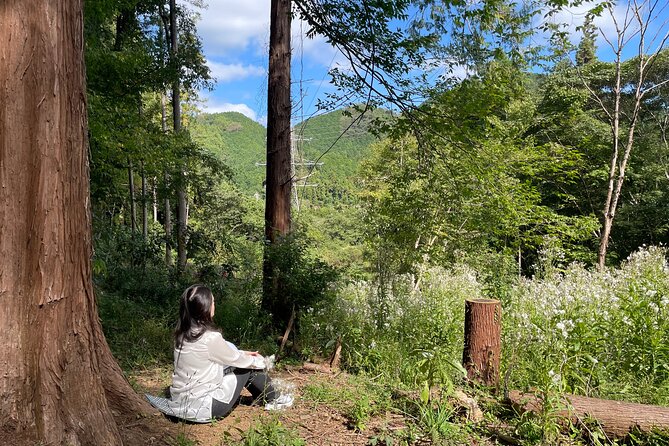
After learning about the forest and cutting a log, you have time to walk among the trees and rest beneath a canopy. The quiet is central to the experience. You may hear little more than natural sounds and the movement of the group.
The term forest bathing can sound grand, but here it means something direct: slow down, breathe the wood-scented air, and pay attention to the living trees around you. You are encouraged to find a tree that speaks to you and spend a quiet moment beneath it. That invitation gives the activity a personal edge without turning it into a formal wellness program.
Some people will love this pause. Others may find it too unstructured, especially if they want a packed schedule of sights. I would treat it as a reset between the physical log work and the indoor craft session.
The forest is internationally certified, which adds useful context to the talk about stewardship. Certification does not make the outing a wilderness expedition, and you should not expect a long mountain hike. It does show that the forest is managed according to recognized environmental standards.
Burning your kanji onto an Edo Castle phone stand
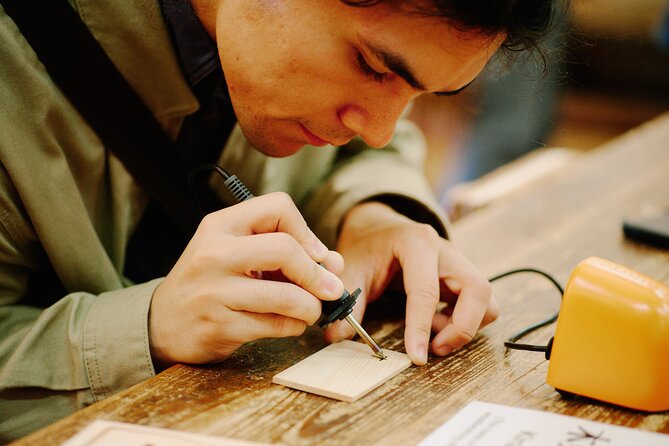
The final craft is the most portable part of the experience. You use a pyrography pen to inscribe a kanji of your choice on a wooden piece shaped like Edo Castle. The finished object works as a smartphone stand.
This is a smart souvenir for two reasons. First, it is small enough to carry home without the usual worry about breaking a large craft item. Second, choosing your own kanji gives the object a personal meaning. You can select a character connected to your name, a value, a place, or a feeling, though the experience does not specify a fixed list of options.
The pyrography pen burns the design into the wood rather than simply printing it on top. That makes the process feel closer to woodcraft than to a standard tourist workshop. You should expect a relaxed creative task, not a formal lesson in Japanese calligraphy or professional carpentry.
The Edo Castle shape ties the activity back to Tokyo. The city’s former castle is now part of the Imperial Palace grounds, but here it appears in a modest wooden form connected to the timber tradition of the region. The result is both useful and tied to the story you have just heard.
Is $93.93 a fair price?
At about $93.93 per person, this is not the cheapest half-day activity near Tokyo. The price includes the guided forest program, the studio session, the log-cutting experience, the wood craft, and the short air-conditioned ride between Higashi-Agano Station and the site.
It does not include your train fare or lunch. You also need to reach the meeting point independently, so add those costs when comparing this outing with a city tour or a longer day trip.
I think the price makes the most sense for someone who values access and instruction. The private forest is normally closed to the public, and the family connection gives you a story that a general woodland walk cannot provide. The small maximum group of eight also helps justify the cost.
If you only want scenery, you can find less expensive ways to spend time outdoors. If you want a compact introduction to Japanese forestry, a physical demonstration, and a finished craft, the package is more convincing.
Timing, transport, and nearby plans
The activity lasts about two hours and thirty minutes. It begins and ends at Higashi-Agano Station, with about ten minutes of guided driving to the studio and ten minutes back.
The return is around lunchtime. From there, you can continue to Hannō Station and choose lunch at one of the local restaurants recommended by the guide. Lunch is not part of the tour, so leave room in your budget and schedule for it.
Hannō also works well as a base or add-on point for other Saitama outings. Chichibu, Kawagoe, and Moomin Valley Park are all noted as nearby attractions. The forest experience itself is short enough to pair with another plan, but you should avoid cramming too much into the same morning if you want time for lunch and transport.
Because the activity depends on good weather, keep your schedule flexible. If poor weather cancels the outing, you are offered another date or a full refund. The same applies if the minimum number of participants is not reached.
Who will enjoy this most
I would recommend this for you if you want an authentic activity close to Tokyo and have an interest in one or more of these areas:
- Japanese architecture and historic building materials
- Forestry, conservation, or responsible land management
- Traditional family businesses
- Hands-on crafts
- Quiet time in nature
- Small-group experiences rather than large sightseeing tours
Architecture students may find the wood lesson especially useful because it connects material choice with place and history. Families can enjoy the saw and craft work, provided everyone is comfortable with a modest amount of physical activity.
It is also a good choice for repeat visitors to Tokyo. If you have already seen the major temples, shopping districts, and central neighborhoods, a morning or half-day in Hannō gives you a different view of the region.
This may not suit you if you need a fully accessible indoor program, want a long hike, or prefer a tour with lunch and all transportation included. The information provided says most people can participate, but it does not give detailed accessibility information, so ask the provider before booking if you have specific mobility needs.
Booking details that matter
Confirmation is provided when you book. Free cancellation is available up to 24 hours before the local start time, with a full refund. Cancellations or changes made within 24 hours are not accepted for a refund.
The tour uses a mobile ticket and offers group discounts. Since it averages six days of advance booking, reserving about a week ahead is sensible, especially if you need a particular date.
The experience provider is the Oku-Musashi Hannō Tourism Association. Its local connection is important here because the outing depends on access to a working family forest and a traditional woodworking setting, not simply on a guide leading a generic nature walk.
Should you book this forest and woodcraft tour?
Book it if you want to understand how Japanese wood reaches from forest to finished object. The combination of private woodland access, thinning lessons, log cutting, forest quiet, and a handmade phone stand gives the two-and-a-half-hour visit a clear purpose.
I especially like that the experience does not stop at scenery. You learn why the trees are managed, test the work yourself, and then make something connected to Tokyo’s past. That sequence helps the ideas stick.
Skip it if your priority is the lowest possible cost, a full-day excursion, or a meal included in the price. For everyone else, this is a thoughtful escape from the city, particularly for visitors who want a close look at local tradition rather than another quick photo stop.
FAQ
Where does the experience begin?
It begins at Higashi-Agano Station in Hannō, Saitama Prefecture. Meet the guide outside the ticket gate by looking for the tour placard.
Where does the tour end?
The activity ends back at Higashi-Agano Station, the same place where you meet the guide.
How long does the experience last?
The total duration is approximately two hours and thirty minutes.
How do I reach the activity site from the station?
The guide drives the group from Higashi-Agano Station to the activity site in an air-conditioned vehicle. The drive takes about ten minutes each way.
Is lunch included?
No. Lunch is not included. The tour returns around lunchtime, and the guide can recommend local restaurants near Hannō Station.
How many people can join the tour?
The maximum group size is eight people.
What wood activities are included?
You learn about Nishikawa timber and thinning, try cutting a log, spend quiet time beneath the trees, and complete a pyrography craft.
What does the craft make?
You burn a kanji of your choice onto a wooden piece shaped like Edo Castle. The finished piece can be used as a smartphone stand.
Is transportation from Tokyo included?
No. Your transportation costs to and from the meeting point are not included. The tour does include the vehicle ride between Higashi-Agano Station and the activity site.
Can I cancel for a refund?
You can cancel up to 24 hours before the local start time for a full refund. Cancellations or changes within 24 hours are not refunded. If bad weather or insufficient bookings cancel the experience, you are offered another date or a full refund.